
Chef Graziella
Baccalà Mantecato alla Veneziana
The silken salt cod spread of Venice, beaten to cloud-like cream through patience and proper technique. No cream touches this dish. The emulsion of fish and olive oil creates all the richness you need.
A cooking platform built around craft, culture, and the stories behind what we eat.
Created by
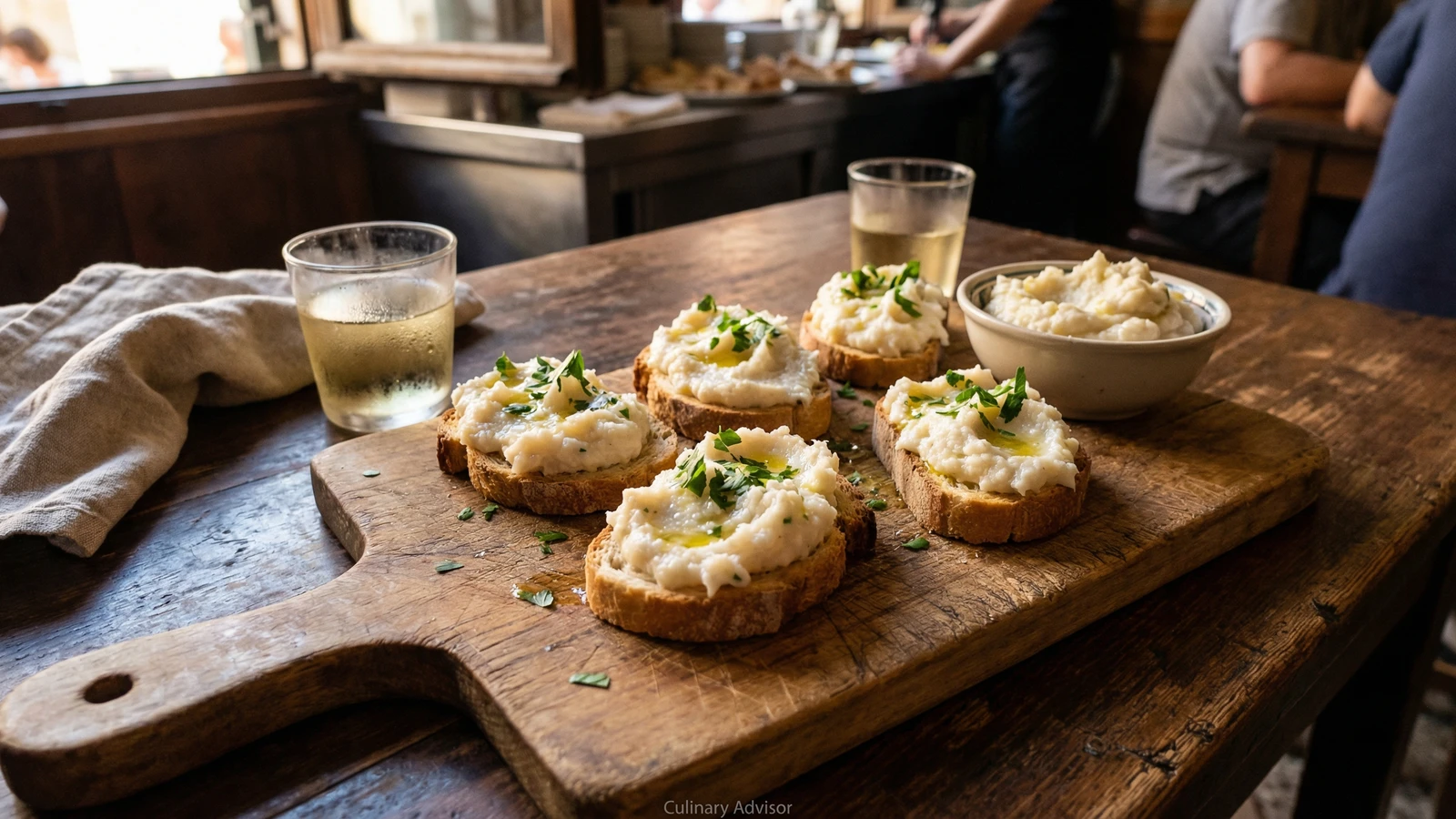
The whipped salt cod of Venice, made creamy through patience and olive oil alone. Served on small toasts in every bacaro worth its shadow, this is cicchetti at its most refined.
In the bacari of Venice, those shadowy wine bars where workers gather in late morning and again before dinner, you will find baccalà mantecato on every counter. The word mantecato means whipped, beaten, worked until transformed. This is what you do to salt cod. You beat it with good olive oil until it becomes something improbable: light, creamy, almost mousse-like, tasting of the sea without any of the aggression of raw salt.
Americans sometimes add cream. This is wrong. The creaminess comes from technique, not dairy. The olive oil emulsifies into the warm fish through persistent beating, the same principle that makes mayonnaise. What you keep out matters as much as what you put in. Cream would mask the delicate brine and sweet fish flavor that proper mantecato reveals.
The garlic question divides Venetians. Some insist on a single crushed clove, infused during whipping and removed before serving. Others consider even this a corruption. I give you the choice. Either way, restraint is paramount. This is not the place for the garlic excess that ruins so much would-be Italian cooking.
The work is in the desalting and the whipping. Neither can be rushed. If you cannot give three days to soaking the cod and fifteen minutes to beating it, make something else. Simple does not mean easy.
Salt cod arrived in Venice through trade with northern Atlantic fishermen as early as the 15th century, becoming essential to a city surrounded by sea but perpetually in need of preserved protein. Baccalà mantecato emerged in the bacari culture of the 19th century, where quick bites called cicchetti accompanied glasses of ombra, the small pour of wine that cast a shadow across the bar.
Quantity
1 pound
soaked 48-72 hours, water changed every 8 hours
Quantity
1
Quantity
1 small
halved
Quantity
3/4 cup
best quality
Quantity
1 small
crushed
Quantity
to taste
freshly ground
Quantity
1 tablespoon
chopped fine
Quantity
24 small pieces
| Ingredient | Quantity |
|---|---|
| dried salt cod (baccalà)soaked 48-72 hours, water changed every 8 hours | 1 pound |
| bay leaf | 1 |
| yellow onionhalved | 1 small |
| extra virgin olive oilbest quality | 3/4 cup |
| garlic clove (optional)crushed | 1 small |
| white pepperfreshly ground | to taste |
| flat-leaf parsleychopped fine | 1 tablespoon |
| crostini or grilled polenta rounds | 24 small pieces |
This step cannot be rushed. Place the dried salt cod in a large bowl and cover with cold water. Refrigerate and change the water every 8 hours for 48 to 72 hours. The cod is ready when a small piece tastes pleasantly seasoned, not aggressively salty. Thinner pieces may need only 48 hours. Thicker center cuts require the full 72. Taste and decide.
Drain the soaked cod and place it in a pot with fresh cold water to cover by two inches. Add the bay leaf and onion halves. Bring to a gentle simmer over medium heat. Do not let it boil. Poach until the fish flakes easily when pressed with a fork, 20 to 25 minutes depending on thickness. The flesh should be opaque throughout and tender.
Drain the cod and discard the bay leaf and onion. While still warm, remove any skin and bones. Be thorough. Run your fingers through the flesh to find the small pin bones that hide there. Break the cod into small pieces in a large bowl. It should still be warm when you begin whipping.
Using a wooden spoon or the paddle attachment of a stand mixer set to medium speed, begin beating the warm cod. Add the olive oil in a thin, steady stream while continuing to beat. This takes time. The fish must absorb the oil gradually, becoming creamy and light. If using garlic, add the crushed clove during the first minute of whipping, then remove it. The process takes 10 to 15 minutes by hand, 7 to 8 minutes with a mixer.
Continue whipping until the mixture becomes pale, fluffy, and holds soft peaks when the spoon is lifted. It should have the consistency of thick whipped cream. The fish fibers should be fully broken down and imperceptible. Taste and season with white pepper. Salt is unlikely to be needed if you desalted properly, but taste and adjust. Fold in the parsley.
For crostini, slice a baguette into rounds one-third inch thick. Brush lightly with olive oil and toast until golden but still slightly soft in the center. For polenta, cut cold polenta into small rounds or rectangles and grill until marked and warmed through. Either base should be sturdy enough to hold the whipped cod.
Mound a generous spoonful of baccalà mantecato on each crostino or polenta round. Do not be stingy. The whipped cod is the point, not a garnish. Serve at room temperature. The mantecato should never be refrigerator-cold when it reaches the table.
1 serving (about 115g)
Culinary guides, cultural storytelling, and the editorial depth that makes cooking meaningful.
Discover Culinary ExplorerChef Graziella
The silken salt cod spread of Venice, beaten to cloud-like cream through patience and proper technique. No cream touches this dish. The emulsion of fish and olive oil creates all the richness you need.

Chef Juliette
Tiny éperlans, lightly floured and fried until their tails stand crisp, arrive in a generous heap on a napkin with fried parsley and grooved lemon, a weeknight lesson in heat and restraint.

Chef Juliette
Brandade de Morue turns salt cod, warm olive oil, and milk into a pale, silky emulsion: keep everything warm and add the oil slowly, then crown the generous dome with butter-fried bread.

Chef Juliette
Salt cod worked warm with cream, one patient spoonful at a time, until the rough flakes become a glossy Nîmes paste, domed generously and ringed with butter-fried croutons for the table.