
Chef Lupita
Agua de Alfalfa
Ciudad de México's highland market agua fresca, fresh alfalfa blended with pineapple and lime until bright green, strained clean, and poured cold from the vitrolero.
A cooking platform built around craft, culture, and the stories behind what we eat.
Created by
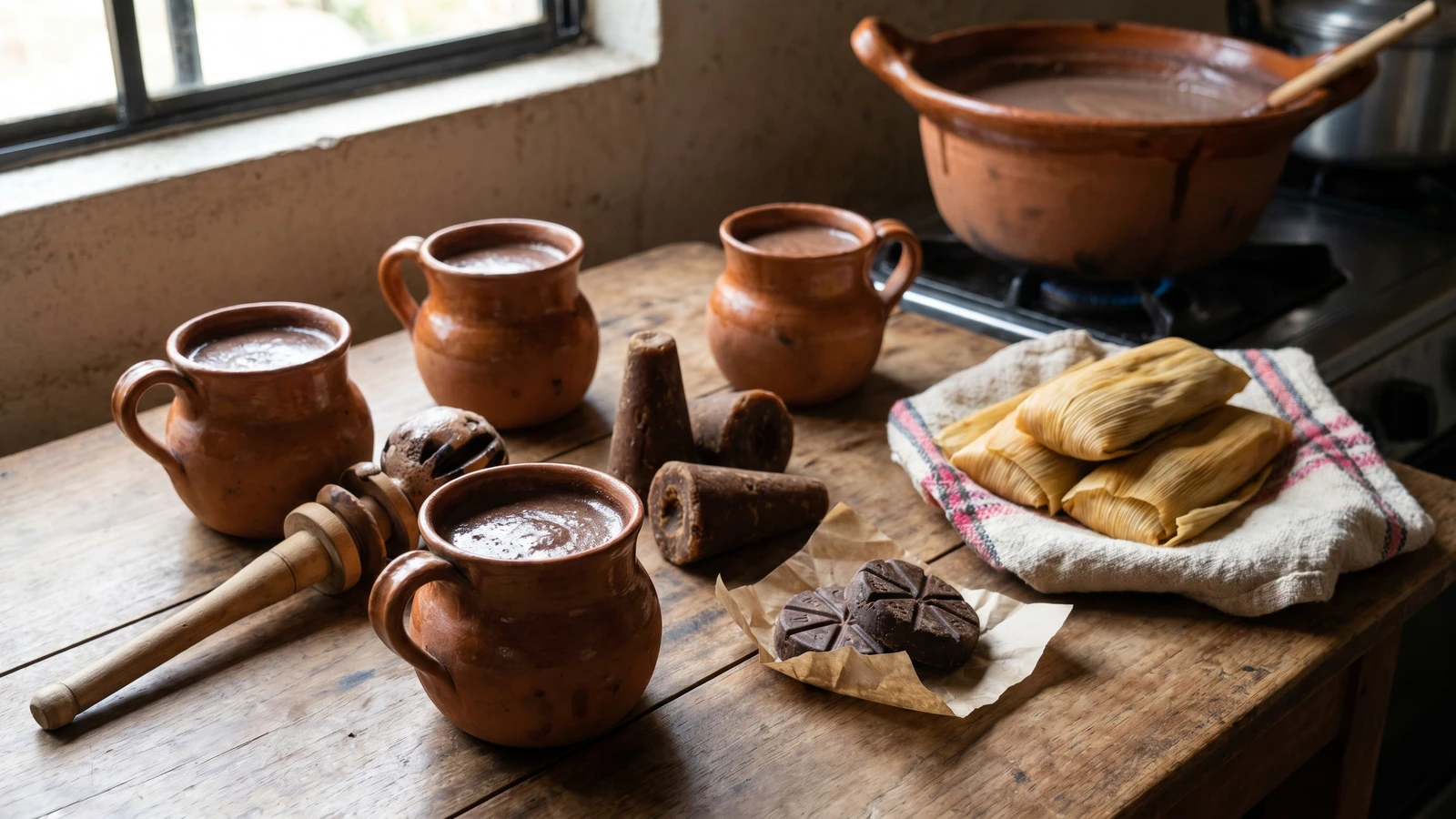
Estado de México's chocolate atole from the cold central highlands, thickened with nixtamal masa, sweetened with piloncillo, scented with canela, and beaten with a molinillo until frothy.
Estado de México, the high valleys around Toluca and Texcoco, is where I want you to place this cup. Cold mornings, market stalls opening before the sun, tamaleras lifting lids from metal vaporeras, and clay jarritos filled with champurrado thick enough to slow you down.
This is atole before it is chocolate. Remember that. The masa is not a thickener you toss in because the drink looks thin. It is the center of the drink, corn treated with cal, ground, cooked, and respected. The chocolate and piloncillo give depth, the canela gives perfume, but the nixtamal gives the body. If you don't understand the corn, you don't understand champurrado.
I learned to listen for the spoon scraping the bottom of the pot in winter markets. The women making champurrado never stop stirring. They know milk burns, masa clumps, and chocolate lies flat if you don't wake it up with heat and movement. A molinillo is not decoration. It is the tool that gives the drink its foam and its dignity.
Cada estado, su propia cocina, and central Mexico owns this cold-morning habit with authority. Serve it with tamales on Dia de la Candelaria, with pan dulce during posadas, or alone when the house needs feeding before anyone is ready to speak.
Atole comes from the Nahuatl word atolli, a maize-based drink consumed in central Mexico before the Spanish conquest. Champurrado took its recognizable form in New Spain after the 16th century, when cacao, already valued in Mesoamerica, met colonial sugar, piloncillo, milk, and cinnamon in domestic kitchens. Its strongest ritual pairing today is with tamales, especially during Dia de la Candelaria on February 2, when families in central Mexico gather to pay the tamal debt from Rosca de Reyes.
Quantity
6 cups
divided
Quantity
2 cups
Quantity
1 cup fresh masa or 3/4 cup masa harina
Quantity
1 cone, about 7 ounces
chopped
Quantity
1 tablet, about 3 ounces
chopped
Quantity
1
Quantity
1/4 teaspoon
| Ingredient | Quantity |
|---|---|
| whole milkdivided | 6 cups |
| water | 2 cups |
| fresh masa for tortillas or masa harina | 1 cup fresh masa or 3/4 cup masa harina |
| piloncillo conechopped | 1 cone, about 7 ounces |
| Mexican chocolate tabletchopped | 1 tablet, about 3 ounces |
| Mexican cinnamon stick (canela) | 1 |
| kosher salt | 1/4 teaspoon |
Put the fresh masa in a blender with 2 cups of the milk and blend until completely smooth. If you use masa harina, whisk it with the milk and let it sit for 5 minutes before blending. Masa must hydrate before it thickens properly. Otherwise you get lumps, and no señora at the mercado will forgive that.
In a heavy pot, combine the water, piloncillo, canela, salt, and remaining 4 cups milk. Warm over medium heat, stirring until the piloncillo dissolves. Do not boil hard. Milk scorches fast, and scorched milk announces itself before you can hide it.
Add the chopped Mexican chocolate and stir until it melts into the milk. The color should turn deep brown, not pale beige. Mexican chocolate has cacao, sugar, and canela already inside it, so taste before adding more sweetness. No me vengas con cocoa powder and calling it the same thing.
Pour the blended masa through a fine-mesh strainer directly into the pot, whisking as you pour. Lower the heat and cook for 12 to 15 minutes, stirring constantly with a wooden spoon. The champurrado should coat the spoon and feel thick enough to drink slowly, almost to eat. The masa is cooked when the raw corn smell disappears and the chocolate smells round and toasted.
Remove the canela. Work a molinillo between your palms inside the pot until the surface turns foamy. If you do not own one, use a whisk and your arm. The froth matters because champurrado is not just hot chocolate with flour. It is atole with chocolate, masa, and air worked into it. Así se hace y punto.
Ladle into clay jarritos or thick mugs while it is glossy and full-bodied. Serve with tamales, pan dulce, or nothing at all. In the Valle de Toluca, this is breakfast, holiday food, and comfort in one cup. Saber cocinar es saber vivir.
1 serving (about 375g)
Culinary guides, cultural storytelling, and the editorial depth that makes cooking meaningful.
Discover Culinary ExplorerChef Lupita
Ciudad de México's highland market agua fresca, fresh alfalfa blended with pineapple and lime until bright green, strained clean, and poured cold from the vitrolero.

Chef Lupita
Aguascalientes' Lenten agua fresca, jewel-red from cooked beet and full of apple, banana, orange, lettuce, and ground peanuts, served cold when Holy Week meets the Feria de San Marcos.

Chef Lupita
Sonora and Sinaloa's creamy malted barley water, built on toasted cebada perla, Mexican canela, vanilla from Papantla, and evaporated milk. Pink-beige, rich, and served cold over heavy ice in a heavy glass tumbler. Liquid cookie comfort the northwest way.

Chef Lupita
Yucatán's everyday tonic of boiled chaya leaves blended with lima agria, sugar, and ice. The bright green jarra that sits on every Peninsula table from Mérida to Valladolid.