Culinary Explorer
A cooking platform built around craft, culture, and the stories behind what we eat.
Free with an account.
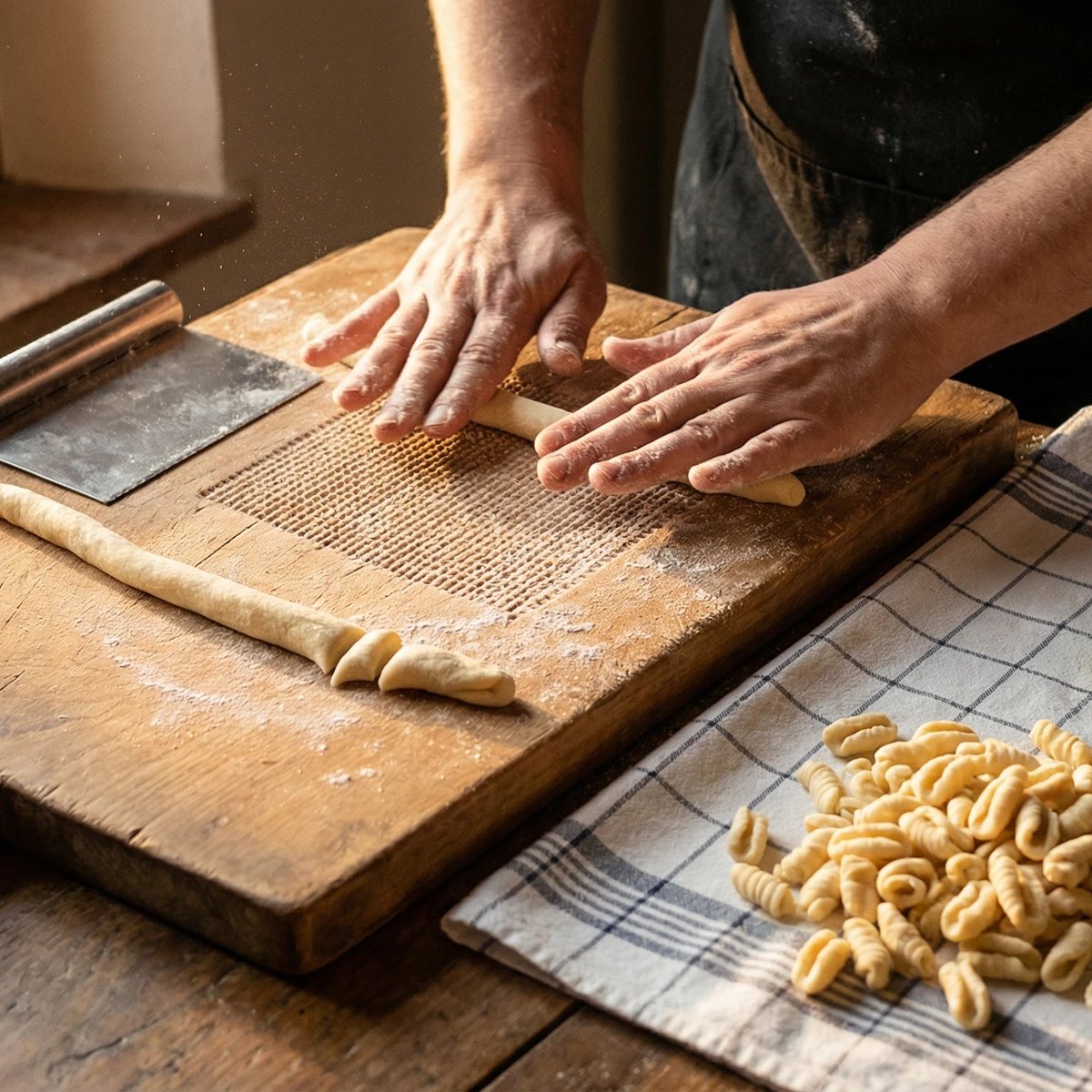
Cavatelli
Created by Chef Graziella
The little hollowed shells of Puglia and Molise, shaped with nothing more than two fingers and a wooden board. The motion takes practice. The result catches sauce like nothing else.
Cavatelli means 'little hollows,' and that is exactly what you are making: small curled shells with a cavity that traps sauce. The technique is simple to describe, harder to master. You press dough with two fingers and drag toward you. The dough rolls over itself and curls. When you do it correctly, each piece emerges hollow in the center and slightly ridged from the wood.
This is semolina pasta, not egg pasta. The dough is firm, almost stiff when you first bring it together. It becomes pliable as you work it, but it will never feel silky like fresh egg pasta. This firmness is necessary. Soft dough will not hold its shape when you drag your fingers across the board.
Puglia claims cavatelli. So does Molise, where they call them cavatieddi. Both regions are correct. These little shells have been made in southern Italian kitchens for centuries, shaped by hands that knew no written recipe. Farm wives made them by feel, thousands at a time, working through mountains of semolina before a feast. You will make fewer. But you will make them the same way.
Simple does not mean easy. The shaping motion takes repetition. Your first attempts may look rough. By the hundredth, you will have found the rhythm. This is how all hand-shaped pasta works: you learn through your fingers, not your eyes.
Ingredients
semola di grano duro rimacinata
Quantity
300g
lukewarm water
Quantity
150ml
fine sea salt
Quantity
1/2 teaspoon
| Ingredient | Quantity |
|---|---|
| semola di grano duro rimacinata | 300g |
| lukewarm water | 150ml |
| fine sea salt | 1/2 teaspoon |
The rest of this recipe is free with an account.
You have reached the limit for recipes without an account. Create a free account to keep reading.
By signing in, you agree to our Terms and Conditions and Privacy Policy