
Chef Lupita
Agua de Alfalfa
Ciudad de México's highland market agua fresca, fresh alfalfa blended with pineapple and lime until bright green, strained clean, and poured cold from the vitrolero.
A cooking platform built around craft, culture, and the stories behind what we eat.
Created by
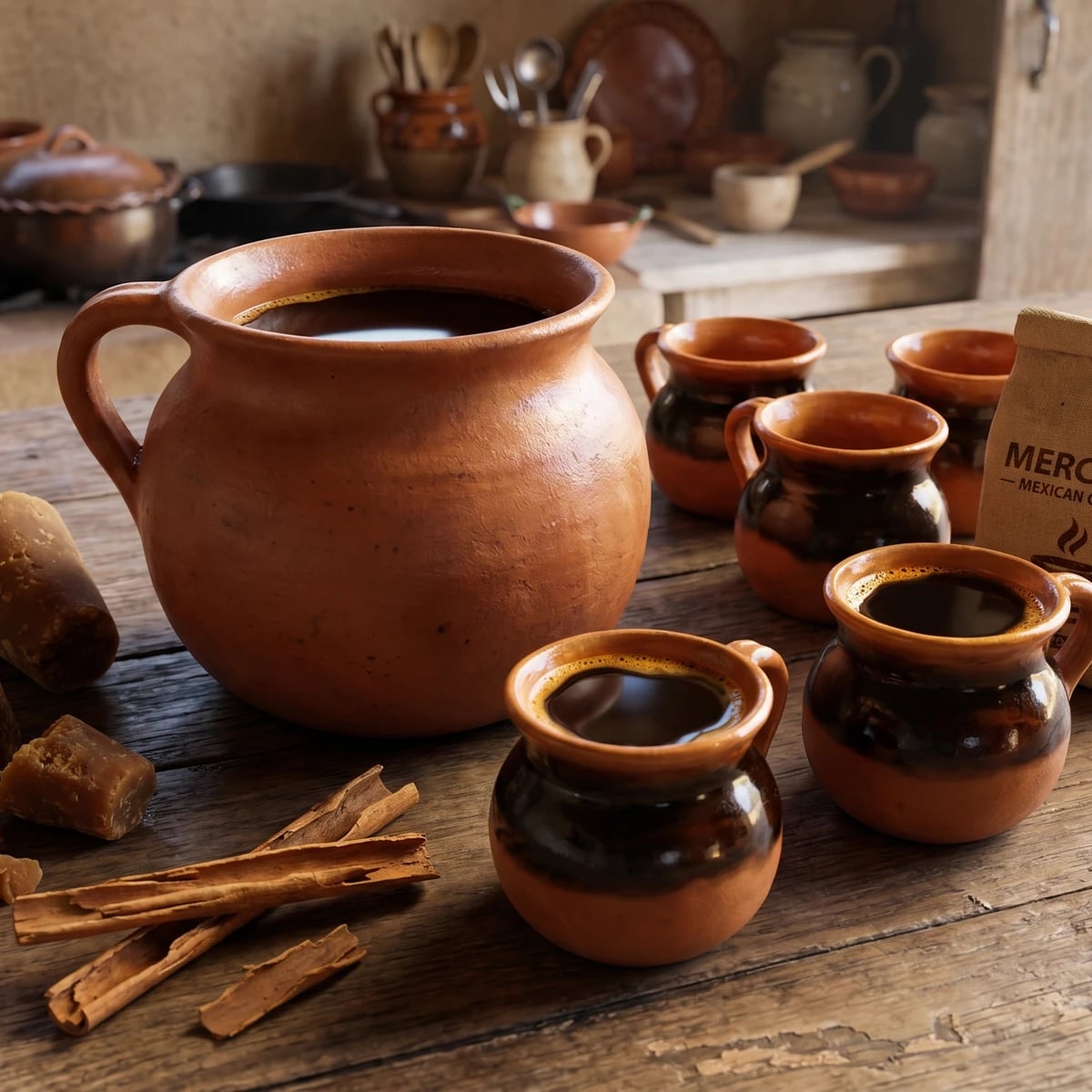
Puebla's central highland café de olla, brewed in barro with coarse coffee, canela de Ceilán, piloncillo, and orange peel until the clay gives the cup its quiet earth.
This comes from Puebla's central highlands and the coffee towns of the Sierra Norte: Cuetzalan, Xicotepec, Huauchinango. The coffee grows in the humid mountains, but the drink belongs to the kitchen, to the clay olla on the stove, to the woman who knows when the piloncillo has melted just by the smell.
Café de olla is not espresso with cinnamon. No me vengas con atajos. You need coarse-ground Mexican coffee, piloncillo, canela de Ceilán, and a clean clay pot that has been used enough to know its work. The barro gives the coffee an earthy depth. A stainless pot will make coffee, yes. It won't make this cup.
In the markets around La Merced, and in the Puebla stalls where women sell tamales in the morning, café de olla is not decoration. It is breakfast, warmth, sugar, strength. Some cooks add clavo de olor. Some add orange peel. I use both, lightly. The coffee stays in charge. Saber cocinar es saber vivir, even when all you're making is one pot to wake the house.
Café arrived in Mexico in the late 18th century, with commercial cultivation expanding in Veracruz, Oaxaca, Chiapas, and Puebla during the 19th century. Café de olla became closely associated with rural kitchens and with the soldaderas of the Mexican Revolution, who brewed coffee in clay pots with piloncillo and canela to serve troops during long marches. The clay olla is not a romantic detail: porous earthenware changes the aroma and softens the bitterness, which is why this drink survived in home kitchens long after metal pots became common.
Quantity
6 cups
Quantity
6 ounces
chopped or broken into pieces
Quantity
2 sticks
about 3 inches each
Quantity
2
Quantity
1 strip
about 3 inches long, with little white pith
Quantity
6 tablespoons
preferably from Puebla, Veracruz, Oaxaca, or Chiapas
| Ingredient | Quantity |
|---|---|
| water | 6 cups |
| piloncillochopped or broken into pieces | 6 ounces |
| canela de Ceilánabout 3 inches each | 2 sticks |
| whole cloves | 2 |
| orange peelabout 3 inches long, with little white pith | 1 strip |
| coarse-ground Mexican dark roast coffeepreferably from Puebla, Veracruz, Oaxaca, or Chiapas | 6 tablespoons |
Rinse a 2-quart clay olla with warm water. Do not scrub it with soap if it is unglazed inside. Clay remembers soap, and then your coffee will remember it too. Place the olla over medium heat with the water, piloncillo, canela, cloves, and orange peel.
Bring the water to a gentle simmer, stirring until the piloncillo dissolves completely. The liquid should turn deep amber and smell of sugarcane and cinnamon. Do not boil hard. A clay pot heats slowly and rewards patience. Rush it and you risk cracking the olla.
Stir in the coarse-ground coffee. Keep the heat low and let it barely simmer for 5 minutes. Coarse grind matters. Fine coffee muddies the pot and turns harsh. This is not drip coffee. This is infusion in barro, and the grounds need room to give flavor without becoming bitter.
Turn off the heat, cover the olla, and let the coffee rest for 5 minutes. The grounds will settle and the canela will finish perfuming the drink. This rest is small, but it matters. Mexican cooking is full of these small waits.
Pour the café de olla through a fine strainer into clay jarritos or heavy mugs. Serve it dark, without milk. Taste before you add anything. The piloncillo should sweeten, not bury the coffee. Así se hace y punto.
1 serving (about 250g)
Culinary guides, cultural storytelling, and the editorial depth that makes cooking meaningful.
Discover Culinary Explorer
Chef Lupita
Ciudad de México's highland market agua fresca, fresh alfalfa blended with pineapple and lime until bright green, strained clean, and poured cold from the vitrolero.

Chef Lupita
Ciudad de Mexico's market-table agua fresca, made from dried flor de jamaica simmered until the water turns garnet, then chilled and poured over ice for hot afternoons.

Chef Lupita
Ciudad de México's market limeade, built from limón criollo, bloomed chia, cane sugar, and cold water, the glass vitrolero drink that keeps an outdoor table steady.

Chef Lupita
Ciudad de Mexico's mercado agua fresca, made from whole tamarind pods boiled, rested, pressed, sweetened, and chilled until the glass tastes sweet, sour, and honest.