Culinary Explorer

A cooking platform built around craft, culture, and the stories behind what we eat.
Discover Culinary Explorer
Buttermilk Biscuits with Honey Butter

Buttermilk Biscuits with Honey Butter

Created by

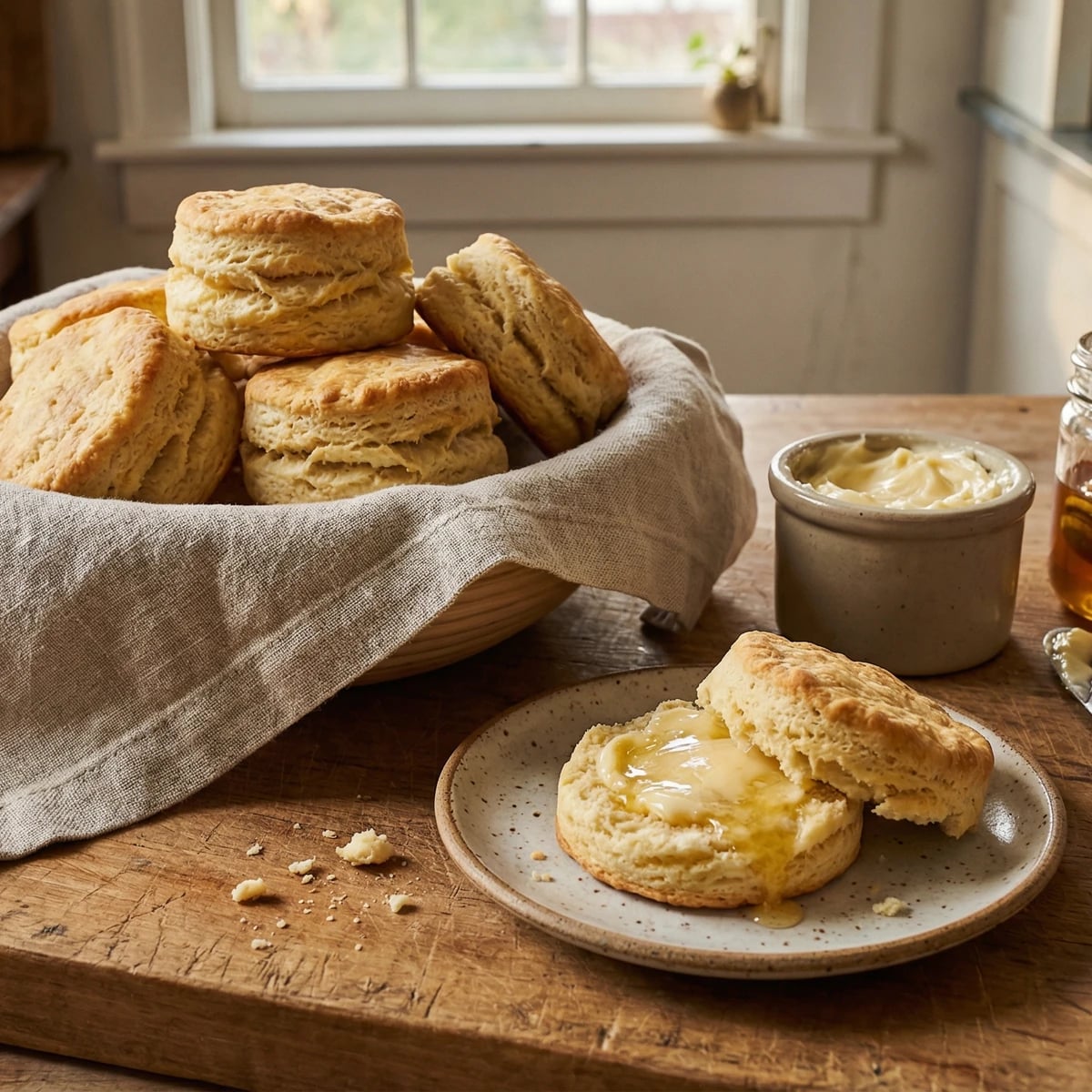
Flaky, golden biscuits built layer by tender layer with cold butter and tangy buttermilk, split warm and spread with honey butter that melts into every crevice.

Pastries & Cookies
American
Comfort Food
Make Ahead
20 min
Active Time
15 min cook35 min total
Yield8-10 biscuits

Start with butter. Good butter, from cows that ate grass. The kind that tastes like something. When you bake with butter this simple, the quality shows in every bite.

Buttermilk biscuits are an exercise in restraint. Four folds. Minimal handling. Cold ingredients from start to finish. The technique matters more than any single element because you are building layers, and layers require patience and a light hand. Every time you touch the dough, you risk melting those butter pieces that create the flake.

I learned to make biscuits from Southern cooks who could turn them out before coffee was ready, their hands moving from memory. They never measured. They knew the dough by feel, by the way it held together without being smooth. That shaggy quality is what you want. Smooth dough means overworked dough, and overworked dough makes tough biscuits.

The honey butter is not an afterthought. Find honey from someone who keeps bees, the kind that tastes of clover or wildflowers or eucalyptus depending on where the hives sit. Whip it into good butter with a pinch of salt. Spread it on a warm biscuit and you will understand why these deserve to be made from scratch.

The technique, the tradition, and the story behind every dish.

Discover Culinary Explorer

Ingredients

all-purpose flour

Quantity

2 cups (250g)

plus more for dusting

baking powder

Quantity

1 tablespoon

baking soda

Quantity

1/4 teaspoon

fine sea salt

Quantity

1 teaspoon

unsalted butter (for biscuits)

Quantity

1/2 cup (1 stick/113g)

very cold

cold buttermilk

Quantity

3/4 cup

plus more for brushing

unsalted butter (for honey butter)

Quantity

1/2 cup (1 stick/113g)

softened

raw honey

Quantity

3 tablespoons

flaky sea salt

Quantity

pinch

Equipment Needed

  • Pastry cutter or two forks
  • 2 1/2-inch round biscuit cutter
  • Rimmed baking sheet
  • Pastry brush

Instructions

  1. 1

    Prepare your workspace

    Set your oven to 425°F. Line a baking sheet with parchment. Clear your counter and dust it lightly with flour. Biscuit making moves quickly once you start, and cold ingredients wait for no one.

  2. 2

    Mix the dry ingredients

    Whisk together the flour, baking powder, baking soda, and salt in a large bowl. This takes thirty seconds but distributes the leavening evenly, which matters. Uneven leavening means uneven rise.

  3. 3

    Cut in the cold butter

    Cut your cold butter into small cubes, about half an inch each. Add them to the flour and work quickly with a pastry cutter or your fingertips, pressing and tossing until the mixture looks like coarse meal with some pea-sized pieces remaining. Those butter pieces will create your layers. Do not overwork this. Your hands are warm; the butter must stay cold.

    If your kitchen runs warm, freeze the cubed butter for ten minutes before starting.
  4. 4

    Add the buttermilk

    Make a well in the center and pour in the cold buttermilk. Stir gently with a fork, pulling flour from the edges into the center, until a shaggy dough just comes together. It will look rough. It should. Stop the moment you no longer see pools of liquid.

  5. 5

    Fold for layers

    Turn the dough onto your floured surface. Pat it into a rectangle about an inch thick. Fold it in thirds like a letter. Turn it ninety degrees. Pat it out again. Fold again. Repeat this twice more for a total of four folds. This builds the flaky layers without overworking the gluten. Handle the dough gently, as if it were tired.

    If the dough feels sticky at any point, dust your hands and the surface with more flour. Better a little more flour than overworked dough.
  6. 6

    Cut the biscuits

    Pat the dough to about one inch thick. Using a sharp two and a half inch biscuit cutter dipped in flour, cut straight down without twisting. Twisting seals the edges and prevents proper rise. Gather scraps gently, pat together, and cut remaining biscuits. The scrap biscuits will be slightly less tender, but still good.

  7. 7

    Arrange and brush

    Place biscuits on your prepared sheet with sides touching. Biscuits that lean against each other rise taller and straighter. Brush the tops with buttermilk. This gives them color and a slight tang on the crust.

  8. 8

    Bake until golden

    Bake for 12 to 15 minutes until the tops are deep golden and the sides look set and lightly colored. The bottoms should sound hollow when you tap them. Remove from the oven and let rest on the pan for two minutes, no longer. Biscuits want to be eaten warm.

  9. 9

    Make the honey butter

    While biscuits bake, beat the softened butter with a wooden spoon or mixer until light and fluffy. Drizzle in the honey and continue beating until fully incorporated and airy. The butter should hold soft peaks and look almost whipped. Finish with a pinch of flaky salt. Taste. Adjust the honey if your butter is particularly sweet or the honey particularly mild.

    Local raw honey from a farmers market will have character that commercial honey cannot match. Ask the beekeeper what flowers their bees favor.
  10. 10

    Serve immediately

    Split a warm biscuit with your hands, never a knife. The rough interior catches more butter. Spread generously with honey butter and watch it begin to melt into the layers. This is breakfast. This is Sunday. This is why you made them from scratch.

Chef Tips

  • The single most important thing is temperature. Cold butter, cold buttermilk, work quickly. If your kitchen is warm, chill your mixing bowl and flour in the freezer for ten minutes before starting.
  • Do not substitute milk with vinegar for buttermilk. Real buttermilk has a thickness and tang that the substitute cannot replicate. Find the real thing at any grocery store.
  • Biscuit dough can be cut and frozen unbaked for up to a month. Bake directly from frozen, adding three to four minutes to the baking time. This means fresh biscuits any morning you want them.
  • Leftover biscuits, if there are any, split and toast well the next day. They make a fine base for strawberry shortcake or a simple egg sandwich.

Advance Preparation

  • Honey butter can be made up to a week ahead and refrigerated. Bring to room temperature before serving so it spreads easily.
  • Unbaked biscuits freeze beautifully. Arrange cut biscuits on a sheet, freeze solid, then transfer to a bag. Bake from frozen at 425°F for 16-18 minutes.
  • The dry ingredients can be mixed and the butter cut in up to two hours ahead, kept refrigerated. Add buttermilk just before baking.

Frequently Asked Questions

Nutrition Information

1 biscuit with honey butter (about 85g)

Calories
310 calories
Total Fat
21 g
Saturated Fat
13 g
Trans Fat
0 g
Unsaturated Fat
8 g
Cholesterol
55 mg
Sodium
390 mg
Total Carbohydrates
28 g
Dietary Fiber
1 g
Sugars
6 g
Protein
4 g

Note: Chef personas and recipes are created with AI assistance. Cook with care: follow safe food-handling practices, check doneness with a thermometer when needed, and adapt for allergies and your kitchen.

Where cooking meets culture.

Culinary guides, cultural storytelling, and the editorial depth that makes cooking meaningful.

Discover Culinary Explorer

More from Chef Ally's Cookies and Pastries

Browse the full collection