
Chef Isabel
Arròs a la Cassola
Catalonia's casserole rice is cooked in a cassola, not a paella pan: rabbit, chicken, and pork rib over a dark sofregit, finished juicy with a small picada.
A cooking platform built around craft, culture, and the stories behind what we eat.
Created by
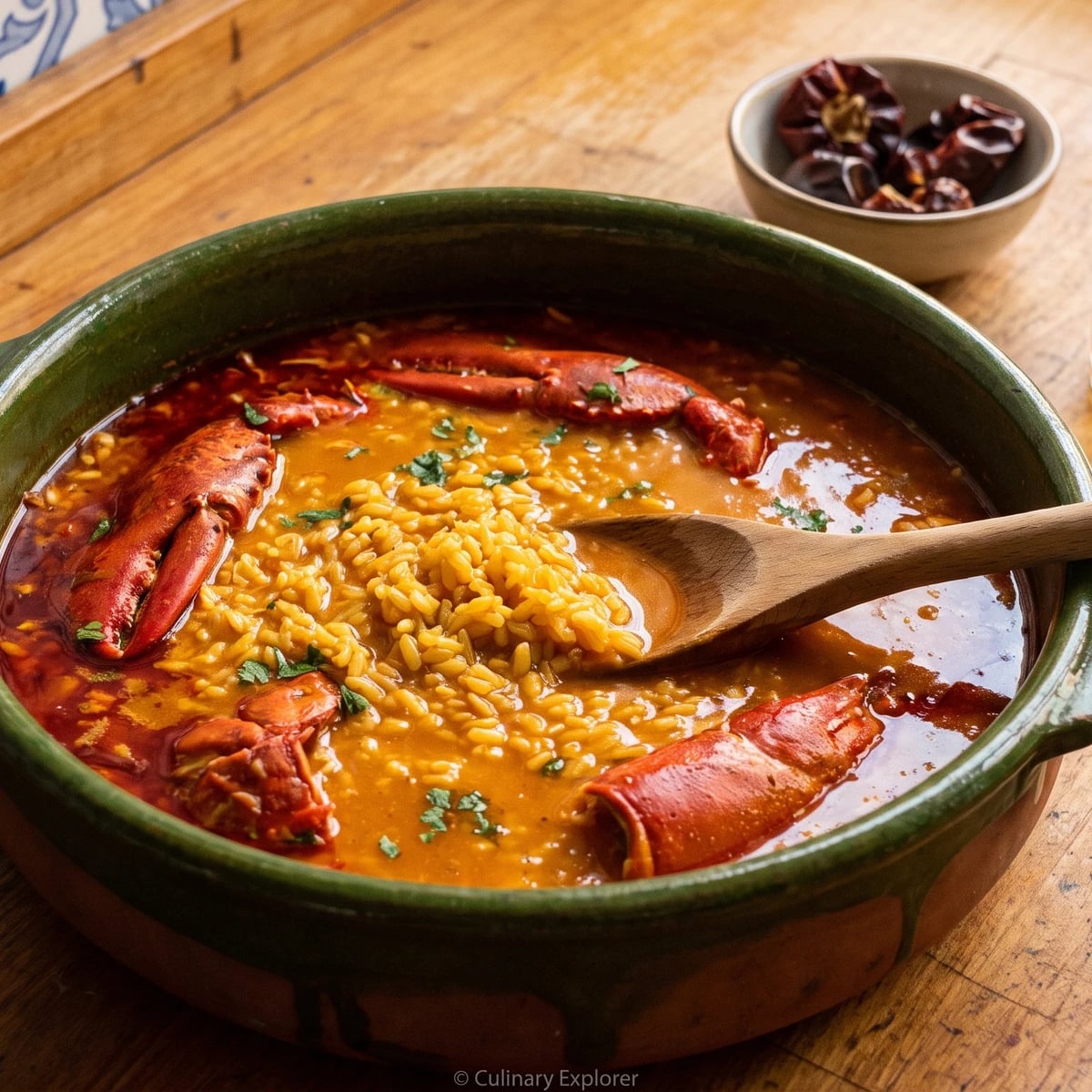
Alicante's lobster rice is cocina de cuchara, spoon food: bomba rice, strong fish fumet, and salmorreta cooked loose and glossy, never dry like a paella.
Arroz caldoso de bogavante is Alicantino, from the rice country around Alicante, where the broth matters as much as the grain. This is not a paella with extra liquid. It is a spoon rice, loose and glossy, with lobster giving sweetness to a fish fumet and salmorreta, the Alicante base of ñora, garlic, tomato, and oil, doing the quiet work underneath.
The method that decides it is the broth-to-rice balance. Bomba rice can drink a lot and still hold its shape, but caldoso must stay soupy at the table, not tighten into a dry arroz while everyone waits for plates. Keep the fumet hot, add enough of it, and stop when the rice is just tender with a little heart left. It finishes in the bowl. Rush the sofrito or starve the pan of broth and you lose the dish.
If you are far from Alicante, no hace falta haber pisado España. Use good fish stock made with prawn shells or white fish bones, and if bogavante is impossible, use a firm raw lobster tail with shell, or large langoustines. The flavour will be a little less deep in the claws and head, but it will still be honest if the fumet is strong and the rice is right. Siempre sale, si lo sigues.
Alicante's rice cooking belongs to the Valencian coast, where fishermen's broths, dried ñoras, tomatoes, and short-grain rice meet in both dry arroces and spoonier caldosos. Salmorreta is one of the marks of the Alicante kitchen: a cooked paste of ñora, garlic, tomato, and olive oil that gives many local rice dishes their red depth before the stock ever goes in. Bogavante makes this a special-occasion arroz, but the logic is older and practical: the shell gives the broth its strength, and the rice carries it to the spoon.
Quantity
1, about 900g to 1.1kg
live or raw frozen, split into head, claws, and tail pieces
Quantity
320g
Quantity
1.6 litres, plus 200ml extra if needed
kept hot
Quantity
80ml
Quantity
2
stems and seeds removed
Quantity
4 cloves
peeled
Quantity
250g
grated, skins discarded
Quantity
1, about 120g
finely chopped
Quantity
1 teaspoon
Quantity
1 pinch
lightly toasted
Quantity
120ml
Quantity
8g, plus more to taste
Quantity
1 tablespoon
chopped
Quantity
1
cut into wedges
| Ingredient | Quantity |
|---|---|
| bogavante, European lobsterlive or raw frozen, split into head, claws, and tail pieces | 1, about 900g to 1.1kg |
| bomba rice | 320g |
| fish fumetkept hot | 1.6 litres, plus 200ml extra if needed |
| extra virgin olive oil | 80ml |
| dried ñora peppersstems and seeds removed | 2 |
| garlicpeeled | 4 cloves |
| ripe tomatoesgrated, skins discarded | 250g |
| small onionfinely chopped | 1, about 120g |
| sweet pimentón de la Vera | 1 teaspoon |
| saffron threadslightly toasted | 1 pinch |
| dry white wine | 120ml |
| fine sea salt | 8g, plus more to taste |
| flat-leaf parsley (optional)chopped | 1 tablespoon |
| lemon (optional)cut into wedges | 1 |
Put the ñoras in warm water for 20 minutes, then scrape the softened flesh from the skins. Warm 40ml of the olive oil in the cazuela over medium-low heat, add the garlic, and cook until pale gold. Add the grated tomato and cook it down slowly, 12 to 15 minutes, until the oil separates and the tomato is thick and dark. Stir in the ñora flesh and pimentón off the heat so it smells sweet and does not burn. Blend this paste with a ladle of fumet until smooth. This is the salmorreta, the Alicante base, and it is where the rice gets its depth.
Pat the lobster pieces dry and season lightly. Heat the remaining 40ml olive oil in a wide cazuela or deep paella pan. Add the lobster head and claws cut side down first, then the tail pieces, and cook just until the shell turns red and the cut sides take a little colour, 3 to 4 minutes. Lift the lobster to a plate. Do not cook it through now, or it will be tough by the time the rice is ready.
Add the chopped onion to the same pan with a pinch of salt and lower the heat. Cook it slowly for 10 minutes, scraping the red lobster oil from the bottom, until the onion is soft and golden. Pour in the white wine and let it reduce until almost dry. Stir in the salmorreta and saffron, and cook for 2 minutes, just long enough for the oil to shine red around the edges.
Add the bomba rice and stir it through the base for 1 minute, coating every grain. Pésalo, no lo adivines: 320g rice to about 1.6 litres fumet gives the loose caldoso finish. Toasting the rice lightly helps it hold its shape, but this dish is not chasing socarrat. It wants broth.
Pour in 1.6 litres hot fumet, add 8g salt, and bring the pan to a lively simmer. Cook uncovered for 10 minutes, stirring now and then so the rice does not catch. Return the lobster pieces and any juices to the pan, nestling them into the broth, and cook 6 to 8 minutes more, until the rice is just tender with a small firm centre and the broth is still generous. If it tightens too much, add hot fumet, 100ml at a time.
Turn off the heat and rest the arroz for 3 minutes, no longer. Taste the broth and correct the salt. Scatter with parsley if you use it, and serve at once in deep bowls with lobster in every serving. A caldoso waits for nobody; leave it ten minutes and the rice will keep drinking until the spoon food becomes something else.
1 serving (about 620g)
Culinary guides, cultural storytelling, and the editorial depth that makes cooking meaningful.
Discover Culinary Explorer
Chef Isabel
Catalonia's casserole rice is cooked in a cassola, not a paella pan: rabbit, chicken, and pork rib over a dark sofregit, finished juicy with a small picada.

Chef Isabel
Arròs amb bledes i cargols is Valencian cuchara food: rice, chard, snails, and white beans in a saffroned broth, carried by a slow sofrito and eaten with a spoon.

Chef Isabel
Arròs brut is Mallorcan spoon rice, dark from sobrasada, liver, mushrooms, and sweet spices. It should be loose and brothy, never dry like a paella.

Chef Isabel
Valencia's brothy chicken and rabbit rice is cocina de cuchara, spoon food: the sofrito gives depth, the short-grain rice gives body, and the broth stays loose enough for a spoon.