Chef Isabel
Abanico Ibérico a la Plancha
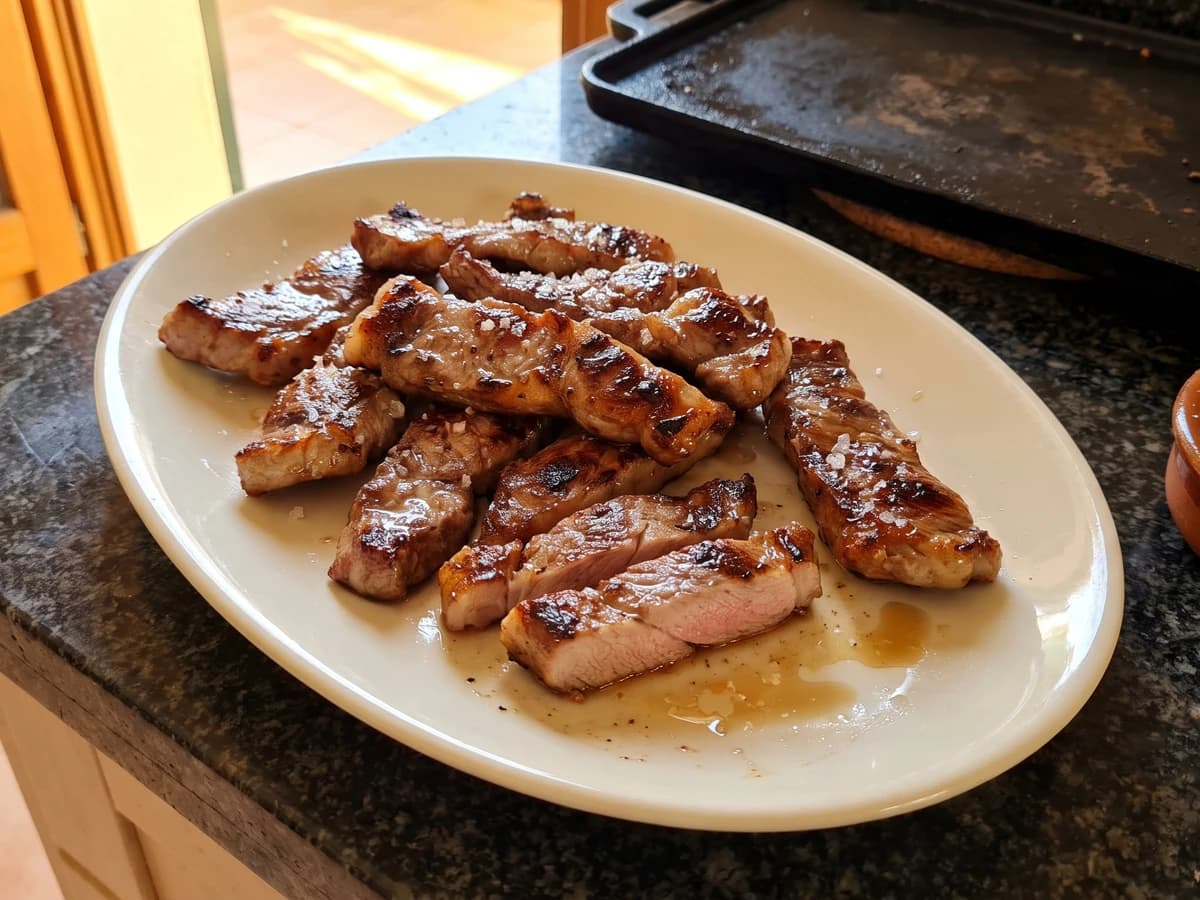
Extremadura's dehesa gives us this fan-shaped, marbled rib cut: salt it at the last moment, lay it on a fierce plancha, and count in seconds so the centre stays juicy.
A cooking platform built around craft, culture, and the stories behind what we eat.

Created by
Valencia's brothy chicken and rabbit rice is cocina de cuchara, spoon food: the sofrito gives depth, the short-grain rice gives body, and the broth stays loose enough for a spoon.
Arròs caldós de pollastre i conill is Valencian, the wetter cousin of the dry arroces cooked in a paella pan. This one belongs in a deep cazuela or heavy pot, with chicken, rabbit, green beans, saffron, and enough broth that the rice comes to the table loose and spoonable. Not every arroz is a paella. This is its own good thing.
The method that decides it is the base. Brown the meats well, then cook the sofrito, the slow tomato and onion base, until it darkens and goes sweet before the rice ever goes in. Rush that part and the broth tastes thin. Give it time, then add four parts hot broth to one part rice and let the grain swell into the liquid without being driven to mush.
If you can't find Valencian bomba rice, use Calasparra. Arborio will do at a pinch, but it releases more starch, so stir less and serve it the moment the grain is just tender. Rabbit is worth using here; if you can't get it, use more bone-in chicken thighs and know the dish will be rounder and less lean. No hace falta haber pisado España. Pésalo, no lo adivines, and it comes out.
Arròs caldós belongs to the Valencian rice country, where the huerta, the Albufera rice fields, and the household pot meet more quietly than in the famous dry paella. Chicken, rabbit, flat green beans, tomato, saffron, and short-grain rice are the same plain larder that shapes many Valencian arroces, but the higher broth ratio makes this cocina de cuchara, spoon food. It is a home dish for eating immediately, because caldoso rice waits for no one; the grain keeps drinking even after the pot leaves the fire.
Quantity
300g
Quantity
500g
cut into serving pieces
Quantity
400g
cut into small bone-in pieces
Quantity
180g
trimmed and cut into 4cm pieces
Quantity
120g
fresh or frozen
Quantity
1 small
finely chopped
Quantity
2, about 220g pulp
grated, skins discarded
Quantity
3 cloves
minced
Quantity
80ml
Quantity
1 teaspoon
Quantity
1 good pinch
Quantity
1.4L, plus a little extra if needed
Quantity
1 small
Quantity
to taste
Quantity
to taste
| Ingredient | Quantity |
|---|---|
| Spanish short-grain rice, preferably bomba or Calasparra | 300g |
| bone-in chicken thighs or drumstickscut into serving pieces | 500g |
| rabbitcut into small bone-in pieces | 400g |
| flat green beanstrimmed and cut into 4cm pieces | 180g |
| garrofó or large lima beansfresh or frozen | 120g |
| onionfinely chopped | 1 small |
| ripe tomatoesgrated, skins discarded | 2, about 220g pulp |
| garlicminced | 3 cloves |
| extra virgin olive oil | 80ml |
| sweet pimentón de la Vera | 1 teaspoon |
| saffron threads | 1 good pinch |
| hot chicken stock or light rabbit stock | 1.4L, plus a little extra if needed |
| rosemary sprig (optional) | 1 small |
| salt | to taste |
| black pepper | to taste |
Salt the chicken and rabbit well. Heat the olive oil in a deep cazuela or heavy pot over medium-high heat and brown the meat in batches until the skin and edges take on a firm golden colour, about 8 to 10 minutes. Do not crowd the pot; pale meat gives a pale broth. Lift the pieces to a plate as they brown.
Lower the heat to medium and add the flat green beans and garrofó to the same oil. Cook for 4 minutes, scraping the browned bits from the bottom. Add the onion with a pinch of salt and cook slowly until soft and golden, about 10 minutes. Add the garlic and stir for 30 seconds, just until it smells sweet.
Add the grated tomato and cook it down patiently until the oil separates and the tomato turns darker, thick, and almost jammy, 12 to 15 minutes. Stir in the pimentón off the heat for a few seconds so it blooms without burning. This slow sofrito is the floor of the dish; rush it and the rice tastes thin no matter how good the stock is.
Return the chicken and rabbit to the pot with any juices. Crush the saffron between your fingers and add it with the hot stock. Bring to a lively simmer, then lower the heat and cook uncovered for 25 minutes, until the meat is nearly tender and the broth is well colored. Taste for salt now; the rice needs a seasoned broth, not a timid one.
Raise the heat so the broth is bubbling evenly. Stir in the rice and the rosemary sprig if using, then cook uncovered for 15 to 18 minutes, stirring only once or twice to keep the grains from catching. Keep the rice loose and brothy. If it tightens before the grain is tender, add a small ladle of hot stock or water.
Remove the rosemary after a few minutes so it perfumes the pot without taking over. When the rice is just tender with a little bite and the broth still moves around it, take the pot off the heat and rest it for 3 minutes only. Serve at once in deep bowls. Arròs caldós waits badly; the rice keeps drinking while everyone talks.
1 serving (about 680g)
Culinary guides, cultural storytelling, and the editorial depth that makes cooking meaningful.
Discover Culinary ExplorerChef Isabel
Extremadura's dehesa gives us this fan-shaped, marbled rib cut: salt it at the last moment, lay it on a fierce plancha, and count in seconds so the centre stays juicy.
Chef Isabel
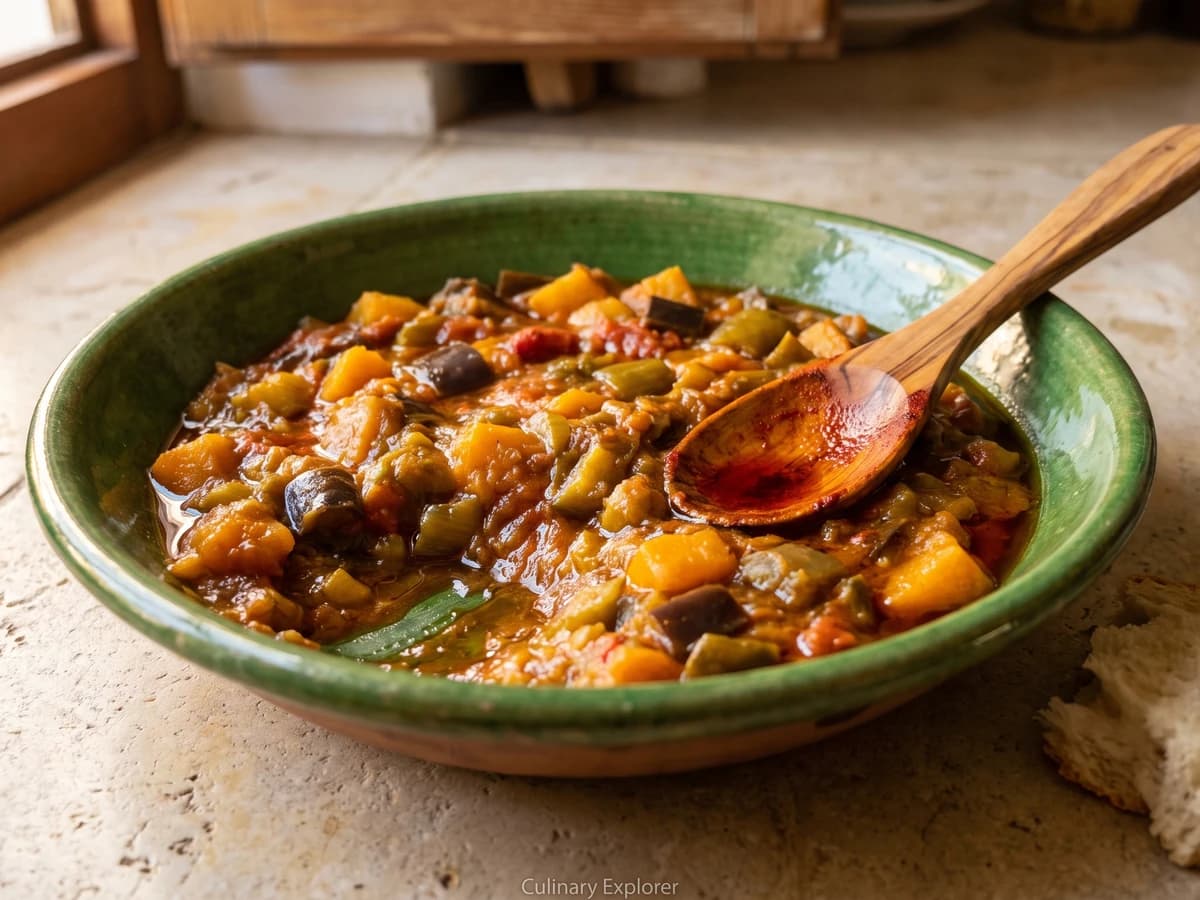
Alboronía is Andalucía's old pumpkin and aubergine stew, deepened with tomato, pimentón, and cumin, then cooked without hurry until the vegetables settle into a glossy, sweet, spoon-soft whole.

Chef Isabel
Aletría Murciana is Murcia's humble noodle guiso: fine fideos, pork ribs, potato, saffron, and a dark sweet sofrito. Get that base right and the pot knows where it's going.
Chef Isabel
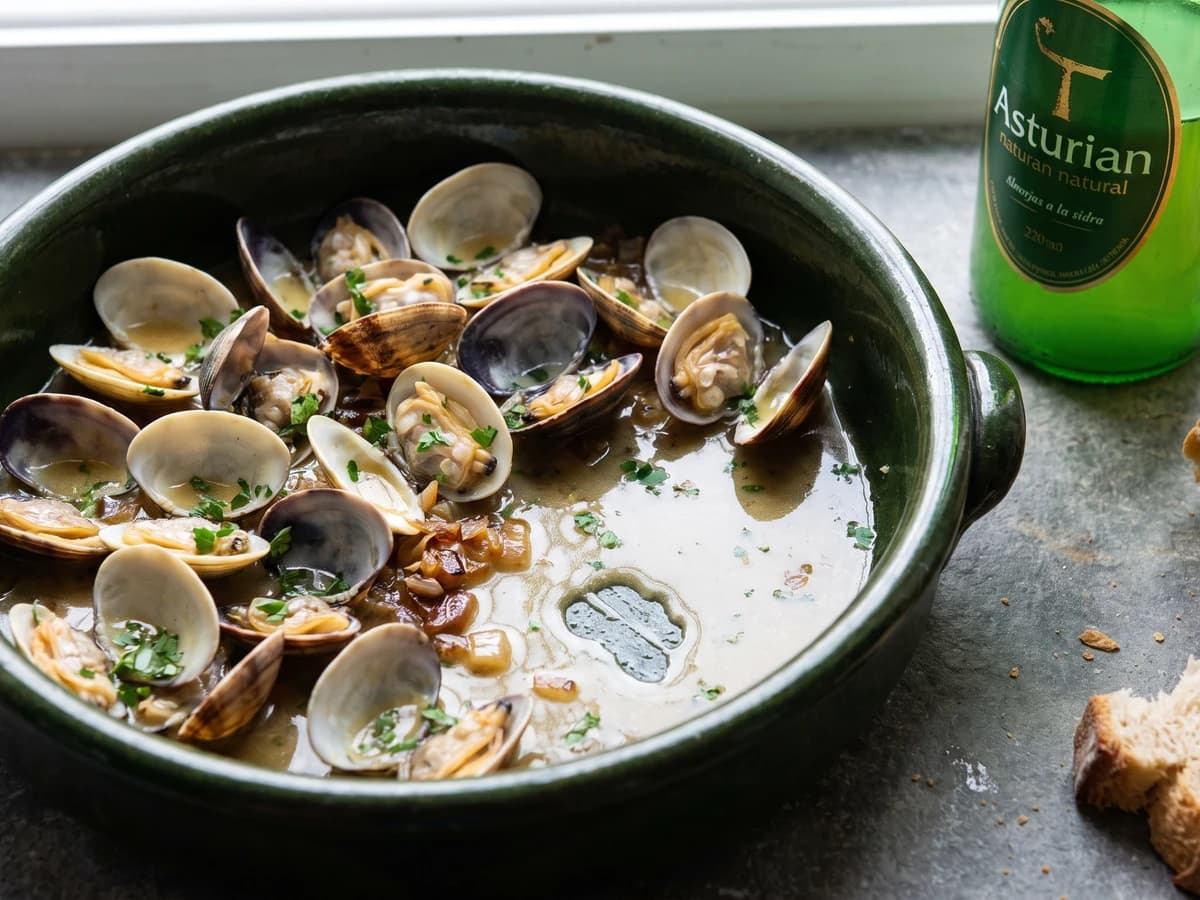
Asturias opens clams in tart natural cider over a slow onion and garlic sofrito, making a bright, briny sauce that asks for bread and rewards one rule: lift each clam as it opens.