Culinary Explorer

A cooking platform built around craft, culture, and the stories behind what we eat.
Discover Culinary Explorer
Arròs Brut Mallorquí

Arròs Brut Mallorquí

Created by

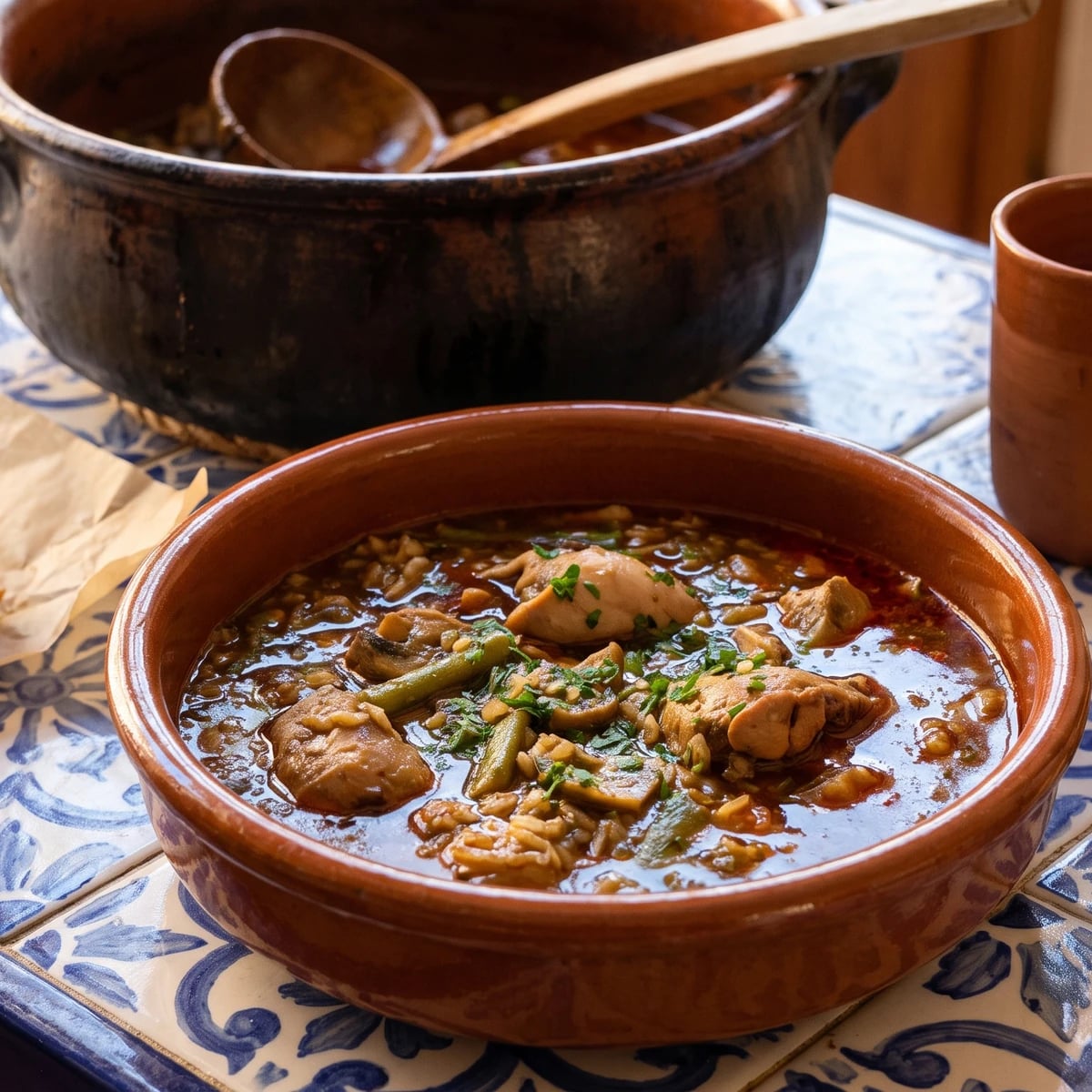
Arròs brut is Mallorcan spoon rice, dark from sobrasada, liver, mushrooms, and sweet spices. It should be loose and brothy, never dry like a paella.

Main Dishes
Spanish
Comfort Food
One Pot
Make Ahead
25 min
Active Time
1 hr 10 min cook1 hr 35 min total
Yield6 servings

Arròs brut is Mallorcan, from the Balearic kitchen, and it earns its name honestly: brut means dirty, because the broth turns deep and speckled from liver, sobrasada, mushrooms, pepper, cinnamon, clove, and saffron. This is not a clean yellow rice and it is not a paella. It is cocina de cuchara, spoon food, loose enough to eat from a deep bowl.

The method that decides it is the broth before the rice goes in. Brown the meats well, cook the sofrito, the slow onion and tomato base, until it turns dark and sweet, then let the spices, sobrasada, liver, and mushrooms stain the pot. Only then add the rice. If the broth tastes thin at that point, the rice will not fix it. Rice is honest that way.

If you are far from Mallorca, no hace falta haber pisado España. Use a good Spanish sobrasada if you can find it; if not, use soft cured chorizo in a small amount and know it will taste smokier and less gently sweet. For mushrooms, esclata-sangs are the Mallorcan prize, but níscalos, cremini, or oyster mushrooms will do the work. Keep it brothy, serve it at once, and don't call it dry rice. Siempre sale, si lo sigues.

In the Margin beside this one I keep the warning short: rice drinks while you talk. Have everyone seated before the rice is tender, because arròs brut waits for nobody.

Arròs brut belongs to Mallorca's inland home cooking, where rice stretched the animals and vegetables a household had at hand into a generous pot for the table. Its dark colour comes from the island larder: sobrasada, chicken liver or game liver, mushrooms, and the warm spice mixture often sold as espècies d'arròs brut, with pepper, cinnamon, clove, nutmeg, and saffron. Older versions change with the season and the house, adding snails, game birds, artichokes, peas, or esclata-sangs when the market and the fields offer them.

The technique, the tradition, and the story behind every dish.

Discover Culinary Explorer

Ingredients

extra virgin olive oil

Quantity

60ml

bone-in chicken thighs or drumsticks

Quantity

450g

chopped into small pieces

rabbit

Quantity

450g

bone-in, chopped into small pieces

pork ribs

Quantity

250g

cut into small pieces

chicken liver

Quantity

80g

trimmed

sobrasada

Quantity

120g

casing removed

onion

Quantity

1 large

finely chopped

green Italian frying pepper

Quantity

1

finely chopped

garlic

Quantity

3 cloves

finely chopped

ripe tomatoes

Quantity

250g

grated

flat green beans

Quantity

150g

cut into 3cm pieces

small artichokes

Quantity

2

trimmed and cut into eighths

frozen artichoke hearts (optional)

Quantity

150g

mushrooms, preferably esclata-sangs or níscalos

Quantity

150g

cleaned and sliced

peas

Quantity

120g

fresh or frozen

hot chicken stock

Quantity

1.8 litres, plus more if needed

short-grain rice, preferably bomba or Calasparra

Quantity

350g

bay leaf

Quantity

1

sweet pimentón

Quantity

1 teaspoon

freshly ground black pepper

Quantity

1/2 teaspoon

ground cinnamon

Quantity

1/4 teaspoon

ground cloves

Quantity

1 small pinch

ground nutmeg

Quantity

1 small pinch

saffron threads

Quantity

12

lightly crushed

flat-leaf parsley

Quantity

10g

finely chopped

salt

Quantity

to taste

Equipment Needed

  • Wide heavy cazuela, Dutch oven, or deep saute pan, 30cm
  • Small ladle
  • Sharp knife for chopping bone-in pieces

Instructions

  1. 1

    Brown the meats

    Heat the olive oil in a wide heavy cazuela or deep pot over medium-high heat. Salt the chicken, rabbit, and pork ribs lightly, then brown them in batches until the edges are well coloured, 8 to 10 minutes per batch. Do not crowd the pot. That brown on the bones is the first broth, and without it the rice tastes flat.

    Ask the butcher to chop the rabbit and chicken through the bone into small rice-pot pieces. Arròs brut is eaten with a spoon, but the bones are part of the flavour.
  2. 2

    Cook the sofrito

    Lower the heat to medium and add the onion and green pepper to the same oil, scraping up the browned bits. Cook 12 to 15 minutes, stirring often, until the onion is dark gold and soft. Add the garlic for 1 minute, then add the grated tomato and cook until it thickens, darkens, and the oil begins to show at the edges, another 10 minutes. This slow sofrito is where the sweetness comes from; rush it and the whole pot tastes thinner.

  3. 3

    Stain the pot

    Push the sofrito to one side and add the chicken liver. Cook it until firm, about 3 minutes, then mash it into the sofrito with a spoon. Add the sobrasada and let it melt into the oil. Stir in the pimentón, black pepper, cinnamon, clove, nutmeg, saffron, and bay leaf for 30 seconds only, just until fragrant. Pimentón burns quickly, and burnt pimentón turns bitter.

  4. 4

    Simmer the broth

    Return the browned meats and their juices to the pot. Add the green beans, artichokes, mushrooms, and hot stock. Bring to a lively simmer, then lower the heat and cook uncovered for 25 minutes, until the rabbit and pork are nearly tender and the broth is dark, glossy, and well seasoned. Taste it now. It should be a little stronger than soup, because the rice will take up salt and flavour.

  5. 5

    Add the rice

    Stir in the rice and peas, keeping the pot at a steady simmer. Cook 15 to 18 minutes, stirring now and then so nothing catches, until the rice is tender but still has a small bite. This is a brothy rice, not a dry arroz: add a ladle of hot stock or water if it tightens before the rice is done. The grains should move freely in the broth.

  6. 6

    Serve at once

    Take out the bay leaf, taste for salt, and stir in the parsley. Rest 3 minutes, no more. Ladle the arròs brut into deep bowls with pieces of chicken, rabbit, pork, mushrooms, and vegetables in each one. Serve immediately, while it is still loose enough for a spoon. If it sits, it becomes good leftovers, but it stops being the dish at its best.

Chef Tips

  • Use bomba or Calasparra rice if you can. Arborio works at a pinch, but it gives off more starch, so stir less and keep extra hot stock ready. It will be creamier, less clean-grained, and that is the compromise.
  • Sobrasada is not the same as chorizo. Sobrasada melts into the broth and gives it a soft pimentón sweetness. If you must substitute, use 60g soft cured Spanish chorizo, minced fine, and accept a smokier, firmer taste.
  • The spice should warm the rice, not make it taste like dessert. Pésalo, no lo adivines: the cinnamon is 1/4 teaspoon, the clove only a small pinch. More is not better here.
  • Arròs brut is best the moment the rice is done. You can make the broth base ahead, but once the rice goes in, call people to the table.
  • For a Mallorcan table, serve it with a simple green salad or pickled olives. A young red from Binissalem or a dry rosat sits well with the sobrasada and spices.

Advance Preparation

  • Brown the meats and make the sofrito base up to 1 day ahead. Add the stock, vegetables, and rice only when you are ready to serve.
  • Trim the artichokes and keep them in water with a squeeze of lemon for up to 2 hours, then drain before adding.
  • Leftovers thicken as the rice drinks the broth. Reheat gently with a little water or stock and treat it as a thick rice stew, not as freshly made arròs brut.

Frequently Asked Questions

Nutrition Information

1 serving (about 560g)

Calories
670 calories
Total Fat
30 g
Saturated Fat
8 g
Trans Fat
0 g
Unsaturated Fat
20 g
Cholesterol
170 mg
Sodium
1050 mg
Total Carbohydrates
66 g
Dietary Fiber
6 g
Sugars
7 g
Protein
38 g

Note: Chef personas and recipes are created with AI assistance. Cook with care: follow safe food-handling practices, check doneness with a thermometer when needed, and adapt for allergies and your kitchen.

Where cooking meets culture.

Culinary guides, cultural storytelling, and the editorial depth that makes cooking meaningful.

Discover Culinary Explorer

More from Brothy, Meloso & Black Rices

Browse the full collection