
Chef Isabel
Arròs a la Cassola
Catalonia's casserole rice is cooked in a cassola, not a paella pan: rabbit, chicken, and pork rib over a dark sofregit, finished juicy with a small picada.
A cooking platform built around craft, culture, and the stories behind what we eat.
Created by
Arroz Caldero del Mar Menor is Murcian fishermen's rice: rockfish broth, dried ñora, garlic, tomato, and short-grain rice served first, with the fish brought after.
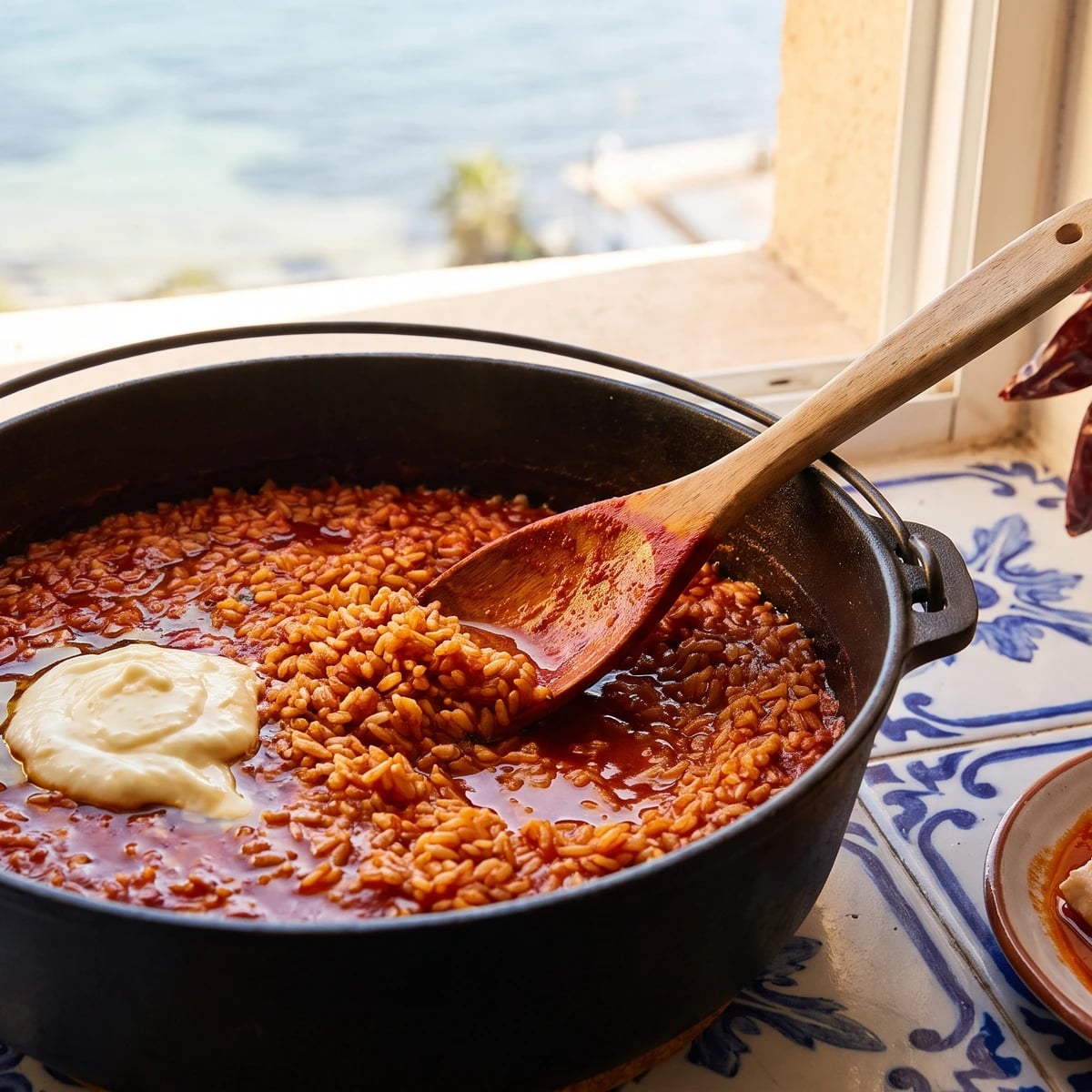
Arroz Caldero del Mar Menor is Murcian, from the fishing towns around that shallow lagoon, and it is not a paella wearing another hat. The rice is cooked in a deep fish broth stained with dried ñora pepper, garlic, and tomato, then served first with allioli. The fish comes after, dressed with a little of the same broth. Two turns, one pot. Tal como se hace allí.
The method that decides it is the broth. You fry the ñoras and garlic gently, never black, then pound them into a picada, the paste that carries their flavour through the stock. Rush that or scorch the ñora and the whole pot turns bitter. Let the rockfish give itself to the water, strain it well, and cook the rice in that broth until the grains are tender and separate, not creamy and not dry as a Valencian paella.
If you are far from the Mar Menor, no hace falta haber pisado España. Use Calasparra or bomba rice if you can; a good short-grain rice works, but it will drink differently, so watch the pot and keep hot broth nearby. For the fish, choose firm white fish and bones from a fishmonger: sea bream, red mullet, gurnard, monkfish bones, whatever is clean and fresh. Pésalo, no lo adivines. Siempre sale, si lo sigues.
Arroz caldero belongs to the Murcian coast around the Mar Menor, where fishermen cooked rice in an iron cauldron, the caldero, using fish that was good for broth but not always fine enough for market. The dried ñora pepper, long tied to Murcia's larder, gives the dish its deep red colour and its warm, sweet bitterness. It is traditionally served a banda, apart: the rice first with ajoaceite or allioli, and the fish after, so nothing is wasted from the pot.
Quantity
400g
Quantity
900g
cleaned
Quantity
600g
such as grey mullet, sea bream, gurnard, hake, or monkfish
Quantity
2.2 litres
Quantity
5
Quantity
8
peeled
Quantity
300g
grated
Quantity
90ml
Quantity
1
Quantity
1 teaspoon
Quantity
small pinch
Quantity
12g, plus more to taste
Quantity
1
cut into wedges
Quantity
to serve
| Ingredient | Quantity |
|---|---|
| Calasparra or bomba rice | 400g |
| mixed rockfish, fish heads, and bones for stockcleaned | 900g |
| firm white fish steaks or filletssuch as grey mullet, sea bream, gurnard, hake, or monkfish | 600g |
| water | 2.2 litres |
| dried ñora peppers | 5 |
| garlic clovespeeled | 8 |
| ripe tomatoesgrated | 300g |
| extra virgin olive oil | 90ml |
| bay leaf | 1 |
| sweet pimentón | 1 teaspoon |
| saffron threads (optional) | small pinch |
| fine sea salt | 12g, plus more to taste |
| lemon (optional)cut into wedges | 1 |
| allioli | to serve |
Open the ñoras, shake out the seeds, and soak the peppers in warm water for 20 minutes until pliable. Scrape the softened flesh from the skins with the back of a knife and keep it aside. If the ñoras are very dry, give them the full soak; leathery pepper skin has no place in the rice.
Warm the olive oil in a wide caldero, cazuela, or heavy pot over medium-low heat. Add the garlic cloves and cook until pale gold, then lift them out. Add the ñora flesh to the same oil for 30 seconds only, stirring all the time, then lift it out too. Do not let it darken. Burnt ñora is bitter, and no amount of fish will save it.
Add the grated tomato to the red oil with the bay leaf and cook over medium heat for 10 to 12 minutes, until it has darkened, thickened, and the oil begins to show at the edges. This is the sofrito, the slow tomato base. Cook it down properly or the broth tastes raw and thin.
Pound the fried garlic, ñora flesh, pimentón, saffron if using, and 12g salt in a mortar until you have a rough red paste. Stir in a spoonful of the cooked tomato to loosen it. A mortar does this best because it bruises the garlic instead of chopping it into sharp little bits, but a small processor will do if that is what you have.
Add the rockfish, heads, and bones to the pot with the tomato. Pour in 2.2 litres water and bring it just to a simmer. Skim the surface, then stir in the picada. Cook gently for 30 minutes, pressing the fish now and then so it gives up its flavour. Strain through a fine sieve, pressing firmly, and measure the broth. You need 1.4 litres for the rice and about 300ml for the fish; if you have less, top up with hot water.
Return 300ml of the strained broth to a small pan and keep the rest hot. Season the firm white fish lightly and poach it in the small pan at a gentle tremble until just cooked, 5 to 8 minutes depending on thickness. Lift it onto a warm plate and spoon over a little broth. Cover it loosely while the rice cooks; this is the second turn of the meal.
Put 1.4 litres of the hot strained broth into the cleaned caldero or wide pot and bring it to a lively simmer. Taste it now; it should be a little saltier than soup because the rice will take it in. Add the rice, stir once to spread it evenly, and cook uncovered for 16 to 18 minutes, lowering the heat after the first 8 minutes so it bubbles steadily. Do not fuss with it. The grains should be tender with a little bite, surrounded by enough red broth to keep the rice juicy, not soupy.
Take the pot off the heat, cover it with a clean cloth, and let it rest for 5 minutes. Serve the rice first, with a spoonful of allioli at the side so each person can stir in as much as they like. Bring the fish after, with its broth and lemon wedges if you want them. The order matters: rice first, fish second. That is caldero, not just fish rice.
1 serving (about 500g)
Culinary guides, cultural storytelling, and the editorial depth that makes cooking meaningful.
Discover Culinary Explorer
Chef Isabel
Catalonia's casserole rice is cooked in a cassola, not a paella pan: rabbit, chicken, and pork rib over a dark sofregit, finished juicy with a small picada.

Chef Isabel
Arròs amb bledes i cargols is Valencian cuchara food: rice, chard, snails, and white beans in a saffroned broth, carried by a slow sofrito and eaten with a spoon.

Chef Isabel
Arròs brut is Mallorcan spoon rice, dark from sobrasada, liver, mushrooms, and sweet spices. It should be loose and brothy, never dry like a paella.

Chef Isabel
Valencia's brothy chicken and rabbit rice is cocina de cuchara, spoon food: the sofrito gives depth, the short-grain rice gives body, and the broth stays loose enough for a spoon.