Chef Joost
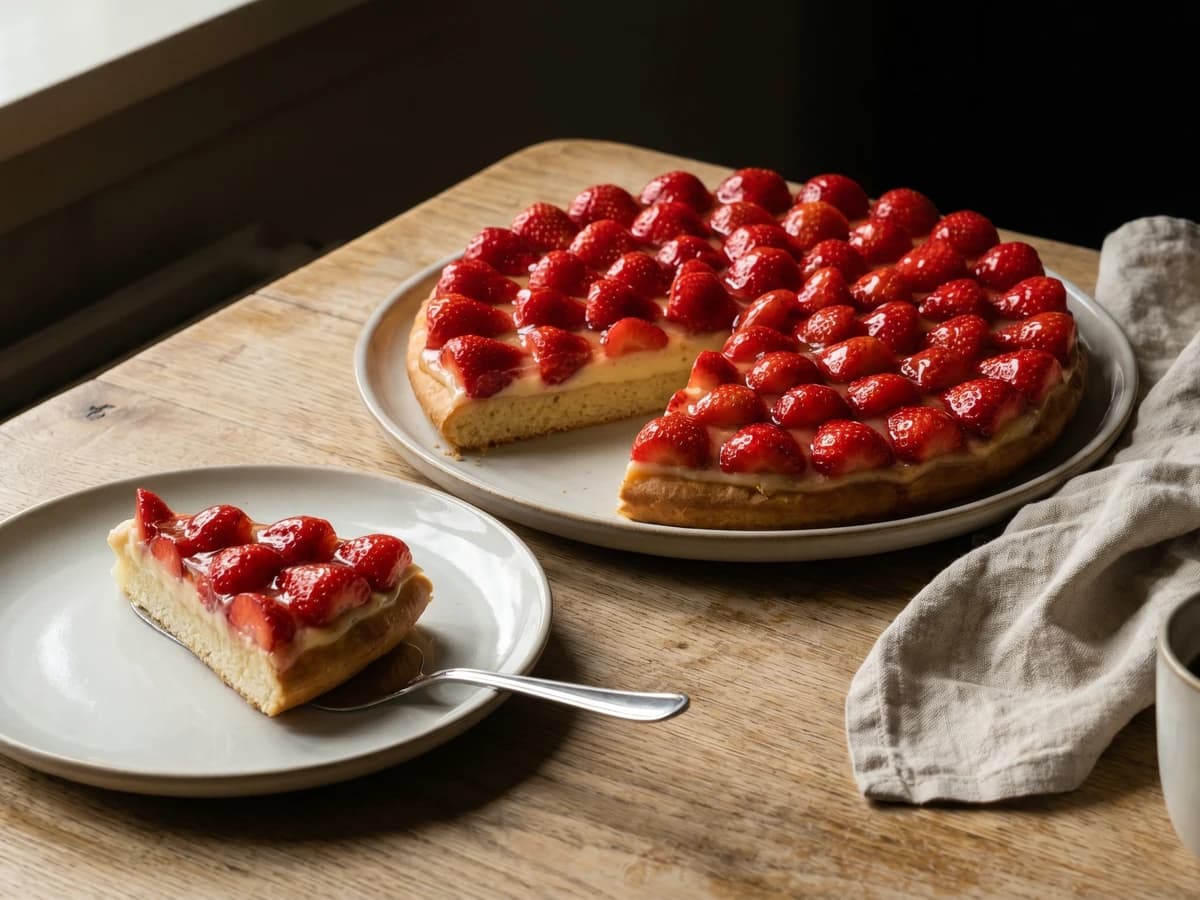
Aardbeienvlaai (Limburg Strawberry Vlaai)
The summer vlaai that politely breaks Limburg's baked-fruit rule: soft gistdeeg, cool pastry cream, and strawberries left fresh because June knows better than the oven.
A cooking platform built around craft, culture, and the stories behind what we eat.
Created by
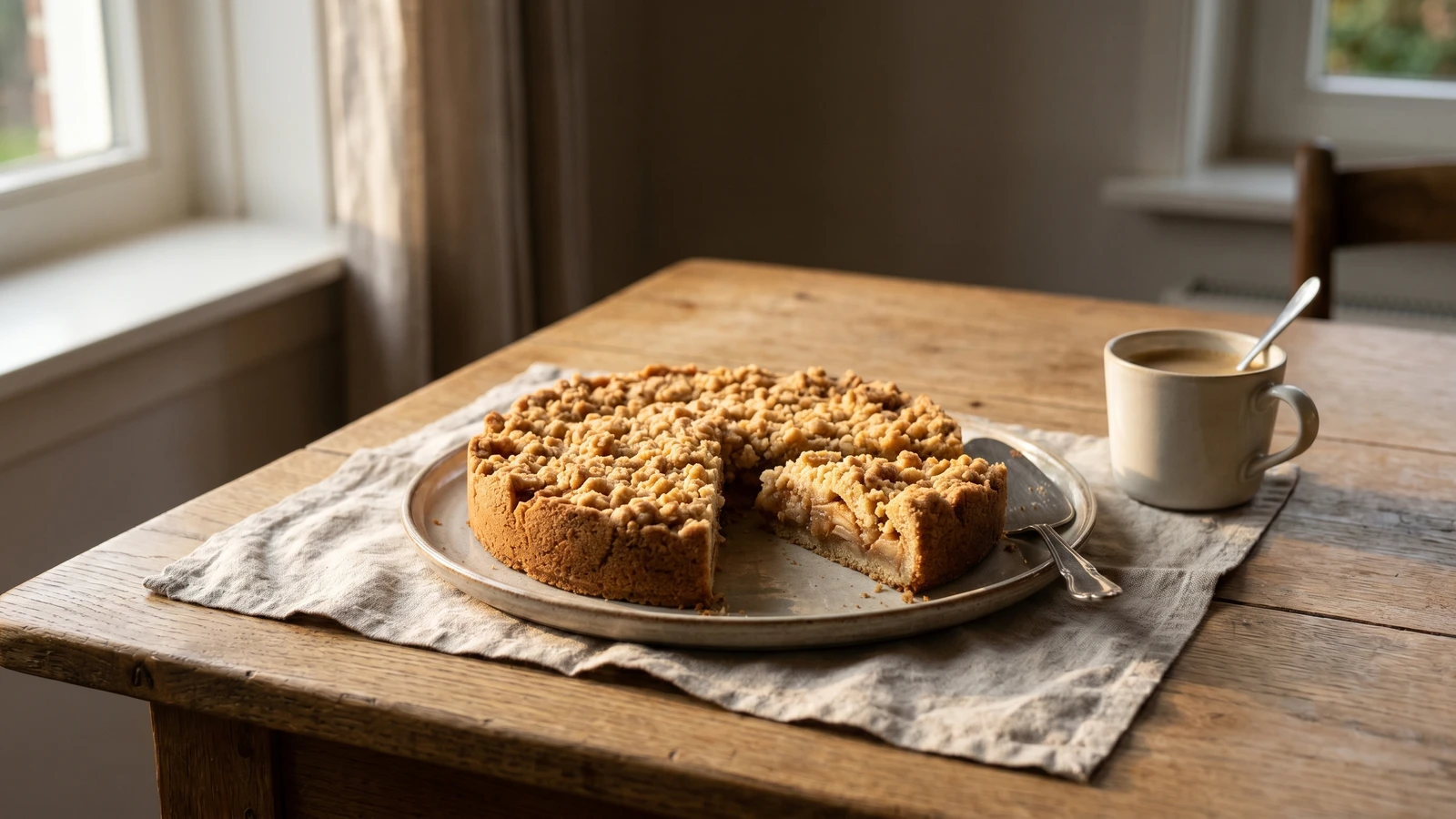
The name gives away the whole pleasure: apples below, kruimel, crumbs, above, and no lattice pretending to be architecture when buttered rubble will do better.
In my grandmother's second notebook, apple tart appears more often than birthdays. Not because it was grand, but because it was useful: for Sunday coffee, for a neighbour at the door, for the child who had learned that cinnamon meant something good was coming. Appelkruimeltaart was the relaxed sister of appeltaart, less formal than the tall lattice version, more forgiving at the edges, and very often better for it.
The name already tells you the method. Appel is apple, taart is tart, and kruimel means crumb. That crumb is not decoration; it is the whole argument. A lattice asks you to be tidy. Kruimel asks you to rub flour, sugar, and butter between your fingers until the pieces look like coarse sand and small pebbles, then scatter them over tart apples that have been sharpened with lemon and warmed with cinnamon.
But let me tell you a secret. Dutch baking is never as plain as people say. The cinnamon in this pie is part of the old spice cupboard of the Republic, the same cupboard that gives speculaas its swagger and even finds its way into stews. Here it meets the autumn apple, preferably a firm tart one, because sweet apples collapse into apology. Hou het altijd simpel: cold butter for crumbs, tart apples for backbone, and enough patience to let the pie cool before slicing. Warm filling runs. Rested filling remembers its manners.
Apple tarts appear in Dutch cookery from the early modern period, including sixteenth- and seventeenth-century recipe traditions in which apples were baked with sugar, butter, and imported spices. Appelkruimeltaart is a later home and bakery variation on appeltaart, replacing the familiar lattice with a buttery kruimel, crumb topping, a style shared across the Germanic streusel tradition but fully at home beside Dutch coffee. Its cinnamon is not an afterthought: by the seventeenth century, spices such as cinnamon, nutmeg, mace, and clove had become everyday markers of Dutch festive baking through the trade networks of the Republic.
Quantity
250g
Quantity
125g
cold and cubed
Quantity
80g
Quantity
1
Quantity
1/4 teaspoon
Quantity
1 tablespoon
Quantity
900g
peeled, cored, and sliced
Quantity
75g
Quantity
60g
Quantity
2 teaspoons
Quantity
1 tablespoon
Quantity
1 tablespoon
Quantity
50g
crumbled
Quantity
120g
Quantity
90g
cold and cubed
Quantity
80g
Quantity
1/2 teaspoon
Quantity
pinch
Quantity
as needed
| Ingredient | Quantity |
|---|---|
| all-purpose flour, for the crust | 250g |
| unsalted butter, for the crustcold and cubed | 125g |
| caster sugar | 80g |
| egg | 1 |
| fine salt | 1/4 teaspoon |
| cold water (optional) | 1 tablespoon |
| firm tart applespeeled, cored, and sliced | 900g |
| raisins | 75g |
| granulated sugar | 60g |
| ground cinnamon | 2 teaspoons |
| lemon juice | 1 tablespoon |
| cornstarch | 1 tablespoon |
| almond paste (optional)crumbled | 50g |
| all-purpose flour, for the kruimel topping | 120g |
| unsalted butter, for the kruimel toppingcold and cubed | 90g |
| light brown sugar | 80g |
| ground cinnamon, for the topping | 1/2 teaspoon |
| fine salt, for the topping | pinch |
| butter for the tin | as needed |
Butter a 24cm springform tin. Rub the flour, cold butter, caster sugar, and salt together until the mixture looks like coarse meal, then mix in the egg. If the dough refuses to gather, add the cold water one teaspoon at a time. Press it into a flat disc, wrap it, and chill for 30 minutes. Cold butter is the small discipline here; it gives the crust its clean bite instead of a soft slump.
Peel, core, and slice the apples about half a centimetre thick. Toss them with the raisins, granulated sugar, cinnamon, lemon juice, and cornstarch. The lemon keeps the fruit lively, the cornstarch catches the juices, and the cinnamon does what cinnamon has done in Dutch kitchens for centuries: makes thrift smell like celebration.
Heat the oven to 180C. Roll the chilled dough and line the base and sides of the tin, pressing it about 4cm up the wall. Patch any tears with your fingers; this is a home tart, not a court document. Scatter the crumbled almond paste over the base if using it. It gives a quiet, old-fashioned richness and helps protect the pastry from the apple juices.
Pile the apple mixture into the lined tin and press it down gently so there are no large hollows. A high mound is correct; the apples settle as they bake. Pour in any cinnamon sugar left in the bowl, because leaving that behind would be poor scholarship and worse housekeeping.
For the topping, rub the flour, cold butter, brown sugar, cinnamon, and salt between your fingers until you have uneven crumbs, some sandy and some pea-sized. Do not make it too fine. Kruimel should look like rubble, because those larger pieces bake into the buttery ridges everyone quietly steals first.
Scatter the kruimel evenly over the apples and bake for 50 to 55 minutes, until the crumbs are deep golden, the crust is browned at the edge, and thick apple juices are bubbling at the sides. If the top browns too quickly, lay a loose sheet of foil over it for the last 15 minutes.
Let the tart cool in the tin for at least one hour before removing the ring. This is not politeness, it is structure. The apples need time to settle and the juices need time to thicken, or your first slice will run across the plate like it has an appointment elsewhere.
1 serving (about 235g)
Culinary guides, cultural storytelling, and the editorial depth that makes cooking meaningful.
Discover Culinary ExplorerChef Joost
The summer vlaai that politely breaks Limburg's baked-fruit rule: soft gistdeeg, cool pastry cream, and strawberries left fresh because June knows better than the oven.

Chef Joost
A Limburg vlaai is not a pie trying to be grand. It is a thin yeast-dough round, fruit-bright and generous, made for birthdays, coffee, and second slices.

Chef Joost
The December bakery counter made small: cold leafed pastry wrapped around lemon-scented amandelspijs, brushed gold, and scattered with almonds so one person gets the whole holiday in both hands.
Chef Joost
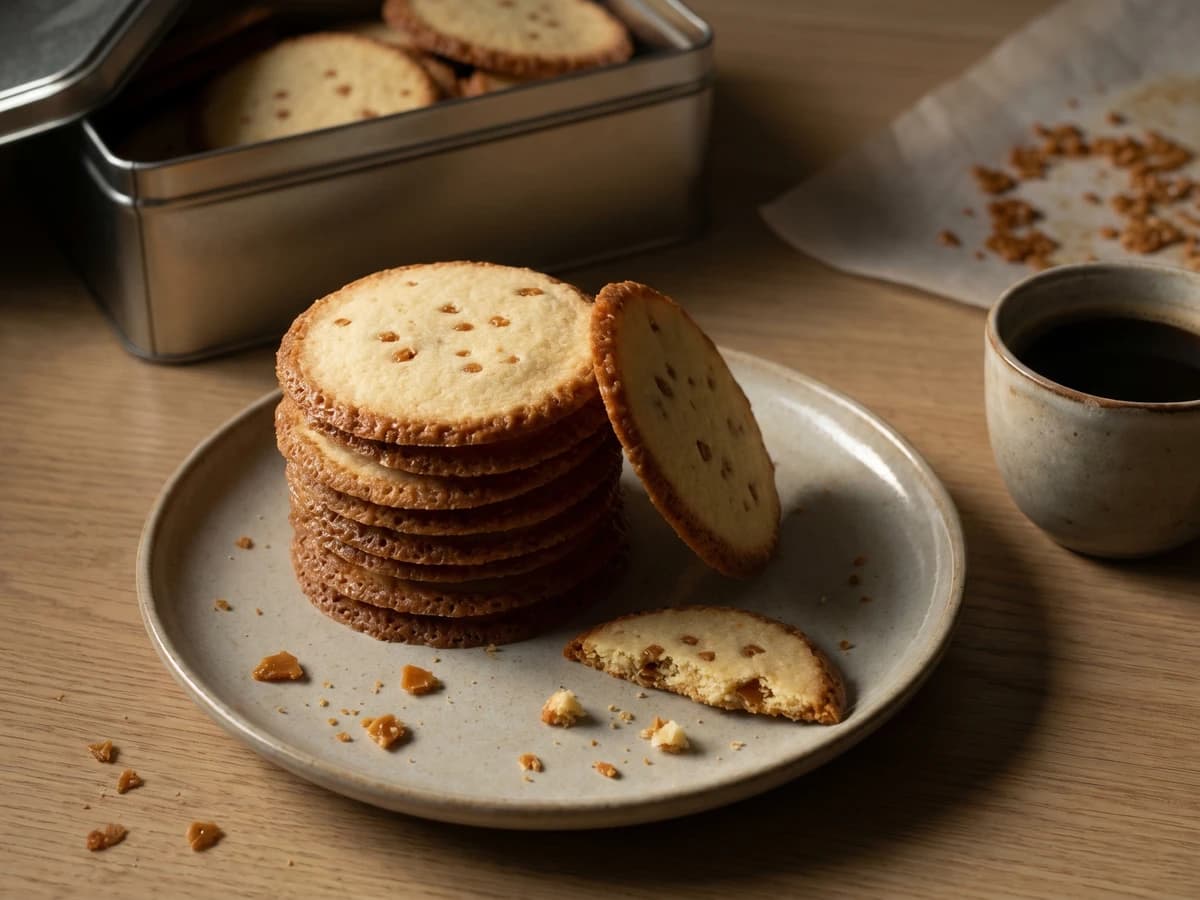
A thin Amsterdam cookie carrying a cog ship in its name: caramelized butter dough, almond nougatine, and a 1934 contest that turned municipal pride into something for coffee.