Chef Juliette
Bookmaker Sandwiches
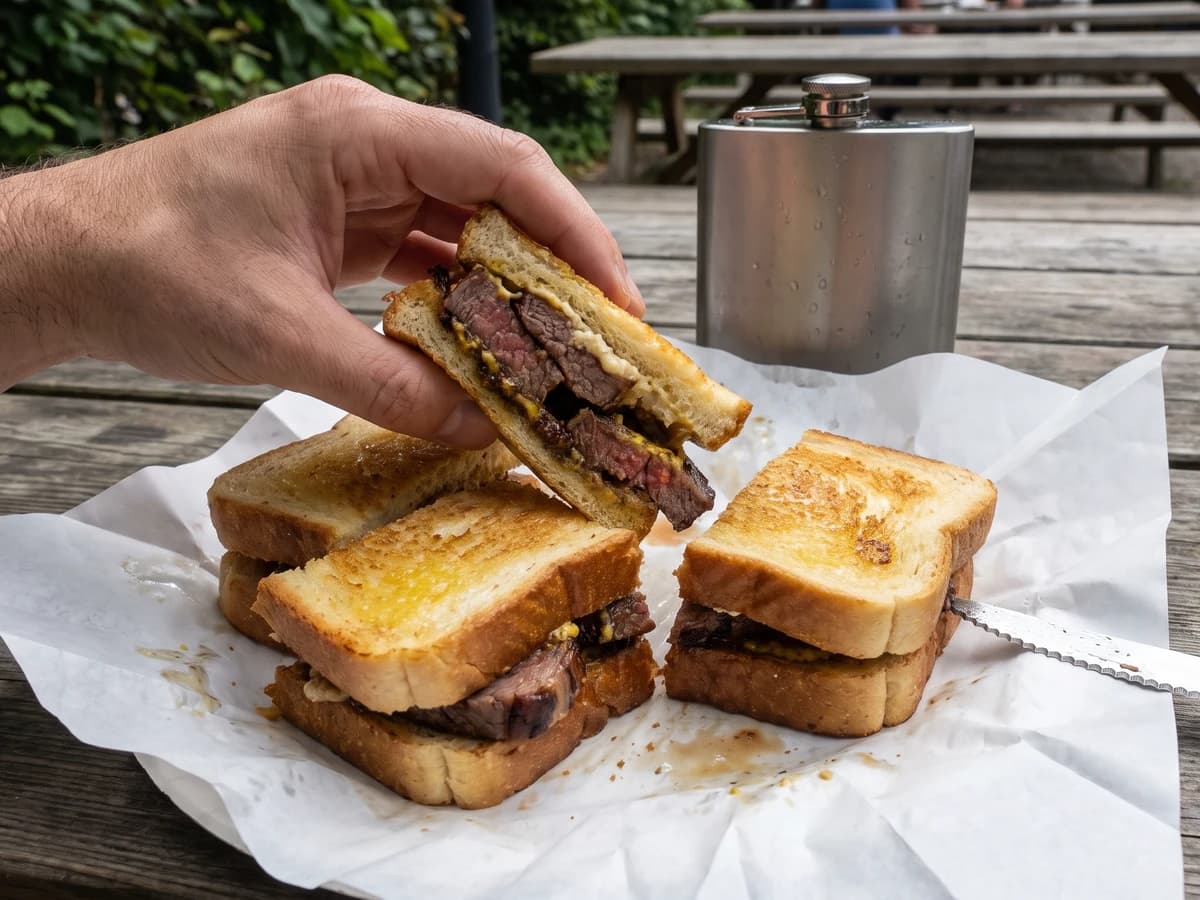
Steak grilled dark at the edges, cooled, sharpened with horseradish and mustard, then pressed between buttered loaf heels until the crumb catches every juice: a race-day sandwich substantial enough to be supper.
A cooking platform built around craft, culture, and the stories behind what we eat.
Created by Chef Juliette
Based on No. 2336, Sandwiches, from Le Guide Culinaire (1907) by Auguste Escoffier
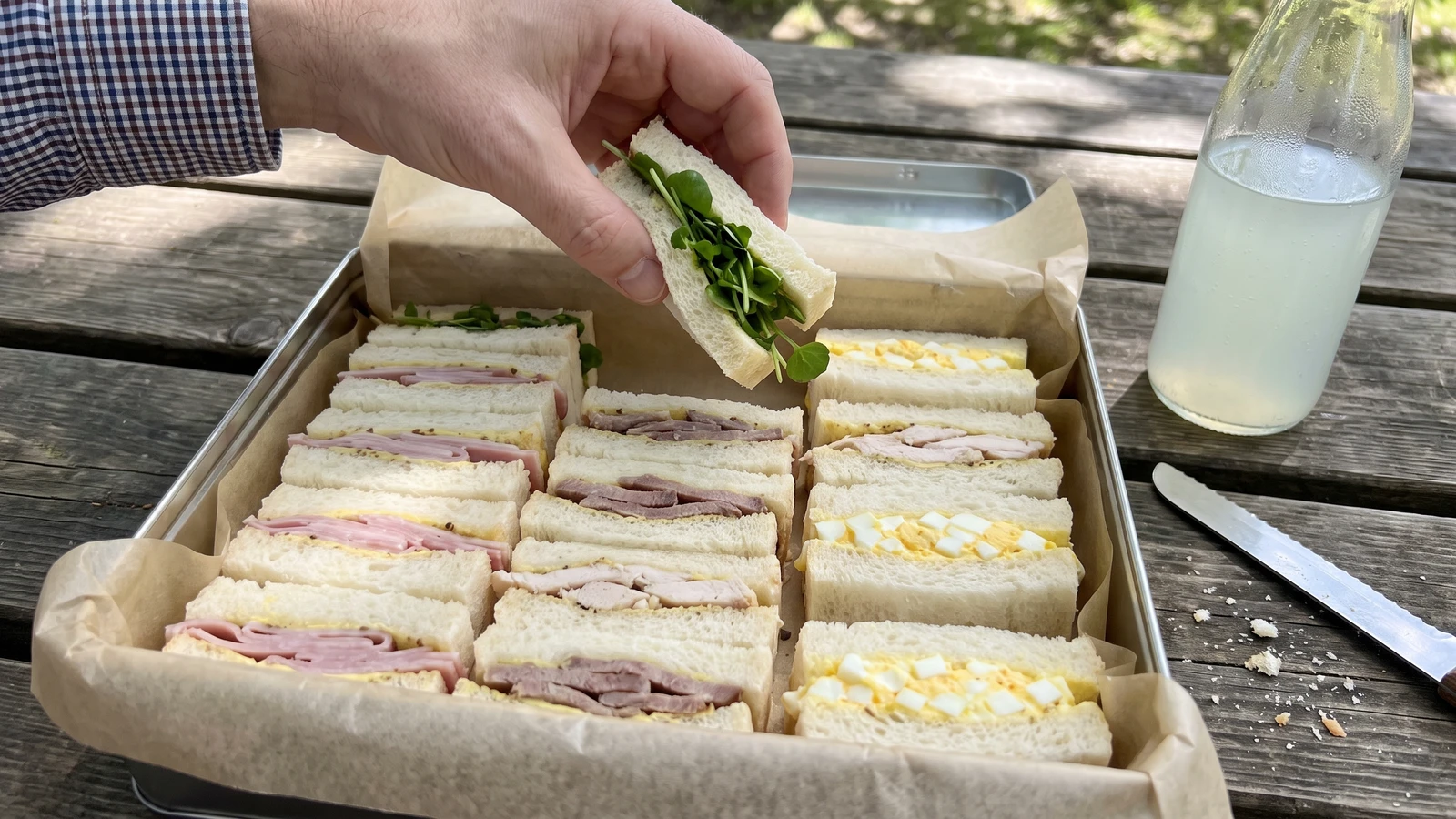
Five classical fillings between bread buttered to every edge, cut into tidy rectangles and held under a light weight: a French buffet lesson in softness, proportion, and restraint.
Sandwichs classiques teach the discipline of moisture. Butter must cover every slice right to the edges before mustard or filling touches it; that thin seal keeps the crumb tender instead of damp, while a slight weight closes the layers without crushing them.
The source assumed a garde-manger, the cold station, stocked with cooked meats and staffed to trim endless identical rectangles for a ball buffet. Here, twenty pieces serve four, made with a bread knife, parchment, and a light cutting board, using small amounts of ham, tongue, chicken, egg, and watercress. The brigade's volume is scaffolding and can go; the edge-to-edge butter, mustard, neat proportions, and gentle pressing are the dish and must stay. One cook, one stove, one evening.
The one step that matters most is the butter seal. Let the butter soften until it spreads without dragging, then cover every corner. Miss an edge and moisture enters; coat it properly and the bread remains soft, even after the sandwiches travel.
These sandwiches belong to the French ball buffet and salon supper rather than to a particular regional larder, where precise dimensions and bread that stayed tender mattered as much as the filling. The name and two-slice form traveled from Britain, but French classical kitchens absorbed them by imposing a butter seal, mustard, tidy rectangular cuts, and a light weight for holding. The tiny buffet version was more than a smaller sandwich: its diced filling was mixed with an equal weight of mustard butter so every piece remained coherent.
Quantity
20 slices (about 1 lb / 450 g)
Quantity
10 tablespoons (150 ml / 142 g)
softened
Quantity
2 tablespoons (30 ml / 30 g)
Quantity
2 oz / 57 g
thinly sliced
Quantity
2 oz / 57 g
thinly sliced
Quantity
2 oz / 57 g
thinly sliced
Quantity
2
Quantity
1 packed cup (240 ml / 30 g)
tough stems removed, washed and thoroughly dried
| Ingredient | Quantity |
|---|---|
| soft, fine-crumb white sandwich bread | 20 slices (about 1 lb / 450 g) |
| buttersoftened | 10 tablespoons (150 ml / 142 g) |
| Dijon mustard | 2 tablespoons (30 ml / 30 g) |
| cooked hamthinly sliced | 2 oz / 57 g |
| cooked tonguethinly sliced | 2 oz / 57 g |
| cooked chickenthinly sliced | 2 oz / 57 g |
| large eggs | 2 |
| watercresstough stems removed, washed and thoroughly dried | 1 packed cup (240 ml / 30 g) |
Put the eggs in a small saucepan, cover them with cold water, and bring to a boil. Lower the heat and simmer for 9 minutes, then cool them promptly in cold water. Peel only when cold and slice thinly. A warm egg sheds moisture and softens the bread, so give it time to cool completely.
Chill the cooked meats so they slice and lie neatly, then blot away any surface moisture. Dry the watercress with particular care. Moisture belongs inside the filling, not loose against the crumb; wet leaves or meat juices will defeat even good butter.
Arrange the bread in ten matched pairs. Spread one face of every slice with softened butter, covering the corners and edges completely, then spread a thin film of Dijon over one slice in each pair. If the butter drags and tears the crumb, stop. Ça se rattrape: scrape it back into the bowl, let it soften for 5 minutes, and patch the torn place before continuing. Cold butter and soft bread are poor company.
Lay ham over two mustard-coated bases, tongue over two, and chicken over two, keeping each filling flat and extending it to the corners. Overlap one sliced egg across each of two more bases. Divide the watercress between the final two, arranging it in an even, compact layer. Close every sandwich with its matching slice, buttered side against the filling.
Set the sandwiches close together on a board, cover them with parchment, and place a second light cutting board or baking sheet on top for 15 to 20 minutes. The pressure should merely join bread and filling. If the bread flattens visibly, the weight is too heavy; remove it at once and let the sandwiches rest uncovered for a minute before replacing only the light board.
With a long, sharp bread knife, trim each pressed sandwich into a 3-inch square (7.5 cm), then halve it into two rectangles measuring about 3 by 1½ inches (7.5 by 4 cm). Saw gently instead of bearing down, and wipe the blade between filling types so the cut faces stay clean. Save the trimmings for crumbs or croûtons.
Arrange the twenty rectangles snugly in a shallow covered container with parchment between layers. Keep them cool until serving, particularly the chicken and egg sandwiches. Bring them to the picnic still tender, with their edges closed and the mustard just visible beneath the filling. Cooking well is not cooking fancy. À table!
1 serving (about 230g)
Culinary guides, cultural storytelling, and the editorial depth that makes cooking meaningful.
Discover Culinary ExplorerChef Juliette
Steak grilled dark at the edges, cooled, sharpened with horseradish and mustard, then pressed between buttered loaf heels until the crumb catches every juice: a race-day sandwich substantial enough to be supper.

Chef Thomas
Back bacon crisped in a hot pan, a ripe tomato that actually tastes of something, crisp lettuce and real butter on proper toast. A sandwich that earns its place in the notebook.

Chef Isabel
Almussafes is Valencian bar-counter food: a crusty roll filled with sobrasada, cheese, and onion, then pressed on the plancha until the bread crisps and the filling runs together.

Chef Takumi
A sausage on a stick, sweet batter, clean hot oil, and no cornmeal. Amerikan doggu is festival food made plain, with the batter thick enough to cling.