
Chef Elsa
Apfelkren
Freshly grated horseradish folded with tart apple and lemon, the cold, sharp sauce that belongs beside every plate of Tafelspitz in Vienna and has done for as long as anyone can remember.
A cooking platform built around craft, culture, and the stories behind what we eat.
Created by
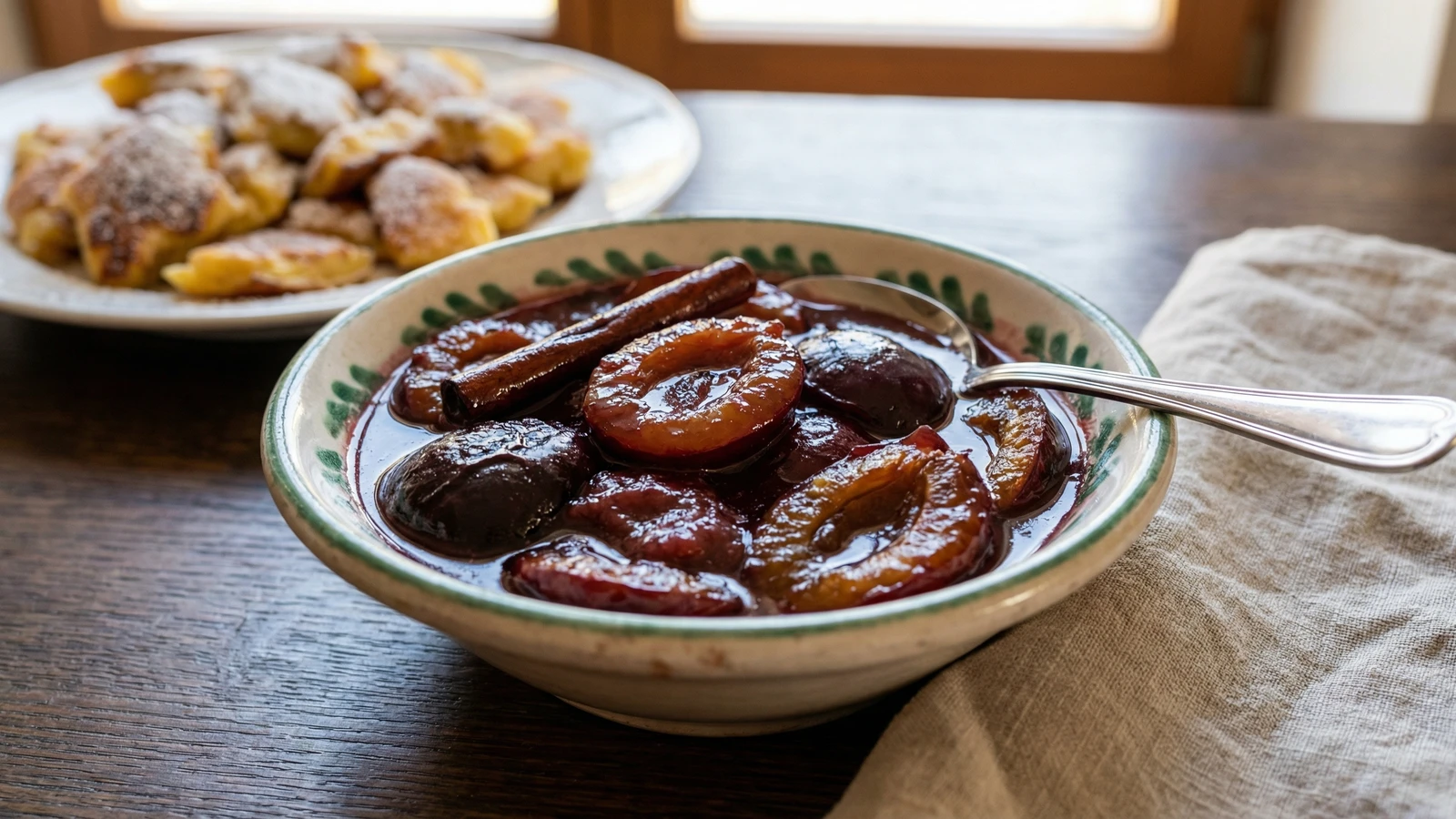
Zwetschken stewed gently in red wine with cinnamon and cloves until some collapse into sauce and others hold their shape, the compote that belongs beside every Kaiserschmarrn you'll ever make.
In my grandmother Eva's kitchen in Deal, the Zwetschkenröster came out in late summer like clockwork. Gretel would arrive with a bag of Italian plums from the farm shop down the road and announce that it was Röster season, which really meant it was Kaiserschmarrn season, because you don't make one without the other. The two women would stand at the stove, Eva halving plums while Gretel adjusted the sugar and argued with herself about whether this year's fruit needed more lemon or less. I sat on my stool and watched the plums turn from gold to garnet in the pot.
Zwetschkenröster is one of the simplest things in Austrian cooking. Plums, sugar, spice, a splash of wine, fifteen minutes of gentle heat. That's it. But it holds a position in the cuisine that's completely out of proportion to its effort, because it's the compote that sits beside half the Mehlspeisen tradition. Kaiserschmarrn without Zwetschkenröster is incomplete. Topfenknödel without it feel lonely on the plate. Even Palatschinken filled with Topfen want a spoonful of this dark, warm, spiced fruit alongside.
What makes a good Röster is restraint. You cook the plums gently enough that some pieces hold their shape while others dissolve into the sauce. You keep the sweetness in check because this isn't jam. It's a counterpoint. The sharpness of the fruit and the warmth of the cinnamon are there to balance all that butter and sugar and powdered sweetness in whatever it's served beside. Get this right, and everything on the plate makes sense together.
Röster, from the verb rösten meaning to roast or stew, appears across Austrian cookbooks from the 18th century onward as the standard fruit accompaniment for flour-based desserts. Zwetschken (a variety of prune plum native to Central Europe) became the most common choice because their late summer harvest coincided with the beginning of the cooler months when warm Mehlspeisen returned to Austrian tables. Gretel Beer included Zwetschkenröster in her writing as an essential component of the Kaiserschmarrn plate, not as an optional side, reflecting the Austrian understanding that the compote and the dish it accompanies are parts of a single whole.
Quantity
750g
halved and pitted
Quantity
80g
Quantity
1 teaspoon
Quantity
1
Quantity
3
Quantity
1 strip (about 5cm)
Quantity
1 tablespoon
Quantity
100ml
Quantity
50ml
Quantity
1 teaspoon
mixed with 1 tablespoon cold water
| Ingredient | Quantity |
|---|---|
| Zwetschken (Italian prune plums)halved and pitted | 750g |
| granulated sugar | 80g |
| vanilla sugar (Vanillezucker) | 1 teaspoon |
| cinnamon stick | 1 |
| whole cloves | 3 |
| lemon zest | 1 strip (about 5cm) |
| fresh lemon juice | 1 tablespoon |
| dry red wine | 100ml |
| water | 50ml |
| cornflour (optional)mixed with 1 tablespoon cold water | 1 teaspoon |
Halve each Zwetschke along its natural seam and twist to separate. Pop out the stone. Don't worry about making the halves perfectly even. Some will tear a little. That's fine. The ragged ones collapse faster in the pot and thicken the sauce, while the neater halves hold their shape and give you chunks. You want both textures in the finished Röster.
Combine the sugar, red wine, water, cinnamon stick, cloves, and lemon zest strip in a wide saucepan over medium heat. Stir until the sugar dissolves, then let it come to a gentle simmer. The wine and spices need a minute or two together before the fruit goes in. You're building a poaching liquid, not just boiling plums in water. The wine gives the Röster its deep garnet color and a warmth that plain sugar and water never will.
Add the plum halves to the simmering liquid, skin side down where you can manage it. Lower the heat so the surface barely trembles. You don't want a rolling boil. Aggressive heat turns Zwetschken to mush in three minutes flat, and then you've lost the texture that makes this compote worth eating. Cook gently for twelve to fifteen minutes. Some halves will break down into the sauce. Others will keep their shape. Stir once or twice, gently, with a wooden spoon.
Remove the cinnamon stick, cloves, and lemon zest strip. Add the Vanillezucker and lemon juice and stir through. Taste it. The balance should lean toward tart, not sweet. This is a compote meant to stand next to sugar-dusted Kaiserschmarrn or powdered Palatschinken, and it needs that sharpness to do its job. If your plums were very ripe and the sauce is thinner than you'd like, stir in the cornflour slurry and let it simmer another minute until it thickens slightly. If the sauce already has body from the broken-down fruit, skip it entirely.
Let the Röster sit for at least ten minutes off the heat before serving. The flavors settle and the juices thicken as it cools from boiling to warm. Serve it in a small bowl alongside Kaiserschmarrn, Topfenknödel, Palatschinken, or anything from the Mehlspeisen tradition that needs a fruity, spiced partner. It should be warm, not hot. Mahlzeit!
1 serving (about 125g)
Culinary guides, cultural storytelling, and the editorial depth that makes cooking meaningful.
Discover Culinary ExplorerChef Elsa
Freshly grated horseradish folded with tart apple and lemon, the cold, sharp sauce that belongs beside every plate of Tafelspitz in Vienna and has done for as long as anyone can remember.

Chef Elsa
The clear, caraway-scented pan jus you pour over Schweinsbraten and Knödel, built from nothing but good pork drippings, honest stock, and the patience to let a roasting pan tell you everything it knows.

Chef Elsa
A silky butter roux sauce finished with beef broth, cream, and handfuls of fresh dill, the way every Viennese grandmother serves it alongside Tafelspitz on Sunday.

Chef Elsa
Crisp cauliflower, sweet carrots, and bright peppers in a spiced sweet-sour brine with mustard seeds, the jar you open first when the Brettljause comes out and the last one you put away.