
Chef Elsa
Apfelkren
Freshly grated horseradish folded with tart apple and lemon, the cold, sharp sauce that belongs beside every plate of Tafelspitz in Vienna and has done for as long as anyone can remember.
A cooking platform built around craft, culture, and the stories behind what we eat.
Created by
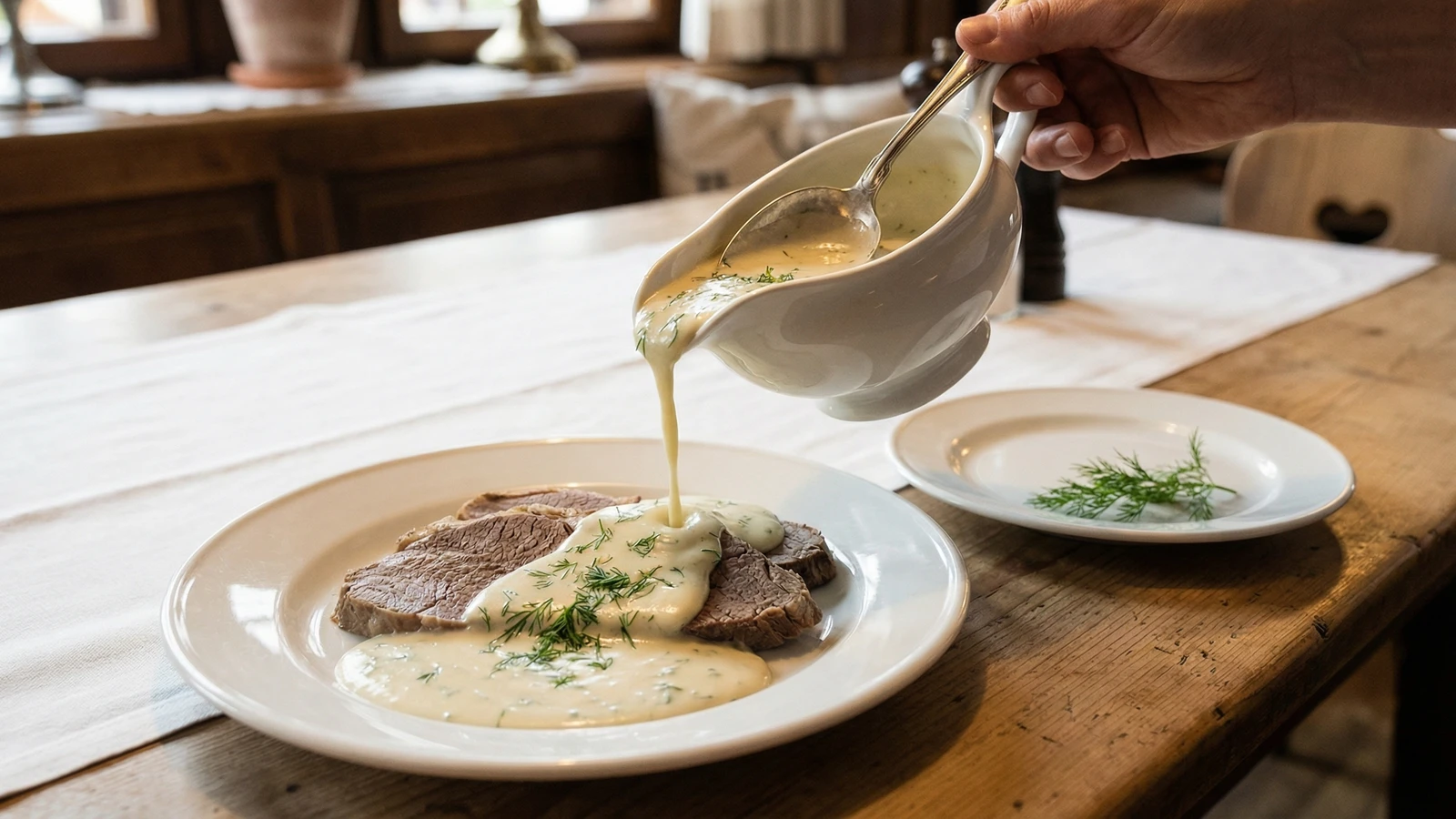
A silky butter roux sauce finished with beef broth, cream, and handfuls of fresh dill, the way every Viennese grandmother serves it alongside Tafelspitz on Sunday.
In my grandmother Eva's kitchen in Kent, Dillsauce was the sauce that appeared whenever Gretel brought over a piece of good beef for simmering. It wasn't written down for years. Gretel would stand at the stove, melt the butter, stir in the flour, and pour in the broth she'd just ladled from the beef pot. A splash of cream, a fistful of dill, a squeeze of lemon, done. The whole thing took ten minutes. I'd watch the sauce go from pale blonde to something silky and fragrant, clinging to the back of the spoon, and I'd think: that's what dinner smells like.
Dillsauce belongs to the family of Einbrenn sauces that form the backbone of Austrian home cooking. An Einbrenn is just a roux, butter and flour cooked together, but in Vienna they built an entire world of sauces on that simple base. Dillsauce, Schnittlauchsauce, Semmelkrensauce. Each one a different herb or flavor stirred into the same reliable foundation. The technique is the same every time. Once you learn it, you can make any of them.
What makes Dillsauce special is how much work the dill does. It's not a background note. It's the whole personality of the sauce. You need fresh dill, and you need a lot of it. Dried dill in this sauce is like putting instant coffee in a Melange. You'll taste the difference, and not in a good way. Buy the freshest bunch you can find, chop it at the last moment, and stir it in just before serving so the heat wakes up the oils without cooking them out.
Dillsauce is part of the Viennese Rindfleischküche, the boiled beef tradition that reached its height in the 19th century when Viennese menus listed a dozen or more cuts of simmered beef, each served with its own specific sauce. The tradition of pairing boiled beef with roux-based herb sauces reflects the practical Austrian instinct of using the cooking broth itself as the sauce's foundation. Gretel Beer documented this tradition carefully, noting that a proper Viennese Beisl would offer three or four sauces alongside a single plate of Tafelspitz, and the diner was expected to try them all.
Quantity
40g
Quantity
30g
Quantity
300ml
warm
Quantity
100ml
Quantity
1 large bunch (about 30g)
finely chopped
Quantity
1 tablespoon
Quantity
1/2 teaspoon
Quantity
to taste
Quantity
to taste
| Ingredient | Quantity |
|---|---|
| unsalted butter | 40g |
| plain flour | 30g |
| good beef stockwarm | 300ml |
| heavy cream (Schlagobers) | 100ml |
| fresh dillfinely chopped | 1 large bunch (about 30g) |
| white wine vinegar or fresh lemon juice | 1 tablespoon |
| granulated sugar | 1/2 teaspoon |
| salt | to taste |
| white pepper | to taste |
Melt the butter in a heavy saucepan over medium-low heat. When it foams, add the flour all at once and stir constantly with a wooden spoon. You're making an Einbrenn, the Austrian roux that's the foundation of half the sauces in Viennese cooking. Cook the flour and butter together for about two minutes, stirring the whole time. You want it to turn a pale straw color and smell faintly nutty, but not brown. The moment it starts to darken beyond that, your heat is too high. Pull the pan off the burner and keep stirring.
Remove the pan from the heat for a moment and pour in about a third of the warm beef stock, whisking vigorously. It will seize up and thicken immediately. That's normal. Keep whisking until the paste loosens into a smooth, thick sauce with no lumps. Return to medium heat and add the remaining stock in two more additions, whisking each time until smooth before adding the next. The stock must be warm, not cold. Cold liquid hitting a hot roux shocks the flour and gives you lumps that no amount of whisking will fix.
Let the sauce simmer gently for five to six minutes, stirring often. It should thicken to the consistency of pouring cream, coating the back of your spoon in a clean line when you draw your finger through it. If it's too thick, add a splash more stock. If it's thin and watery, simmer it a little longer. The sauce will continue to thicken slightly as it cools, so pull it just before you think it's perfect.
Stir in the cream and let the sauce return to a gentle simmer for one minute. Add the vinegar or lemon juice and the sugar. The acid is not there to make the sauce sour. It's there to wake it up and balance the richness of the butter and cream. The sugar rounds off the acidity. Season with salt and white pepper. White pepper because you don't want black specks in this pale, elegant sauce.
Take the sauce off the heat. Stir in the chopped fresh dill. All of it. If you look at the amount and think it's too much, it's probably just right. The dill goes in off the heat because you want the warmth to release its fragrance without cooking it down to nothing. Thirty seconds on a hot burner and dill loses its personality. Taste, adjust the salt if needed, and pour into a warm sauceboat. Serve immediately alongside Tafelspitz, poached beef, or a piece of gently cooked fish. Mahlzeit!
1 serving (about 110g)
Culinary guides, cultural storytelling, and the editorial depth that makes cooking meaningful.
Discover Culinary ExplorerChef Elsa
Freshly grated horseradish folded with tart apple and lemon, the cold, sharp sauce that belongs beside every plate of Tafelspitz in Vienna and has done for as long as anyone can remember.

Chef Elsa
The clear, caraway-scented pan jus you pour over Schweinsbraten and Knödel, built from nothing but good pork drippings, honest stock, and the patience to let a roasting pan tell you everything it knows.

Chef Elsa
Crisp cauliflower, sweet carrots, and bright peppers in a spiced sweet-sour brine with mustard seeds, the jar you open first when the Brettljause comes out and the last one you put away.

Chef Elsa
Austria's sharp, herbal tarragon mustard, the golden-green condiment that belongs next to every sausage, every Brettljause board, and every cold cut platter you'll ever serve.