Culinary Explorer

A cooking platform built around craft, culture, and the stories behind what we eat.
Discover Culinary Explorer
Zorza Gallega

Zorza Gallega

Created by

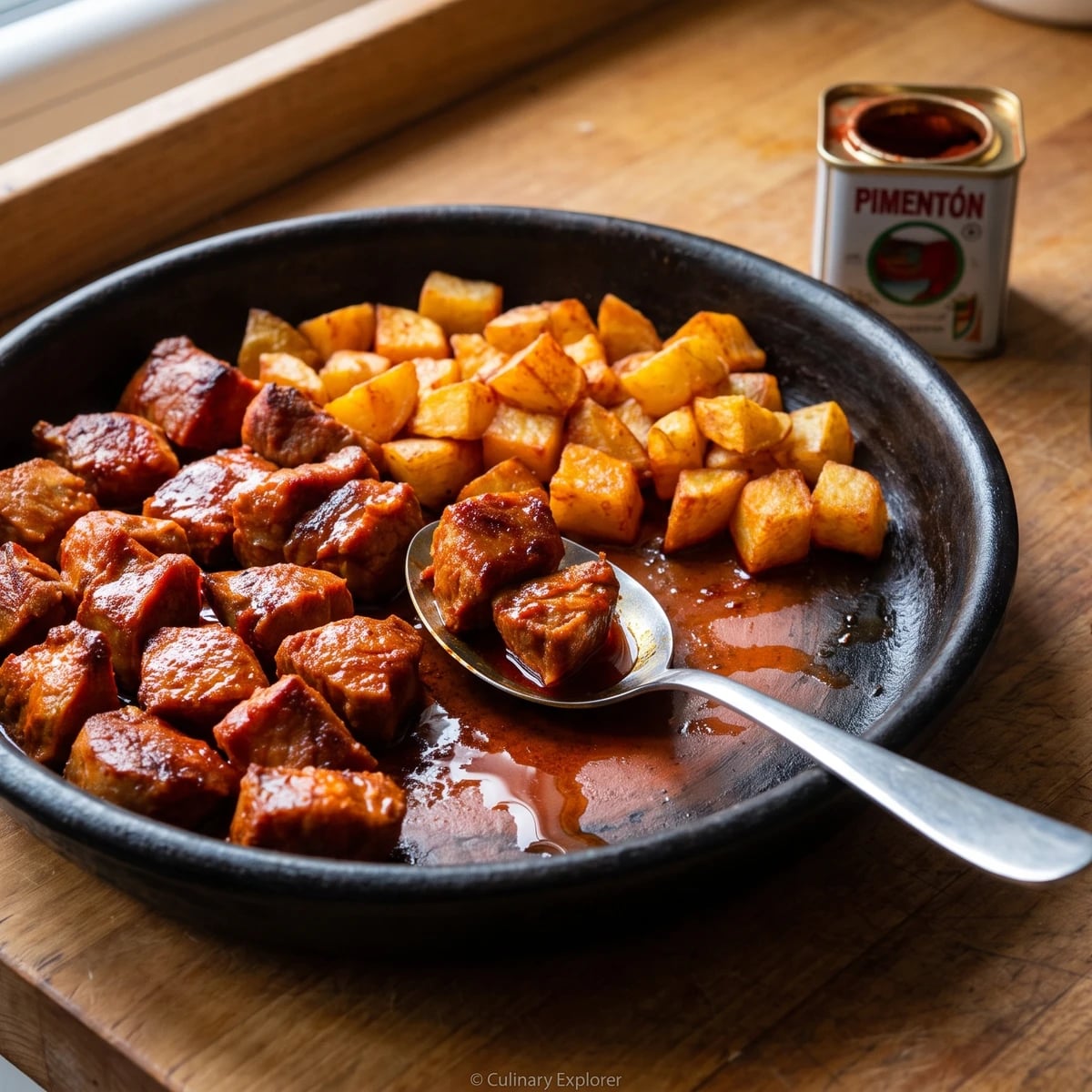
Zorza Gallega is chorizo before the casing, the seasoned pork fried loose after a long rest so the pimentón, garlic, oregano, and wine have time to reach the meat.

Appetizers & Snacks
Spanish
Comfort Food
Weeknight
Budget Friendly
20 min
Active Time
20 min cook24 hr 40 min total
Yield4 servings

Zorza Gallega belongs to Galicia, and it is chorizo before the casing: chopped pork seasoned with pimentón, garlic, oregano, salt, and a little wine, then rested until the meat turns red all the way through. It isn't sausage yet. It is the prueba de matanza, the test of the seasoning before the chorizos are stuffed, fried loose in a pan and eaten with potatoes or bread.

The method that decides it is the rest. Mix it today, cook it tomorrow. That pause lets the salt draw the seasoning into the pork, so you don't get plain meat with red dust on the outside. Pésalo, no lo adivines: weigh the salt and the pimentón, because this is not the place for guessing.

If you can't find Spanish pork collar or shoulder already chopped for chorizo, use pork shoulder with a little belly mixed in, or coarse-ground pork with enough fat to stay juicy. Lean mince turns dry and mean in the pan. No hace falta haber pisado España, but you do need real pimentón, preferably de la Vera, and patience for the overnight rest. Siempre sale, si lo sigues.

Zorza belongs to the Galician matanza, the household pig slaughter that filled the larder with chorizos, cured pork, and fat for the year. Before the seasoned meat was packed into casings, a little was fried as the prueba, the test, so the cook could judge the salt, garlic, and pimentón while there was still time to correct the batch. In Galicia it became a dish in its own right, served loose with fried potatoes, cachelos, or bread for catching the red oil.

The technique, the tradition, and the story behind every dish.

Discover Culinary Explorer

Ingredients

pork shoulder

Quantity

700g

trimmed and cut into 1.5cm pieces

pork belly

Quantity

200g

skin removed and cut into 1.5cm pieces

fine sea salt

Quantity

18g

sweet smoked pimentón de la Vera

Quantity

18g

hot pimentón de la Vera (optional)

Quantity

4g

garlic cloves

Quantity

5

crushed to a paste

dried oregano

Quantity

2 teaspoons

bay leaf

Quantity

1

broken in half

dry white wine

Quantity

80ml

preferably Galician

olive oil, for frying the zorza

Quantity

2 tablespoons

potatoes

Quantity

700g

peeled and cut into rough wedges

olive oil, for frying the potatoes

Quantity

as needed

salt, for the potatoes

Quantity

to taste

Equipment Needed

  • Wide mixing bowl
  • Heavy frying pan or cast-iron skillet
  • Kitchen scale
  • Slotted spoon

Instructions

  1. 1

    Season the pork

    Put the pork shoulder and belly in a wide bowl. Add the salt, sweet pimentón, hot pimentón, garlic paste, oregano, bay leaf, and white wine. Mix with your hands until every piece is red and glossy, with no dry pimentón left at the bottom of the bowl.

    Use pork with visible fat. Zorza made from lean meat cooks up dry, and then no amount of pimentón will save it.
  2. 2

    Rest overnight

    Cover the bowl and refrigerate for at least 24 hours, stirring once if you remember. This rest is the dish: the salt and wine carry the garlic and pimentón into the meat, so the pork tastes seasoned through instead of coated.

  3. 3

    Fry the potatoes

    Heat enough olive oil to come halfway up the potatoes in a heavy pan. Fry the wedges over medium heat until tender inside and golden at the edges, about 15 to 18 minutes. Lift them out, salt them while hot, and keep them nearby.

  4. 4

    Cook the zorza

    Set a wide frying pan over medium-high heat and add 2 tablespoons olive oil. Remove the bay leaf, then add the pork in a single layer, working in batches if needed. Let it brown before you move it, then turn and cook until the pieces are firm, glossy, and cooked through, about 6 to 8 minutes per batch.

  5. 5

    Serve with potatoes

    Return all the zorza to the pan with its red oil, add the fried potatoes, and toss just enough to stain them with pimentón. Taste one piece for salt and heat. Serve at once with bread, because leaving that oil behind would be foolish.

Chef Tips

  • Pimentón decides the flavour. Use Spanish smoked pimentón, sweet with a little hot if you like it sharper. Plain paprika gives colour but not the deep smoke this dish expects.
  • If you only have coarse-ground pork, use it, but choose 20 to 25 percent fat and fry it in loose clumps instead of breaking it into fine crumbs. The bite will be different, softer and less rustic, but the seasoning still works.
  • Rest the meat 24 hours if you can, 12 hours if the day has cornered you. Less than that and the garlic tastes raw while the pork tastes separate from its seasoning.
  • This is not cured sausage. Keep it cold, cook it through, and eat it within 2 days of mixing, or freeze it after the overnight rest.

Advance Preparation

  • Mix the pork and seasonings 24 hours ahead and keep covered in the refrigerator.
  • After the overnight rest, freeze the raw seasoned zorza in flat 450g portions for up to 2 months; thaw overnight in the refrigerator before frying.
  • The potatoes are best fried just before serving, but they can be cut a few hours ahead and kept covered in cold water, then dried very well before frying.

Frequently Asked Questions

Nutrition Information

1 serving (about 330g)

Calories
965 calories
Total Fat
72 g
Saturated Fat
21 g
Trans Fat
0 g
Unsaturated Fat
48 g
Cholesterol
145 mg
Sodium
2300 mg
Total Carbohydrates
36 g
Dietary Fiber
6 g
Sugars
2 g
Protein
43 g

Note: Chef personas and recipes are created with AI assistance. Cook with care: follow safe food-handling practices, check doneness with a thermometer when needed, and adapt for allergies and your kitchen.

Where cooking meets culture.

Culinary guides, cultural storytelling, and the editorial depth that makes cooking meaningful.

Discover Culinary Explorer

More from Embutidos & the Matanza

Browse the full collection