Chef Isabel
Acedías Fritas de Cádiz
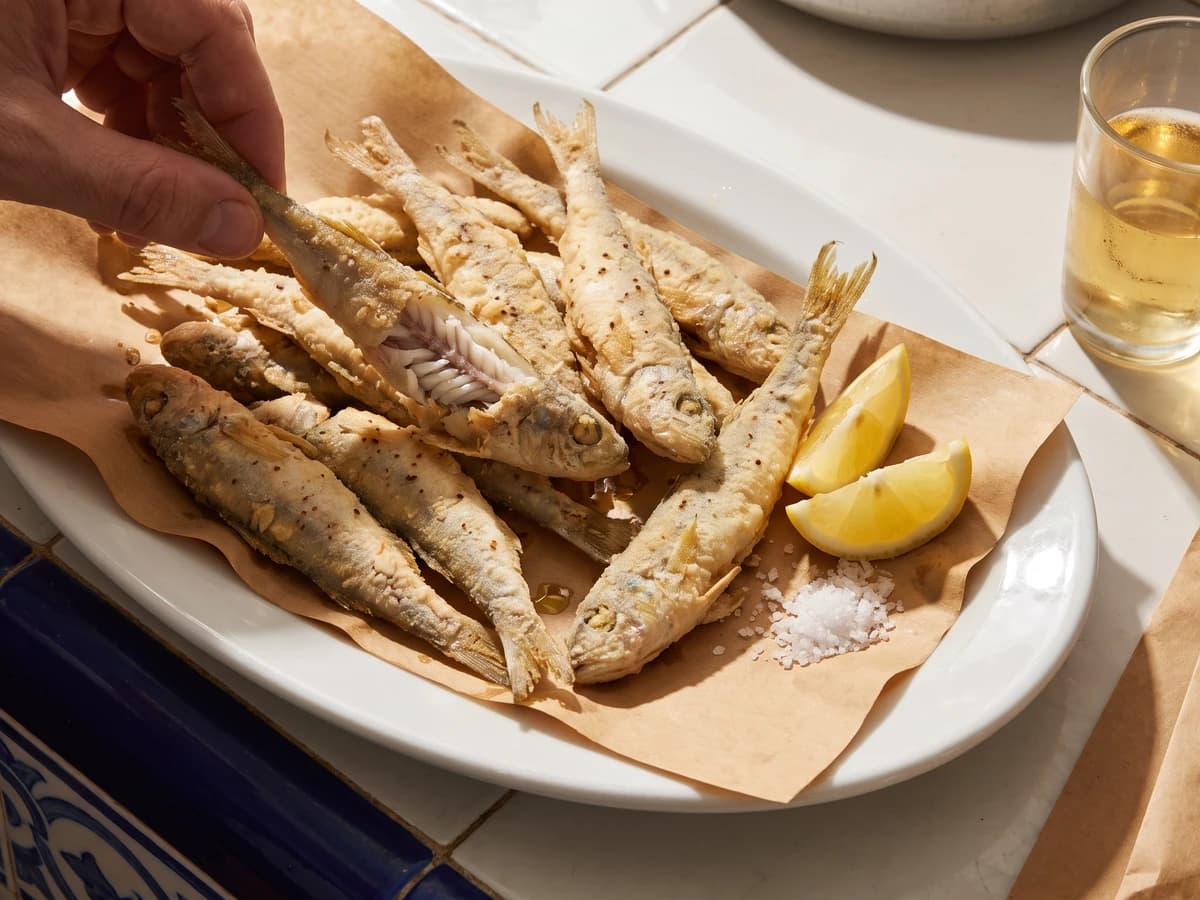
Acedías fritas belong to Cádiz: tiny wedge sole, salted, dusted in frying flour, and dropped into very hot olive oil so the rims crisp while the fish stays tender.
A cooking platform built around craft, culture, and the stories behind what we eat.
Created by
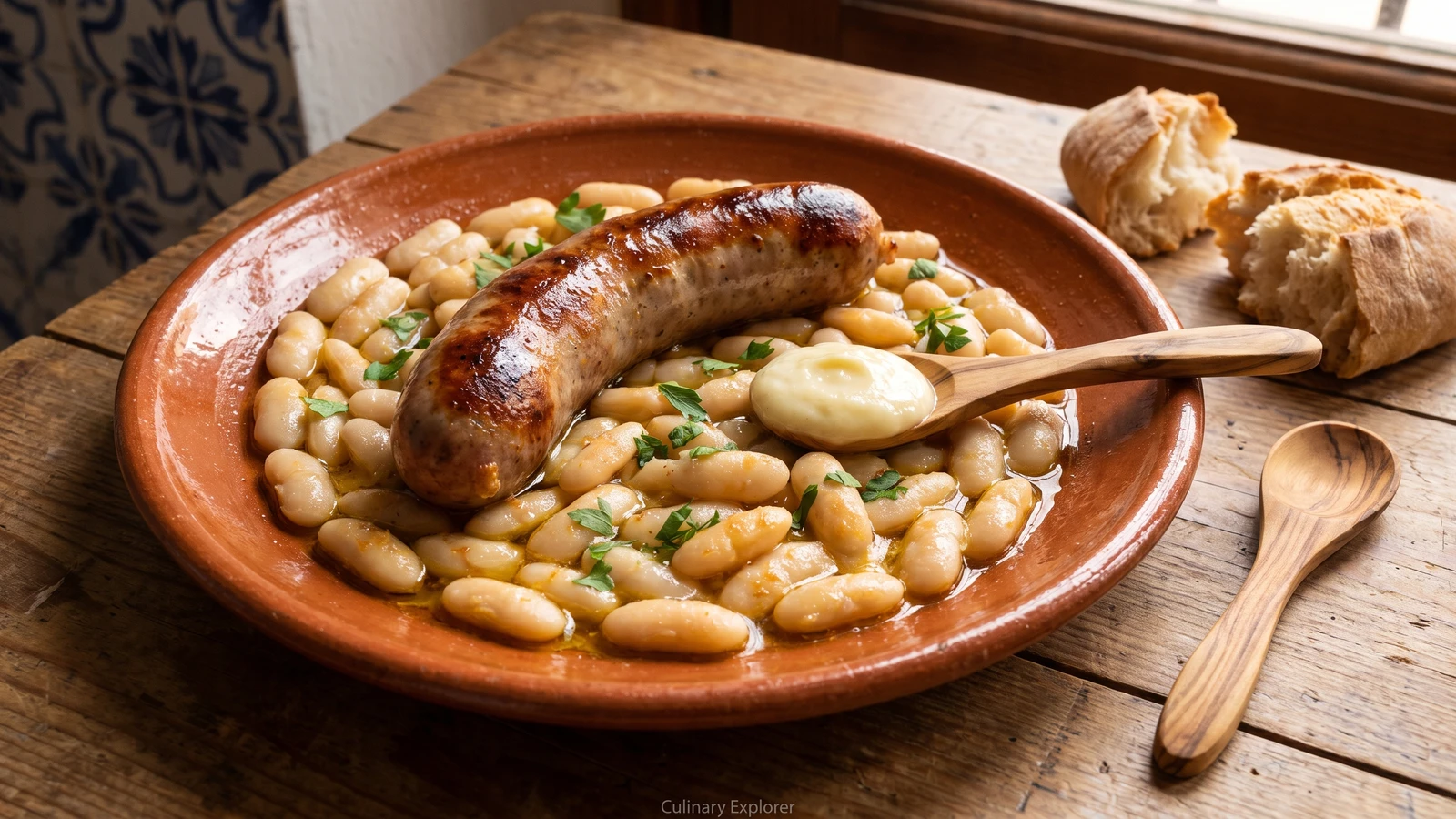
Botifarra amb mongetes is Catalan: fresh pork sausage cooked through, white beans turned in its fat until glossy, and allioli beside it. Simple food, if the sausage is right.
Botifarra amb mongetes is Catalan, and it is as plain as a good dish can be: fresh botifarra, white beans, garlic, olive oil, and allioli on the side. What makes it itself is not smoke, spice, or a clever sauce. It is the clean pork sausage and the beans, mongetes, taking on the fat left in the pan.
The method that decides it is the order. Cook the botifarra first, gently enough that the skin browns without bursting and the inside cooks through. Then use that same pan for the beans. They should fry, not stew, so dry them well before they go in. If they hiss when they hit the fat, you're on the right road.
In Catalonia you would look for mongetes del ganxet, the hooked white bean with a thin skin and creamy middle. Far from there, use good dried cannellini or a jar of cooked white beans with no sugar or herbs in it. The jar saves time and costs the dish little, but drain and dry the beans properly or you'll get a wet pan and sad beans.
Serve it with allioli, the garlic and oil sauce, and bread. No hace falta haber pisado España. You need a proper fresh pork sausage, beans that hold their shape, and the patience not to rush the pan. Siempre sale, si lo sigues.
Botifarra amb mongetes belongs to Catalonia, especially the inland farmhouse table where fresh pork sausages and dried white beans made a filling meal from the household larder. The dish is often called botifarra amb seques, with seques meaning the cooked dry beans, and it is tied to the Catalan habit of letting one good ingredient season the next in the same pan. Mongetes del ganxet, prized around the Vallès and Maresme, became the bean most closely associated with the dish because its thin skin and creamy flesh suit the frying without collapsing.
Quantity
300g
soaked overnight
Quantity
1
Quantity
1
peeled and halved
Quantity
4, about 450g total
Quantity
3 tablespoons
Quantity
2
lightly crushed
Quantity
1 tablespoon
chopped
Quantity
to taste
Quantity
to taste
Quantity
to serve
Quantity
to serve
| Ingredient | Quantity |
|---|---|
| dried mongetes del ganxet or cannellini beanssoaked overnight | 300g |
| bay leaf | 1 |
| small onionpeeled and halved | 1 |
| fresh botifarres or plain fresh pork sausages | 4, about 450g total |
| extra virgin olive oil | 3 tablespoons |
| garlic cloveslightly crushed | 2 |
| flat-leaf parsleychopped | 1 tablespoon |
| salt | to taste |
| freshly ground black pepper | to taste |
| allioli | to serve |
| rustic bread | to serve |
Drain the soaked beans and put them in a pot with the bay leaf and halved onion. Cover with cold water by 4cm, bring slowly to a gentle simmer, and cook until tender but still whole, about 60 to 90 minutes depending on the bean. Salt only in the last 15 minutes. Drain well, discard the onion and bay, and spread the beans on a tray for 10 minutes so their surface dries.
Set a wide frying pan over medium-low heat and add 1 tablespoon of olive oil. Add the botifarres and cook them slowly, turning often, until the skins are browned and the centers are cooked through, 16 to 20 minutes. Do not prick them unless they threaten to burst; you want their juices in the sausage first, then the rendered fat left in the pan.
Lift the botifarres onto a warm plate and let them rest while you fry the beans. Leave the browned bits and fat in the pan. That is the seasoning for the mongetes, and washing it away would be a small crime with no benefit.
Add the remaining 2 tablespoons olive oil to the same pan with the crushed garlic. Let the garlic color lightly, then remove it before it burns. Add the dry beans in a single broad layer, season with salt and black pepper, and fry over medium-high heat for 6 to 8 minutes, turning with a spatula only now and then. Let some beans catch a little golden crust. This is the whole point: the beans carry the sausage fat, but they must stay beans, not mash.
Stir the chopped parsley through the beans, taste for salt, and spoon them onto warm plates. Set one botifarra on each portion, whole or split lengthwise if you like the browned cut face. Serve with allioli and bread for mopping the oil. Tal como se hace allí, plain and enough.
1 serving (about 385g)
Culinary guides, cultural storytelling, and the editorial depth that makes cooking meaningful.
Discover Culinary ExplorerChef Isabel
Acedías fritas belong to Cádiz: tiny wedge sole, salted, dusted in frying flour, and dropped into very hot olive oil so the rims crisp while the fish stays tender.
Chef Isabel
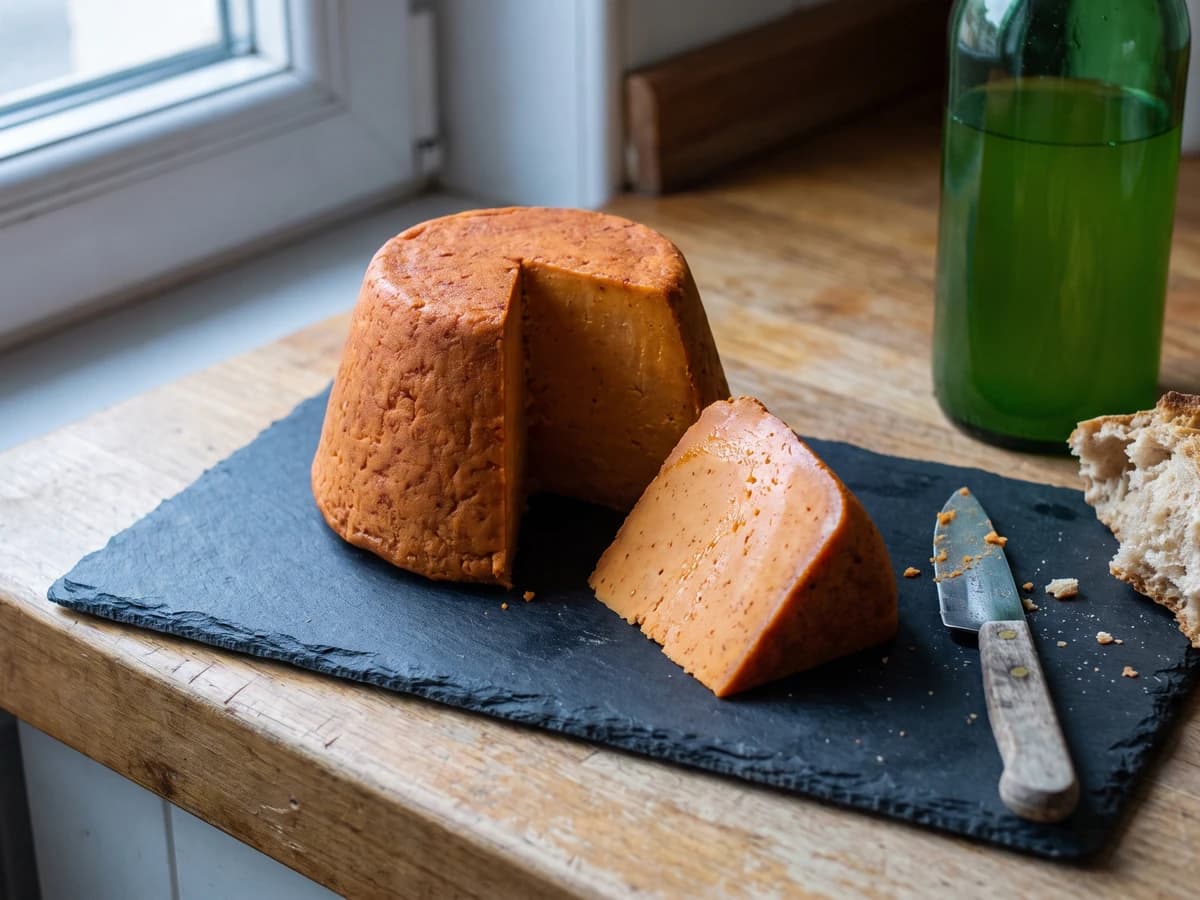
Afuega'l Pitu Roxu is Asturias in a small cheese: cow's milk set slowly to a dense curd, drained without squeezing, then kneaded with pimentón until it turns orange and grips the throat.
Chef Isabel
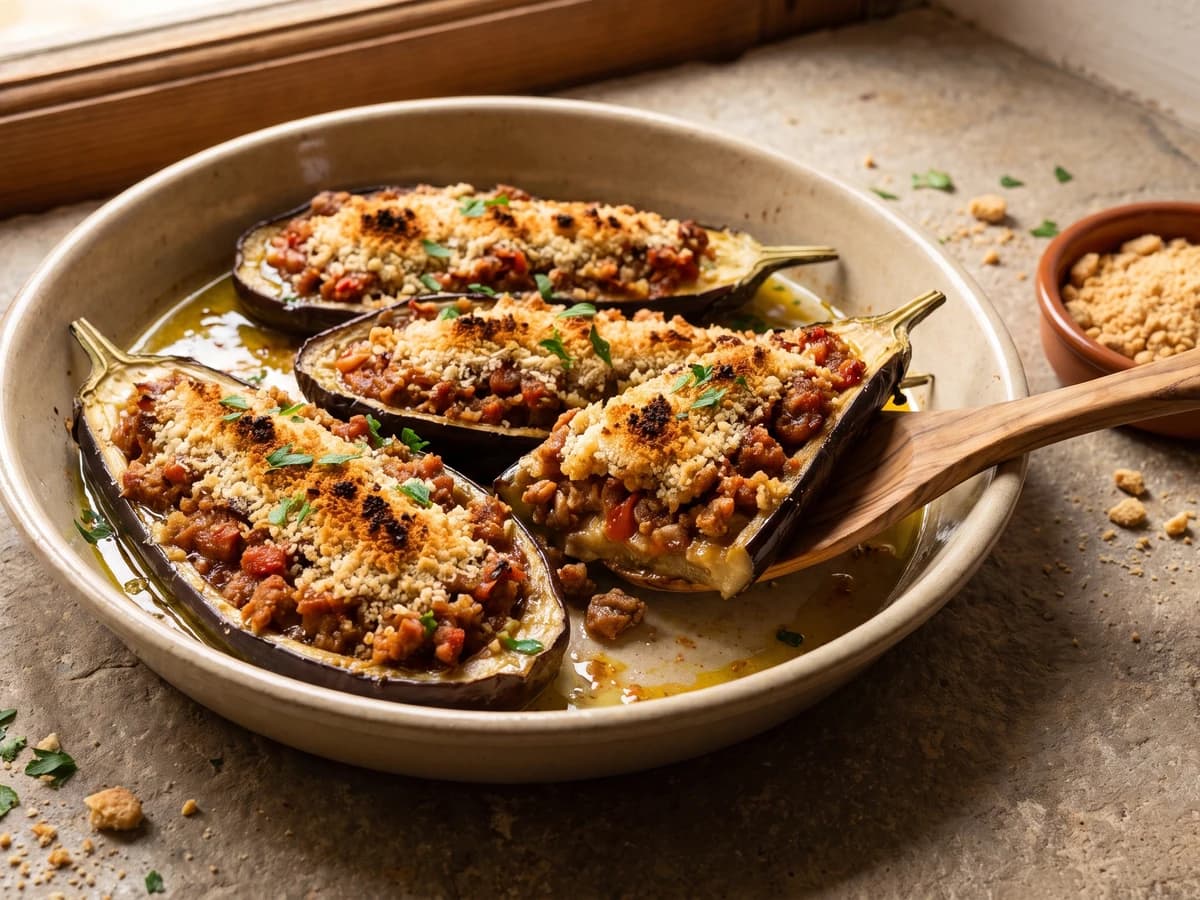
Albergínies farcides are Mallorca's summer stuffed aubergines: tender boiled shells, a slow pork sofrito with moraduix, and a plain breadcrumb cap baked until the top turns crisp and golden.

Chef Isabel
Carxofes farcides are Catalan stuffed artichokes: tender hearts filled with jamón, slow sweet onion, and breadcrumbs, then baked in a light creamy sauce until the tops turn golden.