
Chef Joost
Advocaat (Dutch Egg Liqueur)
Advocaat is the Dutch liqueur you eat with a spoon: brandewijn, yolks and sugar turned into a glossy Easter glass, with a hat of slagroom and no apology.
A cooking platform built around craft, culture, and the stories behind what we eat.
Created by
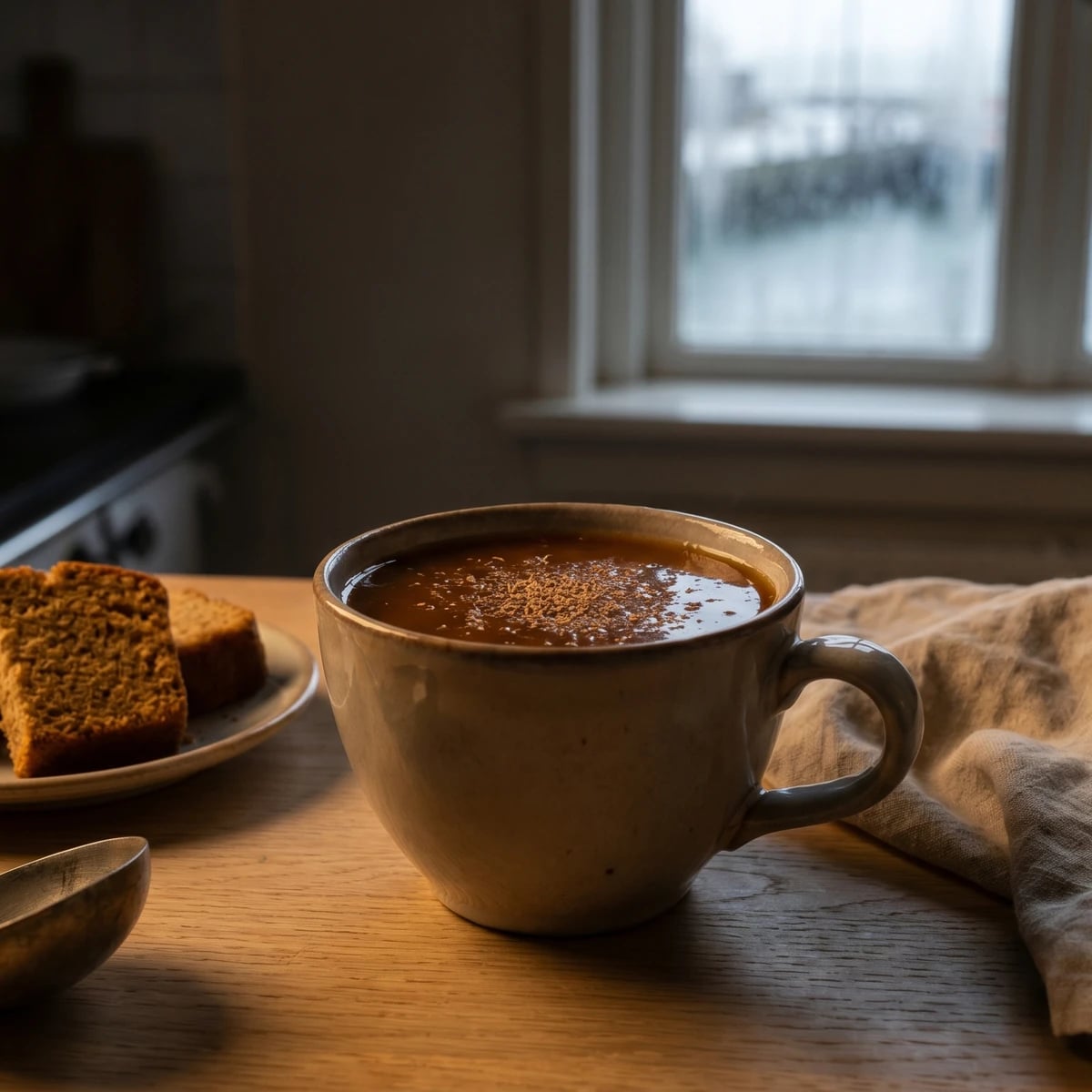
The skater's cup from frozen Dutch canals: warm beer or wine, egg, sugar, rum and spice, ladled beside koek, cake, when the ice was thick enough to carry a village.
Aproper Dutch winter used to announce itself by sound. Not the thermometer, not the weather report, but the first scrape of skates on natural ice, that long iron whisper across a canal. Then the stalls appeared: koek-en-zopie, cake and zopie, little wooden counters on the ice where you warmed your fingers around a cup and pretended you had only stopped for the children.
The name already tells you how modest this drink is. Zopie comes from zoopje, a small drink or little sip, and that is exactly its scale: not a grand punch bowl, not a tavern ceremony, just a hot cup passed to a skater between laps. But let me tell you a secret. The Dutch winter drink was never plain. Beer or wine, egg, sugar, rum, cinnamon, clove, sometimes lemon: a frugal country knew perfectly well how to put spice cargo into a tin ladle.
The only real trick is gentleness. Egg gives zopie its old-fashioned body, but egg is also proud and easily offended; boil it and you'll get sweet scrambled beer, for obvious reasons. So you warm the drink slowly, whisk, keep it below a simmer, and stop when it thickens enough to coat the spoon. Hou het altijd simpel, always keep it simple. A cup, a biscuit, cold hands, and the whole canal for a dining room.
Koek-en-zopie stalls are documented on Dutch winter ice from at least the seventeenth century, when frozen canals and rivers became temporary roads, markets, and social rooms. Zopie itself was traditionally a warm alcoholic drink made with beer or wine, eggs, sugar, rum, and spices such as cinnamon and clove; the name derives from zoopje, a small drink or sip. The drink belongs to the culture of natural-ice skating, and every rare winter when the canals freeze hard enough, the phrase koek-en-zopie still returns to Dutch mouths almost before the skates are sharpened.
Quantity
500ml
Quantity
2
Quantity
50g
Quantity
2 tablespoons
Quantity
1
Quantity
2
Quantity
1 strip
cut without white pith
Quantity
pinch
Quantity
a little
| Ingredient | Quantity |
|---|---|
| bock beer or light red wine | 500ml |
| large egg yolks | 2 |
| dark brown sugar or lichte basterdsuiker | 50g |
| dark rum | 2 tablespoons |
| cinnamon stick | 1 |
| cloves | 2 |
| lemon peelcut without white pith | 1 strip |
| fine salt | pinch |
| freshly grated nutmeg (optional) | a little |
Pour the beer or wine into a small saucepan and add the cinnamon stick, cloves, lemon peel, and salt. Warm it gently until the surface looks lively at the edges but does not simmer. Give the spices five minutes to speak; if the liquid boils, the old winter cup turns harsh.
In a heatproof bowl, whisk the egg yolks with the sugar until thick and glossy, about two minutes. This is what gives zopie its body, not cream. The sugar also protects the yolks a little from the heat, which is useful, because eggs have never respected nostalgia.
Remove the spices and lemon peel. While whisking constantly, pour a small ladle of the hot drink into the yolks, then add two more ladles the same way. This slow start keeps the egg smooth. Rush it and you'll taste your mistake in every cup.
Pour the tempered mixture back into the saucepan and set it over low heat. Stir constantly for three to five minutes, until the zopie lightly coats the back of a spoon. Do not let it boil. Take it off the heat, stir in the rum, and taste for sugar.
Ladle into small cups and grate over a little nutmeg if you like. Serve with plain spice cake or speculaas. This is not a drink for lingering in the pot; it belongs in cold hands while the ice is still calling.
1 serving (about 135g)
Culinary guides, cultural storytelling, and the editorial depth that makes cooking meaningful.
Discover Culinary Explorer
Chef Joost
Advocaat is the Dutch liqueur you eat with a spoon: brandewijn, yolks and sugar turned into a glossy Easter glass, with a hat of slagroom and no apology.

Chef Joost
Anijsmelk is the Dutch night drink of cold hands and quiet kitchens: milk, anise, a little butter, and the sweet medicinal smell every child remembers.

Chef Joost
Beerenburg is Friesland in a small glass: bitter herbs, old jenever, cold quays, and a name that belongs not to bears but to an Amsterdam spice merchant.

Chef Joost
The bishop's red wine, scented with orange and clove, belongs to Pakjesavond as surely as pepernoten: a small pot of spice-route history passed between cold hands.