
Chef Joost
Advocaat (Dutch Egg Liqueur)
Advocaat is the Dutch liqueur you eat with a spoon: brandewijn, yolks and sugar turned into a glossy Easter glass, with a hat of slagroom and no apology.
A cooking platform built around craft, culture, and the stories behind what we eat.
Created by
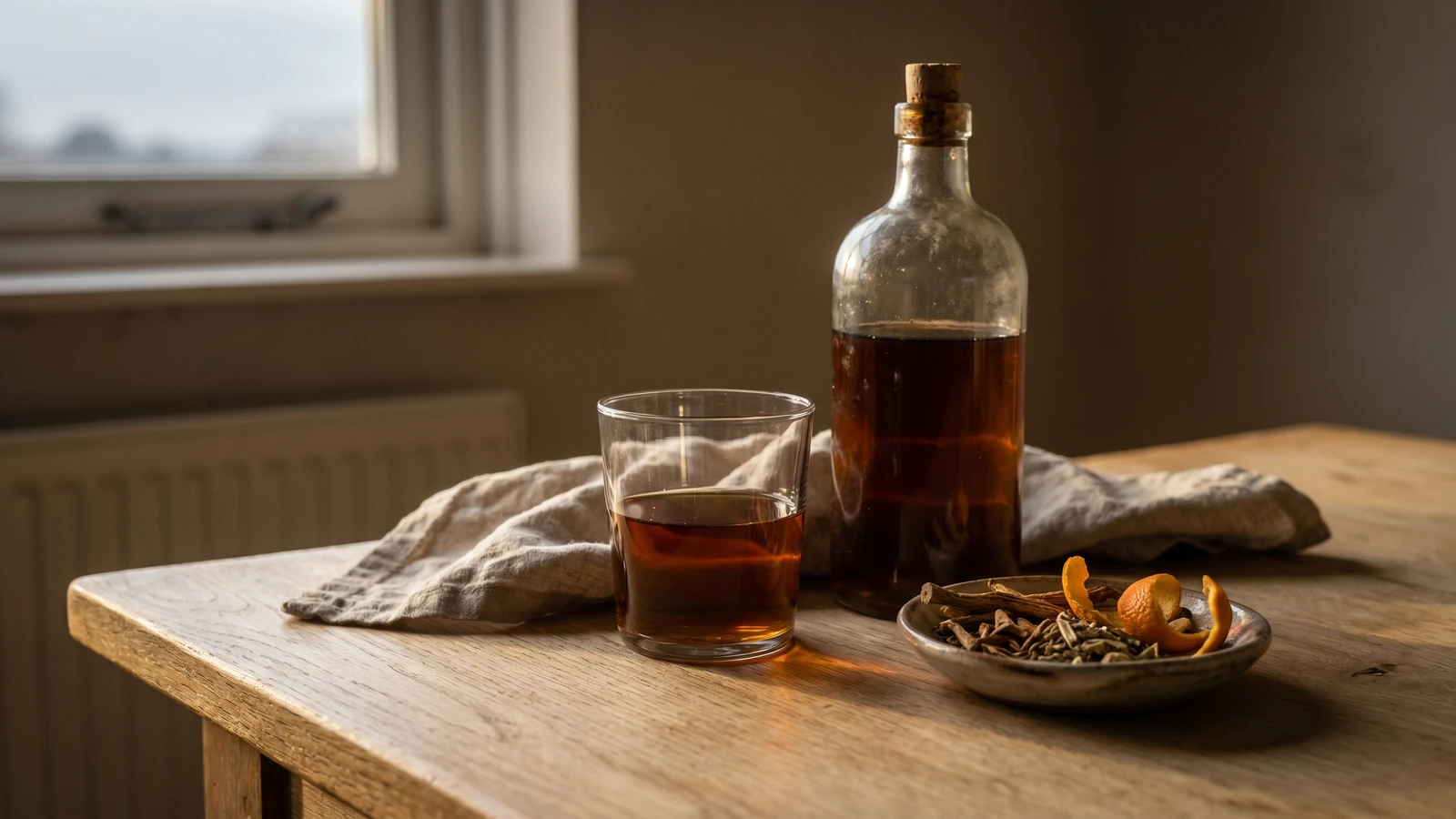
Beerenburg is Friesland in a small glass: bitter herbs, old jenever, cold quays, and a name that belongs not to bears but to an Amsterdam spice merchant.
Some drinks belong to weather. Beerenburg belongs to the northern kind: a wet coat over a chair, a canal wind that has learned its manners only halfway, and a small glass set down in a Frisian cafe without ceremony. In Zeeland, the tide set the menu. In Friesland, often enough, the cold set the measure.
The name already tells you, though not the way tourist ears expect. Beerenburg is not a bear's fortress, however cheerful that misunderstanding may be after the second glass. It comes from Hendrik Beerenburg, an Amsterdam spice and herb merchant whose mixtures travelled north with skippers, merchants, and people who understood that jenever by itself was honest, but jenever with bitter roots had backbone. But let me tell you a secret: the most Frisian of drinks began with an Amsterdam shop and became Frisian because Friesland kept making it, drinking it, arguing over it, and pouring it in every cafe where the door sticks in winter.
The method is almost embarrassingly simple, which is why it asks for care. You steep bitter and aromatic botanicals in good jonge jenever, jonge meaning young or unaged, then wait until the liquid turns dark amber and the bitterness rounds its elbows. Hou het altijd simpel. Don't throw the whole herb cupboard at the bottle. A proper Beerenburg should taste medicinal in the old useful sense: gentian bite, orange peel lift, warm spice, and enough restraint that the second sip explains the first.
Beerenburg takes its name from Hendrik Beerenburg, an eighteenth-century Amsterdam herb merchant whose spice mixtures were bought by northern skippers and infused into jenever. Friesland made the drink its own in the nineteenth century, with houses such as Weduwe Joustra in Sneek, founded in 1864, turning the skippers' herbal dram into a regional signature. The drink's history is a reminder that Dutch regional identity often formed through trade as much as through soil: Amsterdam supplied the botanicals, but Friesland gave the bitter its home.
Quantity
1 liter
Quantity
8g
Quantity
5g
Quantity
5g
lightly crushed
Quantity
1 orange
peeled thinly, with little white pith
Quantity
1/2 lemon
peeled thinly, with little white pith
Quantity
1
Quantity
4
Quantity
4
lightly crushed
Quantity
2
lightly crushed
Quantity
2g
Quantity
1 tablespoon
| Ingredient | Quantity |
|---|---|
| jonge jenever | 1 liter |
| dried gentian root | 8g |
| dried angelica root | 5g |
| dried licorice rootlightly crushed | 5g |
| organic orange peelpeeled thinly, with little white pith | 1 orange |
| organic lemon peelpeeled thinly, with little white pith | 1/2 lemon |
| cinnamon stick | 1 |
| whole cloves | 4 |
| juniper berrieslightly crushed | 4 |
| cardamom podslightly crushed | 2 |
| dried galangal or ginger | 2g |
| dark brown sugar or kandijsuiker (optional) | 1 tablespoon |
Put the gentian, angelica, licorice, citrus peels, cinnamon, cloves, juniper, cardamom, and galangal into a clean 1.5-liter glass jar. Keep the citrus peel thin; the white pith gives a flat bitterness, and Beerenburg wants the clean stern bitterness of roots, not the sulk of bad peeling.
Pour in the jonge jenever and stir once with a clean spoon. Seal the jar and set it somewhere cool and dark. The jenever is not a blank spirit here; its grain and juniper are part of the drink, so vodka will give you a tincture, not Beerenburg.
Leave the jar for 10 to 14 days, turning it gently every day or two. Start tasting after day 7. You are waiting for dark amber color, a firm bitter front, and a warm spiced finish. If the gentian begins to shout over everything else, strain it early; bitterness should stand at the door, not block it.
Strain through a fine sieve, then again through a coffee filter or double layer of cheesecloth into a clean bottle. Add the sugar only if the bitterness feels too sharp. Many Frisian glasses are poured dry and unsweetened, but a little kandijsuiker, rock sugar, can round the edges without turning the drink soft.
Let the bottled Beerenburg rest at least 3 days before drinking. Serve in small glasses, room temperature or lightly chilled. The rest matters: freshly strained bitters taste like separate arguments, but after a few days the roots, peel, and jenever begin speaking in one voice.
1 serving (about 30g)
Culinary guides, cultural storytelling, and the editorial depth that makes cooking meaningful.
Discover Culinary ExplorerChef Joost
Advocaat is the Dutch liqueur you eat with a spoon: brandewijn, yolks and sugar turned into a glossy Easter glass, with a hat of slagroom and no apology.

Chef Joost
Anijsmelk is the Dutch night drink of cold hands and quiet kitchens: milk, anise, a little butter, and the sweet medicinal smell every child remembers.

Chef Joost
The bishop's red wine, scented with orange and clove, belongs to Pakjesavond as surely as pepernoten: a small pot of spice-route history passed between cold hands.

Chef Joost
The name means farm boys, but the jar is pure celebration: raisins swollen with brandy, cinnamon, and patience, spooned out at New Year like a northern Dutch secret.