
Chef Jeong-sun
Agwi-jjim (Braised Monkfish with Bean Sprouts)
Firm monkfish buried under crisp soybean sprouts, minari, and a red gochugaru sauce thickened at the end; Masan's market dish asks for heat, timing, and a steady hand.
A cooking platform built around craft, culture, and the stories behind what we eat.

Created by
Cold, lean beef cut by hand into clean ribbons, seasoned lightly with sesame oil, garlic, soy, and sugar, then served with crisp Korean pear and a yolk at the center.
Yukhoe lives or dies before the seasoning bowl comes out. The beef must be fresh, lean, cold, and cut by hand. If the meat is ordinary, cook another dish. My teacher would have sent it back without a word, and she would have been right.
This is not a dish to hide under sauce. A little sesame oil, a little soy, a breath of garlic, enough sugar to round the salt, and the beef still has to taste like beef. The pear is not decoration. It keeps the bite cold and crisp, and its sweetness lets you use less sugar. Cut it just before serving so it doesn't brown and weep into the plate.
I won't tell you this is easy, because raw food asks for discipline. Buy whole-muscle beef from a butcher you trust, tell them it will be eaten raw, keep it below 4C, trim the outside, and serve it the same day. 손맛 is real. I still measure it, so it can be handed on. Here the measure matters because too much garlic, sugar, or sesame oil turns a clear dish muddy.
Yukhoe belongs to Korea's family of hoe (raw preparations), and written records from the Joseon period show raw beef dishes appearing in formal tables as well as in later urban restaurant cooking. Modern yukhoe became especially visible through Seoul market restaurants, including the well-known yukhoe alley at Gwangjang Market, and through regional dishes such as Jeonju bibimbap, where seasoned raw beef is a prized topping. Its luxury has less to do with ornament than with the requirement for very fresh beef, careful knife work, and immediate serving.
Quantity
450g
whole-muscle cut, trimmed and kept very cold
Quantity
1
chilled, peeled and julienned just before serving
Quantity
1 tablespoon
for pear water
Quantity
2 cups
for pear water
Quantity
1 1/2 tablespoons
Quantity
1 tablespoon
Quantity
1 teaspoon
Quantity
1 teaspoon
Quantity
2 teaspoons
very finely minced
Quantity
1 tablespoon
lightly crushed
Quantity
1/4 teaspoon
plus more only if needed
Quantity
1/8 teaspoon
freshly ground
Quantity
1 large
very fresh or pasteurized
Quantity
1 tablespoon
tips removed and lightly crushed
Quantity
a few drops
for finishing
| Ingredient | Quantity |
|---|---|
| very fresh lean beef tenderloin, eye of round, or top roundwhole-muscle cut, trimmed and kept very cold | 450g |
| Korean pearchilled, peeled and julienned just before serving | 1 |
| fine sea saltfor pear water | 1 tablespoon |
| cold waterfor pear water | 2 cups |
| toasted sesame oil | 1 1/2 tablespoons |
| soy sauce | 1 tablespoon |
| fine sugar | 1 teaspoon |
| honey or maesil-cheong (green plum syrup) (optional) | 1 teaspoon |
| garlicvery finely minced | 2 teaspoons |
| toasted sesame seedslightly crushed | 1 tablespoon |
| fine sea saltplus more only if needed | 1/4 teaspoon |
| black pepperfreshly ground | 1/8 teaspoon |
| egg yolkvery fresh or pasteurized | 1 large |
| pine nuts (optional)tips removed and lightly crushed | 1 tablespoon |
| extra toasted sesame oil (optional)for finishing | a few drops |
Put the whole piece of beef in the freezer for 20 to 25 minutes, just until the surface firms but the center is not frozen. Cold beef cuts clean. Warm beef smears under the knife, and yukhoe needs clear edges.
With a clean sharp knife on a clean board, trim away all exterior surfaces, dry edges, silver skin, and any visible connective tissue. This is not wastefulness. The outside of a whole muscle has handled the world; the inside is what you serve raw.
Slice the beef across the grain into sheets about 3mm thick, then stack a few sheets and cut them into matchsticks about 3mm wide and 6 to 7cm long. Keep the cuts even so the seasoning touches every piece the same way. Put the cut beef in a chilled bowl and refrigerate while you prepare the rest.
Stir 1 tablespoon salt into 2 cups cold water. Peel the pear and cut half of it into fine matchsticks. Dip the pear in the salt water for 1 minute, then drain and pat dry. This keeps the pear pale and crisp without making it taste salty. Save the other half for the plate or another meal.
In a chilled bowl, stir together the sesame oil, soy sauce, sugar, honey or maesil-cheong if using, garlic, crushed sesame seeds, 1/4 teaspoon salt, and black pepper. Taste the seasoning before the beef goes in. It should be nutty, lightly salty, and only faintly sweet. If garlic is the first thing you taste, you used too much.
Add the cold beef to the seasoning and toss gently with clean gloved hands or chopsticks for 20 to 30 seconds, just until every strand shines. Do not knead it. The beef should stay loose, not become a paste. Taste one small piece and add only a pinch more salt if it tastes flat.
Spread the pear matchsticks on a chilled plate, then mound the seasoned beef over them or beside them in a low nest. Make a small hollow in the center and set the egg yolk there. Scatter pine nuts if using and finish with a few drops of sesame oil. Serve immediately with chopsticks, and mix the yolk through at the table.
1 serving (about 180g)
Culinary guides, cultural storytelling, and the editorial depth that makes cooking meaningful.
Discover Culinary ExplorerChef Jeong-sun
Firm monkfish buried under crisp soybean sprouts, minari, and a red gochugaru sauce thickened at the end; Masan's market dish asks for heat, timing, and a steady hand.

Chef Jeong-sun
A quick Korean rice bowl built on contrast: warm rice, cold popping flying-fish roe, chopped vegetables, gim, sesame oil, and the crisp rice bottom a hot stone bowl gives you.
Chef Jeong-sun
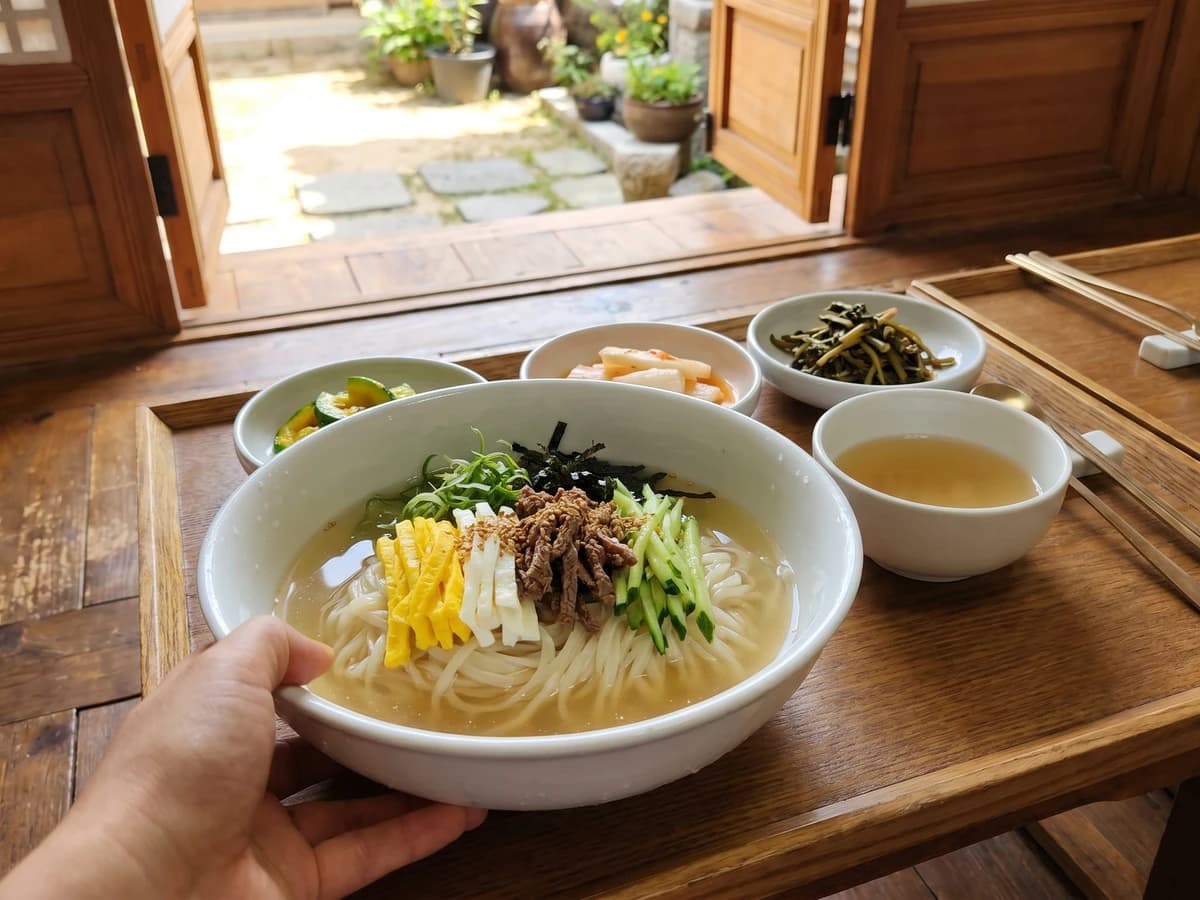
Andong's guest noodles, wheat and roasted soybean flour rolled thin, boiled and rinsed cold, then set in a clear chilled anchovy broth with careful strips of beef, egg, and cucumber.

Chef Jeong-sun
Andong's ritual-table rice served on an ordinary day: separate soy-sesame namul, warm rice, and clear radish soup, mixed without gochujang so every vegetable keeps its own voice.