
Chef Jeong-sun
Agwi-jjim (Braised Monkfish with Bean Sprouts)
Firm monkfish buried under crisp soybean sprouts, minari, and a red gochugaru sauce thickened at the end; Masan's market dish asks for heat, timing, and a steady hand.
A cooking platform built around craft, culture, and the stories behind what we eat.

Created by
Firm raw fish, cucumber, pear, minari, and perilla tossed in a sharp red chojang dressing, mixed only at the last minute so the fish stays cold and clean.
Hoe-muchim lives or dies in the last two minutes. The fish must be cold, the vegetables must be dry and crisp, and the chojang (sweet-sour chili dressing) must cling instead of flood. People think the red sauce is the point. It isn't. The fish is the point. Let it taste like itself.
My teacher used this dish for the pieces of hoe that were too firm or uneven for a plain platter, never for fish that was tired. That distinction matters. Hoe-muchim is not a hiding place. It is what you make when good fish wants acidity, crunch, and a sharp hand at the table. The pear cools the chili, minari gives a clean green bite, and perilla leaves make the whole bowl smell Korean before anyone lifts chopsticks.
Tonight it asks for discipline, not difficulty. Buy safe fish, keep it cold, cut everything evenly, and dress it only when the table is ready. The safe corner to cut is the vessel: a chilled mixing bowl is enough, no special plate needed. The corner you don't cut is timing. Mix early and the vegetables weep, the fish softens, and the dish loses its spine.
Hoe-muchim belongs to Korea's raw-fish eating culture, especially the coastal market and port-table habit of serving sliced fish with chojang, vegetables, and soju rather than only soy sauce and wasabi. Regional versions vary by catch: in the east and south, fluke, rockfish, squid, or sea squirt may be tossed this way, while inland homes often use firm sashimi-grade fish bought from markets. The dish is modern in its red form because gochujang-based chojang became the common companion to hoe in the twentieth century, but the older habit is simple and practical: raw seafood, something sharp, something fresh, eaten at once.
Quantity
450g
skin and bones removed, kept very cold
Quantity
1 Korean cucumber or 1/2 English cucumber (about 120g)
seeded and cut into matchsticks
Quantity
1/2 small (about 80g)
very thinly sliced
Quantity
1/2 (about 150g)
peeled and cut into matchsticks
Quantity
6 leaves
rolled and thinly sliced
Quantity
60g
cut into 2-inch lengths
Quantity
2
thinly sliced on the diagonal
Quantity
1
thinly sliced
Quantity
2 tablespoons
Quantity
1 teaspoon
for finishing
Quantity
3 tablespoons
Quantity
2 tablespoons
Quantity
1 tablespoon
Quantity
1 tablespoon
Quantity
1 tablespoon
Quantity
2 teaspoons
minced
Quantity
1 teaspoon
Quantity
1 teaspoon
for the dressing
Quantity
1 teaspoon
fresh
Quantity
1/4 teaspoon
| Ingredient | Quantity |
|---|---|
| sashimi-quality firm white fishskin and bones removed, kept very cold | 450g |
| Korean cucumber or English cucumberseeded and cut into matchsticks | 1 Korean cucumber or 1/2 English cucumber (about 120g) |
| onionvery thinly sliced | 1/2 small (about 80g) |
| Korean pear or Asian pearpeeled and cut into matchsticks | 1/2 (about 150g) |
| perilla leaves (kkaennip)rolled and thinly sliced | 6 leaves |
| minari (Korean water parsley)cut into 2-inch lengths | 60g |
| scallionsthinly sliced on the diagonal | 2 |
| mild green chili (optional)thinly sliced | 1 |
| toasted sesame seeds | 2 tablespoons |
| toasted sesame oilfor finishing | 1 teaspoon |
| gochujang (Korean red chili paste) | 3 tablespoons |
| rice vinegar | 2 tablespoons |
| maesil-cheong (green plum syrup) or honey | 1 tablespoon |
| sugar | 1 tablespoon |
| soy sauce | 1 tablespoon |
| garlicminced | 2 teaspoons |
| gochugaru (Korean chili flakes) | 1 teaspoon |
| toasted sesame oilfor the dressing | 1 teaspoon |
| lemon juice or yuja juicefresh | 1 teaspoon |
| fine sea salt | 1/4 teaspoon |
Buy fish meant to be eaten raw, from a fishmonger who understands that you will serve it uncooked. Keep it at refrigerator temperature, below 4 degrees C or 40 degrees F, and use it the same day. Do not use freshwater fish for this. Hoe-muchim is generous with sauce, but sauce does not make unsafe fish safe.
In a bowl, stir together the gochujang, rice vinegar, maesil-cheong or honey, sugar, soy sauce, minced garlic, gochugaru, 1 teaspoon sesame oil, lemon or yuja juice, and salt until smooth. Taste it. It should be sweet, sour, spicy, and salty in that order, but none of them should bury the fish. If your gochujang is very sweet, reduce the sugar by 1 teaspoon.
Cut the cucumber and pear into matchsticks about 5cm long and 3mm thick. Slice the onion as thin as you can and soak it in cold water for 10 minutes, then drain and pat dry. Cut the minari into 2-inch lengths, slice the scallions, and roll the perilla leaves before slicing them into fine ribbons. Knife work matters here because thick vegetables bruise the fish and watery vegetables thin the sauce.
Pat the fish dry with clean paper towels, then slice it across the grain into strips about 6mm thick and 5cm long. Keep the fish on a chilled plate while you work. The pieces need enough thickness to stay springy after tossing, because thin sashimi slices collapse under chojang.
Put the cucumber, onion, pear, minari, scallions, and chili in a large cold bowl. Add the fish and 4 tablespoons of chojang first, then toss gently with gloved hands or chopsticks. Add more sauce 1 tablespoon at a time only if the fish still looks bare. Notebook 31 says 5 tablespoons of this sauce is right for 450g fish and this amount of vegetables. More than that turns hoe-muchim into red soup.
Fold in the sliced perilla leaves, 1 tablespoon sesame seeds, and the final teaspoon of sesame oil. Pile the hoe-muchim onto a chilled platter and scatter the remaining sesame seeds over the top. Serve immediately with rice, gim (roasted seaweed), and lettuce leaves if you like. Do not let it sit on the table while people finish talking. This dish is mixed, served, and eaten while it is still cold.
1 serving (about 270g)
Culinary guides, cultural storytelling, and the editorial depth that makes cooking meaningful.
Discover Culinary ExplorerChef Jeong-sun
Firm monkfish buried under crisp soybean sprouts, minari, and a red gochugaru sauce thickened at the end; Masan's market dish asks for heat, timing, and a steady hand.

Chef Jeong-sun
A quick Korean rice bowl built on contrast: warm rice, cold popping flying-fish roe, chopped vegetables, gim, sesame oil, and the crisp rice bottom a hot stone bowl gives you.
Chef Jeong-sun
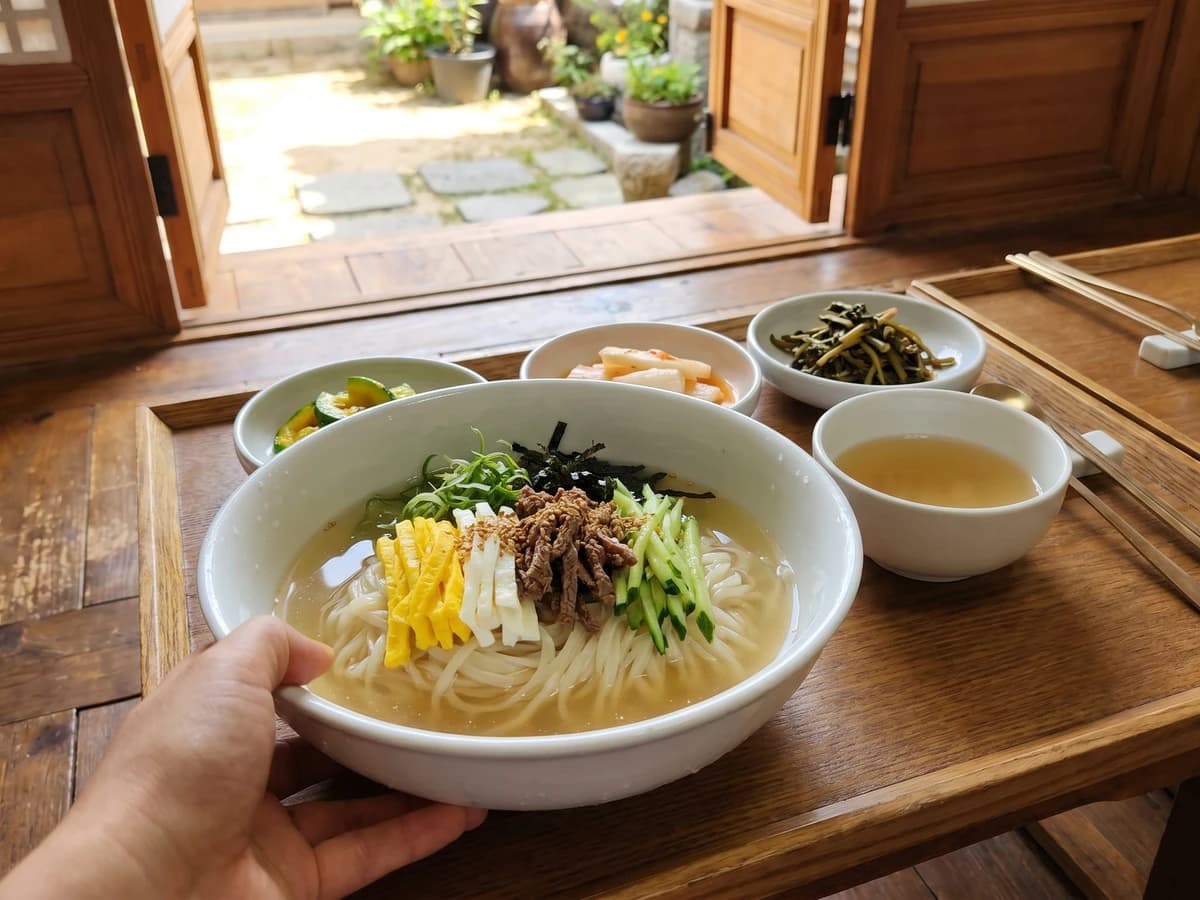
Andong's guest noodles, wheat and roasted soybean flour rolled thin, boiled and rinsed cold, then set in a clear chilled anchovy broth with careful strips of beef, egg, and cucumber.

Chef Jeong-sun
Andong's ritual-table rice served on an ordinary day: separate soy-sesame namul, warm rice, and clear radish soup, mixed without gochujang so every vegetable keeps its own voice.