
Chef Fai
Isan Beef Larb (Larb Nua)
No sugar. That's the rule. Isan larb strips Thai cuisine down to three pillars: nam pla for salt, manao for sour, prik for heat, bound by the smoky crunch of freshly pounded khao khua. The absence defines the dish.
A cooking platform built around craft, culture, and the stories behind what we eat.
Created by
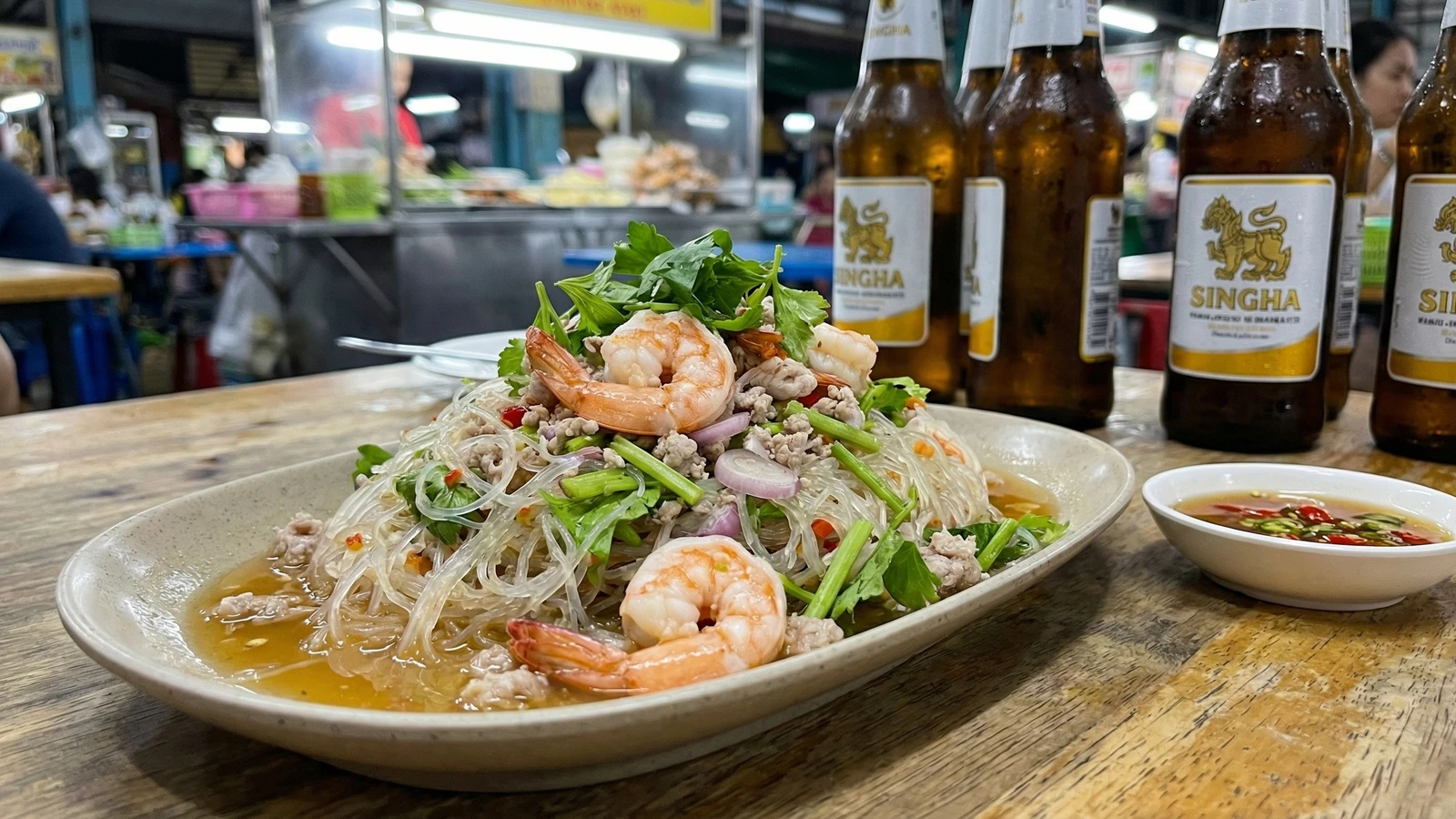
The four-pillar dressing meets the most absorbent noodle in Thai cooking. Dress while warm, serve at room temp, pile the herbs high. This is Central Thai yam distilled to its governing principle.
Yam wun sen is the dish that proves the dressing is everything.
Ajarn always said: in a Central Thai yam, the protein changes, the vegetables change, but the dressing never changes. Fish sauce for salt. Palm sugar for sweet. Lime for sour. Chili for spice. That's the law. Every yam in the Central Thai canon runs on this ratio. Once you understand the dressing, you can yam anything. Squid. Shrimp. Glass noodles. A tin of sardines if you're broke and hungry. The system is the point.
What makes yam wun sen special is the noodle itself. Wun sen (วุ้นเส้น) are mung bean glass noodles, almost flavorless on their own, practically transparent. They're a sponge. They exist to absorb. When you toss hot, just-cooked noodles with the dressing, the strands drink it in. Every bite carries the full four-pillar balance. That's why you dress yam wun sen while the noodles are still warm. Heat opens the starch structure. The dressing gets inside, not just on the surface. Let it cool to room temperature before serving, never cold from a fridge. Cold kills the aromatics and tightens the noodles into a sticky lump.
The herbs here aren't decoration. Mint, cilantro, Chinese celery (khuen chai, ขึ้นฉ่าย): these are structural ingredients. They provide the freshness that cuts through the richness of the pork and shrimp. Raw shallots, sliced thin, give a sharp bite that wakes up the whole plate. If you leave the herbs out, you don't have yam wun sen. You have dressed noodles. There's a difference, and it matters.
Yam wun sen belongs to the broad Central Thai family of yam (ยำ), dressed salads governed by the four-pillar dressing formula. Glass noodles (wun sen) arrived in Thai kitchens through Chinese trade centuries ago but were absorbed into the Thai yam tradition, dressed with nam pla and lime rather than soy and vinegar. The dish became a staple of Central Thai home cooking and street vendor menus in the mid-20th century, prized because the noodles are cheap, shelf-stable, and absorb flavor better than any rice noodle.
Quantity
100g
Quantity
150g
Quantity
200g (about 12)
peeled and deveined
Quantity
3 tablespoons
Quantity
3 tablespoons (about 3 limes)
Quantity
1 tablespoon
Quantity
5
sliced thin
Quantity
3
sliced thin
Quantity
2 stalks
cut into 1-inch pieces
Quantity
1/4 cup
Quantity
1/4 cup
Quantity
2 tablespoons
Quantity
2
sliced into 1-inch pieces
Quantity
for serving
| Ingredient | Quantity |
|---|---|
| dried glass noodles (wun sen) | 100g |
| minced pork | 150g |
| medium shrimppeeled and deveined | 200g (about 12) |
| fish sauce (nam pla) | 3 tablespoons |
| lime juice (nam manao) | 3 tablespoons (about 3 limes) |
| palm sugar (nam tan pip) | 1 tablespoon |
| bird's eye chilies (prik khi nu)sliced thin | 5 |
| shallots (hom daeng)sliced thin | 3 |
| Chinese celery (khuen chai)cut into 1-inch pieces | 2 stalks |
| fresh mint leaves (saranae) | 1/4 cup |
| fresh cilantro leaves and stems (phak chi) | 1/4 cup |
| dried shrimp (goong haeng) | 2 tablespoons |
| green onionssliced into 1-inch pieces | 2 |
| lime wedges | for serving |
Soak the dried glass noodles in room-temperature water for 15 minutes. They should soften and turn pliable but stay slightly firm. Don't use hot water. Hot water makes them go limp and gummy before they even hit the pot. You want them hydrated, not cooked. Not yet.
While the noodles soak, make the dressing. Dissolve the palm sugar (nam tan pip) in the lime juice (nam manao). Add the fish sauce (nam pla) and sliced bird's eye chilies (prik khi nu). Stir once. Taste it. The balance should hit you: sour first, salty second, sweet just barely rounding the edges, heat building from the chilies. Adjust now, not later. This dressing governs the entire dish. If the dressing is wrong, everything is wrong.
Bring a pot of water to a rolling boil. Drop in the minced pork, breaking it apart immediately with chopsticks or a fork. Let it cook for about 2 minutes until it's just cooked through, white all the way, no pink. Scoop it out with a slotted spoon and drop it straight into the dressing. The hot pork starts absorbing immediately. That's what you want. Now drop the shrimp into the same water. Cook them until they curl and turn pink, about 90 seconds. Scoop them out and add them to the dressing with the pork.
Drain the soaked noodles and drop them into the same boiling water. Cook for 60 to 90 seconds. That's it. Glass noodles go from perfect to mush in a heartbeat. They should be translucent, slippery, and still have a slight chew. Drain them immediately. If they sit in hot water, they're done for. Use scissors to cut the noodles into manageable lengths, about 6 inches. Nobody wants to fight a two-foot strand of wun sen at the table.
Add the hot noodles to the bowl with the dressing and proteins. Toss everything together right now. This is the critical moment. Warm noodles absorb. Cool noodles don't. The starch structure is open when the noodles are hot, and the dressing gets pulled inside every strand. Toss thoroughly. Every noodle should be coated and glistening.
Add the sliced shallots (hom daeng), Chinese celery (khuen chai), green onions, dried shrimp (goong haeng), mint leaves (saranae), and cilantro (phak chi). Toss gently. These go in last because they don't cook. They stay raw, sharp, and aromatic. Taste one more time. If the lime has faded (it does, fast), squeeze in a little more. If it needs more salt, a splash of fish sauce. Pound, taste, adjust. The yam method.
Transfer to a serving plate. Pile it up. The herbs should be visible on top, not buried underneath. Serve at room temperature with lime wedges on the side. Never from a fridge. Cold yam wun sen is stiff, muted, and sad. Room temperature is where the aromatics sing and the noodles stay supple. This is meant to be eaten immediately, shared with friends, ideally with cold drinks and too much chili.
1 serving (about 180g)
Culinary guides, cultural storytelling, and the editorial depth that makes cooking meaningful.
Discover Culinary ExplorerChef Fai
No sugar. That's the rule. Isan larb strips Thai cuisine down to three pillars: nam pla for salt, manao for sour, prik for heat, bound by the smoky crunch of freshly pounded khao khua. The absence defines the dish.

Chef Fai
No sugar. That's the line between Isan and Central Thai larb. Grilled catfish flaked while warm, dressed with nam pla, manao, khao khua, prik pon, and a storm of fresh herbs. The plateau on a plate.

Chef Fai
No sugar. That's the rule. Isan larb strips Thai cuisine down to three pillars: nam pla for salt, manao for sour, prik for heat, with khao khua tying it together in a way nothing else can.

Chef Fai
Duck brings gamey depth to the Isan larb formula. No sugar. Lime, fish sauce, khao khua, prik pon, and a wall of fresh herbs. This is the celebration table standard, and the governing rule is restraint.