
Chef Fai
Isan Beef Larb (Larb Nua)
No sugar. That's the rule. Isan larb strips Thai cuisine down to three pillars: nam pla for salt, manao for sour, prik for heat, bound by the smoky crunch of freshly pounded khao khua. The absence defines the dish.
A cooking platform built around craft, culture, and the stories behind what we eat.
Created by
The yam dressing is the four pillars made portable: nam pla for salt, manao for sour, nam tan pip for sweet, prik for heat. Dress the shrimp while they're still warm. The heat opens the dressing. That's the science talking.
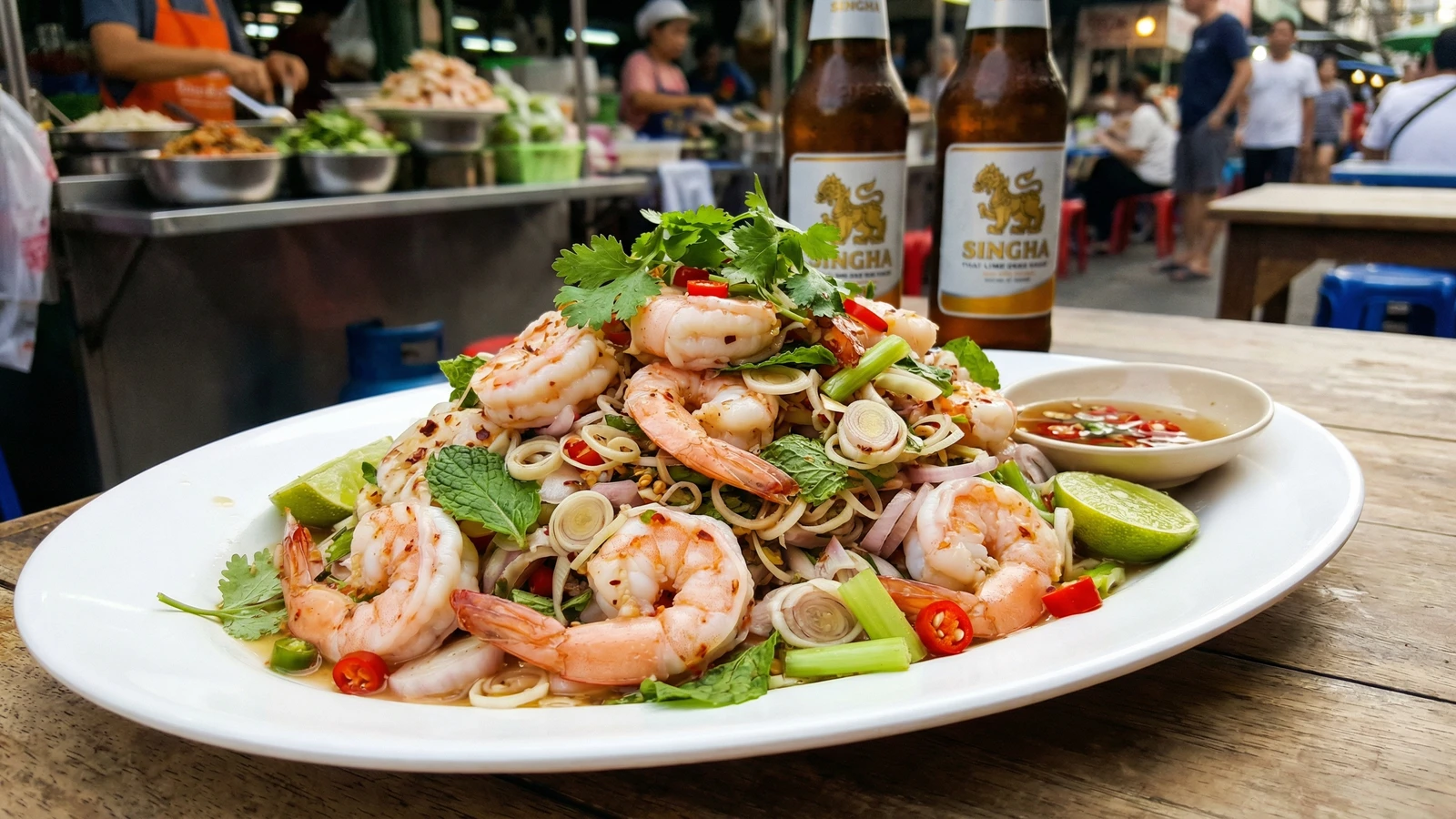
The yam dressing is the most important formula in Central Thai cooking that nobody talks about. Fish sauce for salt. Lime juice for sour. Palm sugar for sweet. Chili for spice. Four ingredients, mixed in a bowl, and you have the dressing that governs every Thai salad. Pla goong. Yam wun sen. Yam thua phoo. Every single one. Change the protein, change the herbs, keep the dressing. That's the system.
Ajarn always said: if you understand the dressing, you can dress anything. He wasn't being poetic. He was being literal. This ratio is the four pillars made portable, a vinaigrette built on the same governing rules that define gaeng, that define tom yam, that define som tam. Fish sauce gives you salinity plus umami from months of protein fermentation. Lime gives you the bright, volatile acidity of a tropical citrus. Palm sugar rounds the edges without making it sweet. And bird's eye chilies cut through everything with clean, direct heat. You taste this dressing once and you understand Thai cuisine.
Here's the technique that separates a good pla goong from a great one: dress the shrimp while they're still warm. Not hot. Not cold. Warm. The residual heat opens the pores of the protein, and the dressing penetrates instead of sitting on the surface. Every yam vendor in Bangkok knows this. They poach the shrimp, drain them, and while they're still steaming in the colander, the dressing goes on. By the time the herbs are tossed in and the dish hits the plate, it's room temperature and every shrimp is saturated with flavor.
The herbs in pla goong are not garnish. Let me say that again. The lemongrass, the mint, the Chinese celery, the shallots: these are structural ingredients. They carry weight in every bite. Lemongrass is sliced so thin it's almost translucent, from the tender inner core only. Mint leaves are torn, not chopped, so the oils release when you bite down. Shallots are raw and sliced thin enough to see through. Chinese celery (the thin-stalked kind, not the fat Western variety) adds a grassy bitterness that balances the richness of the shrimp. This is a composed dish. Every component earns its place.
Pla goong belongs to the Central Thai family of yam and pla (dressed salads), which emerged as a distinct category of Thai cuisine in the Rattanakosin period alongside the formalization of royal and domestic cooking traditions. The term "pla" in this context refers to a lime-dressed preparation (distinct from pla meaning fish), specifically applied to seafood salads dressed raw or barely cooked. The dish's reliance on a simple, unpounded dressing rather than a kreung tam places it in the same structural category as yam, making it a direct expression of the four-pillar framework without the paste foundation that defines curries and stir-fries.
Quantity
500g (about 20-24 pieces)
shell-on
Quantity
3 stalks
tender inner core only, sliced paper-thin
Quantity
3
sliced thin
Quantity
3 stalks
cut into 1-inch pieces with leaves
Quantity
1 cup
torn
Quantity
5
sliced thin
Quantity
3 tablespoons
Quantity
4 tablespoons (about 3-4 limes)
Quantity
1 tablespoon
shaved or grated
Quantity
1 tablespoon
Quantity
for finishing
Quantity
for serving
| Ingredient | Quantity |
|---|---|
| medium shrimp (goong)shell-on | 500g (about 20-24 pieces) |
| lemongrass (takhrai)tender inner core only, sliced paper-thin | 3 stalks |
| shallots (hom daeng)sliced thin | 3 |
| Chinese celery (kheun chai)cut into 1-inch pieces with leaves | 3 stalks |
| fresh mint leaves (bai saranae)torn | 1 cup |
| bird's eye chilies (prik khi nu)sliced thin | 5 |
| fish sauce (nam pla) | 3 tablespoons |
| lime juice (nam manao) | 4 tablespoons (about 3-4 limes) |
| palm sugar (nam tan pip)shaved or grated | 1 tablespoon |
| roasted chili flakes (prik pon) | 1 tablespoon |
| fresh cilantro sprigs (phak chi) | for finishing |
| lime wedges | for serving |
In a bowl, combine the fish sauce (nam pla), lime juice (nam manao), and palm sugar (nam tan pip). Stir until the sugar dissolves completely. Taste it. Right now, before anything else touches it. Sour should lead. Salty follows. Sweet should be barely there, just enough to round the edges. If the lime is too aggressive, add a pinch more sugar. If it tastes flat, more fish sauce. This dressing is the entire dish. Get it right and everything else falls into place.
Bring a pot of water to a rolling boil. Drop the shrimp in, shell-on. Watch them. The moment they curl into a C-shape and turn pink, about 90 seconds to 2 minutes, pull them out. Do not wait for a full curl into an O. That's overcooked. Shrimp go from perfect to rubber in the time it takes you to check your phone. Drain immediately. Peel while still warm. The shells slip off easier when they're hot, and you need that residual heat for the next step.
This is the step that makes or breaks the dish. While the shrimp are still warm (not screaming hot, not room temperature, warm), pour the dressing over them. Toss gently. The residual heat opens the protein's structure and the dressing penetrates the flesh instead of just coating the surface. Let them sit in the dressing for 2 minutes. Every yam vendor in Bangkok does this. It's not a trick. It's the science of how warm protein absorbs liquid. Cold shrimp in dressing gives you dressed shrimp. Warm shrimp in dressing gives you pla goong.
Take the lemongrass stalks and peel away the tough outer layers until you reach the pale, tender core. Slice it as thin as you physically can. Paper-thin. Translucent. If you can't see light through the slices, they're too thick. Thick lemongrass is fibrous and unpleasant to chew. Thin lemongrass is aromatic, tender, and releases its citral oils with every bite. This is a raw preparation. The lemongrass doesn't cook. It needs to be thin enough to eat.
Add the sliced lemongrass, shallots, Chinese celery, sliced chilies, and roasted chili flakes (prik pon) to the dressed shrimp. Toss gently with your hands or two spoons. Now add the torn mint leaves and toss once more, just to distribute. The mint goes in last because it bruises easily and you want the leaves bright and fragrant, not wilted and dark. Taste a shrimp with a piece of lemongrass and a mint leaf together. That's a bite. Sour, salty, herbal, spicy, with the sweetness of the shrimp cutting through. If the balance is right, you'll know. If it needs more lime, squeeze it now. Sour goes in last, sour goes in slowly.
Transfer to a serving plate. Don't arrange it like a fine-dining restaurant. Pile it with confidence. The herbs should be visible and generous, not tucked underneath. Scatter cilantro sprigs on top. Place lime wedges on the side. Serve immediately at room temperature. Never from the fridge. Cold kills the aromatics, mutes the lime, and tightens the shrimp. This dish is alive at room temperature. It dies in the refrigerator.
1 serving (about 150g)
Culinary guides, cultural storytelling, and the editorial depth that makes cooking meaningful.
Discover Culinary ExplorerChef Fai
No sugar. That's the rule. Isan larb strips Thai cuisine down to three pillars: nam pla for salt, manao for sour, prik for heat, bound by the smoky crunch of freshly pounded khao khua. The absence defines the dish.

Chef Fai
No sugar. That's the line between Isan and Central Thai larb. Grilled catfish flaked while warm, dressed with nam pla, manao, khao khua, prik pon, and a storm of fresh herbs. The plateau on a plate.

Chef Fai
No sugar. That's the rule. Isan larb strips Thai cuisine down to three pillars: nam pla for salt, manao for sour, prik for heat, with khao khua tying it together in a way nothing else can.

Chef Fai
Duck brings gamey depth to the Isan larb formula. No sugar. Lime, fish sauce, khao khua, prik pon, and a wall of fresh herbs. This is the celebration table standard, and the governing rule is restraint.