
Chef Fai
Isan Beef Larb (Larb Nua)
No sugar. That's the rule. Isan larb strips Thai cuisine down to three pillars: nam pla for salt, manao for sour, prik for heat, bound by the smoky crunch of freshly pounded khao khua. The absence defines the dish.
A cooking platform built around craft, culture, and the stories behind what we eat.
Created by
The yam dressing is the four pillars made portable: nam pla for salt, manao for sour, nam tan pip for sweet, prik for heat. Dress the beef while it's hot. The warmth opens the dressing and pulls it into every fiber.
Yam is the most honest expression of the four-pillar system. No paste. No coconut. No wok. Just a dressing built on fish sauce, lime juice, palm sugar, and chili, tossed with a protein and enough fresh herbs to make the whole thing alive. If you understand yam, you understand the governing rules of Thai flavor in their purest, most portable form.
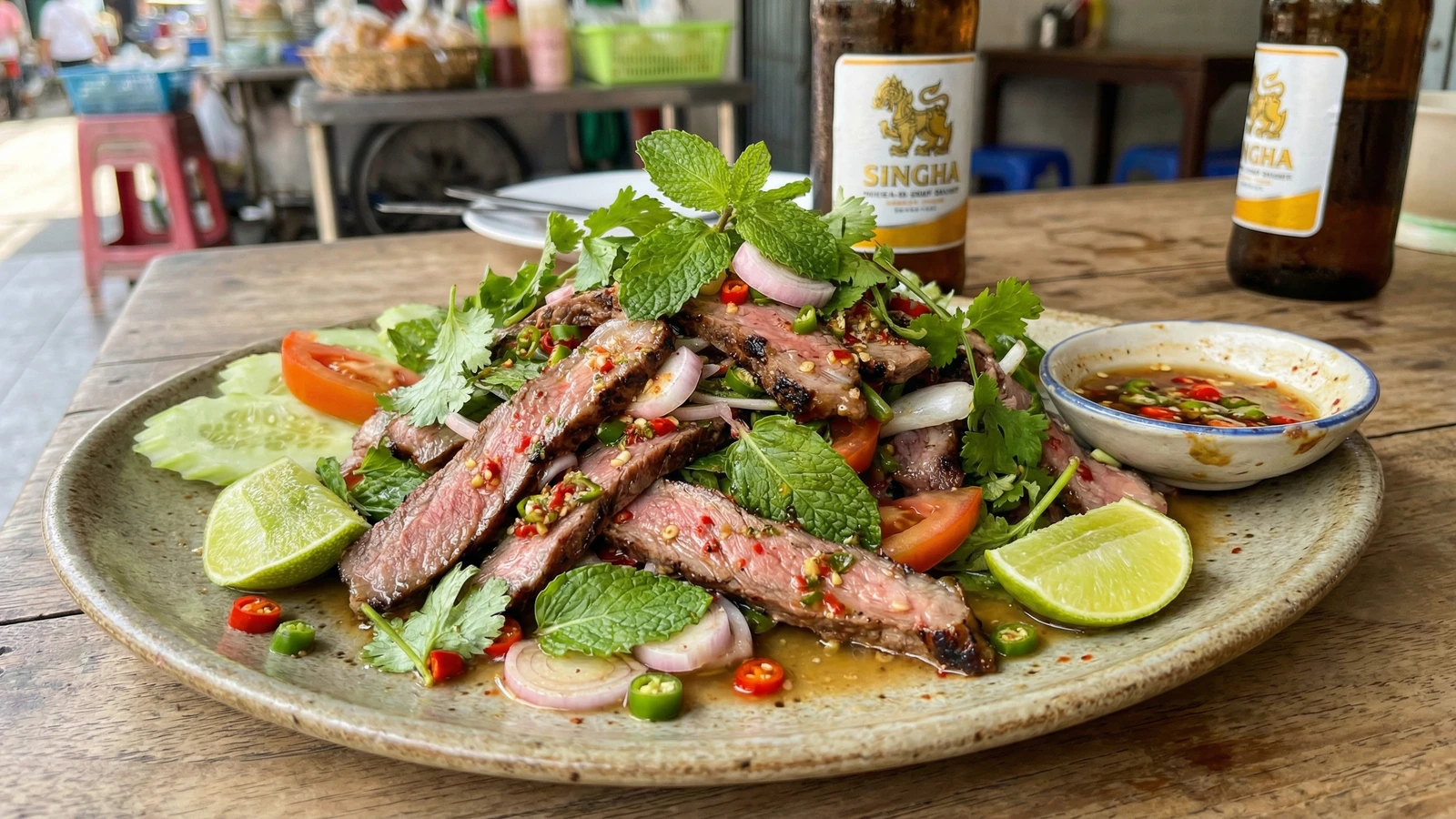
Yam nua is the beef version, and the principle that makes it work is temperature. You grill the beef hot, slice it while it's still warm, and dress it immediately. Ajarn always said: "Hot protein, cold herbs, room-temperature dressing. That's the architecture of yam." The warmth of the meat opens its fibers and lets the dressing soak in. If you chill the beef first and dress it cold, the lime and fish sauce sit on the surface. You get salad with beef in it. You don't get yam nua.
The herbs here are not garnish. Mint, cilantro, shallots, these are structural ingredients carrying as much weight as the beef itself. A proper yam nua should have almost as much herb volume as meat. When I teach this at Fai Thai workshops, I watch people pile on beef and scatter three leaves of mint on top. That's not yam. That's a steak plate with decoration. The herbs are doing half the work.
Fish sauce for salt. Palm sugar for sweet. Lime for sour. That's the law. No vinegar. No soy sauce. No granulated sugar. The dressing ratio is yours to own, but the ingredients are fixed. Taste it before the beef goes in. If the dressing isn't balanced on its own, nothing you add later will save the dish.
Yam (ยำ) is one of the oldest Thai culinary categories, a method of dressing ingredients in a sour-salty-sweet-spicy vinaigrette that predates the arrival of the chili pepper in Southeast Asia (when sourness and heat came from native peppercorns and tamarind). Yam nua became a popular Central Thai restaurant and home dish in the late 20th century as beef consumption grew alongside Thailand's expanding middle class. Unlike Isan beef dishes such as nam tok (which uses toasted rice powder and belongs to the larb family), yam nua follows the Central Thai dressing formula with no khao khua and relies on raw shallots and fresh herbs for texture.
Quantity
300g
about 1 inch thick
Quantity
1 tablespoon
Quantity
3 tablespoons (about 3 limes)
Quantity
2 tablespoons
Quantity
1 teaspoon
Quantity
5
sliced into thin rounds
Quantity
3
sliced thin
Quantity
1 small
sliced into thin half-moons
Quantity
2 medium
cut into wedges
Quantity
1 small
halved lengthwise, sliced on a bias
Quantity
1 large handful
Quantity
1 large handful
roughly torn
Quantity
3-4
cut into 1-inch pieces
Quantity
1 stalk, tender part only
sliced paper-thin
| Ingredient | Quantity |
|---|---|
| beef sirloin or flank steakabout 1 inch thick | 300g |
| vegetable oil | 1 tablespoon |
| lime juice (nam manao) | 3 tablespoons (about 3 limes) |
| fish sauce (nam pla) | 2 tablespoons |
| palm sugar (nam tan pip) | 1 teaspoon |
| bird's eye chilies (prik khi nu)sliced into thin rounds | 5 |
| shallots (hom daeng)sliced thin | 3 |
| red onionsliced into thin half-moons | 1 small |
| tomatoescut into wedges | 2 medium |
| cucumberhalved lengthwise, sliced on a bias | 1 small |
| fresh mint leaves (saranae) | 1 large handful |
| fresh cilantro sprigs (phak chi)roughly torn | 1 large handful |
| Chinese celery stalks (khuen chai) (optional)cut into 1-inch pieces | 3-4 |
| lemongrass (takhrai) (optional)sliced paper-thin | 1 stalk, tender part only |
In a small bowl, combine the lime juice, fish sauce, and palm sugar. Stir until the sugar dissolves. Add the sliced chilies. Taste it now, before anything else happens. The dressing should hit sour first, salty second, with sweetness barely rounding the edges and heat building at the back of your tongue. If it's too sour, a touch more fish sauce. Too salty, more lime. This ratio is the spine of every Central Thai yam. Get it right and the rest is assembly.
Rub the steak with a thin coat of oil and season with a splash of fish sauce on each side. Get your grill (or a cast-iron pan) ripping hot. Lay the steak down and don't touch it. Three to four minutes per side for medium-rare, depending on thickness. You want a hard char on the outside and pink through the middle. The char gives you smoky bitterness that plays against the sour dressing. Overcooked beef turns chewy and dry, and no amount of dressing will fix that. Pull it off the heat when it still feels slightly soft in the center.
Rest the beef for exactly 3 minutes. No longer. You want it warm when you dress it, not room temperature. Slice against the grain into pieces about a quarter-inch thick. They should be thin enough to fold when you pick them up. The cut surface should be pink and glistening. If juice pools on the board, pour it into the dressing. That's flavor. Don't waste it.
This is the critical step. Put the warm sliced beef into a large mixing bowl. Pour the dressing over it immediately. Toss. The heat of the meat opens the fibers and pulls the lime and fish sauce inside. You're not marinating. You're dressing warm protein so it absorbs flavor. Wait five minutes and you've lost the window. Now add the shallots, red onion, tomato wedges, cucumber, and the optional lemongrass. Toss again gently.
Add the mint leaves, torn cilantro, and Chinese celery if using. Toss one final time, gently, so the herbs distribute without bruising. Transfer to a serving plate. The herbs should sit on top and through the beef, not buried under it. Serve immediately at room temperature. Never from the fridge. Yam nua is designed to be eaten the moment it's dressed. The lime juice starts cooking the herbs and wilting the shallots within minutes. That clock is ticking. Put it on the table and eat.
1 serving (about 385g)
Culinary guides, cultural storytelling, and the editorial depth that makes cooking meaningful.
Discover Culinary ExplorerChef Fai
No sugar. That's the rule. Isan larb strips Thai cuisine down to three pillars: nam pla for salt, manao for sour, prik for heat, bound by the smoky crunch of freshly pounded khao khua. The absence defines the dish.

Chef Fai
No sugar. That's the line between Isan and Central Thai larb. Grilled catfish flaked while warm, dressed with nam pla, manao, khao khua, prik pon, and a storm of fresh herbs. The plateau on a plate.

Chef Fai
No sugar. That's the rule. Isan larb strips Thai cuisine down to three pillars: nam pla for salt, manao for sour, prik for heat, with khao khua tying it together in a way nothing else can.

Chef Fai
Duck brings gamey depth to the Isan larb formula. No sugar. Lime, fish sauce, khao khua, prik pon, and a wall of fresh herbs. This is the celebration table standard, and the governing rule is restraint.