Culinary Explorer

A cooking platform built around craft, culture, and the stories behind what we eat.
Discover Culinary Explorer
Yabluchnyk (яблучник, rustic apple cake)

Yabluchnyk (яблучник, rustic apple cake)

Created by

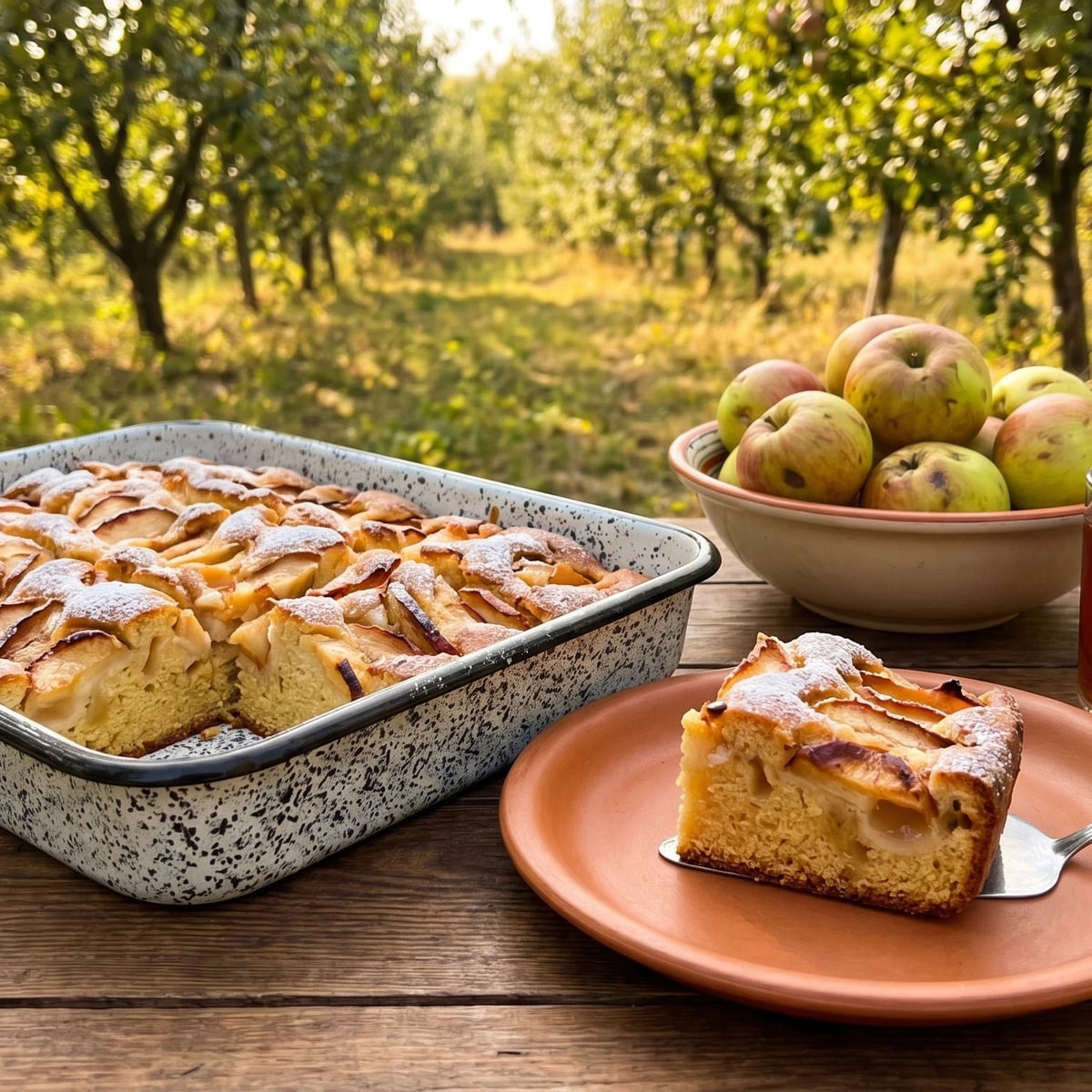
The best yabluchnyk looks almost overloaded, apples pushing through the batter until the cake gives up pretending to be tidy and becomes a garden tray bake.

Desserts
Ukrainian
Comfort Food
Budget Friendly
Batch Cooking
25 min
Active Time
50 min cook1 hr 15 min total
Yield12 generous squares

The cake should look like the apples won. Not a polite crumb with a few neat slices laid on top, but a tray full of fruit barely held together by soft batter, edges caramelized where the juice has bubbled up and caught. This is what you bake when the trees start dropping more than anyone can eat, when the litnya kuhnia, the summer kitchen, smells of warm skins, flour dust, and someone saying, "Use the bruised ones first."

Yabluchnyk is a working cake. It sits on the table in squares, not slices, and people take one while passing through, then come back pretending they only wanted tea. The batter is simple on purpose: eggs for lift, kefir for tenderness, sunflower oil so it stays soft the next day, and enough flour to hold the apples in place without silencing them.

The one thing that decides it is the fruit. Cut the apples unevenly, some thin so they melt, some chunky so your teeth find them. Bake until the smell changes from raw batter to baked orchard, sweet, toasty, a little sharp at the edges. If plums or pears are what your garden gives you, use them. A living recipe knows the tree outside the door.

Yabluchnyk takes its name from yabluko, the Ukrainian word for apple, and it belongs to the wide family of household fruit cakes that changed from region to region instead of settling into one official form. In western Ukraine it often appears as a more layered yabluchnyi plyatsok, while southern and central home kitchens keep looser tray-bake versions for orchard gluts, dacha weekends, and the practical business of using fruit before it softens. Soviet-era recipe standardization favored measured sponge cakes, but the older household logic survived in notebooks: fruit first, crumb second.

The technique, the tradition, and the story behind every dish.

Discover Culinary Explorer

Ingredients

tart-sweet apples

Quantity

1.2 kg

cored, some thinly sliced and some cut into rough chunks

eggs

Quantity

3 large

sugar

Quantity

180g, plus 2 tablespoons for the top

kefir or plain yogurt

Quantity

120ml

neutral sunflower oil

Quantity

120ml

vanilla sugar or vanilla extract

Quantity

1 teaspoon

plain flour

Quantity

260g

baking powder

Quantity

2 teaspoons

fine sea salt

Quantity

1/2 teaspoon

ground cinnamon

Quantity

1 teaspoon

semolina or dry breadcrumbs

Quantity

1 tablespoon

for the tin

butter or sunflower oil

Quantity

as needed

for greasing

icing sugar (optional)

Quantity

to dust

Equipment Needed

  • 23 by 33 cm metal baking tin
  • Large mixing bowl
  • Balloon whisk
  • Rubber spatula

Instructions

  1. 1

    Prepare the tin

    Heat the oven to 180C. Grease a 23 by 33 cm baking tin with butter or sunflower oil, then scatter in the semolina or dry breadcrumbs and shake it around so the bottom and corners are lightly coated. That little rough layer catches the apple juice and helps the bottom bake instead of turning damp.

    A metal tin gives you better edges than glass. If glass is what you have, cook it anyway and give the cake a little longer.
  2. 2

    Cut the apples

    Core the apples but don't fuss over peeling unless the skins are tough. Slice half of them thinly and cut the rest into rough thumb-sized chunks. The thin pieces melt into the batter, the chunks stay bright and juicy, and together they make the cake taste like more than one apple.

  3. 3

    Whisk the batter

    Whisk the eggs with 180g sugar until the mixture lightens and falls from the whisk in a loose ribbon. Beat in the kefir, sunflower oil, and vanilla. It will look glossy and a little golden, nothing fancy, just alive enough to carry the fruit.

  4. 4

    Fold it together

    Stir the flour, baking powder, salt, and cinnamon together, then fold them into the wet mixture until no dry pockets remain. Add the apple chunks and half the slices, turning gently with a spatula. The bowl will look too full. Good. This is enough for eight guests or one hungry Ukrainian.

  5. 5

    Fill and top

    Scrape the batter into the tin and nudge it into the corners. Lay the remaining apple slices across the top in whatever pattern your patience allows, then scatter with the extra sugar. Don't press the fruit down hard; it will settle as the cake rises around it.

  6. 6

    Bake by smell

    Bake until the top is deep golden, the edges pull slightly from the tin, and the center springs back when pressed with two fingers. A skewer should come out with moist crumbs, not wet batter. More than the clock, trust the smell: when it changes from raw flour to baked apples and toasted sugar, you're close.

  7. 7

    Cool and cut

    Let the cake sit in the tin until warm, not hot, then cut it into generous squares. Dust with icing sugar if you like, but don't bury the apple color. Serve plain, with sour cream, or with black tea strong enough to argue back.

Chef Tips

  • Use apples with some sharpness: Antonivka if you can find them, Bramley mixed with Cox, Granny Smith mixed with any fragrant eating apple. All-sweet apples make a sleepy cake.
  • If the apples are very juicy, toss them with 1 tablespoon of the measured flour before folding them in. That helps hold the juice in the crumb.
  • Plums and pears stand in beautifully. Pears want a little more cinnamon; plums like a spoon of sugar over the cut fruit because their sourness comes forward as they bake.
  • The batter forgives you. The fruit balance doesn't. Keep it more apple than crumb, or you've made a plain cake with visitors.
  • Store covered at room temperature for a day, or in the fridge for three days. It softens overnight in the best way.

Advance Preparation

  • The apples can be cut 1 hour ahead and tossed with a squeeze of lemon if they brown quickly.
  • Yabluchnyk keeps well and is often better the next day, when the apple juice has settled into the crumb.
  • Bake the full tray even for a small table. This is batch-cooking cake, and small yabluchnyk looks lonely.

Frequently Asked Questions

Nutrition Information

1 serving (about 150g)

Calories
320 calories
Total Fat
12 g
Saturated Fat
2 g
Trans Fat
0 g
Unsaturated Fat
10 g
Cholesterol
50 mg
Sodium
200 mg
Total Carbohydrates
50 g
Dietary Fiber
3 g
Sugars
29 g
Protein
5 g

Note: Chef personas and recipes are created with AI assistance. Cook with care: follow safe food-handling practices, check doneness with a thermometer when needed, and adapt for allergies and your kitchen.

Where cooking meets culture.

Culinary guides, cultural storytelling, and the editorial depth that makes cooking meaningful.

Discover Culinary Explorer

More from Ukrainian Sweets & Festive Desserts

Browse the full collection