Culinary Explorer

A cooking platform built around craft, culture, and the stories behind what we eat.
Discover Culinary Explorer
Lvivskyi Syrnyk (львівський сирник, chocolate curd cake)

Lvivskyi Syrnyk (львівський сирник, chocolate curd cake)

Created by

A cake made from white curd goes to the table wearing black: dense, lemon-scented syr under dark chocolate glaze, sliced cold and proud from the west.

Desserts
Ukrainian
Special Occasion
Make Ahead
Celebration
35 min
Active Time
1 hr cook10 hr 35 min total
Yield10 to 12 slices

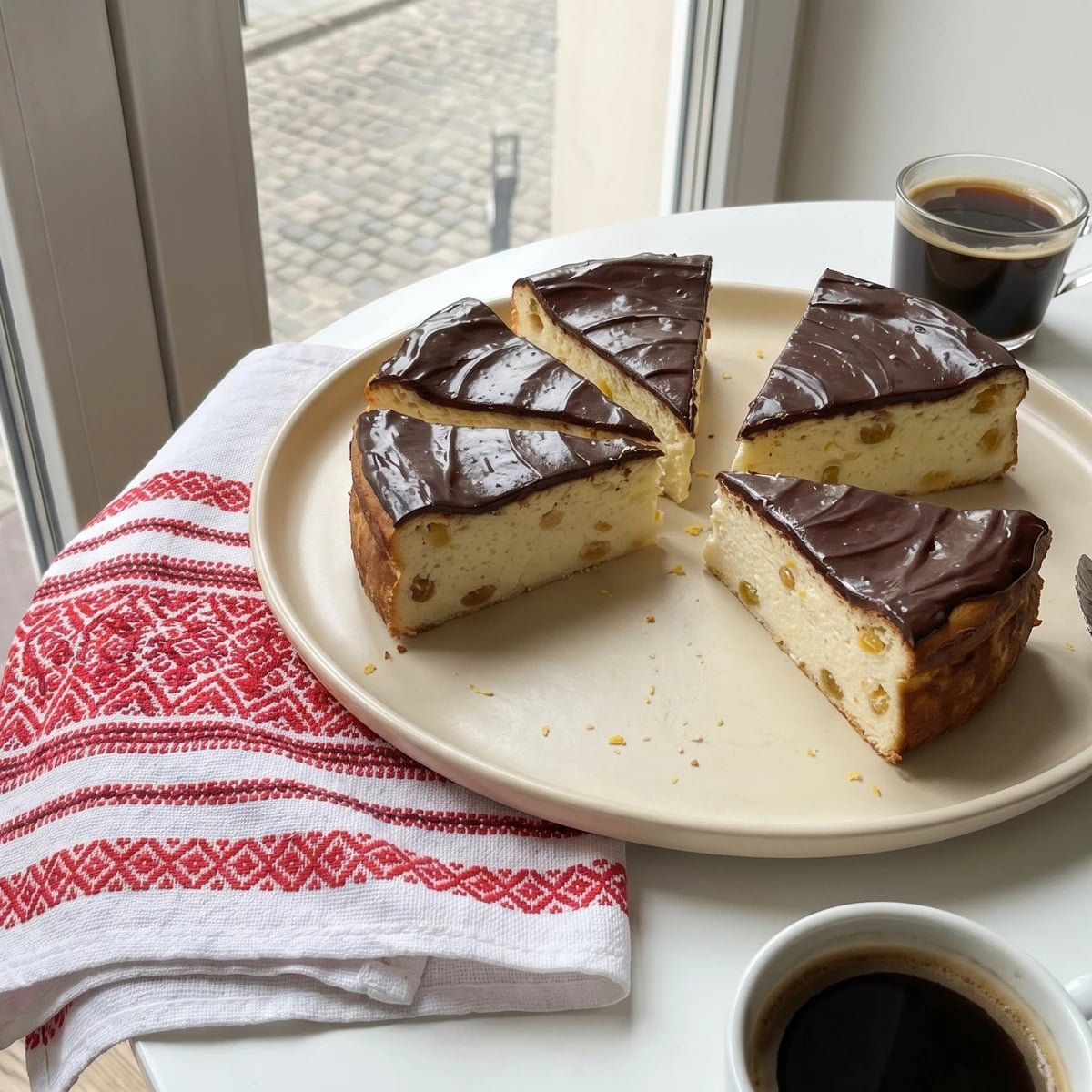
The first surprise is that a cake made from white curd goes to the table wearing black. Cut through the dark chocolate glaze and the inside is pale, close-grained, lemony, freckled with raisins if your house allows them. It is not the fried syrnyk you eat for breakfast with smetana. This one stands on a celebration table in slices, quiet until the fork goes in.

The one thing that decides it is the syr, fresh curd cheese, and how dry and fine you make it. Wet curd gives you a weeping cake. Grainy curd gives you little white pebbles where there should be silk. Press it, then rub it through a sieve or work it smooth in a processor, and the cake sets dense but tender, like sweetened cheese learned manners from a Lviv cafe window.

Aunt Nadia wrote only, "bake until it smells ready," which was rude of her and also correct. First it smells like eggs and sugar. Then the lemon peel comes forward, the edges puff, and the top loses its wobble while the middle still trembles a little. Chill it overnight. Syrnyk is impatient when warm, and splendid the next day.

Lvivskyi syrnyk belongs to Halychyna, western Ukraine's Galicia region, where Ukrainian home baking met Central European cafe culture under the Habsburgs and later kept its own shape through family kitchens and city pastry shops. The word syr in Ukrainian means fresh curd cheese here, not hard cheese, which is why this cake is dense and dairy-rich rather than airy like many American cheesecakes. Its chocolate glaze is a Lviv signature, making it a city dessert as much as a household one.

The technique, the tradition, and the story behind every dish.

Discover Culinary Explorer

Ingredients

full-fat syr, tvorog, farmer's cheese, or well-drained ricotta

Quantity

750g

pressed dry and rubbed smooth

unsalted butter

Quantity

120g

softened

caster sugar

Quantity

150g

large eggs

Quantity

4

separated

fine semolina or cornflour

Quantity

2 tablespoons

lemon

Quantity

1

finely zested

vanilla sugar or vanilla extract

Quantity

1 teaspoon

raisins

Quantity

80g

dark rum, black tea, or warm water (optional)

Quantity

2 tablespoons

for soaking raisins

fine sea salt

Quantity

pinch

dark chocolate

Quantity

100g

60 to 70 percent cocoa

unsalted butter, for the glaze

Quantity

50g

smetana or sour cream, for the glaze

Quantity

2 tablespoons

sugar, for the glaze

Quantity

1 tablespoon

Equipment Needed

  • 22 by 12 cm loaf tin or 20 cm square tin
  • Fine sieve, meat grinder, or food processor
  • Muslin or clean tea towel for draining
  • Small saucepan for the glaze

Instructions

  1. 1

    Dry the syr

    If your syr or farmer's cheese feels wet, wrap it in muslin or a clean tea towel, set it in a sieve over a bowl, and weigh it down for a few hours or overnight in the fridge. It should feel damp and cool, not dripping. This is the step that makes the cake slice clean instead of sighing liquid onto the plate.

    Ricotta works if you drain it hard. A tub of loose supermarket cheese can still make a good syrnyk, but it needs patience before it meets the eggs.
  2. 2

    Smooth the curd

    Rub the drained syr through a sieve, pass it through a meat grinder, or pulse it in a food processor until it loses its graininess. Stop before it turns runny. You want fine curd that holds together on a spoon, not a whipped cream cheese puddle.

  3. 3

    Prepare the tin

    Line a 22 by 12 cm loaf tin or a 20 cm square tin with baking paper, leaving enough overhang to lift the cake out later. Soak the raisins in rum, black tea, or warm water while you mix the batter, then drain them well. Raisins should be plump, not swimming.

  4. 4

    Beat the base

    Beat the softened butter with the sugar until the mixture turns pale and fluffy, then beat in the egg yolks one at a time. Add the smooth syr, semolina or cornflour, lemon zest, vanilla, and salt. The batter should look thick and glossy, with the lemon smell just starting to lift.

  5. 5

    Fold the whites

    Whisk the egg whites until they hold soft peaks, then fold them into the curd mixture in three additions. Be gentle but not theatrical. The batter is dense by nature; you're loosening it enough to bake tender, not trying to make it float away. Fold in the drained raisins.

  6. 6

    Bake until set

    Spoon the batter into the lined tin and smooth the top. Bake at 170C until the edges are puffed and lightly golden, the top is set, and the middle gives only a small tremble when you nudge the tin. It should smell of warm curd, butter, and lemon, no longer raw egg. Let it cool completely in the tin.

  7. 7

    Glaze in black

    Melt the chocolate, butter, smetana, and sugar together gently until glossy and smooth, stirring so it doesn't catch. Lift the cooled syrnyk from the tin and coat the top and sides with the glaze. Let the chocolate settle into a dark, even coat, with little waves from the spoon still visible.

  8. 8

    Chill and slice

    Chill the glazed syrnyk overnight before slicing. This is not politeness; it is structure. The curd firms, the lemon quiets into the dairy, and the chocolate glaze cuts cleanly under a warm knife. Serve cold or cool, in thick slices, enough for eight guests or one hungry Ukrainian.

Chef Tips

  • The syr matters most. If it tastes sharp, milky, and clean before baking, the cake will taste good after baking. If it is watery, press it; if it is grainy, smooth it.
  • Raisins are traditional in many Lviv homes, but not law. Leave them out if your table argues about them, or use chopped dried apricots for a bit more modern version.
  • Do not rush the chill. Warm syrnyk tastes pleasant but cuts badly; next-day syrnyk is the dish.
  • A loaf tin gives the classic tall slices under a dark cap of glaze. A square tin is easier for a crowd and forgives a slightly softer curd.

Advance Preparation

  • Drain the syr overnight if it is wet; this can be done up to 24 hours ahead.
  • The finished syrnyk must chill overnight and keeps well for 3 to 4 days in the fridge.
  • Glaze it the day before serving so the chocolate has time to set cleanly.

Frequently Asked Questions

Nutrition Information

1 serving (about 125g)

Calories
360 calories
Total Fat
22 g
Saturated Fat
13 g
Trans Fat
0 g
Unsaturated Fat
7 g
Cholesterol
120 mg
Sodium
140 mg
Total Carbohydrates
31 g
Dietary Fiber
2 g
Sugars
23 g
Protein
12 g

Note: Chef personas and recipes are created with AI assistance. Cook with care: follow safe food-handling practices, check doneness with a thermometer when needed, and adapt for allergies and your kitchen.

Where cooking meets culture.

Culinary guides, cultural storytelling, and the editorial depth that makes cooking meaningful.

Discover Culinary Explorer

More from Ukrainian Sweets & Festive Desserts

Browse the full collection