
Chef Lesia
Gombovtsi (ґомбовці, plum-stuffed steamed dumplings)
The first cut is the whole argument: pale potato dough, toasted butter crumbs, then a hot purple plum collapsing into syrup at the center.
A cooking platform built around craft, culture, and the stories behind what we eat.
Created by
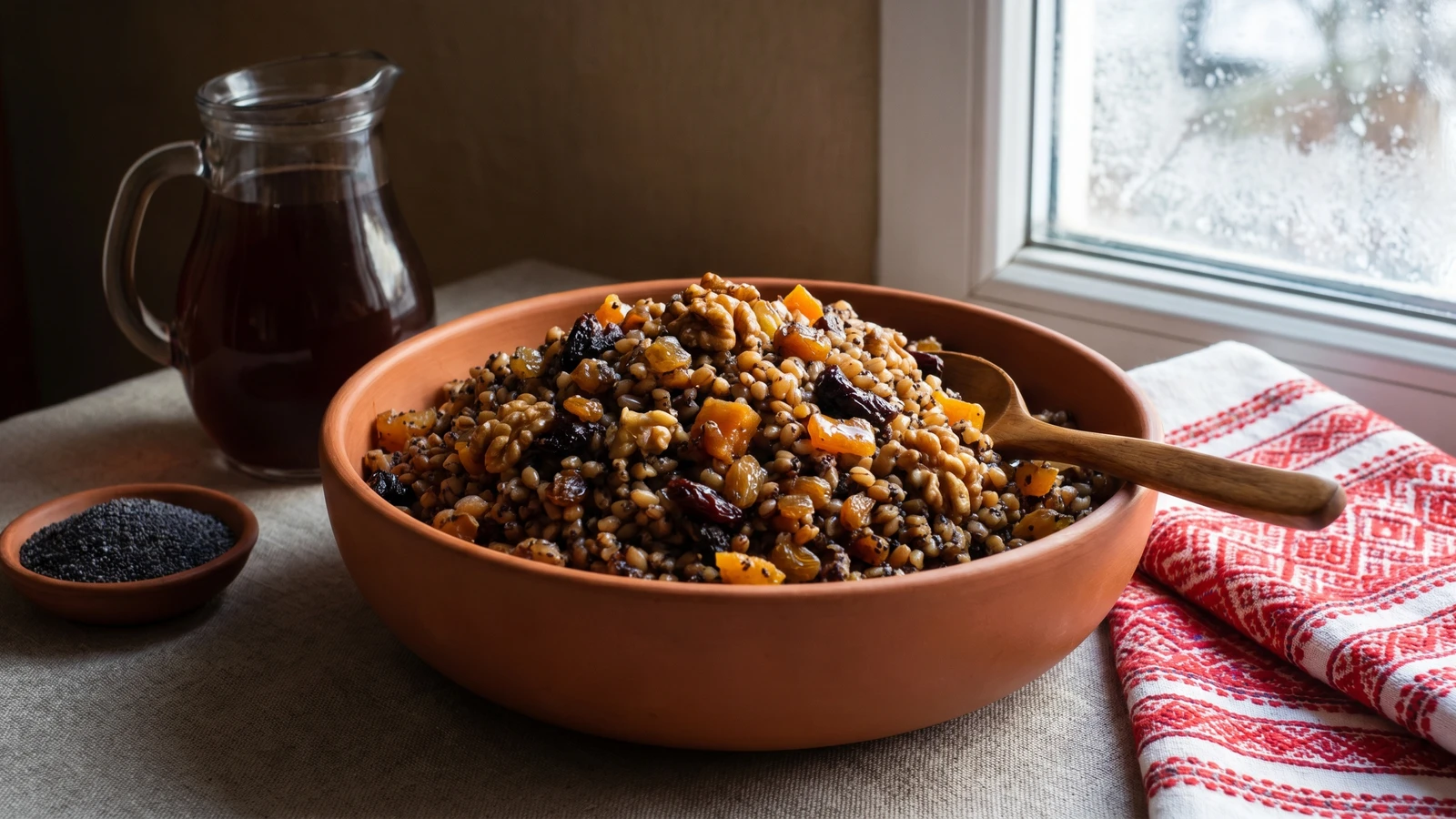
The first spoonful of Christmas Eve is dark wheat, white poppy milk, honey, nuts, and memory. Kutia comes before everything else because grain must speak first.
Before the table is full, before the borshch, before anyone starts passing plates too quickly, there is one spoonful of sweet wheat. Kutia is quiet to look at until you stir it: black poppy seeds crushed into milk, honey loosening over warm grain, walnuts snapping under your teeth, raisins swollen with uzvar, the dried-fruit drink that tastes like winter stored in a cupboard.
This is the first dish of Sviata Vecheria, the Christmas Eve supper, and it doesn't rush. The wheat berries must cook until they open at the seam but still keep their chew. The poppy must be ground until it turns from seeds into a pale, nutty paste. That is the one why that decides the dish: whole poppy seeds only scatter; ground poppy gives milk, body, and the old ceremonial sweetness that carries the honey through every spoonful.
Aunt Nadia's letter says, maddeningly, "poppy until white," as if that were a measurement. She was right. You'll see it. First the seeds look dry and separate, then they bruise, then suddenly the mortar smells warm and oily and the paste lightens. Until the smell changes.
Make enough for the whole table. Kutia is not a little dessert at the end; it is the door the feast walks through.
Kutia is one of Ukraine's oldest ritual dishes, served at Sviata Vecheria, the meatless Christmas Eve supper of twelve dishes, and also appearing in memorial meals where grain, honey, and poppy carry meanings of life, sweetness, and remembrance. Wheat is the ceremonial grain across much of central and western Ukraine, while barley, rice, or dried-fruit additions mark local habit and more modern kitchens. The dish survived Soviet attempts to push religious food into private rooms because it could hide in plain sight as a simple bowl of sweet grain.
Quantity
250g
Quantity
1.5 litres, plus more for soaking
Quantity
1/2 teaspoon
Quantity
120g
Quantity
250ml
for soaking the poppy seeds
Quantity
90g, plus more to taste
Quantity
120ml
Quantity
75g
toasted and roughly chopped
Quantity
60g
Quantity
40g
finely chopped
Quantity
1 teaspoon
Quantity
pinch
| Ingredient | Quantity |
|---|---|
| whole wheat berries | 250g |
| water | 1.5 litres, plus more for soaking |
| fine sea salt | 1/2 teaspoon |
| poppy seeds | 120g |
| boiling waterfor soaking the poppy seeds | 250ml |
| runny honey | 90g, plus more to taste |
| uzvar or warm water | 120ml |
| walnutstoasted and roughly chopped | 75g |
| raisins | 60g |
| dried apricots or prunes from the uzvarfinely chopped | 40g |
| lemon zest (optional) | 1 teaspoon |
| ground cinnamon (optional) | pinch |
Rinse the wheat berries until the water runs clear, then cover them generously with cold water and leave overnight. They should swell a little and lose their dusty smell. This soak is not fussiness; it helps the grain cook evenly without bursting into mush.
Drain the wheat, put it in a wide pot with 1.5 litres fresh water and the salt, then bring it to a gentle simmer. Cook until the grains open at the seam and feel tender but still chewy, skimming any foam from the top. Listen near the end: the pot goes from a hard little pebble-rattle to a softer, thicker sound. Until it sounds right.
Put the poppy seeds in a bowl, pour over the boiling water, and cover. Let them soften until the water darkens and the seeds smell nutty instead of raw. Drain very well through a fine sieve lined with cloth if your sieve is loose.
Grind the drained poppy seeds in a mortar, spice grinder, or food processor until they bruise, clump, and turn pale at the edges. Scrape often. You are not making powder; you are breaking the seeds enough that their milk comes out and carries the honey through the wheat.
Warm the honey gently with the uzvar so it loosens, then stir it through the cooked wheat with the poppy paste. Add the walnuts, raisins, and chopped dried fruit. The mixture should be glossy and spoonable, not soupy; add a splash more uzvar if the wheat drinks it all.
Let the kutia stand at room temperature so the wheat, poppy, and honey find each other. Taste before serving and adjust with more honey or a pinch of salt if it tastes flat. Serve in a generous bowl at the start of the Christmas Eve meal, with lemon zest or cinnamon only if your table likes that brighter, more modern note.
1 serving (about 160g)
Culinary guides, cultural storytelling, and the editorial depth that makes cooking meaningful.
Discover Culinary ExplorerChef Lesia
The first cut is the whole argument: pale potato dough, toasted butter crumbs, then a hot purple plum collapsing into syrup at the center.

Chef Lesia
Two dry, crackling hazelnut meringues hold a whole city's pride between them, with cocoa buttercream, pale cream flowers, and the sound of a knife breaking through sugar.

Chef Lesia
A cake made from white curd goes to the table wearing black: dense, lemon-scented syr under dark chocolate glaze, sliced cold and proud from the west.

Chef Lesia
Honey goes quiet, then suddenly it speaks: thick bubbles, toasted walnuts, amber pulling from the spoon in ropes. This is candy before the shop counter got involved.