
Chef Dean
Amish Buttered Egg Noodles
The humblest side dish in the Pennsylvania Dutch tradition, where wide egg noodles and good butter need nothing more than salt and a warm bowl to become the thing everyone remembers from the church supper.
A cooking platform built around craft, culture, and the stories behind what we eat.

Created by
Impossibly light beer batter shatters to reveal molten, squeaky Wisconsin cheese curds. This tavern classic transforms any gathering into a proper celebration of America's Dairyland.
Drive through Wisconsin on a Friday night and you'll find fried cheese curds on every tavern menu from Superior to Kenosha. They've been a fixture since the 1970s, born from the happy collision of the state's legendary dairy industry and the German brewing traditions that followed immigrants to Milwaukee. Some genius looked at fresh curds and thought: what if we battered and fried these? American ingenuity at its finest.
The secret lives in the curd itself. True Wisconsin curds are barely a day old, so fresh they squeak against your teeth like a rubber band. That squeak comes from the protein strands still intact, not yet broken down by age. When you fry a fresh curd, the exterior crisps while the inside transforms into a stretchy, gooey pocket of pure dairy bliss.
I've eaten these curds in roadhouses and supper clubs across the state, and the best versions share three qualities: a batter so light it shatters at first bite, cheese that pulls in long strings when you break one open, and a cook who knows that fried curds have a three-minute window of perfection. Serve them hot or don't serve them at all.
Quantity
1 pound
at room temperature
Quantity
1 cup
Quantity
1/2 cup
Quantity
1 teaspoon
Quantity
1/2 teaspoon
Quantity
1/4 teaspoon
Quantity
1/4 teaspoon
Quantity
1/4 teaspoon
freshly ground
Quantity
1 cup
very cold
Quantity
1
lightly beaten
Quantity
about 2 quarts
for frying
Quantity
for finishing
Quantity
for dipping
| Ingredient | Quantity |
|---|---|
| fresh Wisconsin cheese curdsat room temperature | 1 pound |
| all-purpose flour | 1 cup |
| cornstarch | 1/2 cup |
| baking powder | 1 teaspoon |
| kosher salt | 1/2 teaspoon |
| cayenne pepper | 1/4 teaspoon |
| garlic powder | 1/4 teaspoon |
| black pepperfreshly ground | 1/4 teaspoon |
| light lager beervery cold | 1 cup |
| large egglightly beaten | 1 |
| vegetable or peanut oilfor frying | about 2 quarts |
| flaky sea salt | for finishing |
| ranch dressing or marinara sauce (optional) | for dipping |
Spread the cheese curds on a paper towel-lined plate and let them come to room temperature for about twenty minutes. Cold curds straight from the refrigerator won't melt properly inside the batter. You want them slightly softened but still firm enough to handle. Pat them completely dry. Any surface moisture will cause the batter to slide off and the oil to sputter dangerously.
Whisk together the flour, cornstarch, baking powder, salt, cayenne, garlic powder, and black pepper in a large bowl. The cornstarch is essential here. It creates that impossibly light, shatteringly crisp shell that distinguishes proper cheese curds from heavy, doughy imitations. Reserve two tablespoons of this mixture in a separate small bowl for dusting.
Make a well in the center of the dry ingredients. Pour in the ice-cold beer and beaten egg. Whisk from the center outward, gradually incorporating the flour until you have a smooth batter the consistency of heavy cream. A few small lumps are fine. Overmixing develops gluten and makes the coating tough. The batter should coat a spoon and drip off slowly in a steady stream.
Pour oil into a heavy Dutch oven or deep cast iron skillet to a depth of three inches. Attach a deep-fry thermometer and heat over medium-high until the oil reaches 375°F. This takes longer than you expect, perhaps ten minutes. Patience here prevents greasy, undercooked curds. The oil should shimmer slightly but not smoke.
Toss the dried cheese curds with the reserved flour mixture until lightly coated. This creates a dry surface for the batter to grip. Working in batches of six to eight curds, drop them into the batter and turn to coat completely. Lift each curd with a fork, letting excess batter drip back into the bowl for two seconds.
Carefully lower battered curds into the hot oil one at a time, spacing them so they don't touch. Fry for sixty to ninety seconds, turning once with a spider strainer, until deep golden brown and craggy all over. The curds are ready when the batter is crisp and the cheese inside is just beginning to soften and stretch. Remove to a wire rack set over a sheet pan.
Sprinkle the hot curds with flaky sea salt while they're still glistening. Transfer to a warm platter lined with parchment. Serve within three minutes, while the exterior crackles and the interior stretches into those long, satisfying cheese pulls. Fried curds wait for no one. Offer ranch dressing or warm marinara alongside.
1 serving (about 190g)
Culinary guides, cultural storytelling, and the editorial depth that makes cooking meaningful.
Discover Culinary ExplorerChef Dean
The humblest side dish in the Pennsylvania Dutch tradition, where wide egg noodles and good butter need nothing more than salt and a warm bowl to become the thing everyone remembers from the church supper.
Chef Dean
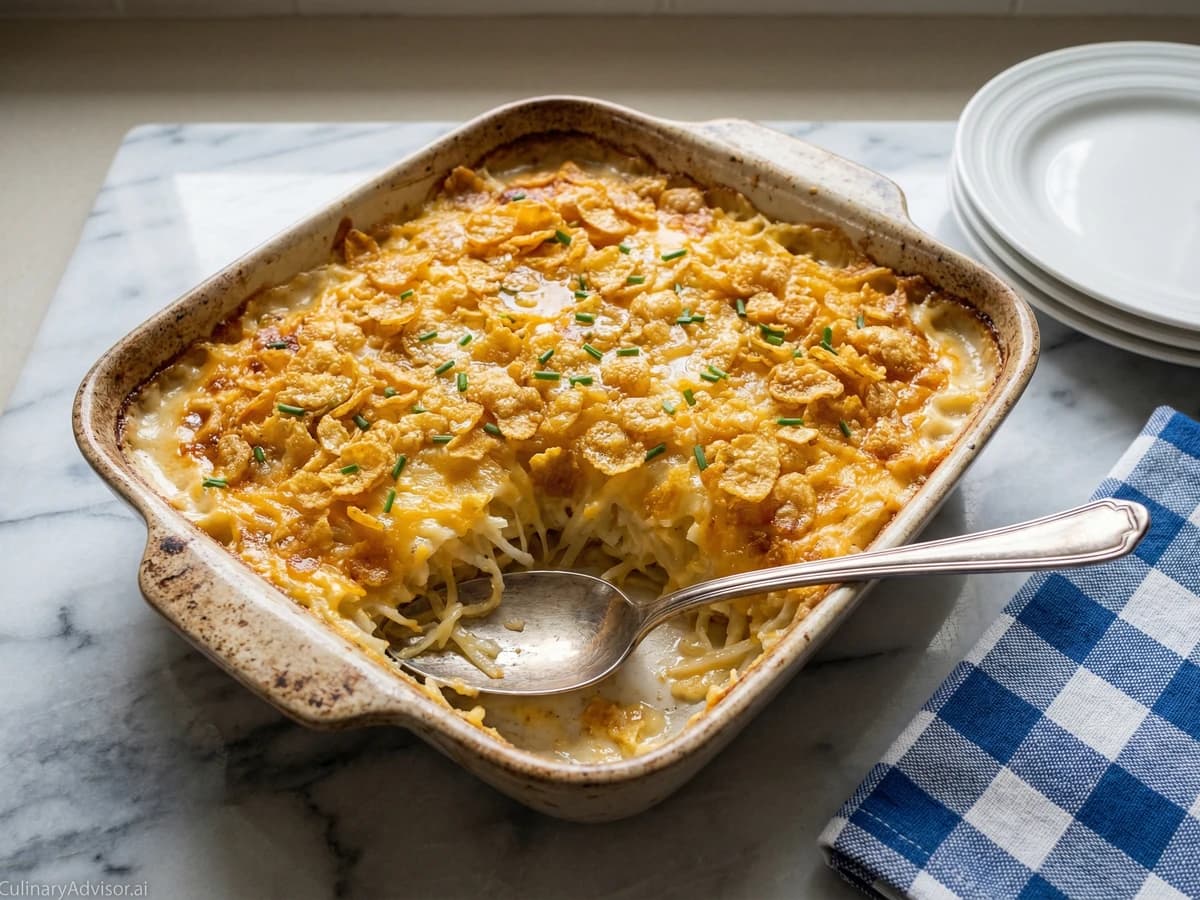
Golden-topped, impossibly creamy shredded potato casserole with a shattering cornflake crust. This is the dish that appears at every church supper, potluck, and time of need across the American heartland.

Chef Dean
Golden-topped stuffing with tender, savory bread cubes perfumed by fresh sage and sweet onions. This is the dish people return to year after year, the one that makes Thanksgiving taste like Thanksgiving.

Chef Dean
Plump hominy kernels braised in smoky bacon fat with roasted Hatch chiles, cumin, and a bright hit of lime. This is the side dish that disappears first at every potluck, the one neighbors ask you to bring again and again.