
Chef Elsa
Apfelkren
Freshly grated horseradish folded with tart apple and lemon, the cold, sharp sauce that belongs beside every plate of Tafelspitz in Vienna and has done for as long as anyone can remember.
A cooking platform built around craft, culture, and the stories behind what we eat.
Created by
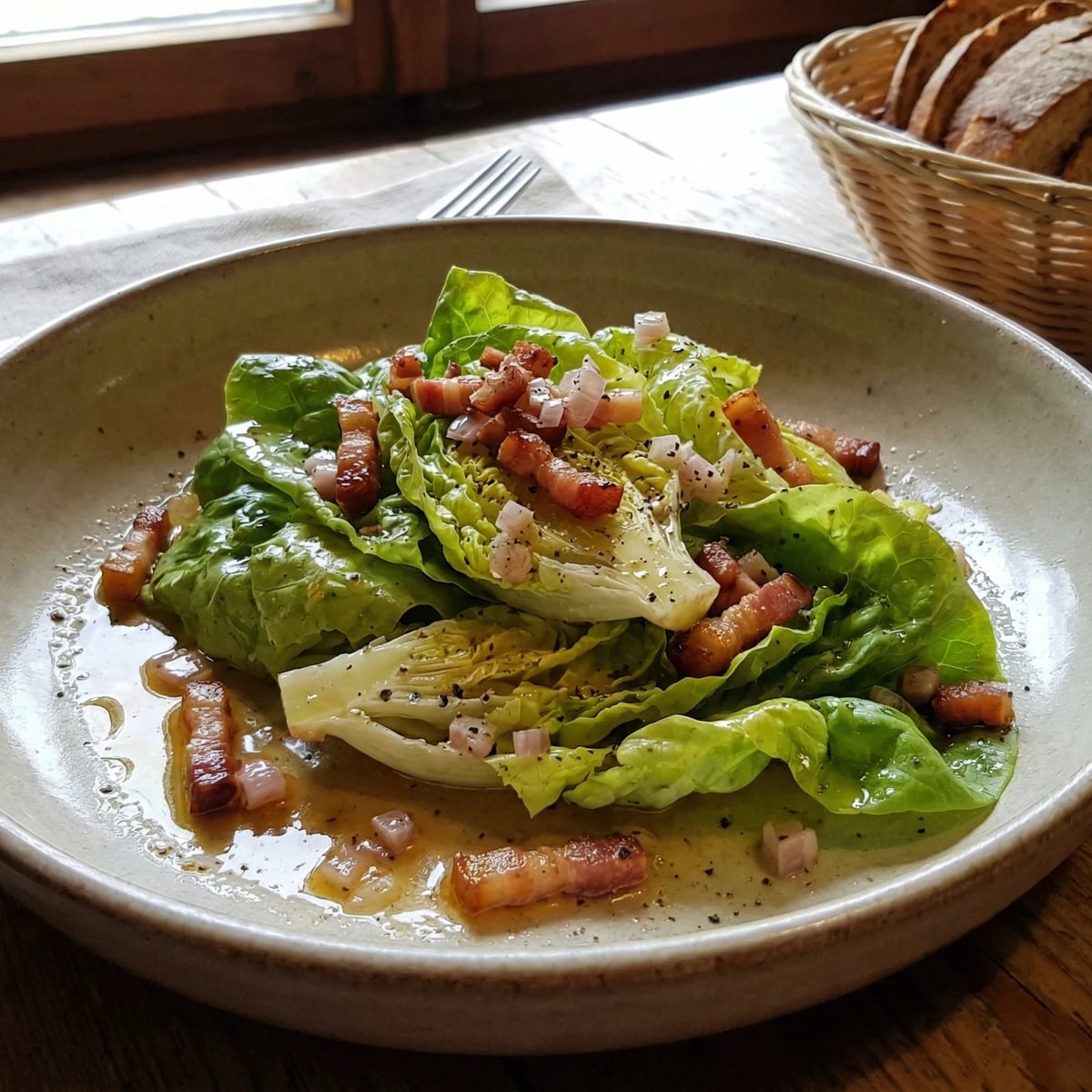
Hot bacon fat, sharp vinegar, and soft shallots poured straight from the pan over sturdy greens. The dressing that wilts and seasons in one honest pour, the way every Gasthaus in Austria has done it for generations.
The first time I really understood this dressing, I was nine or ten, sitting in a Gasthaus somewhere in the Salzkammergut with Gretel and my grandmother Eva. A bowl of Häuptelsalat arrived at the table, the leaves already glistening and half-collapsed under a hot dressing that smelled like bacon and vinegar and something sweet I couldn't name yet. Gretel told me to eat it quickly, before it cooled, and I did. The lettuce was warm and silky where the dressing had hit it, still cool and crisp underneath. I didn't know food could do that, be two temperatures at once.
Warmer Speckdressing is not a recipe you measure out with teaspoons and worry over. It's a technique, a rhythm. You render good Speck until the fat runs clear and the edges crisp. You soften shallots in that fat. You hit the pan with vinegar and let it boil hard for ten seconds. Then you pour the whole thing, still bubbling, over whatever sturdy greens you've got waiting in the bowl. The heat wilts the leaves just enough. The fat coats them. The vinegar cuts through everything and makes it sing.
This is Gasthaus cooking at its most honest. Four or five ingredients, no tricks, no complexity. It depends entirely on the quality of your Speck and the sharpness of your vinegar. Get those two things right and you've got a dressing that makes a simple bowl of greens into something people remember.
Warm bacon dressings belong to the broader central European tradition of using rendered fat as a base for salad dressings, a practice rooted in rural Alpine cooking where animal fat was the primary cooking medium and nothing from a slaughtered pig was wasted. In Austria, the warm Speck dressing became a Gasthaus staple, particularly in Styria and the Salzkammergut, where it's poured over Häuptelsalat (butterhead lettuce), Vogerlsalat (lamb's lettuce), and dandelion greens gathered in spring. The Styrians often finish theirs with a drizzle of Kürbiskernöl, their prized dark pumpkin seed oil, adding a regional signature that other provinces don't replicate.
Quantity
150g
cut into small lardons
Quantity
2 medium
finely diced
Quantity
1 small clove
minced
Quantity
80ml
Quantity
2 teaspoons
Quantity
1 teaspoon
Quantity
3 tablespoons
Quantity
to taste
freshly ground
Quantity
to taste
Quantity
1 head or 200g
washed and dried
| Ingredient | Quantity |
|---|---|
| Speck or good slab baconcut into small lardons | 150g |
| shallotsfinely diced | 2 medium |
| garlicminced | 1 small clove |
| apple cider vinegar | 80ml |
| grainy mustard | 2 teaspoons |
| granulated sugar | 1 teaspoon |
| warm water or light beef broth | 3 tablespoons |
| black pepperfreshly ground | to taste |
| salt | to taste |
| Häuptelsalat (butterhead lettuce) or Vogerlsalat (lamb's lettuce)washed and dried | 1 head or 200g |
Place the Speck lardons in a cold pan. Cold pan, cold fat. This matters. Starting cold lets the fat render slowly out of the meat instead of seizing up on the outside and trapping it in. Set the heat to medium-low and let them cook, stirring now and then, until the fat runs clear and the Speck pieces turn golden and crisp at the edges. This takes about five minutes. Don't rush it. If you hear aggressive sizzling, your heat is too high.
Add the diced shallots to the pan with the rendered Speck. Stir them through the hot fat and cook for about two minutes until they turn translucent and soft. They shouldn't color. You want sweetness from them, not bitterness. Add the garlic and stir for thirty seconds, just until you can smell it. Garlic burns fast in hot fat, so keep things moving.
Pull the pan slightly off the heat and pour in the cider vinegar. It will hiss and spit. That's good. Put it back on the heat and let the vinegar boil hard for about ten seconds. This is not gentle simmering. You want the vinegar to hit the hot fat, grab all those stuck-on bits from the pan bottom, and reduce just enough to lose its raw edge while keeping its sharpness. If you cook the vinegar out entirely, you've lost the whole point of the dressing.
Stir in the mustard, sugar, and warm water or broth. The mustard gives the dressing body so it clings to the leaves instead of sliding off. The sugar isn't there to make it sweet. It's there to round out the vinegar's bite. The water loosens everything so the dressing pours properly. Give it one hard stir, taste it, and adjust. It should be sharply acidic, porky, and just barely sweet. Grind in black pepper. Go easy on the salt because the Speck has done most of that work already.
Have your greens already in the bowl, washed and dried. This is the moment. Pour the hot dressing directly from the pan over the leaves. Toss once, quickly, with two spoons or your hands if you're brave. The leaves should wilt where the dressing lands and stay crisp where it doesn't. That contrast is the whole point. Serve the salad right now, on the plates, at the table. Warmer Speckdressing waits for nothing and nobody. Mahlzeit!
1 serving (about 125g)
Culinary guides, cultural storytelling, and the editorial depth that makes cooking meaningful.
Discover Culinary Explorer
Chef Elsa
Freshly grated horseradish folded with tart apple and lemon, the cold, sharp sauce that belongs beside every plate of Tafelspitz in Vienna and has done for as long as anyone can remember.

Chef Elsa
The clear, caraway-scented pan jus you pour over Schweinsbraten and Knödel, built from nothing but good pork drippings, honest stock, and the patience to let a roasting pan tell you everything it knows.

Chef Elsa
A silky butter roux sauce finished with beef broth, cream, and handfuls of fresh dill, the way every Viennese grandmother serves it alongside Tafelspitz on Sunday.

Chef Elsa
Crisp cauliflower, sweet carrots, and bright peppers in a spiced sweet-sour brine with mustard seeds, the jar you open first when the Brettljause comes out and the last one you put away.