
Chef Elsa
Allerheiligenstriezel
A rich, buttery braided bread that Austrian godfathers bring their godchildren on All Saints' Day. The golden six-strand braid is as much ritual as recipe, and the kitchen smells like love while it bakes.
A cooking platform built around craft, culture, and the stories behind what we eat.

Created by
Tyrolean paired rye flatbreads spiced with bread clover, caraway, and fennel, baked side by side and broken apart at the table the way they've done it in the Vinschgau valley since the Middle Ages.
The first time I ate a proper Vinschgauer was on one of our childhood trips to Austria. We'd driven west from Salzburg into the Tyrol, and Gretel wanted to stop at a farmhouse Gasthaus she remembered from decades earlier. It was still there. The woman who ran it brought out a wooden board with Speck sliced paper-thin, a wedge of Graukäse, and a pair of dark, dense rye rolls pressed together at the hip. She broke them apart with her hands and the smell hit the table before the bread did: caraway, something herbal and grassy I couldn't name yet, and the deep, slightly sour tang of rye. That unnamed herb was Brotklee, bread clover, and it's the flavor that makes Vinschgauer taste like nothing else in Austrian baking.
Vinschgauer Paarl means 'Vinschgau pairs.' They're always baked two together, touching, so they rise into each other and form a flat seam down the middle. You don't cut them. You pull them apart. The inside where they were joined stays soft and pale while the crust gets dark and crackled. The spice mix is specific to this valley: bread clover, caraway, fennel seed, sometimes a whisper of coriander. It's alpine bread, meant for altitude and cold weather and the kind of hunger you earn walking through mountains.
The dough is mostly rye, which means it behaves differently from wheat bread. Rye flour doesn't develop gluten the same way. It stays sticky, it doesn't stretch, and it needs acidity to hold its structure. That's why Vinschgauer use a sourdough starter, not yeast alone. The sourness isn't a flavor choice. It's structural. Without it, the crumb falls apart. Once you understand that, the whole recipe makes sense.
Vinschgauer Paarl trace their origins to the monasteries of the Vinschgau valley (Val Venosta) in South Tyrol, where monastic bakeries were producing spiced rye breads by the 13th century. The bread clover (Trigonella caerulea), called Brotklee or Zigainerklee in dialect, was cultivated in monastery herb gardens specifically for breadmaking and remains the signature spice of the region. The paired shape likely developed as a practical baking convention: pressing two rounds together conserved oven space in communal wood-fired ovens, while the joined surface stayed soft and moist, extending the bread's life in a valley where baking happened only once a week or less.
Quantity
200g
Quantity
350g
Quantity
150g
Quantity
250ml
Quantity
10g
Quantity
7g
Quantity
1 tablespoon
lightly crushed
Quantity
2 teaspoons
lightly crushed
Quantity
1 tablespoon
Quantity
1 teaspoon
Quantity
1 tablespoon
Quantity
1 tablespoon
softened
Quantity
for dusting
| Ingredient | Quantity |
|---|---|
| active rye sourdough starter (100% hydration) | 200g |
| dark rye flour (Roggenmehl) | 350g |
| strong bread flour or Type 812 wheat flour | 150g |
| lukewarm water | 250ml |
| fine sea salt | 10g |
| dried yeast | 7g |
| caraway seedslightly crushed | 1 tablespoon |
| fennel seedslightly crushed | 2 teaspoons |
| dried bread clover (Brotklee/Schabzigerklee) | 1 tablespoon |
| ground coriander | 1 teaspoon |
| dark malt extract or black treacle | 1 tablespoon |
| lard or unsalted buttersoftened | 1 tablespoon |
| rye flour | for dusting |
Lightly crush the caraway and fennel seeds in a mortar. You're not grinding them to powder. You want them cracked open so they release their oils into the dough, but you should still see pieces. Mix them with the bread clover and ground coriander. Set aside. The smell of this mix is the smell of the Vinschgau valley. If you close your eyes it puts you in a stone-walled bakehouse with flour on the floor.
In a large bowl, combine the rye flour, bread flour, salt, dried yeast, and the spice mix. Make a well in the center. Add the sourdough starter, lukewarm water, malt extract, and softened lard. Stir everything together with a wooden spoon or dough scraper until a shaggy, sticky mass forms. Rye dough doesn't come together like wheat dough. It will be heavy, dense, and tacky. That's correct. Don't add more flour because it feels wrong. Rye wants to be sticky.
Turn the dough out onto a surface dusted with rye flour. Knead for six to eight minutes. This will not feel like kneading wheat bread. Rye dough doesn't become smooth and elastic. It stays dense and a bit tacky. You're distributing the ingredients evenly and developing what little structure rye can give you. Use wet hands if it sticks. When it holds together in a rough ball without crumbling, you're done.
Shape the dough into a rough ball and place it back in the bowl. Cover with a damp tea towel or cling film. Let it rise in a warm spot for one and a half to two hours. Rye dough won't double the way wheat dough does. Look for about a fifty percent increase in size and a slightly domed surface. The sourdough and yeast are working together here: the yeast gives lift, the sourdough gives flavor and the acidity that rye needs to hold its crumb.
Turn the risen dough out onto a floured surface and divide it into twelve equal pieces, roughly 85 grams each. Shape each piece into a round ball by tucking the edges underneath and rolling it against the counter with a cupped hand. Dust a baking tray lined with parchment with rye flour. Place the rolls in pairs, pressing two balls together so their sides touch firmly. Leave about five centimeters between each pair. You should have six pairs. Press each pair down gently with your palm to flatten them slightly. Vinschgauer are not tall, puffy rolls. They're broad and flat, about two centimeters high before baking.
Cover the shaped pairs loosely with a tea towel and let them rise for forty-five minutes to one hour. They'll spread slightly and puff up just a little. Don't expect dramatic oven spring from rye bread. While they rest, preheat your oven to 220°C (430°F) with a baking stone or inverted baking tray inside if you have one. Place a small roasting tin on the bottom rack. You'll need it for water.
Dust the tops of the pairs lightly with rye flour. Using a sharp knife or razor blade, score two or three shallow lines across the top of each pair. The cuts don't need to be deep, just enough to let the crust crack open in a controlled way. Slide the tray into the oven and pour half a cup of hot water into the roasting tin below. Close the door quickly. The burst of moisture gives the crust time to stretch before it sets. Bake for ten minutes at 220°C, then reduce the heat to 190°C (375°F) and bake for another twenty to twenty-five minutes. The Vinschgauer are done when the crust is dark brown, nearly mahogany, and the bottom sounds hollow when you tap it.
Transfer the pairs to a wire rack and let them cool completely. Rye bread needs time after baking. The crumb is still setting for the first hour, and if you tear into them too early the inside will be gummy. Patience. When they've cooled, bring them to the table whole. Break each pair apart by hand, the way they do at every Marende in the Tyrol. Serve with thinly sliced Speck, mountain cheese, pickled vegetables, or good butter. Mahlzeit!
1 serving (about 75g)
Culinary guides, cultural storytelling, and the editorial depth that makes cooking meaningful.
Discover Culinary ExplorerChef Elsa
A rich, buttery braided bread that Austrian godfathers bring their godchildren on All Saints' Day. The golden six-strand braid is as much ritual as recipe, and the kitchen smells like love while it bakes.

Chef Elsa
Austria's rye sourdough farmhouse loaf, dark-crusted and tangy, laced with hand-crushed Brotgewürz, the kind of bread that fills a kitchen with the smell of caraway and makes everything else on the table taste better.
Chef Elsa
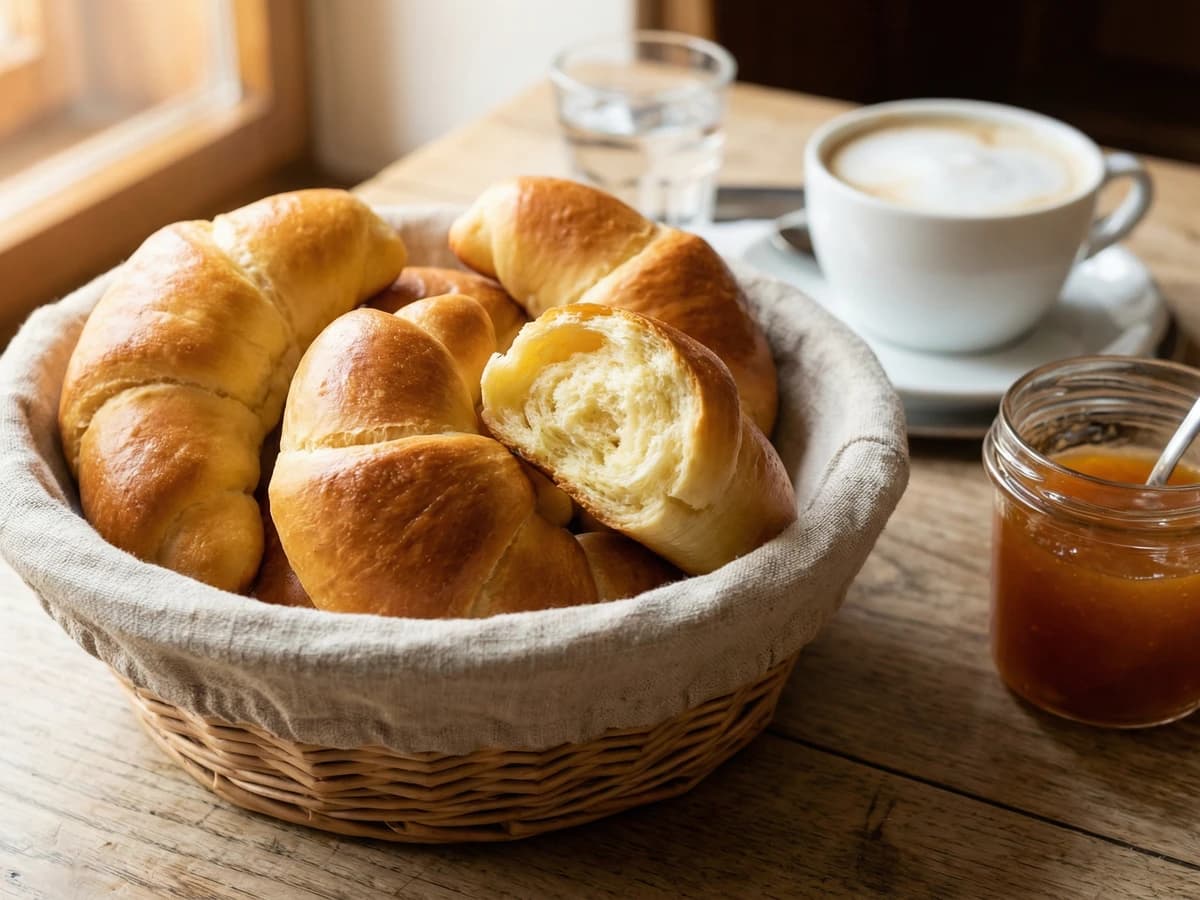
Buttery Viennese crescents, golden with egg wash and soft as a Sunday morning, shaped the way Viennese bakers have shaped them for eight hundred years.

Chef Elsa
Vienna's five-petaled imperial roll, hand-folded into a star and baked until the crust shatters at first touch, with a crumb so soft and airy it barely weighs a thing.