
Chef Lesia
Buryakovyi Salat (буряковий салат, raw beet salad)
The beet stays raw, so the salad bites back: crimson, garlicky, nutty, slick with green sunflower oil, and ready before the bread is on the table.
A cooking platform built around craft, culture, and the stories behind what we eat.
Created by
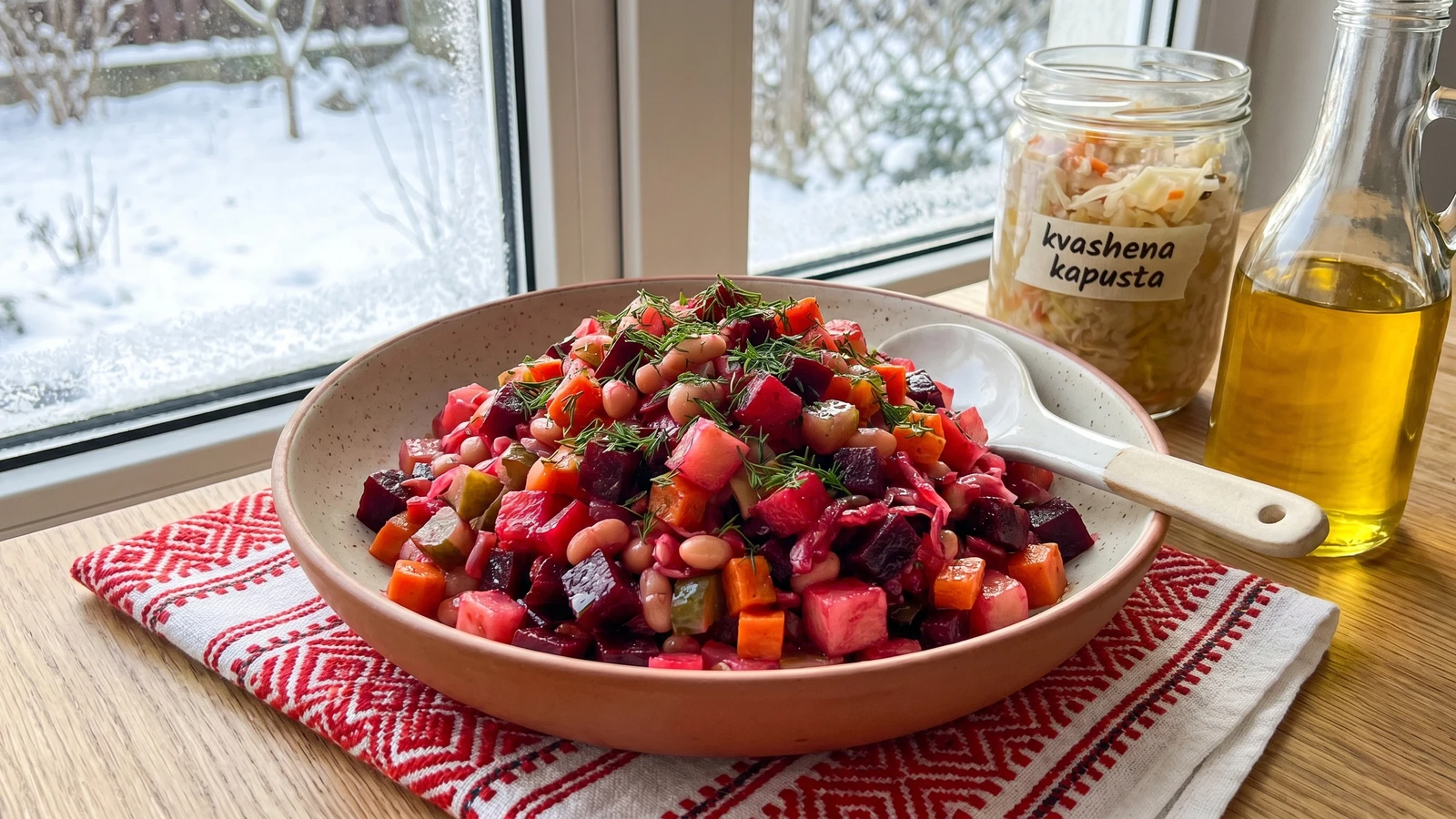
Everything in the bowl turns pink eventually, but the trick is letting each winter thing keep its own bite before the beet takes over.
The beet always wins. You dice it neatly, you keep the potatoes pale, you rinse the beans, you pretend order is possible, and then one toss with green sunflower oil turns the whole bowl pink at the edges. This is vinegret: a winter pantry salad that looks cheerful before you have earned cheerfulness.
It belongs to the cold months, when the garden is gone but the cellar is still talking. Boiled beet, potato, carrot, kvashena kapusta (fermented cabbage), sour cucumber, beans, onion if your family likes a bit of bite, and unrefined sunflower oil, Ukraine in a bottle of oil. No mayonnaise here. The sourness comes from the ferments, not from a sharp bottled dressing, so every spoonful has sweetness, salt, crunch, and that little lactic spark that wakes up boiled roots.
The one thing that decides the dish is the cutting. Dice everything small enough to sit together on one spoon, but not so small that it becomes mash. Aunt Nadia wrote once, "all pieces equal, or they quarrel," which is a ridiculous instruction and also completely correct. Dress the beets first with oil if you want the colors cleaner; toss everything together if you want the old holiday bowl, pink and loud and enough for eight guests or one hungry Ukrainian.
Vinegret takes its name from the French vinaigrette, which entered urban cooking in the Russian Empire in the nineteenth century, but the salad became thoroughly Ukrainian at the home table through local pantry habits: fermented cabbage, sour cucumbers, beans, and unrefined sunflower oil. Soviet canteens standardized it into a cheap boiled-vegetable salad, yet Ukrainian kitchens kept the brighter winter version alive, especially for Christmas, New Year tables, and fasting meals without meat or dairy.
Quantity
3 medium
scrubbed, tails left on
Quantity
3 medium
scrubbed
Quantity
2 medium
scrubbed
Quantity
240g
drained
Quantity
250g
squeezed lightly
Quantity
3 medium
diced
Quantity
1 small
finely diced
Quantity
4 tablespoons, plus more to taste
Quantity
1 tablespoon, plus more to taste
Quantity
1 small bunch
chopped
Quantity
to taste
| Ingredient | Quantity |
|---|---|
| beetsscrubbed, tails left on | 3 medium |
| waxy potatoesscrubbed | 3 medium |
| carrotsscrubbed | 2 medium |
| cooked white beans or cranberry beansdrained | 240g |
| kvashena kapusta (fermented cabbage or sauerkraut)squeezed lightly | 250g |
| sour fermented cucumbers or dill picklesdiced | 3 medium |
| red onion or spring onionfinely diced | 1 small |
| unrefined sunflower oil | 4 tablespoons, plus more to taste |
| cucumber brine or cabbage brine | 1 tablespoon, plus more to taste |
| dillchopped | 1 small bunch |
| sea salt and black pepper | to taste |
Put the beets in one pot and the potatoes and carrots in another, cover with cold salted water, and simmer gently until a knife slips through without forcing. Keep the beet tails on so their color stays inside. The potatoes are ready when they smell earthy and sweet, not watery, and the carrots should bend slightly when lifted with a fork.
Drain the vegetables and let them cool until you can hold them comfortably. Slip the beet skins off with your fingers or a small knife, then peel the potatoes and carrots. Don't rush this while they're hot, or the potatoes will crumble under the knife and sulk in the bowl.
Dice the beets, potatoes, carrots, and cucumbers into small cubes, roughly the size of a bean. This is not fussy work, it's table logic: every spoonful should carry sweet beet, soft potato, sour crunch, and a bean or two. If the pieces are too large, the salad eats like separate leftovers.
Put the diced beets in the serving bowl first and toss them with two tablespoons of sunflower oil until glossy. This thin coat slows the beet from staining everything immediately, so the salad stays ruby-speckled instead of one flat pink. If you like the full pink holiday bowl, skip the politeness and toss it all together later.
Add the potatoes, carrots, beans, fermented cabbage, cucumbers, onion, most of the dill, the remaining sunflower oil, and a spoonful of brine. Fold with a wide spoon, gently from the bottom, until the colors begin to run but the cubes still hold their shape. Taste for salt, sourness, and oil. It should be bright enough to wake up boiled roots, but not so sour that the beet disappears.
Let the vinegret sit at room temperature for twenty minutes, or chill it for later. The beans drink a little oil, the potato takes the brine, and the cabbage softens its sharp elbows. Scatter with the last dill before serving, and bring more sunflower oil to the table for the person who knows what they're doing.
1 serving (about 205g)
Culinary guides, cultural storytelling, and the editorial depth that makes cooking meaningful.
Discover Culinary ExplorerChef Lesia
The beet stays raw, so the salad bites back: crimson, garlicky, nutty, slick with green sunflower oil, and ready before the bread is on the table.

Chef Lesia
The pickle keeps this so-called men's salad honest: beef and beans bring the appetite, fried onion brings sweetness, and cucumber brine cuts through the mayonnaise until the bowl wakes up.
Chef Lesia
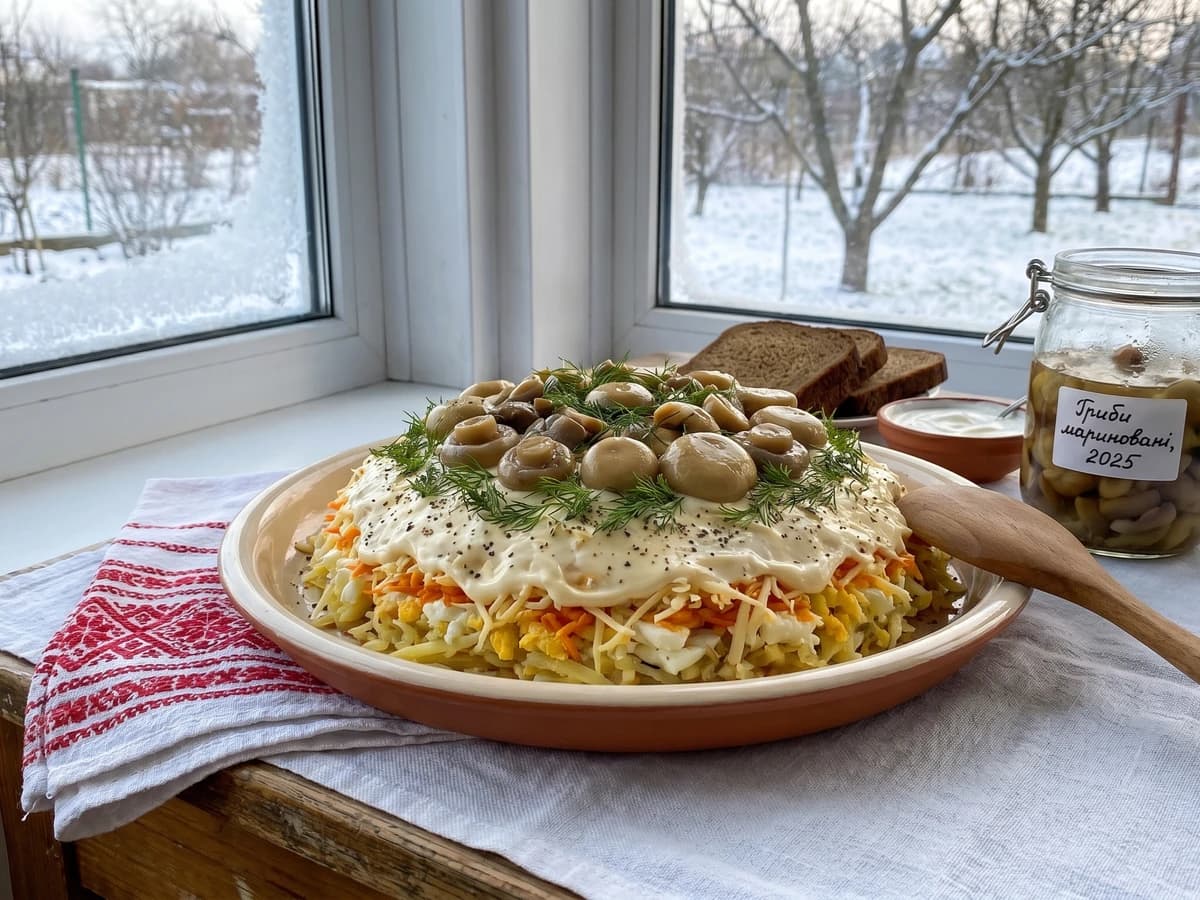
Open the jar and the holiday table smells briefly of the woods: marinated mushrooms, potato, egg, cheese, dill, and just enough mayonnaise to make it hold together.

Chef Lesia
The cabbage changes under your hands: stiff, squeaky ribbons soften into a glossy summer salad with carrot sweetness, dill sharpness, and green sunflower oil catching the light.