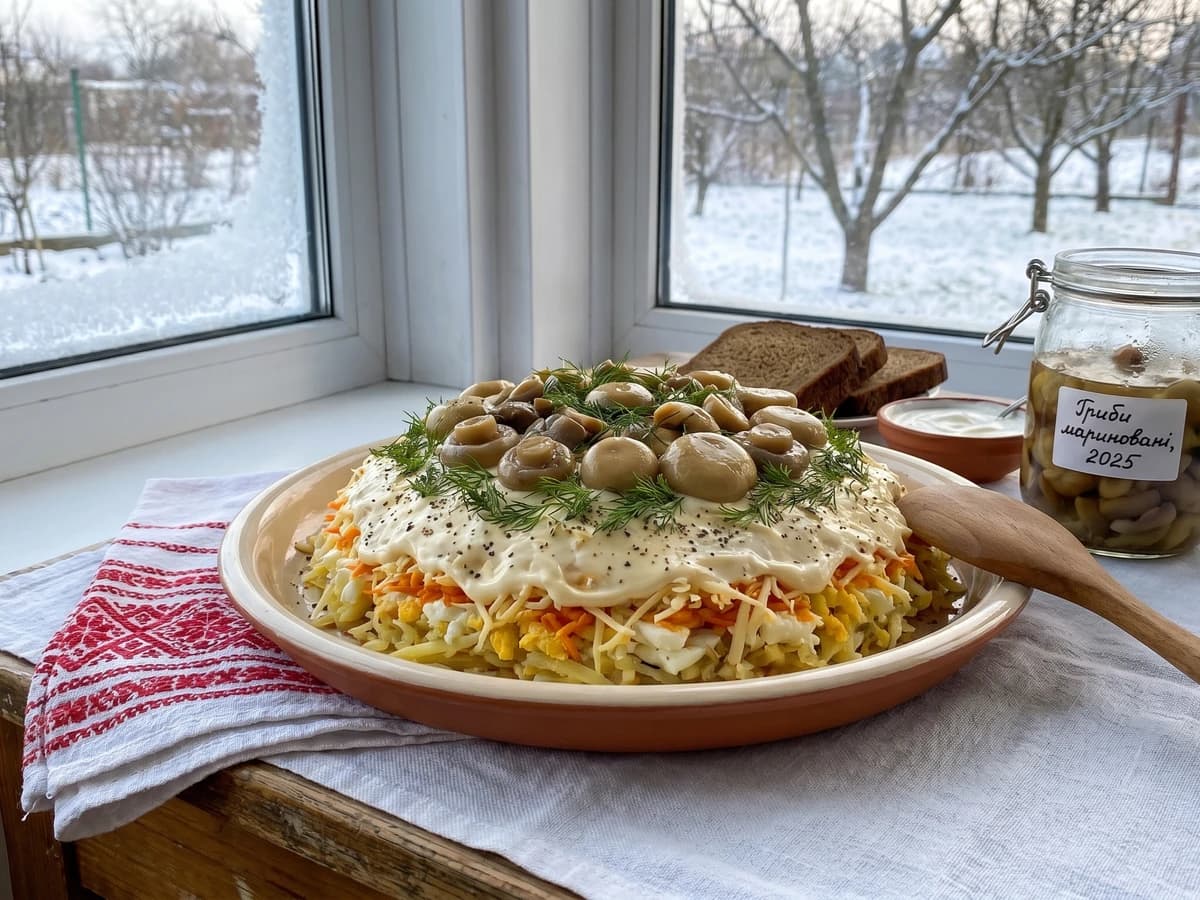
Buryakovyi Salat (буряковий салат, raw beet salad)
Created by
The beet stays raw, so the salad bites back: crimson, garlicky, nutty, slick with green sunflower oil, and ready before the bread is on the table.
Salads
Ukrainian
Budget Friendly
Quick Meal
Meal Prep
20 min
Active Time
0 min cook•20 min total
Yield6 servings
Raw beet does not behave politely. Grate it and the board goes crimson, your fingertips go crimson, the bowl looks like someone tipped a jar of stained-glass pieces into it. That is the pleasure here. No boiling, no soft sweetness, no apology.
This is the salad I make when the table needs color and the purse is tired. One good beet, a fist of walnuts, garlic sharp enough to tap you on the nose, and unrefined sunflower oil, Ukraine in a bottle of oil. Salt it first and let the beet slacken just a little, until the smell changes from damp earth to something sweeter and brighter. Aunt Nadia would have written only that, of course, and left me to work out the rest with red hands.
The one thing that decides the dish is the order. Salt and acid touch the grated beet before the oil, because oil coats every strand and slows the seasoning from getting in. Dress it too quickly and you get grated beet with oil. Wait a few minutes and you get salad.
Make enough for tomorrow. It keeps its crunch, stains whatever sits near it, and improves after a night in the fridge like it has been thinking about itself.
Raw grated beet salads became common in Ukrainian home cooking alongside the wider nineteenth-century spread of sugar beet cultivation, especially through central and southern regions where buryak was cheap, stored well, and fed families through winter. Unlike the Soviet canteen beet salads that often softened everything under mayonnaise, this oil-dressed version belongs to the home table: sharp with garlic, bright with vinegar or pickle brine, and still crunchy.
The technique, the tradition, and the story behind every dish.
•A sturdy box grater or food processor grating disc
•A wide mixing bowl
•A small dry pan for toasting walnuts
Instructions
1
Grate the beets
Peel the raw beets and grate them on the coarse side of a box grater into a wide bowl. Do the carrot the same way. You want long, crisp strands, not a wet puree, so stop before your knuckles get heroic.
A food processor works if you have one. The box grater gives the best ragged edges, and those edges catch the garlic and oil.
2
Salt and sour
Sprinkle the grated beet and carrot with the salt, then add the vinegar or sauerkraut brine. Toss with your hands or two forks until the strands shine and begin to relax. Leave it for a few minutes, just until the beet smells less like cellar earth and more sweet, sharp, and alive.
3
Add the garlic
Smash or grate the garlic and stir it through the beet while the strands are still bare of oil. This is when the garlic can travel properly. Taste a strand. It should catch at the back of your throat, not burn the whole house down.
4
Dress with oil
Pour over the unrefined sunflower oil and toss again until every strand has a green-gold gloss. Add the honey or sugar only if the beet tastes flat or too mineral; good winter beets often need it, summer beets often don't.
5
Finish and serve
Fold in most of the walnuts and dill, then taste for salt and acid. The salad should be crunchy, garlicky, and bright enough to wake up potatoes, bread, or a bowl of buckwheat. Scatter the last walnuts and dill over the top just before serving.
Chef Tips
•Wear gloves if red hands annoy you. I never remember, then walk around looking guilty for two days.
•Salt and acid before oil. This is the step that matters; after the oil goes on, seasoning has a harder time reaching the beet.
•Sauerkraut brine is excellent here, especially in winter. It is not a substitute for vinegar so much as the older habit speaking up.
•For a bit more modern version, add a grated sour apple or a handful of chopped prunes. Both sit happily with beet and walnut.
•Toast the walnuts until they smell warm and sweet. If they smell bitter, they are old, and the salad will tell on them.
Advance Preparation
•The salad can be made up to 2 days ahead and kept covered in the fridge. Add a fresh handful of dill just before serving.
•If making ahead, keep back a spoonful of walnuts for the top so they stay crisp.
Frequently Asked Questions
Nutrition Information
1 serving (about 130g)
Calories
170 calories
Total Fat
11 g
Saturated Fat
1 g
Trans Fat
0 g
Unsaturated Fat
10 g
Cholesterol
0 mg
Sodium
290 mg
Total Carbohydrates
16 g
Dietary Fiber
4 g
Sugars
10 g
Protein
4 g
Where cooking meets culture.
Culinary guides, cultural storytelling, and the editorial depth that makes cooking meaningful.