Culinary Explorer

A cooking platform built around craft, culture, and the stories behind what we eat.
Discover Culinary Explorer
Kapustianyi Salat (капустяний салат, fresh cabbage slaw)

Kapustianyi Salat (капустяний салат, fresh cabbage slaw)

Created by

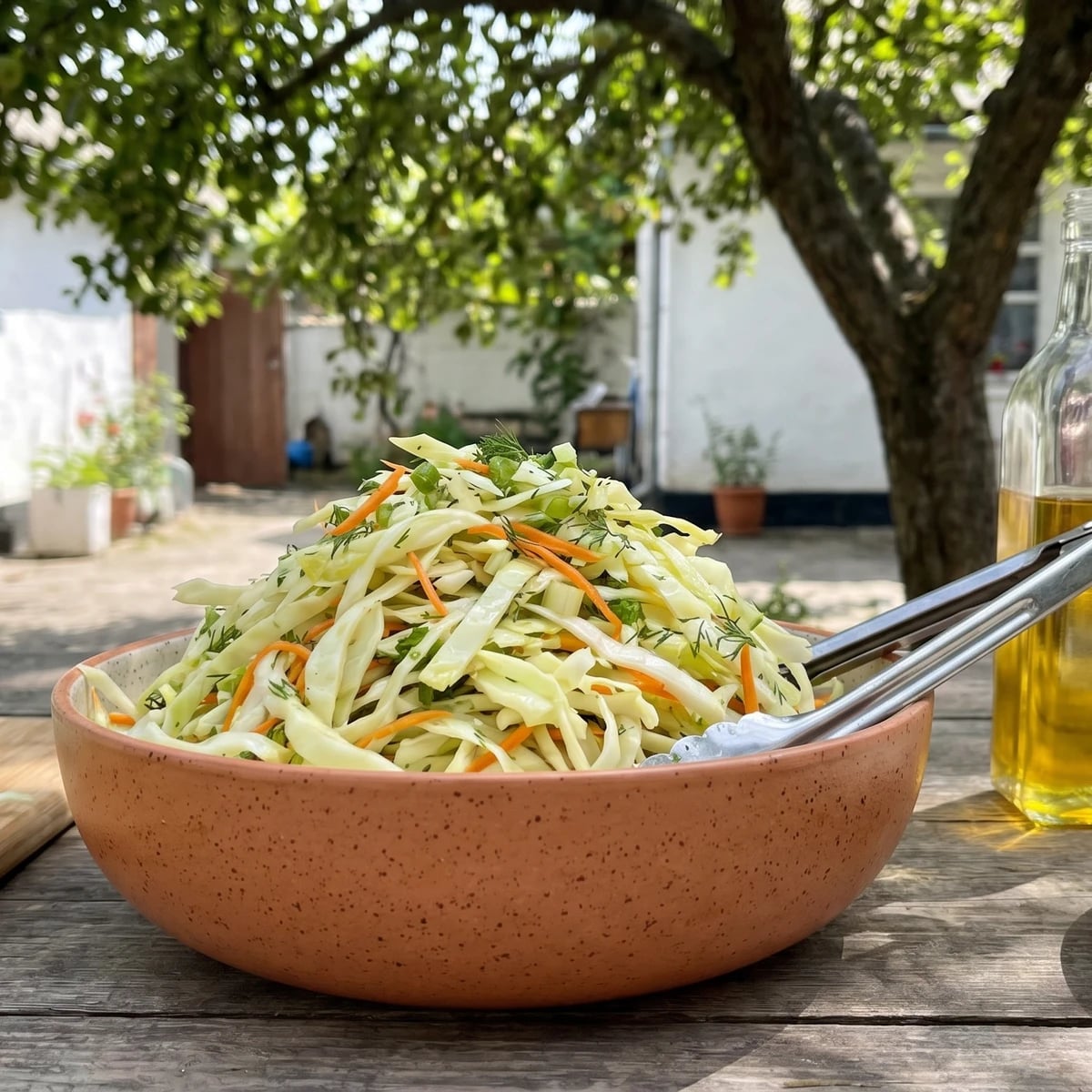
The cabbage changes under your hands: stiff, squeaky ribbons soften into a glossy summer salad with carrot sweetness, dill sharpness, and green sunflower oil catching the light.

Salads
Ukrainian
Budget Friendly
Quick Meal
Picnic
20 min
Active Time
0 min cook20 min total
Yield6 to 8 servings

The first true thing is the sound. Fresh cabbage squeaks when you salt it and squeeze it, then it gives in, softening by handfuls until the bowl smells green and sweet and the ribbons shine instead of bristle. Stir it politely and you get rabbit food. Knead it and you get salad.

This is a table-filler, the kind of kapustianyi salat that appears beside fried potatoes, kotlety, picnic eggs, grilled meat, yesterday's buckwheat, anything that needs crunch and lift. In the south, when young cabbage comes loose-leafed and pale in late spring, it barely needs persuading. In winter, use a firmer cabbage and squeeze with more patience, or open a jar of kvashena kapusta, fermented cabbage, because in January the jar is not a substitute. It is the tradition doing its job.

The why is simple: salt pulls water from the cabbage, and your hands bruise the ribs just enough so the dressing can get inside. Aunt Nadia wrote only, "pomniaty dobre," mash it well, as if that were a quantity. She was right. Stop when the cabbage has lost its raw squeak but still bites back under your teeth.

Make a big bowl. It costs little, feeds everyone, and somehow disappears faster than the main dish.

Fresh cabbage salads became common everyday table dishes across Ukraine in the twentieth century, especially where market gardens and home plots made young spring cabbage cheap and abundant. In the southern steppe kitchen, fresh cabbage slaw sits beside the older preservation habit of kvashennia, with summer bowls giving way to fermented cabbage once cold weather tightens the fields. Soviet canteens made versions of this salad plain and standardized, but home cooks kept the sharper, greener one alive with dill, unrefined sunflower oil, and enough handwork to wake the cabbage up.

The technique, the tradition, and the story behind every dish.

Discover Culinary Explorer

Ingredients

young white cabbage

Quantity

800g

very finely shredded

fine sea salt

Quantity

1 1/4 teaspoons, plus more to taste

carrot

Quantity

1 large

coarsely grated

dill

Quantity

1 small bunch

finely chopped

spring onions

Quantity

2

thinly sliced

unrefined sunflower oil

Quantity

2 tablespoons

apple cider vinegar or mild wine vinegar

Quantity

1 tablespoon

sugar or honey

Quantity

1 teaspoon

freshly ground black pepper

Quantity

to taste

Equipment Needed

  • A large mixing bowl
  • A sharp chef's knife or mandoline
  • A box grater

Instructions

  1. 1

    Shred the cabbage

    Cut the cabbage into fine ribbons, thinner than you think you need, leaving the hard core behind. A knife is better than a grater here because you want ribbons, not wet fluff. Drop everything into the biggest bowl you have so your hands can work freely.

  2. 2

    Salt and squeeze

    Sprinkle over the salt, then get both hands into the bowl and squeeze, fold, and press the cabbage until it turns glossy and the bottom of the bowl gathers a little greenish juice. Listen for the change: the raw squeak quiets down. The cabbage should bend without collapsing.

    This is the step that decides the salad. The salt pulls out moisture, but your hands make the texture tender; a spoon cannot do that job.
  3. 3

    Add the vegetables

    Add the grated carrot, sliced spring onions, and most of the dill. Toss with your fingers, lifting from the bottom so the carrot spreads through in orange streaks and the dill catches everywhere. It should already smell like a garden after rain.

  4. 4

    Dress and taste

    Stir the vinegar with the sugar or honey until it dissolves, then pour it over the cabbage with the sunflower oil and a few turns of black pepper. Toss, squeeze once more, and taste. You want salt first, then green sweetness, then a small clean sourness at the end.

  5. 5

    Let it settle

    Leave the salad on the table while you finish the rest of the meal. It only needs a short rest, just long enough for the oil to shine on the ribbons and the dill to perfume the bowl. Taste again before serving; cabbage drinks salt, the little thief.

Chef Tips

  • Young spring cabbage gives the softest salad. If your cabbage is older and tight-headed, shred it finer and squeeze longer, until it loses that raw squeak.
  • Use unrefined sunflower oil if you can. It is Ukraine in a bottle of oil, nutty and green-gold, and this salad is too simple to hide a dull oil.
  • The vinegar can be sharper or softer depending on your table. Apple cider vinegar is gentle; white wine vinegar is cleaner. Lemon is a bit more modern and works well with picnic food.
  • If the salad throws off too much liquid, don't panic. Lift the cabbage into the serving bowl with your hands and leave the extra brine behind, or pour a spoonful back if it tastes too shy.

Advance Preparation

  • This salad is best within a few hours, while the cabbage still has bite.
  • You can shred the cabbage and grate the carrot a day ahead, then salt, squeeze, and dress shortly before serving.
  • Leftovers keep one day in the fridge and make a good sharp filling for sandwiches or a cold side beside boiled potatoes.

Frequently Asked Questions

Nutrition Information

1 serving (about 135g)

Calories
85 calories
Total Fat
4 g
Saturated Fat
0 g
Trans Fat
0 g
Unsaturated Fat
4 g
Cholesterol
0 mg
Sodium
440 mg
Total Carbohydrates
9 g
Dietary Fiber
3 g
Sugars
5 g
Protein
2 g

Note: Chef personas and recipes are created with AI assistance. Cook with care: follow safe food-handling practices, check doneness with a thermometer when needed, and adapt for allergies and your kitchen.

Where cooking meets culture.

Culinary guides, cultural storytelling, and the editorial depth that makes cooking meaningful.

Discover Culinary Explorer

More from Ukrainian Salads

Browse the full collection