
Chef Lupita
Arroz a la Oaxaqueña
Oaxaca's red rice, stained with tomato and fried in lard, steamed with carrots, ejotes, black beans, and epazote. The side that anchors a Oaxacan family meal and earns its place beside the main.
A cooking platform built around craft, culture, and the stories behind what we eat.
Created by
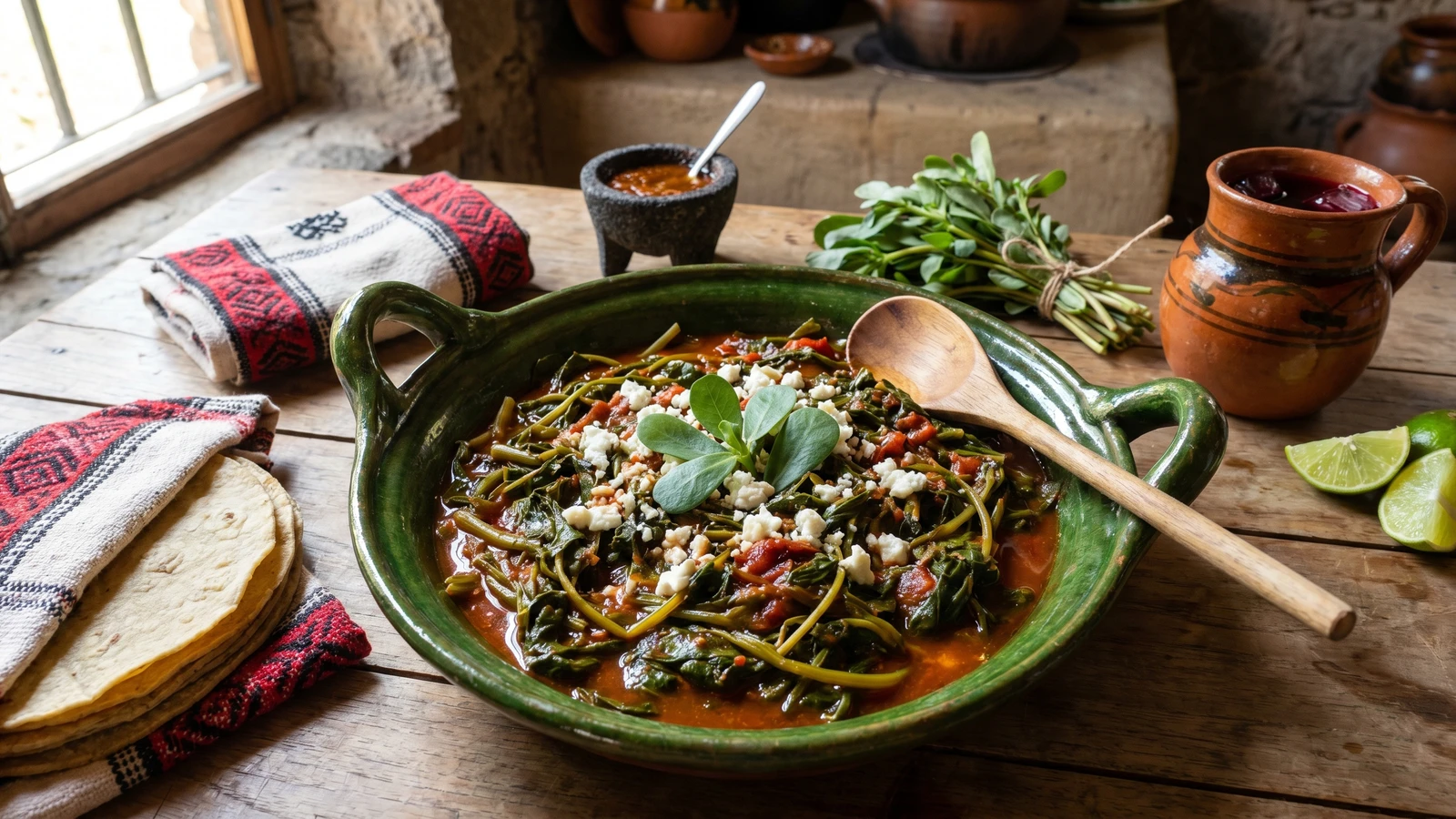
Oaxaca's rainy-season green stewed in charred tomato, white onion, and chile serrano. The kind of weeknight pot that proves Mexican home cooking is built on what the mercado is selling that morning.
Verdolagas belong to the rainy season in central and southern Mexico. After the first storms of June, the leaves push up through the cracks in the milpa and the edges of the cornfield, and by July the senoras at the mercados of Oaxaca and Puebla are selling them in big damp bundles tied with twine. This is not a dish you make in February. The verdolagas are not there in February. Cook what the market is selling today.
The Oaxacan way is to stew them in a salsa de tomate built from charred ripe tomato, white onion, garlic, and chile serrano. Nothing fancy. The dish does not need to be fancy. What it needs is verdolagas that were pulled from the ground that morning and a salsa that has been fried in lard until the fat separates. Without that fry, the tomato tastes like agua de tomate. With it, the salsa carries the verdolagas instead of swimming under them.
My mother did not cook verdolagas. They were not part of the Jalisciense kitchen she carried with her. I learned this dish from a senora named Lucila who sells purslane in the Mercado de la Merced in Oaxaca de Juarez, and who told me, while bagging up a kilo for a customer ahead of me, that the trick is to char the tomato until it is almost too far gone. 'Si no esta negro, no esta listo.' If it is not black, it is not ready. She was right. Saber cocinar es saber vivir.
Verdolagas (Portulaca oleracea) are native to Mesoamerica and have been eaten in what is now Mexico for at least 6,500 years, with archaeological evidence of the seeds in the Tehuacan Valley caves of Puebla and Oaxaca. The plant was a quelite, a wild edible green, gathered seasonally by the indigenous peoples of the central highlands long before the Spanish arrival, and it remained a staple of rural and indigenous diets through the colonial period when European wheat-and-meat cuisine was promoted in the cities. Modern nutritional science has documented that verdolagas contain among the highest levels of omega-3 fatty acids of any leafy green, a fact that confirmed what Oaxacan and Pueblan campesinos already knew: the rainy-season greens kept their families strong.
Quantity
1 1/2 pounds
tender stems and leaves only, tough lower stalks discarded
Quantity
1 pound (about 4 medium)
Quantity
1/2 medium
half thinly sliced, half left whole for blending
Quantity
3
peeled
Quantity
2
stemmed (use 1 if you want less heat)
Quantity
2 tablespoons
Quantity
1 teaspoon, plus more to taste
Quantity
1/4 teaspoon
crumbled between your palms
Quantity
1/4 cup, as needed
Quantity
for serving
warmed
Quantity
for serving
Quantity
for serving
| Ingredient | Quantity |
|---|---|
| fresh verdolagas (purslane)tender stems and leaves only, tough lower stalks discarded | 1 1/2 pounds |
| ripe red tomatoes (tomate guaje or roma) | 1 pound (about 4 medium) |
| white onionhalf thinly sliced, half left whole for blending | 1/2 medium |
| garlic clovespeeled | 3 |
| fresh chile serranostemmed (use 1 if you want less heat) | 2 |
| manteca de cerdo (pork lard) | 2 tablespoons |
| kosher salt | 1 teaspoon, plus more to taste |
| dried Mexican oreganocrumbled between your palms | 1/4 teaspoon |
| water or light chicken broth | 1/4 cup, as needed |
| hand-pressed corn tortillas (optional)warmed | for serving |
| lime wedges (optional) | for serving |
| crumbled queso fresco (optional) | for serving |
Verdolagas come from the ground and they come dirty. Fill the sink with cold water and submerge the bunches. Lift them out, drain the sink, and do it again. Twice, sometimes three times, until the water runs clear. Pinch off the tender top stems and the leaves. The thick lower stalks are stringy and you do not want them in the pot. You should have about 8 to 10 cups of cleaned verdolagas, loosely packed. They will cook down to a quarter of that.
Heat a dry comal or heavy skillet over medium-high. Place the whole tomatoes, the half-piece of onion, the garlic cloves, and the chile serrano on the comal. Turn them as the skin blackens in patches. The garlic takes about three minutes and should soften and turn spotty brown. The chile takes about five. The tomatoes need eight to ten minutes, until the skins split and char and the flesh starts to collapse. This char is the foundation of the salsa. Without it the guisado tastes like raw tomato water.
Put the charred tomatoes (skins, char, and all), the charred onion piece, the garlic, and the chile serrano into the blender with the salt. Blend until smooth, about 30 seconds. You want a loose, bright red salsa with flecks of black from the char. Do not strain it. The skin is part of the body.
In a wide cazuela or heavy skillet, melt the manteca over medium heat. La manteca es el sabor and this is a dish where you can taste the difference if you skip it. Add the thinly sliced half-onion. Cook for about four minutes, stirring, until soft and just beginning to turn gold at the edges.
Pour the blended salsa into the pan with the onion. It will sputter the moment it hits the hot fat. Stand back. Let it cook over medium heat for six to eight minutes, stirring now and then, until the salsa darkens from bright red to a deeper brick color and the fat shows along the edges. This step is the recipe. A salsa that has not been fried tastes raw and acidic. A salsa that has been fried tastes like a guisado.
Add the cleaned verdolagas to the pan in two or three handfuls, stirring after each batch so they wilt down and make room for the next. Add the crumbled oregano. The greens will release their own water and shrink dramatically. If the pan looks dry after the verdolagas have wilted, add the water or broth, a little at a time. You want a stewed consistency, not a soup, not dry. The salsa should cling to the leaves.
Lower the heat to medium-low. Cover partially and cook for ten to twelve minutes, stirring occasionally. The verdolagas are ready when the stems bend without snapping and the leaves have gone deep green and a little slippery, the way spinach goes when it surrenders. Taste for salt now. The tomato will have sweetened and the chile will have rounded out. If it tastes flat, it needs salt, not sugar.
Bring the cazuela to the table. Serve with warm corn tortillas for scooping and a wedge of lime if anyone at the table wants it. A handful of crumbled queso fresco on top is welcome but not required. Eat it as a side with rice and beans, or fold it into a tortilla as a taco de guisado. Asi se hace y punto.
1 serving (about 220g)
Culinary guides, cultural storytelling, and the editorial depth that makes cooking meaningful.
Discover Culinary ExplorerChef Lupita
Oaxaca's red rice, stained with tomato and fried in lard, steamed with carrots, ejotes, black beans, and epazote. The side that anchors a Oaxacan family meal and earns its place beside the main.
Chef Lupita
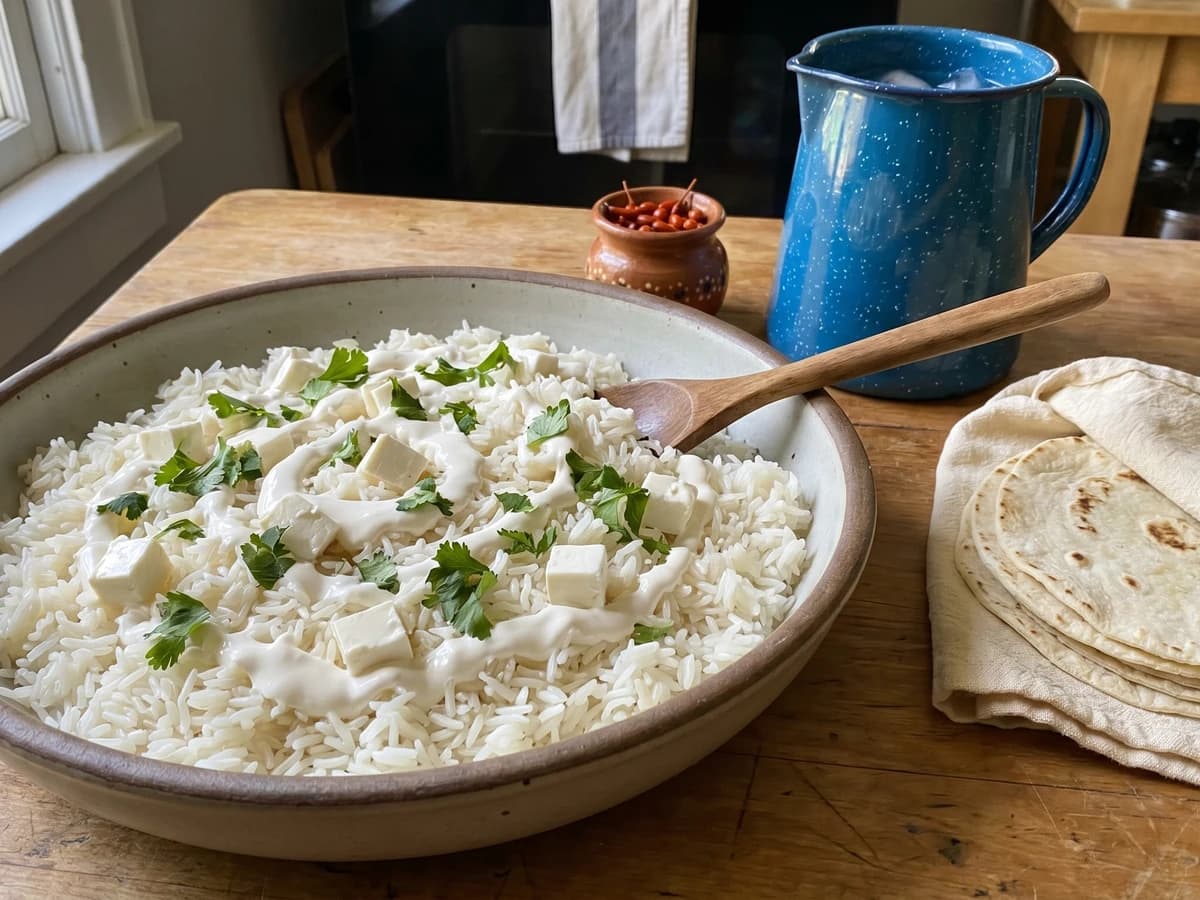
Sinaloa's home-cook white rice topped with cold cubes of cream cheese that soften into the warm grain, finished with crema and a sprinkle of chiltepin at the table. The trick that makes a side dish feel like a small luxury.
Chef Lupita
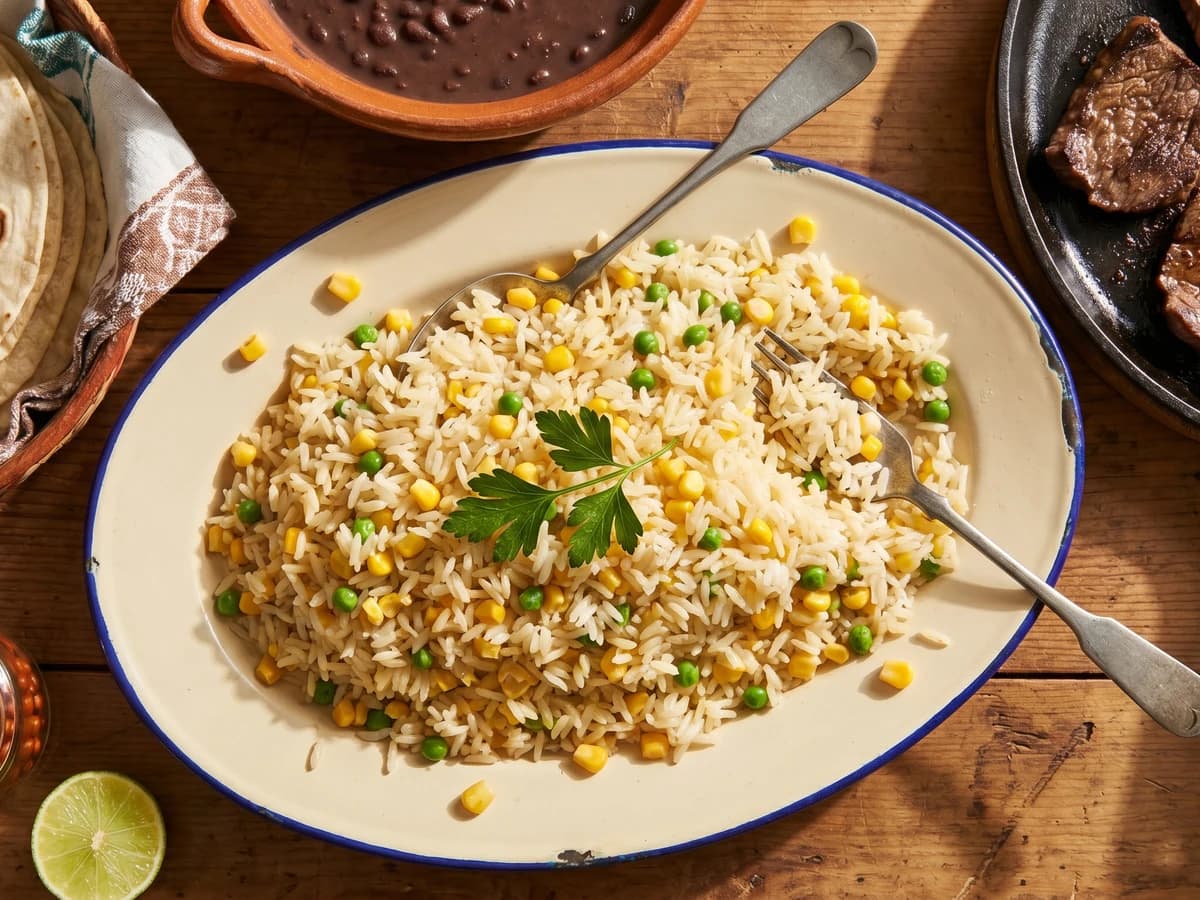
Sonora's white rice, toasted in butter and steamed with sweet corn and tender peas. The clean, quiet partner to a plate of carne asada, not the red rice of central Mexico.

Chef Lupita
Yucatán's white rice with sweet corn kernels, toasted in lard with garlic and onion. The quiet base that holds up against the peninsula's bold achiote-stained stews.