
Chef Freja
Andelår med Rødkål
Slow-roasted duck legs with crisp, deeply golden skin, served with braised red cabbage and caramelized potatoes. The weeknight Danish duck that proves the best part of the bird is the one that takes its time.
A cooking platform built around craft, culture, and the stories behind what we eat.
Created by Chef Freja
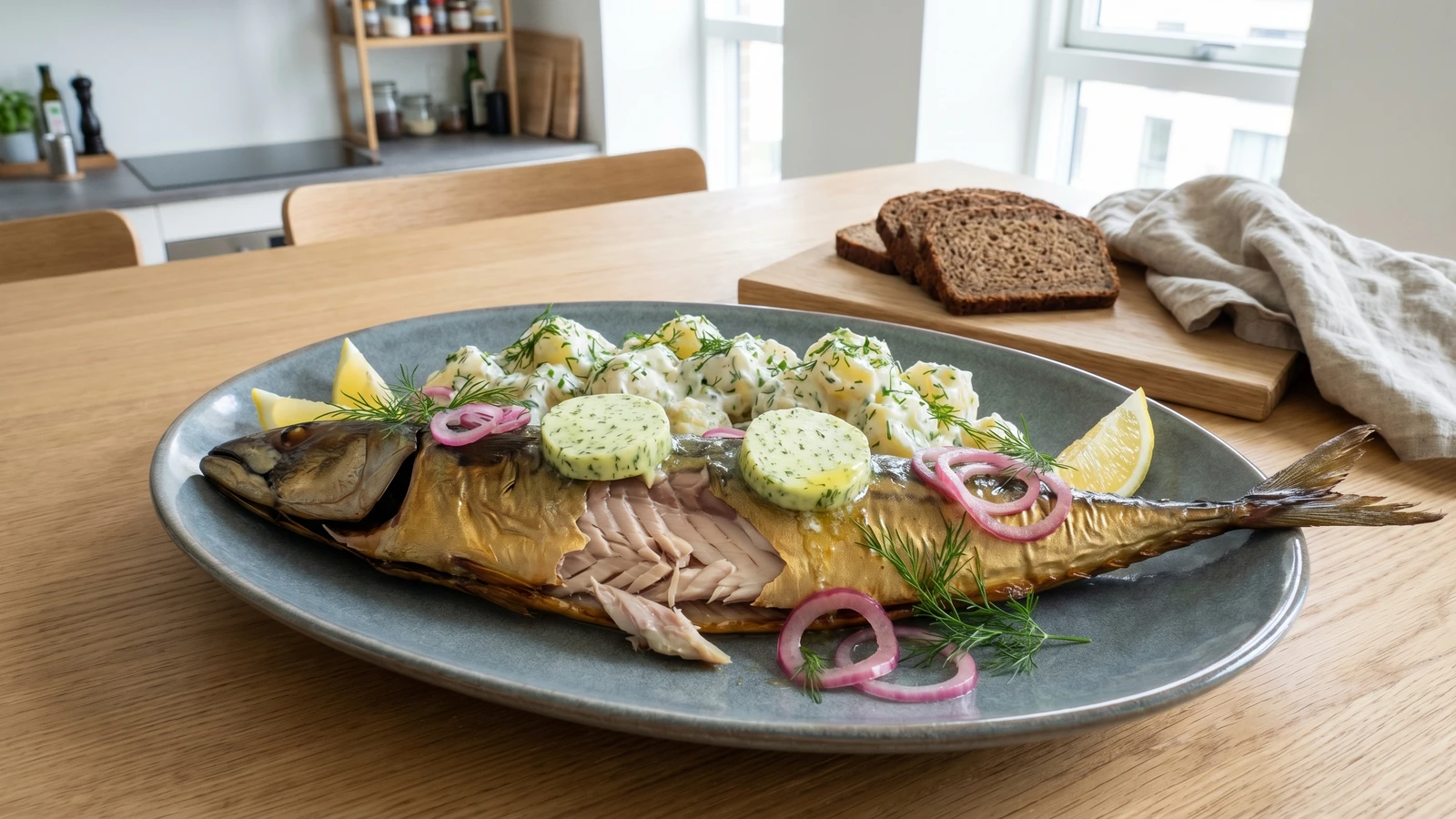
The Bornholm smokehouse plate brought home. Warm alder-smoked mackerel, cold kartoffelsalat dressed with dill and crème fraîche, dildsmør that softens against the fish, pickled onions, and dark rugbrød. July on a platter.
Bornholm in July smells like alder smoke. You catch it before you see the røgeri, drifting across the harbor on warm air, mixing with salt and the heat of sun on stone. The smokehouse plate is what you came for, and this is what it looks like: warm makrel with skin that peels back in one piece, the flesh underneath golden and rich with smoke. A bowl of cold kartoffelsalat beside it. A round of dildsmør softening slowly against the warm fish. Pickled onions sharp enough to cut through the richness. A thick slice of rugbrød to carry it all.
Makrel belongs to high summer. The fish are fattest from June through August, when they chase herring and sprat through Danish waters, and that fat is what makes them perfect for smoking. Smoke needs something to hold onto. Lean fish gives you dry, stringy results. A fat summer mackerel comes out of the smokehouse silky and yielding, the oils in the flesh carrying the alder flavor deep into every flake. The first wild rhubarb and the first mackerel share the same month, and that's not a coincidence. The season decides.
This is a composed plate, not a single dish. Each component is simple on its own. The kartoffelsalat is nye kartofler dressed while still warm so they drink in the dressing. The dildsmør is just butter and fresh dill and a pinch of salt. The pickled onions need fifteen minutes and nothing more. What matters is how they come together: warm fish, cold salad, cool butter, sharp onions. Every temperature and texture has its purpose, and I'll walk you through each one so you can set this plate down at your own table with the confidence of someone who's eaten it at a harbor table in Allinge. You'll know when it's right.
Bornholm's røgeri tradition dates to at least the 1860s, when the island's fishing communities built tall brick smokehouses to preserve enormous herring catches over green alder branches. Mackerel entered the smokehouses as summer tourism grew through the twentieth century, and the varm røget makrel plate, served straight from the chimney with kartoffelsalat and rugbrød, became the island's defining summer meal. The handful of working røgerier that remain in Hasle, Gudhjem, and Svaneke still smoke over alder in the original chimneys, a method that produces a gentler, sweeter smoke than the oak used elsewhere in Scandinavia.
Quantity
4, about 250g each
Quantity
750g
Quantity
100ml
Quantity
2 tablespoons
Quantity
1 tablespoon
Quantity
1 small bunch
fronds picked and chopped, plus extra sprigs for serving
Quantity
1 small bunch
finely snipped
Quantity
to taste
Quantity
to taste
Quantity
100g
softened
Quantity
1 large handful, about 20g
finely chopped
Quantity
a good pinch
Quantity
finely grated zest of half a lemon
Quantity
2 small
sliced paper-thin
Quantity
100ml
Quantity
1 tablespoon
Quantity
1 teaspoon
Quantity
thick slices, to serve
Quantity
to serve
| Ingredient | Quantity |
|---|---|
| whole hot-smoked mackerel | 4, about 250g each |
| small new potatoes (nye kartofler) | 750g |
| crème fraîche (18% fat) | 100ml |
| mayonnaise | 2 tablespoons |
| Dijon mustard | 1 tablespoon |
| fresh dill (for the kartoffelsalat)fronds picked and chopped, plus extra sprigs for serving | 1 small bunch |
| chivesfinely snipped | 1 small bunch |
| fine sea salt | to taste |
| white pepper | to taste |
| unsalted butter (for the dildsmør)softened | 100g |
| fresh dill (for the dildsmør)finely chopped | 1 large handful, about 20g |
| flaky sea salt | a good pinch |
| lemon zest (optional) | finely grated zest of half a lemon |
| red onionssliced paper-thin | 2 small |
| white wine vinegar | 100ml |
| caster sugar | 1 tablespoon |
| fine sea salt (for the pickle) | 1 teaspoon |
| dark rugbrød | thick slices, to serve |
| lemon wedges | to serve |
Start here because the onions need time. Slice the red onions as thinly as you possibly can. A mandoline is the right tool. Thick slices stay too sharp and fight the fish instead of balancing its richness. Place the rings in a small bowl, pour over the white wine vinegar, and add the sugar and salt. Stir once and leave them alone for at least fifteen minutes while you prepare everything else. The vinegar draws out the raw bite and turns the edges translucent and pink. They'll get better the longer they sit.
Put the nye kartofler into a pot of well-salted cold water. Starting in cold water matters: it lets the potatoes heat evenly from the outside in, so you don't end up with soft edges and a chalky center. Bring to a gentle boil and cook until a knife slides through the middle of the largest potato without any resistance at all, about fifteen to eighteen minutes depending on their size. Don't rush this. An undercooked potato at the center of your salad announces itself on the first bite. Drain and let them sit in the colander for five minutes, just until you can handle them. You want them warm, not cold.
While the potatoes cook, beat the softened butter in a bowl until it's creamy and light. Fold in the finely chopped dill and a good pinch of flaky sea salt. If you're using lemon zest, add it now. The lemon doesn't make the butter taste of lemon. It lifts the dill and sharpens the edges just enough to stand up against the smoky fish. Mix until the dill is evenly distributed and the butter has turned pale green. Spoon it onto a piece of cling film, shape it into a rough log about four centimeters across, and twist the ends tight. Put it in the fridge to firm up. You want the dildsmør cold and solid when it meets the warm mackerel. That contrast is half the pleasure: the butter softens slowly against the hot fish, releasing the dill as it melts into golden-green pools on the plate.
Cut the warm potatoes into halves or thick slices, depending on size. Put them in a wide bowl. In a smaller bowl, mix the crème fraîche, mayonnaise, and Dijon mustard together until smooth. Pour this over the warm potatoes and turn them gently through the dressing with a large spoon. This is important: dress them while they're warm. Warm potatoes absorb the dressing and it becomes part of them. Cold potatoes just sit under it, and the salad tastes flat. Add the chopped dill and snipped chives, season well with salt and white pepper, and fold everything together once more. Taste it. The dressing should be tangy and clean, the herbs visible throughout. Let the salad sit at room temperature while you warm the fish.
Heat the oven to 150°C. Place the whole smoked mackerel on a baking tray lined with parchment. Warm them for ten to twelve minutes, no longer. You are not cooking the fish. It is already cooked. What you are doing is bringing it back to the temperature where the oils loosen and the flesh becomes silky and yielding again. Too much heat and the fat renders out, leaving you with dry, fibrous fish that sticks to the skin instead of flaking away from it. You'll know they're ready when the skin tightens slightly across the body and the aroma of alder smoke fills your kitchen. That smell is the signal. Trust it.
This is where it all comes together, and the composition matters. Set the whole warm mackerel on a large serving platter, leaving room on all sides. Spoon the kartoffelsalat alongside in a generous, informal mound. Slice the chilled dildsmør into thick rounds and place them directly on top of the warm fish, where they'll begin to soften immediately. Drain the pickled onions and scatter them over and around the mackerel. Lay a few sprigs of fresh dill across the plate and tuck lemon wedges into the gaps. Bring the rugbrød to the table on a separate board, sliced thick. This plate arrives all at once, warm and cold together, and everyone helps themselves. The mackerel skin peels back to reveal the golden flesh. The butter melts. The pickled onions cut through the smoke. Cooked with love, served at a table where people linger. Tak for mad.
1 serving (about 510g)
Culinary guides, cultural storytelling, and the editorial depth that makes cooking meaningful.
Discover Culinary ExplorerChef Freja
Slow-roasted duck legs with crisp, deeply golden skin, served with braised red cabbage and caramelized potatoes. The weeknight Danish duck that proves the best part of the bird is the one that takes its time.

Chef Freja
The whole roasted duck of juleaften, stuffed with tart apples and dark prunes, slow-roasted for four patient hours until the skin crackles like something earned and the meat underneath gives way without resistance.
Chef Freja
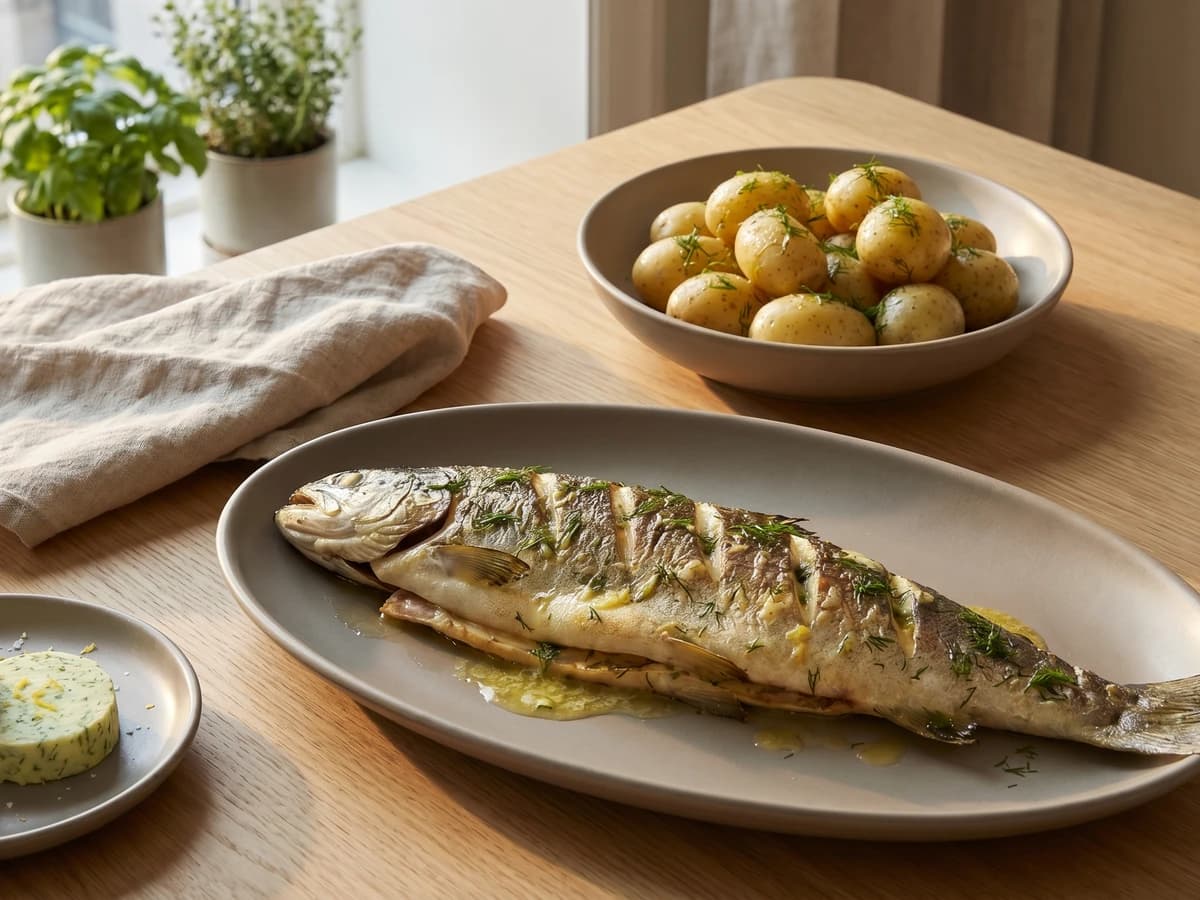
Whole sea trout baked with butter, lemon, and armfuls of dill, served beside the first nye kartofler of the season and a melting slab of dildsmor. The Danish summer table at its most generous.
Chef Freja
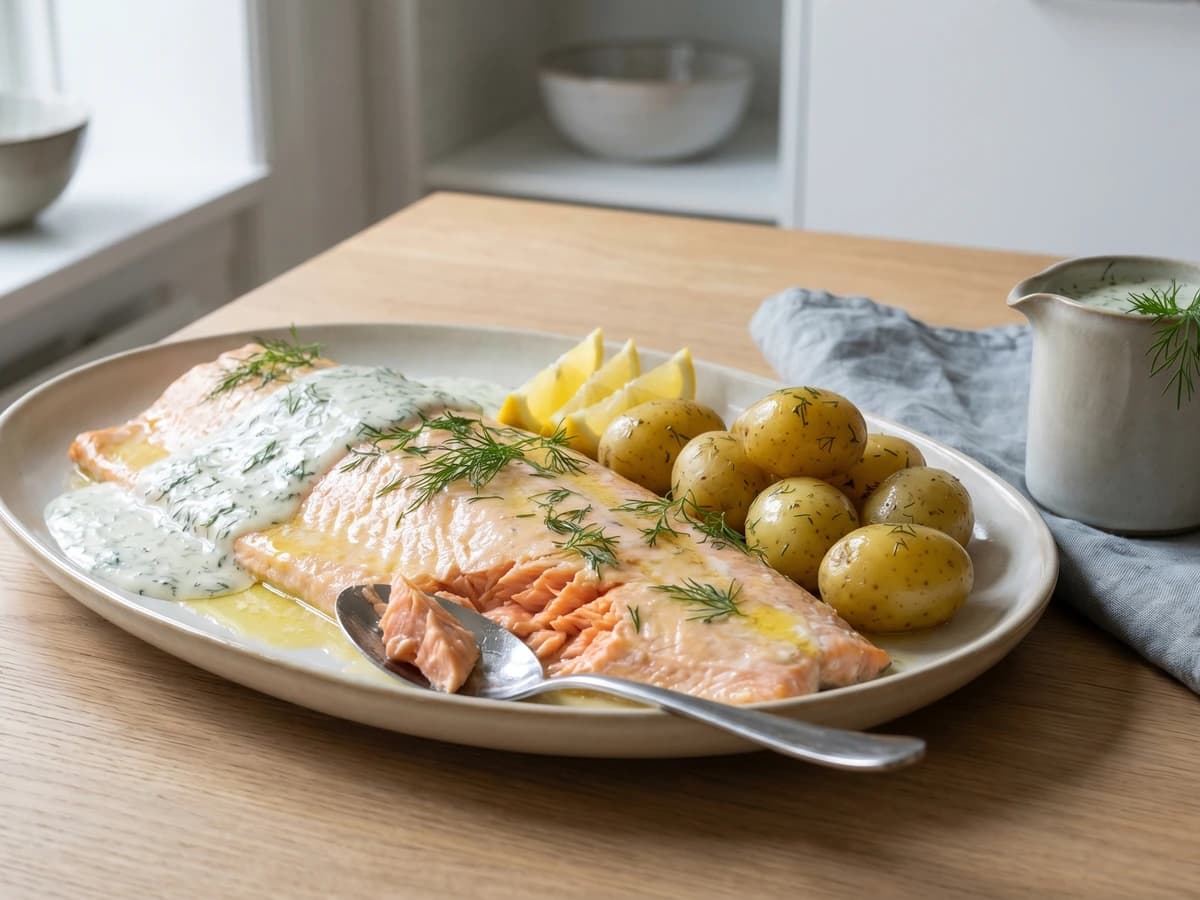
A side of salmon baked gently in butter and white wine, served warm with a bright dill cream sauce and the season's first nye kartofler. Late spring on a Danish table, cooked with love.