
Chef Freja
Andelår med Rødkål
Slow-roasted duck legs with crisp, deeply golden skin, served with braised red cabbage and caramelized potatoes. The weeknight Danish duck that proves the best part of the bird is the one that takes its time.
A cooking platform built around craft, culture, and the stories behind what we eat.

Created by Chef Freja
Limfjord blue mussels steamed open in white wine, butter, and shallots, the broth finished with cream and torn dill, served from the pot with crusty bread for the last spoonful at the bottom of the bowl.
The first real cold comes to Denmark in late September, and if you're anywhere near the Limfjord, you'll hear about blaamuslinger before you feel the wind. The fishermen know the mussels are fattening. The shallow, brackish water of the fjord, where the North Sea meets the inland channels, gives Limfjord mussels a sweetness and a minerality that no other Danish mussel has. The season decides, and from September through April these mussels are at their best: plump, briny, cooked with love by every kitchen that knows what it has.
Dampede blaamuslinger is one of the fastest, most generous dishes in the Danish repertoire. You soften shallots in butter, pour in good white wine, and tip the mussels into the steam. In five or six minutes they open, releasing their liquor into the broth. You finish it with cream and a handful of torn dill, and serve the whole thing from the pot with bread for sopping. That's the meal. The mussels and the broth, inseparable.
Here's what I want you to watch for: the moment the mussels open. Not before, because they need the steam. Not after, because every extra minute toughens the flesh. When the shells gape and the meat inside is plump and pulling slightly from its hinge, take the pot off the heat. You'll know when it's right. The difference between a perfect mussel and an overcooked one is measured in seconds, and I'll tell you exactly what to look for so you never miss it. This is a dish that rewards attention and punishes delay, which is why it belongs at a table where everyone is already seated, wine poured, bread torn, waiting.
The Limfjord in northern Jutland has been Denmark's most prized mussel ground since the late 19th century, when the natural breach at Agger Tangen in 1825 opened the western end of the fjord to the North Sea and permanently altered its salinity. The resulting blend of salt and fresh water created conditions that produce mussels of exceptional sweetness and firm texture, a distinction Limfjord blaamuslinger still hold among Danish shellfish. Steaming mussels in white wine arrived in Danish kitchens via French influence in the early 20th century, but the Danish version is its own thing: less garlic, more dill, a finish of cream rather than the sharp broth of moules mariniere, reflecting the Danish instinct to soften and round a dish rather than sharpen it.
Quantity
2kg
scrubbed and debearded just before cooking
Quantity
40g
Quantity
3 large
finely sliced
Quantity
2 cloves
thinly sliced
Quantity
250ml
Quantity
200ml
Quantity
large bunch
stems and fronds separated
Quantity
1
Quantity
5
Quantity
to taste
Quantity
half a lemon
Quantity
to serve
| Ingredient | Quantity |
|---|---|
| live Limfjord blue musselsscrubbed and debearded just before cooking | 2kg |
| unsalted butter | 40g |
| shallotsfinely sliced | 3 large |
| garlicthinly sliced | 2 cloves |
| dry white wine | 250ml |
| double cream | 200ml |
| fresh dillstems and fronds separated | large bunch |
| bay leaf | 1 |
| whole black peppercorns | 5 |
| fine sea salt | to taste |
| lemon juice | half a lemon |
| good crusty bread | to serve |
Fill a large bowl with cold water and tip the mussels in. Sort through them one by one. Tap any open mussel firmly against the counter. If it closes slowly, it's alive and fine. If it stays open, it's dead. Throw it away. Pull off any fibrous beards clinging to the shell, the little tuft of threads the mussel uses to anchor itself to rocks. Scrub the shells under cold running water to remove sand and grit. Do this just before you cook. Debearded mussels die quickly, so timing matters.
Set a large, heavy pot with a tight-fitting lid over medium heat. Melt the butter until it foams. Add the sliced shallots, the garlic, the dill stems (save the fronds for later), the bay leaf, and the peppercorns. Stir everything through the butter and cook gently for three to four minutes until the shallots turn translucent and soft. You don't want any color here. Browned shallots taste roasted and assertive, and this broth needs to stay clean and bright so the mussels can lead.
Pour in the white wine and let it come to a strong simmer. Let it bubble for one minute. The alcohol cooks off quickly and what stays behind is the wine's acidity and fruit, which will balance the salinity the mussels release as they open. You want the pot hot and the liquid moving before the mussels go in.
Tip all the mussels into the pot at once and immediately clamp the lid on tight. The steam does the work. Leave the lid on and resist the urge to peek for three minutes. Then shake the pot firmly by its handles, holding the lid down, to redistribute the mussels so those on top move to the bottom. Replace the lid and cook for another two to three minutes. The mussels are done when they have opened wide and the flesh inside is plump and pulling slightly away from the shell. Remove the pot from the heat the moment they're open. Blaamuslinger need only minutes in the hvidvin. Overcooking turns them rubbery, and there is no fixing that.
Use a slotted spoon to lift the mussels into a large warmed serving bowl or divide them between deep plates. Set the pot with the broth back on a medium heat. Pour in the cream and stir it through. Let the broth simmer for two minutes until it comes together into something silky and just lightly thickened. It should coat the back of a spoon but still feel like broth, not sauce. Squeeze in the lemon juice and taste. The mussels will have given the liquid their own salt, so taste before you add any. Often you'll find you need none at all.
Remove the bay leaf and dill stems from the broth. Pour the hot broth over the mussels. Tear the reserved dill fronds generously over the top, letting them fall where they will. Serve immediately with thick slices of good crusty bread alongside, the kind with a real crust that holds up when you drag it through the broth. The bread is not optional. Half the pleasure of this dish is sopping up the last of the dill-bright liquid from the bottom of the bowl. Tak for mad.
1 serving (about 425g)
Culinary guides, cultural storytelling, and the editorial depth that makes cooking meaningful.
Discover Culinary ExplorerChef Freja
Slow-roasted duck legs with crisp, deeply golden skin, served with braised red cabbage and caramelized potatoes. The weeknight Danish duck that proves the best part of the bird is the one that takes its time.

Chef Freja
The whole roasted duck of juleaften, stuffed with tart apples and dark prunes, slow-roasted for four patient hours until the skin crackles like something earned and the meat underneath gives way without resistance.
Chef Freja
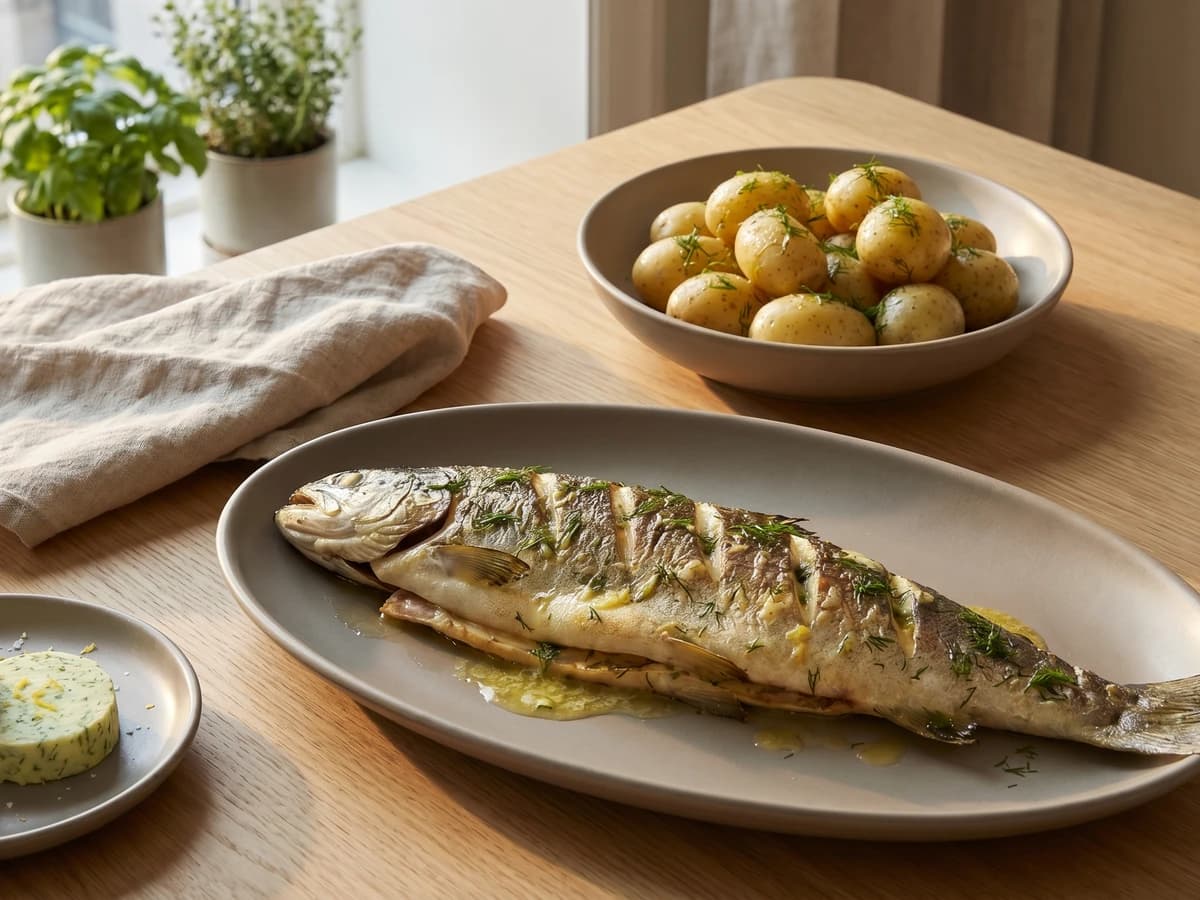
Whole sea trout baked with butter, lemon, and armfuls of dill, served beside the first nye kartofler of the season and a melting slab of dildsmor. The Danish summer table at its most generous.
Chef Freja
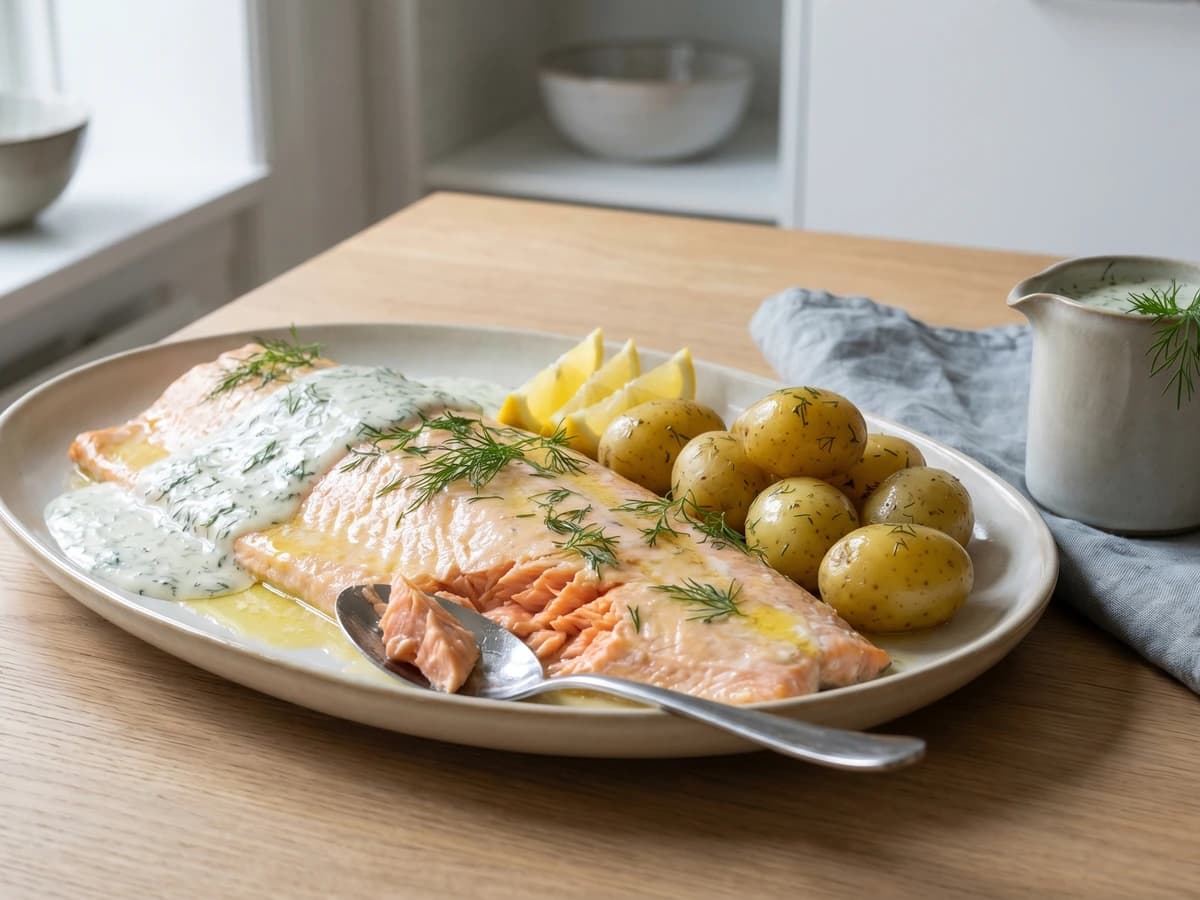
A side of salmon baked gently in butter and white wine, served warm with a bright dill cream sauce and the season's first nye kartofler. Late spring on a Danish table, cooked with love.