
Chef Freja
Andelår med Rødkål
Slow-roasted duck legs with crisp, deeply golden skin, served with braised red cabbage and caramelized potatoes. The weeknight Danish duck that proves the best part of the bird is the one that takes its time.
A cooking platform built around craft, culture, and the stories behind what we eat.

Created by Chef Freja
Whole sea trout baked with butter, lemon, and armfuls of dill, served beside the first nye kartofler of the season and a melting slab of dildsmor. The Danish summer table at its most generous.
Midsummer in Denmark is measured in light. By late June the sun barely sets, the sky stays pale until midnight, and the whole country tilts toward the water. This is when the nye kartofler appear at the market, small and golden-skinned, still carrying the sandy earth they were pulled from that morning. And this is when you bake a whole havorred.
Havorred is the wild sea trout that runs along the Danish coasts, one of the finest fish in our waters. Baked whole with butter, lemon slices, and generous handfuls of fresh dill tucked into the cavity, it's the kind of dish that anchors a summer Sunday. You bring it to the table on the same platter it cooked on, golden-skinned and fragrant, and let people serve themselves. Alongside: a bowl of nye kartofler, cooked until just tender, and a generous portion of dildsmor, that bright compound butter of dill and lemon that melts into everything the moment it touches something warm. This is how we greet each other in June.
The cooking here is simple, and that's the point. The fish does the work. What matters is your sourcing: a fresh, whole sea trout from a fishmonger you trust, real butter (never margarine), and dill that's vivid green and fragrant when you crush a stem between your fingers. Pay attention to the oven temperature and the moment the flesh turns opaque at the thickest point behind the head. That's your signal. Pull it too early and the center is raw. Leave it too long and you lose the silky texture that makes this fish worth every krone. I'll tell you exactly what to look for, and you'll know when it's right.
Havorred has been fished along the Danish coastline for centuries, prized above farm-raised regnbueorred (rainbow trout) for its firmer flesh and clean, mineral flavor shaped by cold seawater and long coastal runs. The tradition of baking a whole fish for a summer gathering appears in Danish household cookbooks as early as the 1860s, and by the turn of the century the pairing of a baked sea trout with nye kartofler had become the defining meal of the Danish summer coast, from the harbors of Skagen in the north to the fishing villages of Bornholm in the east. Dildsmor, the compound butter of fresh dill and lemon, is a specifically Danish refinement: a way of giving the cook one last moment of generosity at the table, a cold slab of butter that melts slowly over the hot fish and releases its fragrance in waves.
Quantity
1, about 1.5kg
cleaned, scaled, and gutted
Quantity
to taste
Quantity
freshly ground, to taste
Quantity
1, plus extra wedges to serve
sliced into thin rounds
Quantity
2 large bunches
divided between cavity, dildsmor, potatoes, and serving
Quantity
40g
cold, cut into small pieces
Quantity
1 tablespoon
Quantity
125g
softened
Quantity
finely grated zest of 1 lemon
for the dildsmor
Quantity
1 tablespoon
for the dildsmor
Quantity
to taste
for the dildsmor
Quantity
800g
small, gently scrubbed, skins left on
Quantity
20g
| Ingredient | Quantity |
|---|---|
| whole sea trout (havorred)cleaned, scaled, and gutted | 1, about 1.5kg |
| fine sea salt | to taste |
| white pepper | freshly ground, to taste |
| lemonsliced into thin rounds | 1, plus extra wedges to serve |
| fresh dilldivided between cavity, dildsmor, potatoes, and serving | 2 large bunches |
| unsalted butter (for the trout)cold, cut into small pieces | 40g |
| cold-pressed rapeseed oil | 1 tablespoon |
| unsalted butter (for the dildsmor)softened | 125g |
| lemon zestfor the dildsmor | finely grated zest of 1 lemon |
| fresh lemon juicefor the dildsmor | 1 tablespoon |
| flaky sea saltfor the dildsmor | to taste |
| nye kartofler (new potatoes)small, gently scrubbed, skins left on | 800g |
| unsalted butter (for the potatoes) | 20g |
In a bowl, work the softened butter with a fork until it's smooth and pliable. Add the finely chopped dill (use a generous handful from one of your bunches), the lemon zest, lemon juice, and a good pinch of flaky sea salt. Mix until everything is evenly distributed and the butter is green-flecked and fragrant. Spoon the butter onto a piece of baking parchment and shape it into a rough log, about 4cm across. Roll the parchment around it, twist the ends, and chill in the fridge until firm. The butter needs to be cold when it reaches the table so it melts slowly over the hot fish, releasing the dill and lemon in waves rather than all at once.
Heat your oven to 200C. Rinse the trout under cold water and pat it completely dry inside and out with kitchen paper. Moisture on the skin prevents it from crisping, so take your time with this step. With a sharp knife, score the skin on each side: three or four diagonal cuts, about 1cm deep, spaced evenly along the body. These cuts aren't decoration. They let the heat reach the thickest part of the flesh evenly and allow the butter to seep into the fish as it bakes. Season the cavity and the scored skin generously with fine sea salt and white pepper. Lay lemon slices inside the cavity in a single overlapping row, then pack in a generous handful of dill sprigs. The aromatics perfume the fish from within, and the lemon juice steams gently as the fish cooks, keeping the flesh moist.
Line a large roasting tin with baking parchment and brush it lightly with the rapeseed oil. Lay the trout on the parchment and scatter the cold butter pieces over the scored skin. The butter must be cold so it melts slowly as the oven heats, basting the skin gradually rather than pooling and burning. Slide the tin into the middle of the oven and bake for 25 to 30 minutes. A 1.5kg fish takes about 25 minutes. You'll know it's done when the skin has turned golden and taut, the butter on the surface is nutty and foaming, and the flesh at the thickest point behind the head has turned from translucent to opaque. If you have an instant thermometer, 55C at the center is what you want. The fish will carry over a few degrees as it rests.
While the trout bakes, scrub the nye kartofler gently under cold water. Don't peel them. The skins of new potatoes are thin, tender, and full of the earthy sweetness that makes nye kartofler worth waiting all year for. Place them in a pot of cold, well-salted water and bring to a steady boil. Starting in cold water is important: it lets the potatoes heat through evenly from the outside in. If you drop them into boiling water, the outsides cook faster than the centers and you end up with potatoes that are floury on the edges and hard in the middle. Cook for 15 to 18 minutes, depending on their size. They're done when a thin knife slides through the center with no resistance at all. Drain them well, return them to the warm pot, and toss gently with the butter and a few torn dill sprigs. The season decides what's on the table, and in June, nothing belongs beside a baked fish more than these.
When the trout comes out of the oven, let it rest on the platter for five minutes. This is not optional. The flesh is still cooking gently from residual heat, and the juices, which have been pushed to the surface by the oven's intensity, need time to redistribute back through the fish. If you cut in immediately, those juices run out onto the platter instead of staying in the flesh where they belong. After five minutes, scatter fresh dill fronds over the top and arrange lemon wedges around the fish. Bring the whole platter to the table alongside the bowl of nye kartofler and the dildsmor, sliced into thick rounds straight from the fridge. Let people help themselves. A thick slice of cold dildsmor on a piece of hot fish, a few nye kartofler on the side, a squeeze of lemon. That's the whole meal. Cooked with love. Tak for mad.
1 serving (about 375g)
Culinary guides, cultural storytelling, and the editorial depth that makes cooking meaningful.
Discover Culinary ExplorerChef Freja
Slow-roasted duck legs with crisp, deeply golden skin, served with braised red cabbage and caramelized potatoes. The weeknight Danish duck that proves the best part of the bird is the one that takes its time.

Chef Freja
The whole roasted duck of juleaften, stuffed with tart apples and dark prunes, slow-roasted for four patient hours until the skin crackles like something earned and the meat underneath gives way without resistance.
Chef Freja
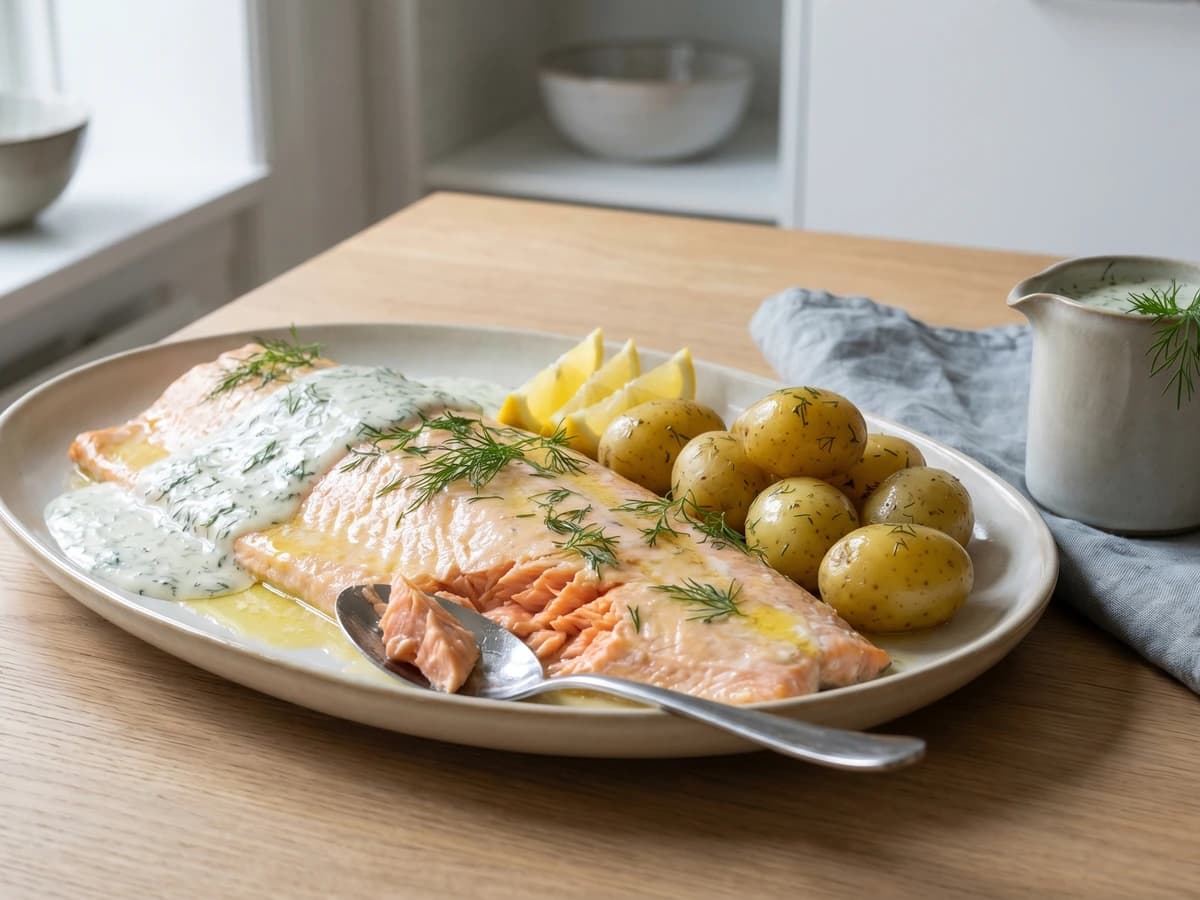
A side of salmon baked gently in butter and white wine, served warm with a bright dill cream sauce and the season's first nye kartofler. Late spring on a Danish table, cooked with love.
Chef Freja
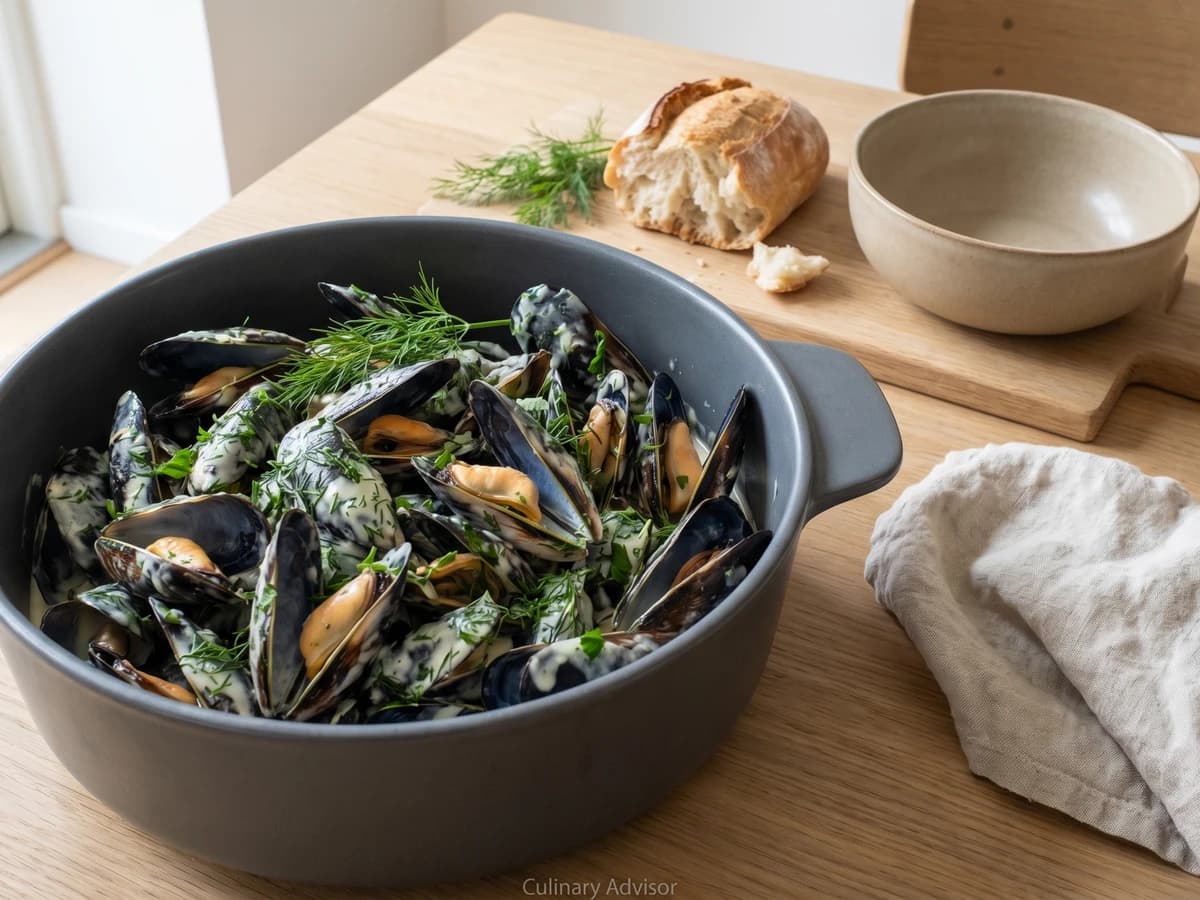
Limfjord blue mussels steamed in white wine and bathed in a roux-thickened cream sauce heavy with dill and parsley. The pot goes straight to the table, the broth pools at the bottom, and the bread is for soaking up every last drop.