Chef Makoa
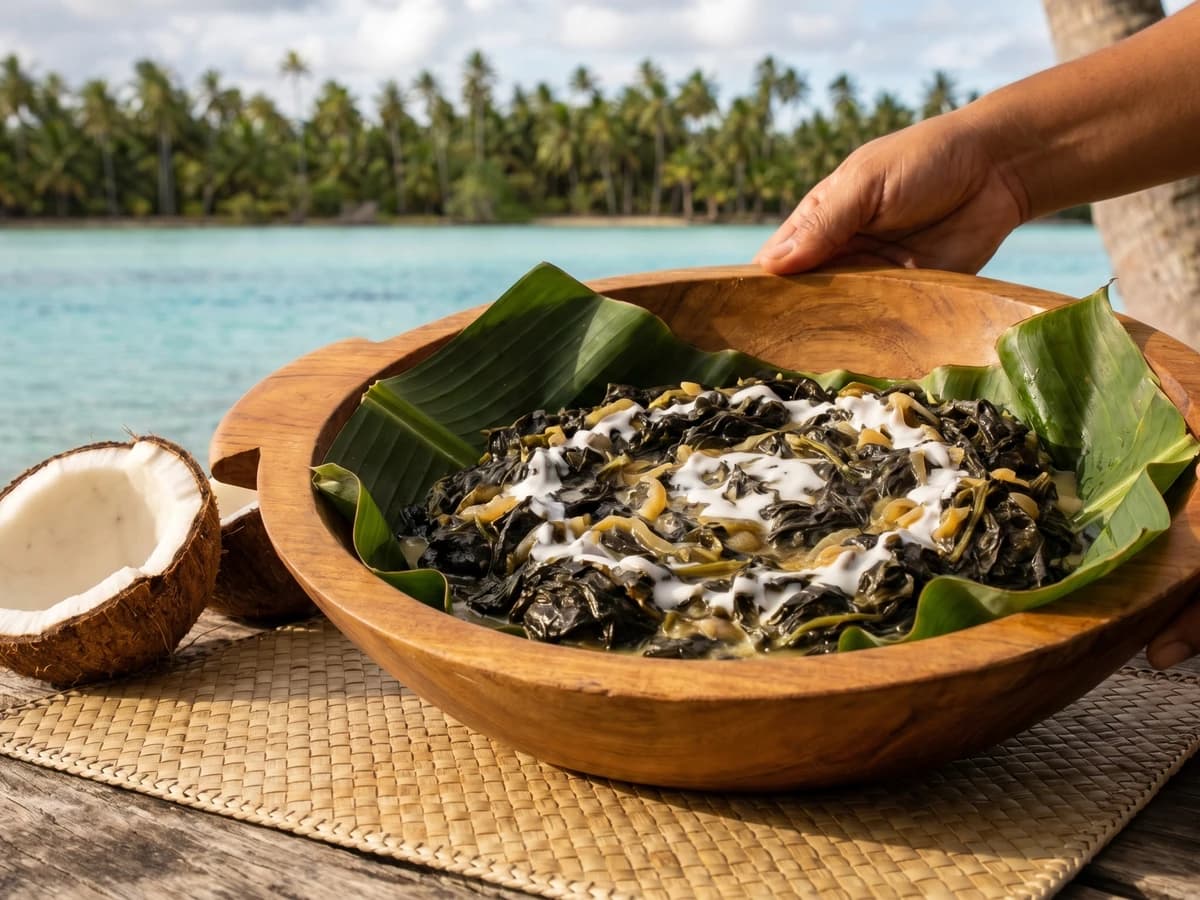
Fāfā (Tahitian Taro Leaves in Coconut Cream)
Tahiti's fāfā cooks young taro leaves down with onion and coconut cream until they turn dark, silky, and rich enough to feed the whole table.
A cooking platform built around craft, culture, and the stories behind what we eat.
Created by
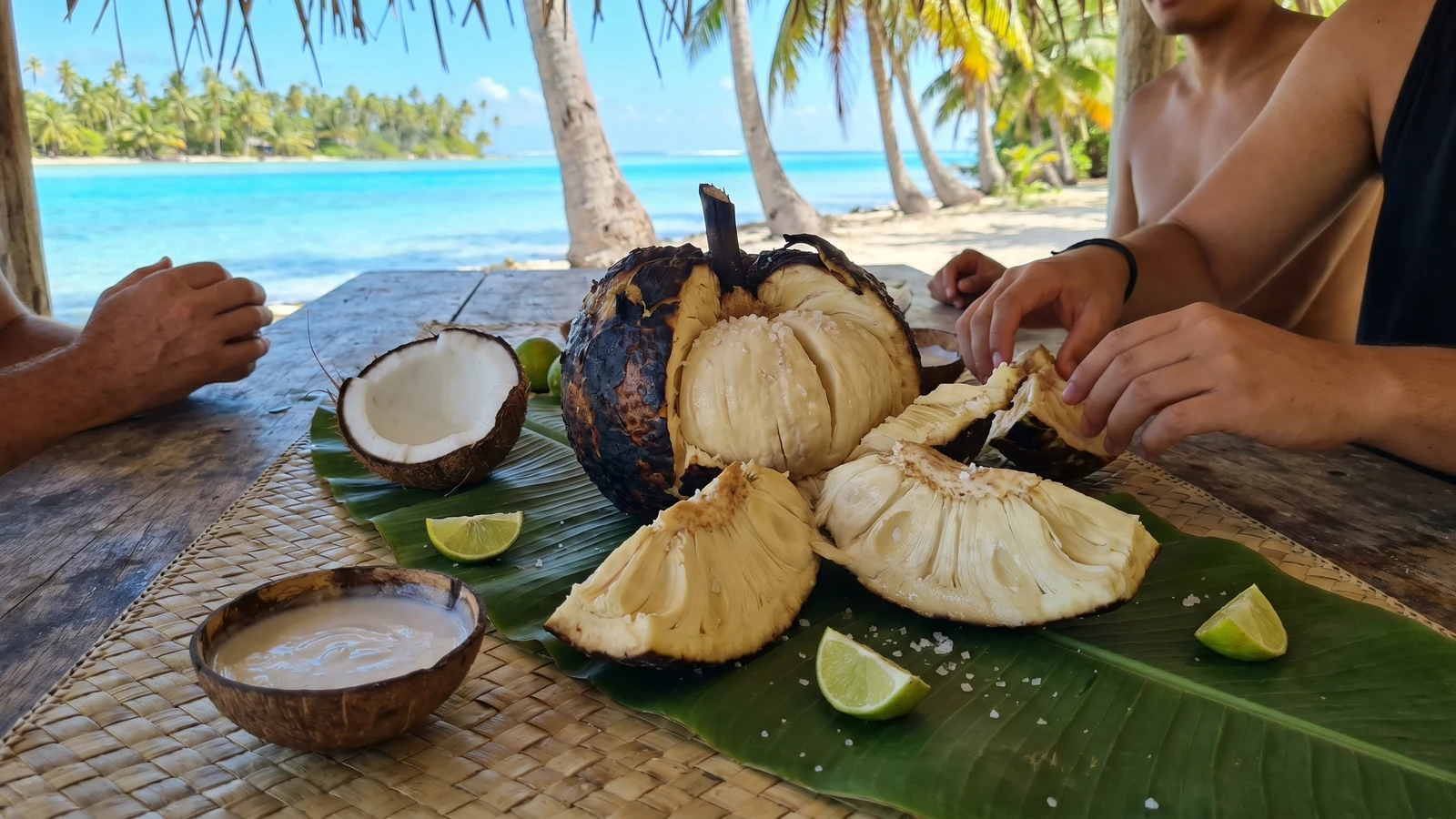
Tahiti's ʻuru roasted whole in its skin, blackened outside and creamy within, the daily bread of maʻa Tahiti brought from embers into a real home oven.
The canoe carried this relative before it carried any recipe. In Tahiti they call him ʻuru, breadfruit, and he stands right in the middle of maʻa Tahiti, the Tahitian table: roasted by the fire, split open, salted, and eaten with fish, pork, coconut, or whatever the day gives. Same root family as the Hawaiian ʻulu, the Cook Islands kuru, the Sāmoan ʻulu, and the Marquesan mei. One ocean, one canoe, one root.
I learned breadfruit first at home in Hawaiʻi, but the Tahitian hand knows this one deep. ʻUru rōti, roasted breadfruit, is not a dressed-up thing. The skin blackens so the inside can turn soft and creamy. The fire makes its own bowl, and when you open it, the flesh pulls away pale and tender, smelling like warm bread, earth, and a little smoke from the yard.
If you have embers, use them. If you have an oven, use that too, no shame. The old people cooked with the heat they had, and we cook with what we have now. What matters is that you don't treat ʻuru like filler. This is canoe food, sovereignty food, comfort food, the starch that feeds the table before anybody starts talking fancy.
Breadfruit was one of the great Polynesian canoe crops, carried and cultivated from the western islands through Tahiti, the Marquesas, the Cook Islands, Hawaiʻi, and out toward Rapa Nui, where starch crops marked survival as much as taste. In Tahiti, ʻuru became a daily staple of maʻa Tahiti, roasted, fermented, pounded, and stored in ways that let families eat from the land instead of waiting on ships. European visitors in the late 1700s noticed breadfruit so strongly that it helped drive the Bounty voyages, but the older story is not empire's hunger for cheap food, it is island people knowing how to feed themselves from tree, fire, and season.
Quantity
1 (2 to 3 pounds)
Quantity
1 tablespoon
for oven roasting
Quantity
1 to 2 teaspoons
to taste
Quantity
1/2 cup
or thick canned coconut cream, for serving
Quantity
as needed
for serving
| Ingredient | Quantity |
|---|---|
| mature firm ʻuru (breadfruit) | 1 (2 to 3 pounds) |
| coconut oil or neutral oil (optional)for oven roasting | 1 tablespoon |
| sea saltto taste | 1 to 2 teaspoons |
| fresh coconut cream (optional)or thick canned coconut cream, for serving | 1/2 cup |
| lime wedges (optional)for serving | as needed |
Pick a mature firm ʻuru, the breadfruit, heavy for its size with green-yellow skin and a little give under your thumb. Too green and it eats tight and dry. Too ripe and it turns sweet and soft, still good food, just not this dish. Eat what you have, but know what stage you're cooking.
Rinse the ʻuru and cut a shallow cross through the skin at the stem end so pressure can escape while it roasts. Don't cut deep into the flesh. The skin is the vessel here, holding the starch while the outside blackens and the inside turns creamy.
Set the whole ʻuru near steady embers, turning every 10 to 15 minutes, until the skin is charred all over and a skewer slides into the center with no fight, 45 to 60 minutes. You want the outside black and blistered, the inside soft and fragrant, like warm bread and chestnut. No rush it. The fruit gives when it's ready.
Let the roasted ʻuru sit 10 minutes so the creamy center settles. Split it open with a knife, pull out the tough core, and lift the pale flesh away from the charred skin in big tender pieces. The surface should look moist and satiny, not dry and crumbly.
Break the ʻuru into wedges or chunks, sprinkle with sea salt, and pass coconut cream at the table if you want that richer Tahitian comfort. Some families eat it plain beside fish, puaʻa, or ʻia ota. Some fold leftovers into the next day's plate. Deep food is not fancy. It's enough.
1 serving (about 220g)
Culinary guides, cultural storytelling, and the editorial depth that makes cooking meaningful.
Discover Culinary ExplorerChef Makoa
Tahiti's fāfā cooks young taro leaves down with onion and coconut cream until they turn dark, silky, and rich enough to feed the whole table.

Chef Makoa
Tahiti's fēʻi are orange-fleshed mountain bananas, cooked until tender and served like a starch, warm with sea salt, coconut cream, and the quiet sweetness of the high valleys.
Chef Makoa
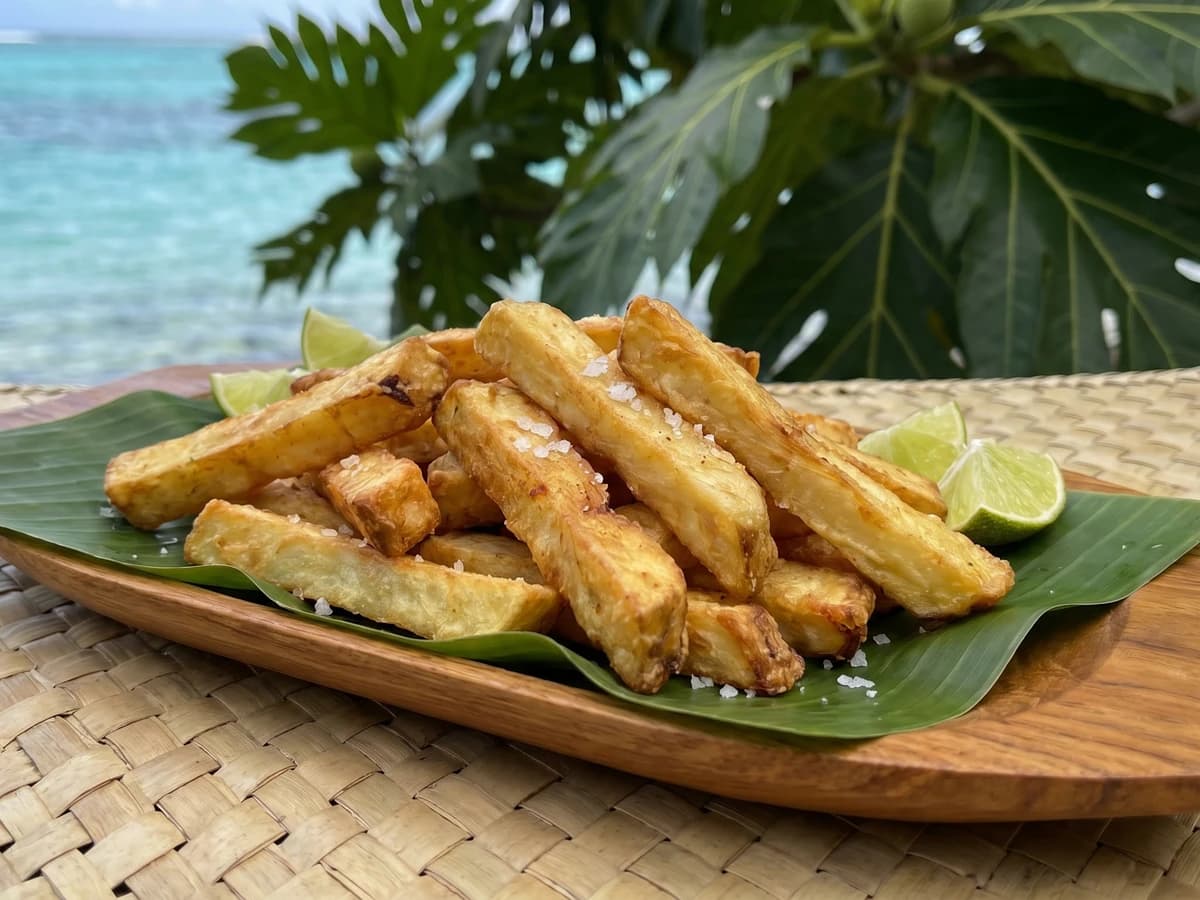
Firm Tahitian ʻuru cut into thick wedges, cooked until tender, then fried crisp and salted while hot. The old canoe crop lands on the table like chips, only deeper.

Chef Makoa
Tender slices of Tahitian ʻuru, breadfruit, baked in coconut milk until the edges go gold, with just enough cheese from the French island pantry to brown the top.