
Chef Jeong-sun
Aehobak-guk (애호박국, Korean Zucchini Soup)
A clean summer soup of Korean zucchini and salted shrimp, built on quick anchovy-kelp broth and finished before the half-moons lose their shape on a weeknight table.
A cooking platform built around craft, culture, and the stories behind what we eat.
Created by
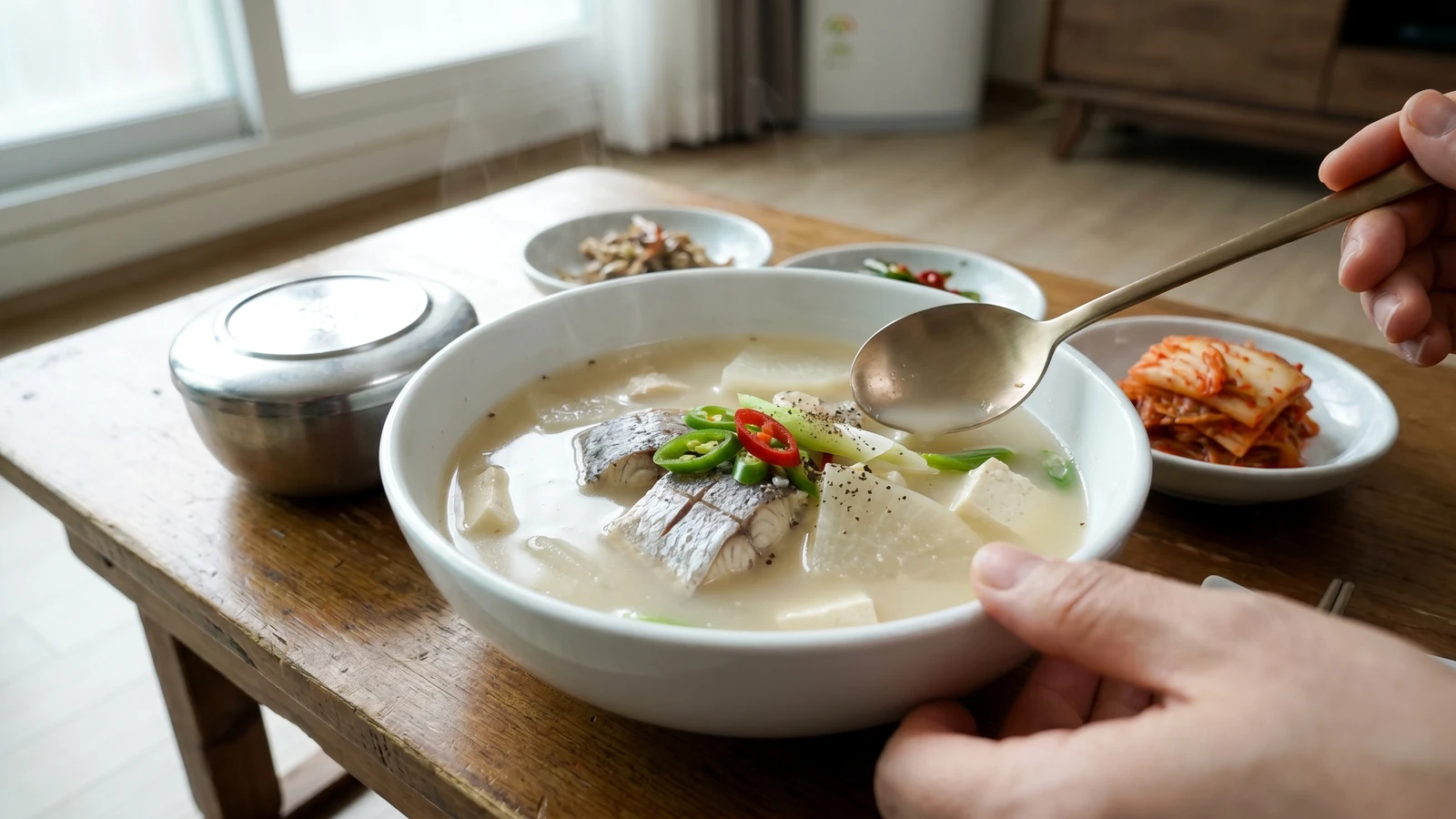
A clear Seosan soup built from wind-dried rockfish and salted shrimp, where rice water softens the salt and the half-dried fish gives the broth its clean depth.
This soup begins before the pot, on the western coast where rockfish are split, salted lightly, and dried until the flesh firms but does not turn hard. Fresh fish makes a quick sweetness. Half-dried ureok gives something deeper and cleaner, the taste of the sea after the shouting has gone quiet.
Ureokjeot-guk asks restraint from you tonight. Rinse the fish, but don't wash away its character. Simmer it gently, not violently. Season with saeujeot (salted shrimp) by measured spoonfuls, because both the fish and the jeot carry salt already. The rice water is not filler. It rounds the broth and keeps the soup pale and soft-edged, which is why plain water tastes thinner here.
My teacher would say to taste the broth before touching the salt jar. She was right, and annoying, which is often the same thing in a kitchen. Write it down. Memory is a borrowed bowl. Once you know how salty your fish and saeujeot are, this becomes a very calm soup to carry to the table with rice, kimchi, and one green namul beside it.
Ureokjeot-guk is strongly associated with Seosan and Taean on Korea's west coast, where rockfish from the Yellow Sea were preserved by salting and wind-drying before refrigeration made fresh fish ordinary. The soup's name comes from seasoning the broth with jeot, especially saeujeot (salted shrimp), rather than from making the fish itself into a fermented paste. In coastal Chungcheong households it has been served as both everyday comfort and a guest dish, especially when a clean, restorative fish soup was wanted without the heaviness of a spicy maeuntang.
Quantity
1 fish, about 450 to 550g
cleaned and cut crosswise into 2-inch pieces
Quantity
5 cups
from the second or third rinse of rice
Quantity
1 cup
as needed
Quantity
250g
cut into 1/3-inch half-moons
Quantity
200g
cut into 1-inch cubes
Quantity
2 tablespoons, plus 1 teaspoon more if needed
finely chopped
Quantity
2 cloves
minced
Quantity
1 teaspoon juice or 3 thin slices
Quantity
1 tablespoon
Quantity
1 small
sliced on the diagonal
Quantity
1 small
sliced on the diagonal
Quantity
2
cut into 2-inch lengths
Quantity
1/4 teaspoon
freshly ground
Quantity
only if needed
| Ingredient | Quantity |
|---|---|
| semi-dried rockfish (ureok)cleaned and cut crosswise into 2-inch pieces | 1 fish, about 450 to 550g |
| rice water (ssal-tteumul)from the second or third rinse of rice | 5 cups |
| wateras needed | 1 cup |
| Korean radish (mu)cut into 1/3-inch half-moons | 250g |
| firm tofucut into 1-inch cubes | 200g |
| saeujeot (salted shrimp)finely chopped | 2 tablespoons, plus 1 teaspoon more if needed |
| garlicminced | 2 cloves |
| ginger juice or fresh ginger | 1 teaspoon juice or 3 thin slices |
| soup soy sauce (guk-ganjang) (optional) | 1 tablespoon |
| green chilisliced on the diagonal | 1 small |
| red chili (optional)sliced on the diagonal | 1 small |
| scallionscut into 2-inch lengths | 2 |
| black pepperfreshly ground | 1/4 teaspoon |
| fine sea salt (optional) | only if needed |
Rinse the semi-dried rockfish quickly under cold water, rubbing away any surface salt or stray scales. If it smells strongly salty, soak it in cold water for 10 minutes, then drain well. Do not soak longer unless the fish is very hard and salty, because you will lose the clean dried-fish flavor you came for.
Rinse 1 cup of rice once and throw that cloudy water away. Add fresh water, rub the rice with your hand, and save 5 cups of the second or third rinse. That water has enough starch to soften the broth without making it pasty. Plain water works in a poor moment, but the soup will taste thinner.
Put the rice water and radish in a medium pot and bring it to a gentle boil over medium heat. Simmer 8 minutes, until the radish edges begin to turn translucent. The radish goes in first because it sweetens the broth and needs time to give itself up.
Lower the rockfish pieces into the pot in one layer if you can. Bring the broth back to a quiet simmer and cook 15 minutes, skimming only the gray foam that rises. Do not stir hard. The fish is firm from drying, but rough stirring still clouds the broth and breaks the pieces.
Stir the chopped saeujeot with 2 tablespoons of hot broth in a small bowl, then add it to the pot. This loosens the salted shrimp so it seasons evenly instead of landing in one salty pocket. Add the garlic and ginger now, then simmer 5 minutes. Taste the broth before adding anything else.
Slide in the tofu and simmer 4 to 5 minutes, just until heated through. Taste again. If the broth is clean but a little flat, add 1 tablespoon guk-ganjang. If it needs only salt, add saeujeot 1 teaspoon at a time or a small pinch of fine sea salt. The finished soup should be savory and clear, with the rockfish still tasting like rockfish.
Add the chilies, scallions, and black pepper, then turn off the heat after 30 seconds. Let the green things stay bright. Serve with rice and sharp kimchi, giving each bowl a piece of fish, radish, tofu, and plenty of broth.
1 serving (about 520g)
Culinary guides, cultural storytelling, and the editorial depth that makes cooking meaningful.
Discover Culinary ExplorerChef Jeong-sun
A clean summer soup of Korean zucchini and salted shrimp, built on quick anchovy-kelp broth and finished before the half-moons lose their shape on a weeknight table.
Chef Jeong-sun
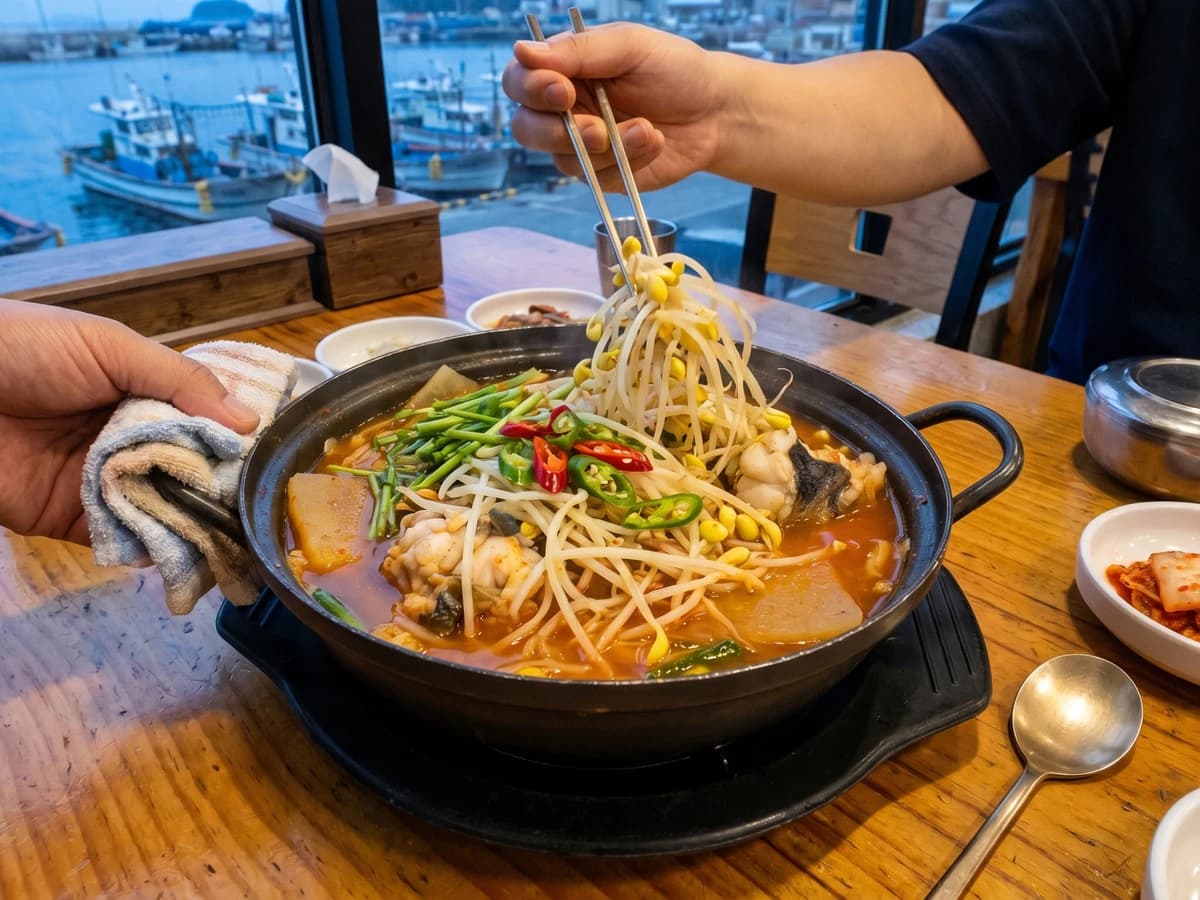
A Masan coast monkfish stew with firm white meat, gelatin at the bones, soybean sprouts for crunch, and a red broth seasoned to carry the fish, not bury it.

Chef Jeong-sun
A weeknight fish roe stew with radish and crown daisy in a clean spicy broth, where the whole success depends on adding the roe late enough that it sets tender, not chalky.

Chef Jeong-sun
Late-summer mallow leaves rubbed with salt until the bitter green water runs off, then simmered in a clean doenjang broth with dried shrimp, the quiet soup a Korean weeknight deserves.