
Chef Jeong-sun
Aehobak-guk (애호박국, Korean Zucchini Soup)
A clean summer soup of Korean zucchini and salted shrimp, built on quick anchovy-kelp broth and finished before the half-moons lose their shape on a weeknight table.
A cooking platform built around craft, culture, and the stories behind what we eat.
Created by
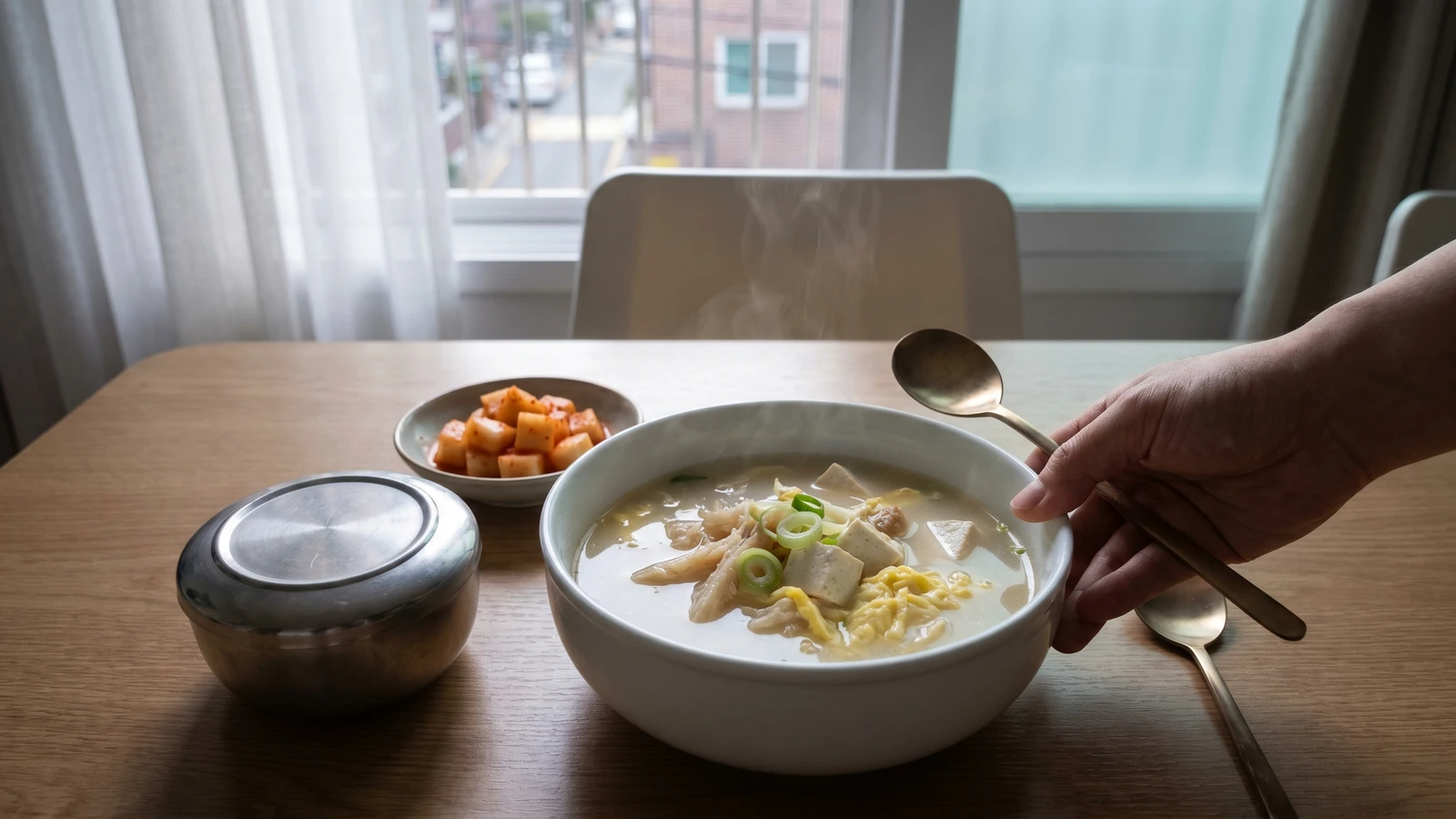
The pale morning soup Koreans trust after a hard night, dried pollock sweated in sesame oil, then simmered in rice water until the broth turns milky and clean.
Bugeo-guk lives or dies before the water goes in. If you drop dried pollock straight into a pot and boil it, you get a thin fish soup and disappointment. Sweat the bugeo in sesame oil first. That is the step my teacher made me repeat until I could smell when the fish had woken up.
This is a morning soup, often a haejangguk (hangover soup), but don't make it only after a hard night. It belongs to the ordinary table too: a bowl of rice, a little kimchi, maybe one namul left from yesterday. The broth should be pale and lightly milky, with torn strands of pollock, soft tofu, egg ribbons, and scallion. It should restore you without shouting at you.
Use rice water if you can, the second rinse from washing rice, not the first dusty one. It gives the soup body without heaviness, and it helps the dried fish turn the broth cloudy and gentle. Season late and lightly. Dried pollock varies in salt, so taste after it has given itself to the broth. 손맛 is real. I still measure it, so it can be handed on.
Koreans give Alaska pollock different names by condition: fresh saengtae, frozen dongtae, half-dried kodari, fully dried bugeo, and winter freeze-dried hwangtae. That vocabulary shows why bugeo-guk became a home soup far from the coast: dried pollock traveled well, kept well, and needed only rice water, egg, and scallion to become a meal. The pale hwangtae used in many restaurants today is especially tied to Gangwon mountain drying fields, where repeated freezing and thawing make the fish light and fibrous.
Quantity
40g, about 2 loosely packed cups
Quantity
6 cups
Quantity
1 tablespoon
Quantity
150g
peeled and cut into thin matchsticks
Quantity
2 cloves
minced
Quantity
1 tablespoon
Quantity
1/2 teaspoon, plus more only after tasting
Quantity
200g
cut into 1/2-inch cubes
Quantity
2 large
lightly beaten
Quantity
2
thinly sliced on the diagonal, whites and greens separated
Quantity
1/8 teaspoon
| Ingredient | Quantity |
|---|---|
| shredded dried pollock (bugeochae) | 40g, about 2 loosely packed cups |
| second-rinse rice water (ssalddeumul) | 6 cups |
| toasted sesame oil | 1 tablespoon |
| Korean radish (mu)peeled and cut into thin matchsticks | 150g |
| garlicminced | 2 cloves |
| guk-ganjang (Korean soup soy sauce) | 1 tablespoon |
| fine sea salt | 1/2 teaspoon, plus more only after tasting |
| firm tofucut into 1/2-inch cubes | 200g |
| eggslightly beaten | 2 large |
| scallionsthinly sliced on the diagonal, whites and greens separated | 2 |
| ground black pepper (optional) | 1/8 teaspoon |
Pick through the dried pollock and remove any hard bones or tough skin. Tear long pieces into 2-inch lengths. Rinse quickly under cold water, just 5 seconds, then squeeze dry in your fist. You are washing off dust and waking the fish, not soaking away its flavor.
When washing rice for the meal, discard the first cloudy rinse. Add fresh water, rub the rice with your hand, and save 6 cups of that second rinse. The first rinse carries dust; the second gives the soup a soft body. If you have no rice water, use plain water. Do not stop the soup for that, but write down which one you used.
Set a medium heavy pot over medium-low heat. Add the sesame oil, dried pollock, radish, and scallion whites. Stir for 3 to 4 minutes, until the pollock curls, the radish edges turn slightly translucent, and the sesame oil smells nutty. Do not brown it. This step coats the fish and radish so the broth turns pale and rounded instead of sharp.
Add the minced garlic and stir 20 seconds, then pour in the 6 cups rice water. Bring to a lively simmer, then lower the heat and cook uncovered for 15 minutes. The broth should turn lightly milky and the radish should bend easily on a spoon. Skim only if foam gathers in a thick patch; a little cloudiness is the point.
Stir in the soup soy sauce and 1/2 teaspoon salt, then add the tofu. Simmer 4 minutes, gently, so the tofu warms through without breaking. Taste the broth now. If it tastes flat, add salt 1/8 teaspoon at a time. Do not add more soup soy sauce just for salt, or the broth turns dark and loses its clean color.
Lower the heat so the soup barely moves. Pour the beaten eggs in a thin circle over the surface and wait 20 seconds before touching them. Then draw chopsticks or a spoon through once or twice to make soft ribbons. If you stir at once, the broth turns grainy. If you boil hard, the egg toughens.
Scatter in the scallion greens and black pepper, if using. Turn off the heat and let the scallions soften for 30 seconds. Serve with hot rice and kimchi. This is not a soup to load with chili. Let the dried pollock taste like itself.
1 serving (about 470g)
Culinary guides, cultural storytelling, and the editorial depth that makes cooking meaningful.
Discover Culinary ExplorerChef Jeong-sun
A clean summer soup of Korean zucchini and salted shrimp, built on quick anchovy-kelp broth and finished before the half-moons lose their shape on a weeknight table.
Chef Jeong-sun
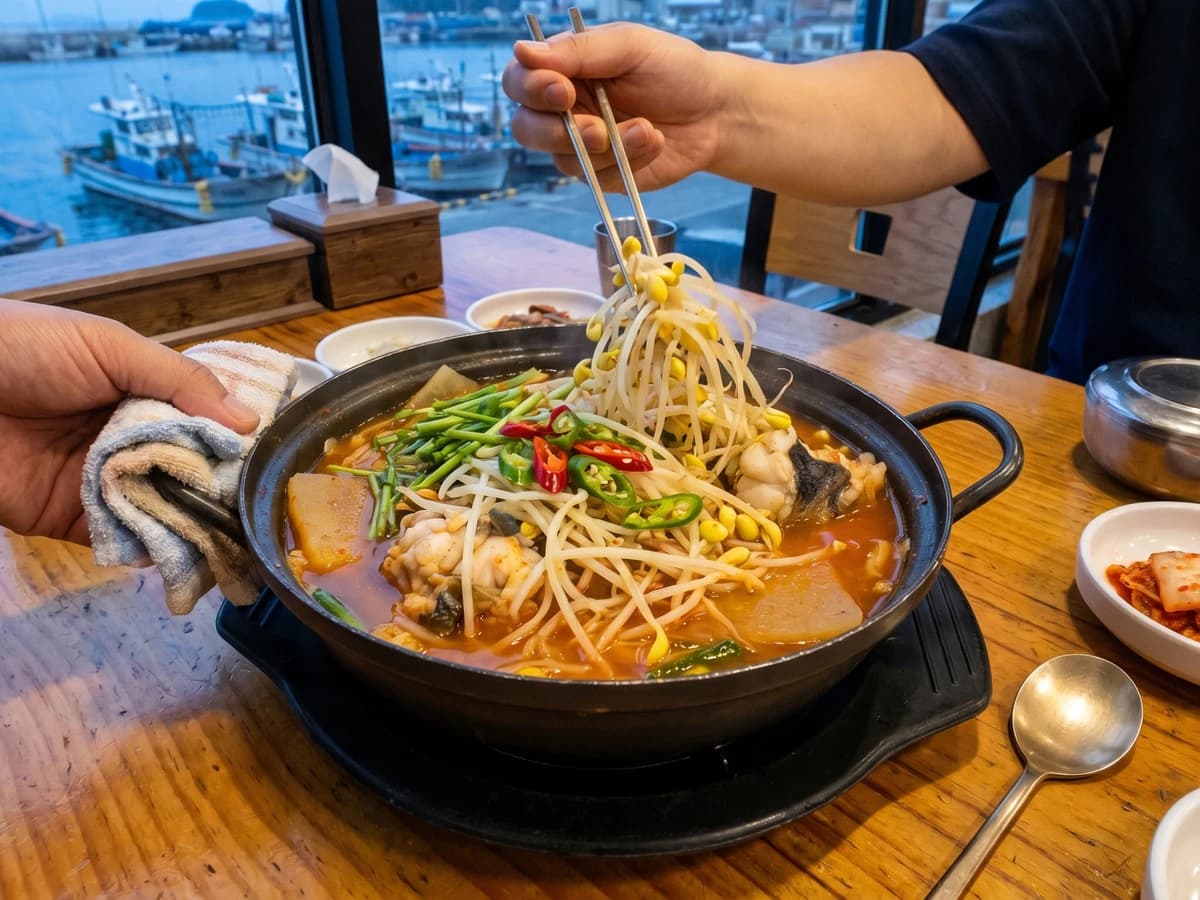
A Masan coast monkfish stew with firm white meat, gelatin at the bones, soybean sprouts for crunch, and a red broth seasoned to carry the fish, not bury it.

Chef Jeong-sun
A weeknight fish roe stew with radish and crown daisy in a clean spicy broth, where the whole success depends on adding the roe late enough that it sets tender, not chalky.

Chef Jeong-sun
Late-summer mallow leaves rubbed with salt until the bitter green water runs off, then simmered in a clean doenjang broth with dried shrimp, the quiet soup a Korean weeknight deserves.