
Chef Jeong-sun
Aehobak-guk (애호박국, Korean Zucchini Soup)
A clean summer soup of Korean zucchini and salted shrimp, built on quick anchovy-kelp broth and finished before the half-moons lose their shape on a weeknight table.
A cooking platform built around craft, culture, and the stories behind what we eat.
Created by
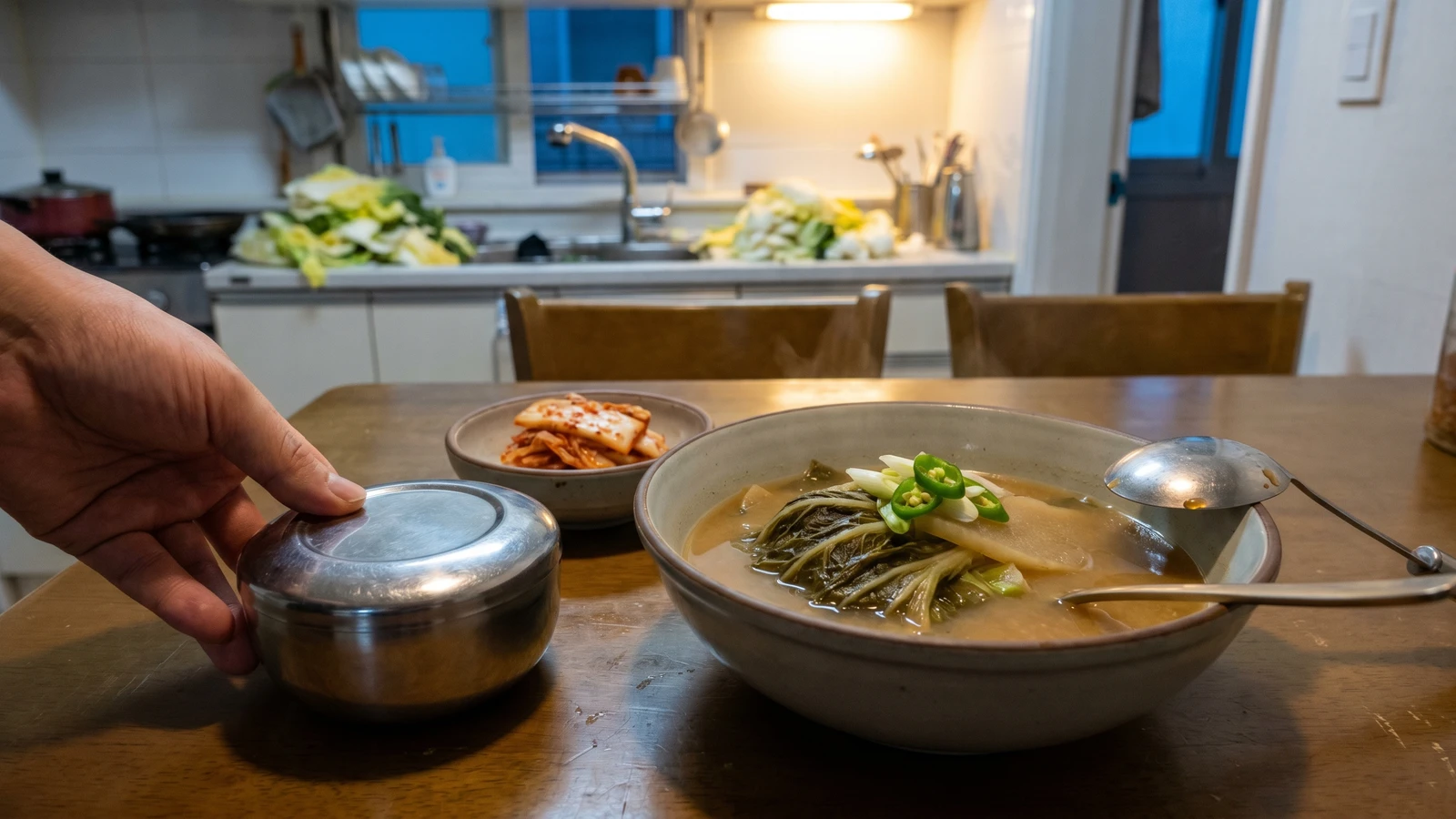
The soup made from cabbage leaves other cooks throw away, parboiled until tender, rubbed with doenjang and garlic, then simmered until the broth tastes deep and plain.
Ugeoji-guk begins at the market edge, where the outer cabbage leaves are too green, too torn, too tough for neat kimchi, so careless hands discard them. Korean kitchens did not. They boiled them, squeezed them, seasoned them, and made soup. Cook the month you're standing in: late autumn and winter cabbage gives the best leaves, especially around kimjang, when every house suddenly has more outer leaves than pride.
The whole dish lives or dies before the soup pot. If the ugeoji (outer cabbage leaves) is only briefly blanched, it fights your teeth no matter how long the broth simmers. Parboil it until the thick ribs bend easily, then squeeze it dry and rub the seasoning into the leaves with your hands. This is not decoration. The paste has to enter the folds before the broth can carry it.
Notebook 38 says 3 tablespoons doenjang for 500 grams blanched leaves and 6 cups broth. Your doenjang may be saltier than mine, so taste before you add soy sauce. 손맛 is real; I measure it anyway. Serve this with rice and one sharp kimchi, and you have a table that wastes nothing and apologizes for nothing.
Ugeoji-guk belongs to Korea's frugal home cooking, especially the late-autumn and winter season when napa cabbage was trimmed in quantity for kimjang and the coarse outer leaves were saved instead of thrown away. Ugeoji refers to blanched outer cabbage leaves, while siraegi refers to dried radish greens, two humble preserved greens often confused outside Korea but treated differently in the pot. The soup is not a court dish; it is household food shaped by storage, thrift, doenjang, and the need to feed rice well.
Quantity
500g
washed well, thick bases trimmed only if woody
Quantity
8 cups
divided
Quantity
1 teaspoon
for blanching
Quantity
6 cups
Quantity
1 piece, about 4 inches square
if making broth
Quantity
10
heads and guts removed, if making broth
Quantity
3 tablespoons
Quantity
1 tablespoon, plus more only if needed
Quantity
2 cloves
minced
Quantity
1 teaspoon
Quantity
1 tablespoon
Quantity
150g
cut into 1/4-inch half-moons
Quantity
1/2 medium
sliced
Quantity
1
sliced thin
Quantity
2
cut into 2-inch lengths
Quantity
1 teaspoon
| Ingredient | Quantity |
|---|---|
| napa cabbage outer leaves (ugeoji)washed well, thick bases trimmed only if woody | 500g |
| waterdivided | 8 cups |
| coarse saltfor blanching | 1 teaspoon |
| anchovy-kelp broth or light beef broth | 6 cups |
| dried kelp (dasima)if making broth | 1 piece, about 4 inches square |
| large dried anchovies (myeolchi)heads and guts removed, if making broth | 10 |
| doenjang (Korean fermented soybean paste) | 3 tablespoons |
| soup soy sauce (guk-ganjang) | 1 tablespoon, plus more only if needed |
| garlicminced | 2 cloves |
| gochugaru (Korean chili flakes) (optional) | 1 teaspoon |
| perilla seed powder (deulkkae-garu) (optional) | 1 tablespoon |
| Korean radish (mu)cut into 1/4-inch half-moons | 150g |
| onionsliced | 1/2 medium |
| green chili (optional)sliced thin | 1 |
| scallionscut into 2-inch lengths | 2 |
| toasted sesame oil (optional) | 1 teaspoon |
Separate the cabbage outer leaves and rinse them one by one, especially where dirt hides near the thick white ribs. Keep the ribs unless they are woody; they give sweetness once properly softened. Cut very large leaves in half crosswise so they fit the pot, but do not chop them small yet.
Bring 2 cups water and 1 teaspoon coarse salt to a boil in a wide pot, then add the cabbage leaves and turn them with tongs. Cover and boil 10 to 14 minutes, until the thick ribs bend easily when pinched. This is the step people rush. If the leaves still spring back stiffly, the finished soup will chew like rope.
Drain the leaves and rinse briefly under cool water so you can handle them. Squeeze firmly in both hands until they stop dripping, then cut into 2-inch pieces. Squeezing matters because watery leaves dilute the doenjang and keep the seasoning on the surface.
If you are making anchovy-kelp broth, put 6 cups water, the kelp, and the cleaned anchovies in a pot over medium heat. Pull the kelp out as soon as the water begins to simmer, before it turns the broth slick and bitter. Simmer the anchovies 10 minutes more, then remove them. If you already have light beef broth, warm 6 cups of it now.
In a bowl, rub the squeezed cabbage with the doenjang, soup soy sauce, garlic, gochugaru if using, and perilla seed powder if using. Use your hand and work the paste into the folds and ribs. The leaves are already cooked, so this is where the flavor enters them; dropping plain leaves into broth and hoping is not cooking.
Add the seasoned ugeoji, radish, and onion to the broth. Bring to a gentle boil, then lower the heat and simmer uncovered for 25 to 30 minutes, until the radish is tender and the cabbage has lost its raw green edge. The broth should be cloudy brown from doenjang, savory but not heavy.
Taste the broth before adding anything. If it tastes thin, simmer 5 minutes longer. If it tastes flat, add soup soy sauce 1 teaspoon at a time, up to 2 teaspoons. Add the green chili and scallions for the last 2 minutes so they stay clear and fresh. Stir in sesame oil only after the heat is off, if you want a rounder finish.
Serve hot in deep bowls with rice and kimchi. The leaves should fold softly against the spoon, and the broth should taste of cabbage, soybean paste, garlic, and time, not salt first. This soup is better after 10 minutes of resting, when the ugeoji has settled into the broth.
1 serving (about 430g)
Culinary guides, cultural storytelling, and the editorial depth that makes cooking meaningful.
Discover Culinary ExplorerChef Jeong-sun
A clean summer soup of Korean zucchini and salted shrimp, built on quick anchovy-kelp broth and finished before the half-moons lose their shape on a weeknight table.
Chef Jeong-sun
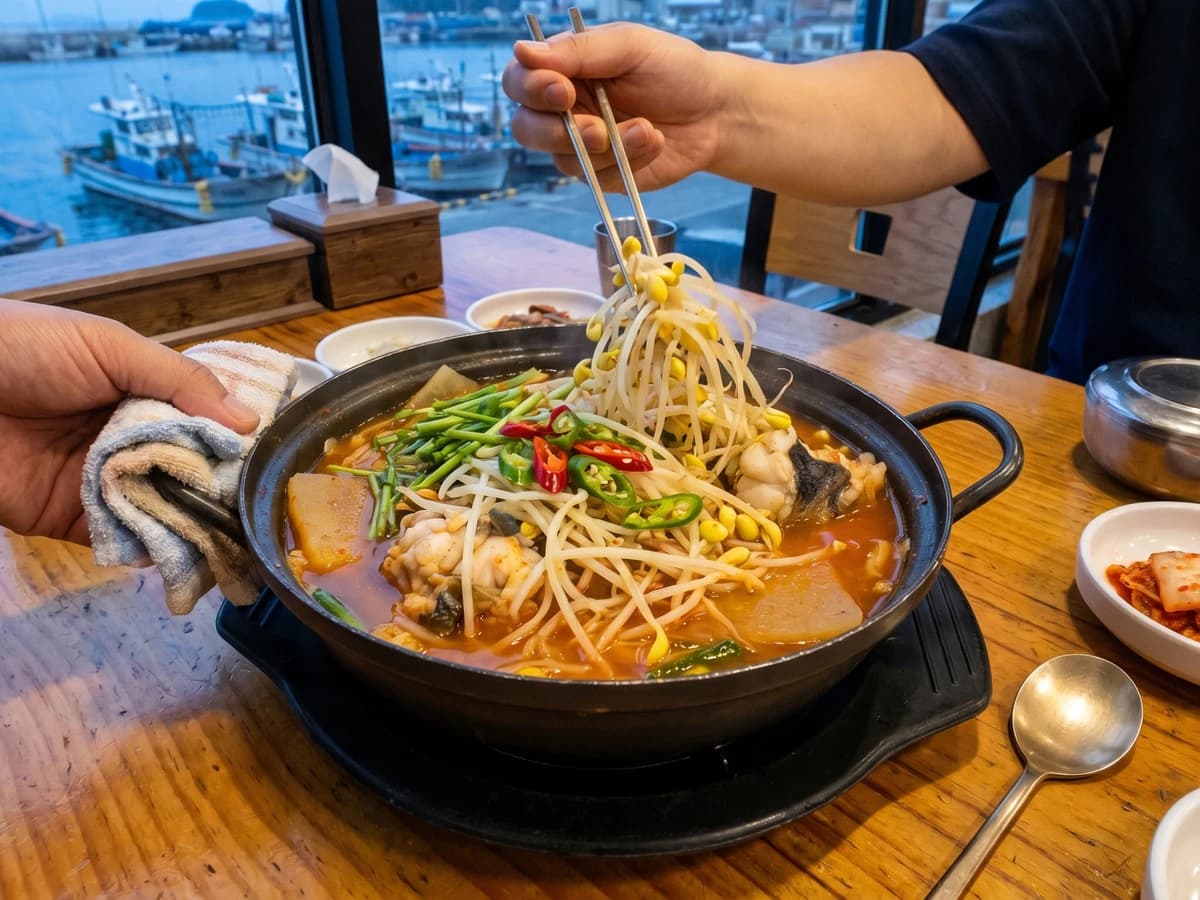
A Masan coast monkfish stew with firm white meat, gelatin at the bones, soybean sprouts for crunch, and a red broth seasoned to carry the fish, not bury it.

Chef Jeong-sun
A weeknight fish roe stew with radish and crown daisy in a clean spicy broth, where the whole success depends on adding the roe late enough that it sets tender, not chalky.

Chef Jeong-sun
Late-summer mallow leaves rubbed with salt until the bitter green water runs off, then simmered in a clean doenjang broth with dried shrimp, the quiet soup a Korean weeknight deserves.