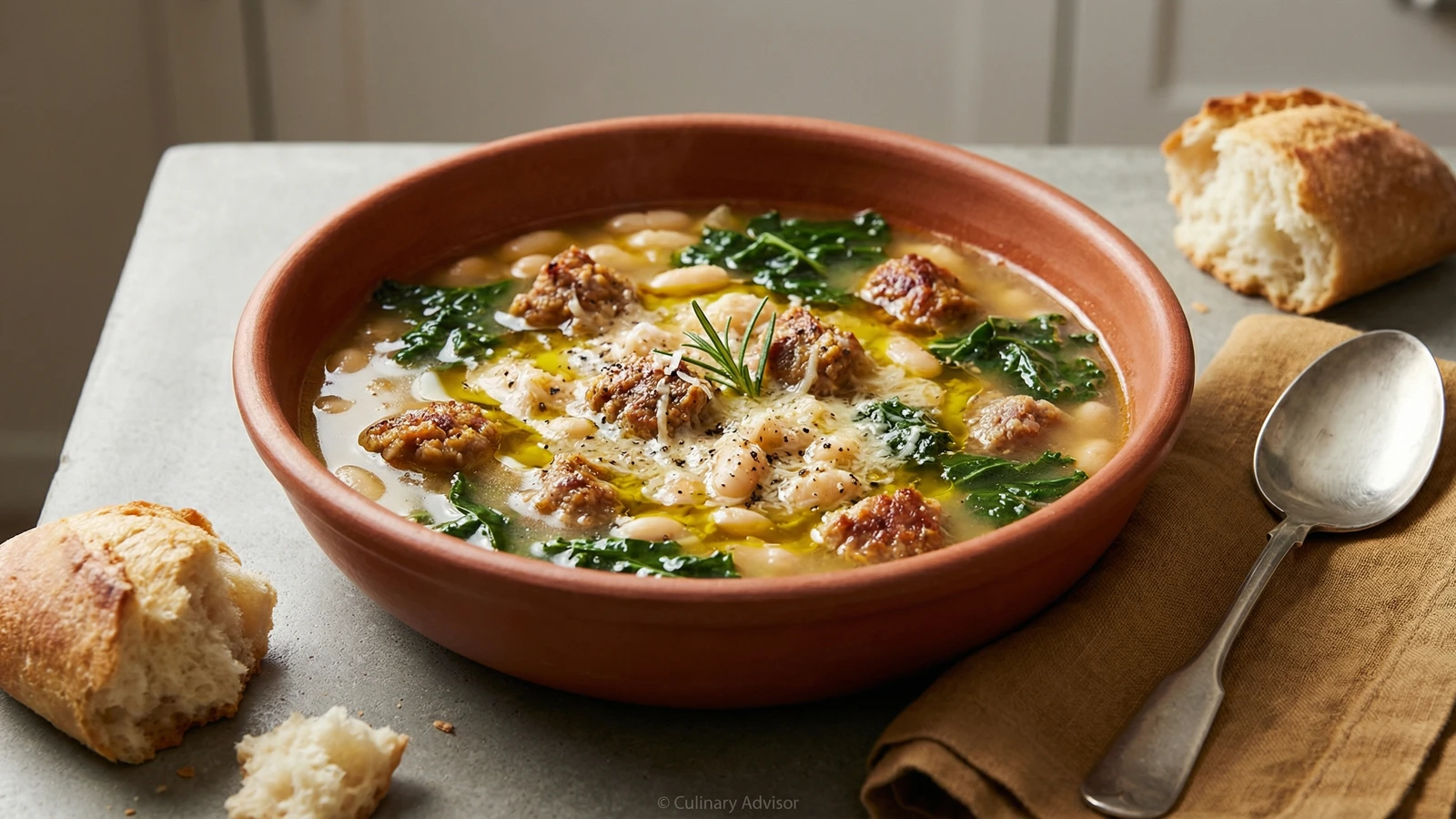
A robust one-pot meal from the Tuscan hills: bronzed sausage, creamy cannellini beans, and tender greens swimming in a garlic-perfumed broth that tastes like it simmered all day but comes together in under an hour.
Soups & Stews
Italian
Weeknight
One Pot
Comfort Food
25 min
Active Time
50 min cook•1 hr 15 min total
Yield8 servings
This soup represents everything I love about Italian peasant cooking. It wastes nothing. It forgives much. It rewards patience with flavors far greater than its humble ingredients suggest. Tuscan farmers have been making variations of this dish for centuries, stretching whatever meat they had with beans and whatever greens grew in the garden.
The secret lives in building layers. You'll brown the sausage first, rendering its fat and creating fond on the bottom of your pot. That fond becomes the foundation. The aromatics soften in the sausage drippings. The beans contribute their starchy cooking liquid. By the time you've finished, you'll have a broth with body and depth that no canned stock could match.
I've taught this soup to nervous cooks who swore they couldn't make anything from scratch. Every one of them left with confidence. The technique is forgiving. The ingredients are accessible. And the result is a pot of soup that makes people ask for the recipe before they've finished their bowl.
The technique, the tradition, and the story behind every dish.
•Large Dutch oven or heavy-bottomed pot (6-quart minimum)
•Wooden spoon
•Slotted spoon
Instructions
1
Brown the sausage
Heat a large Dutch oven or heavy-bottomed pot over medium-high heat. Add the sausage, breaking it into rough one-inch pieces with a wooden spoon. Resist the urge to move it constantly. Let the meat sit against the hot surface until it develops a deep golden-brown crust, about three to four minutes per side. The sausage should sizzle aggressively. If it's not sizzling, your pot isn't hot enough.
Don't crumble the sausage into tiny bits. Larger pieces hold together better and create more fond on the bottom of the pot.
2
Render and reserve
When the sausage is bronzed on all sides but not fully cooked through, transfer it to a plate using a slotted spoon. Leave every drop of rendered fat in the pot. This fat carries the fennel and spice flavors from the sausage. It's liquid gold for building your soup base.
3
Build the soffritto
Reduce heat to medium. Add the olive oil to the sausage drippings. Add the onion, celery, and carrots. Cook, stirring occasionally, until the vegetables soften and the onion turns translucent, eight to ten minutes. You'll notice the fond on the bottom of the pot beginning to loosen. The kitchen will smell like an Italian grandmother's house.
4
Toast the aromatics
Push the vegetables to the edges of the pot, creating a clearing in the center. Add the garlic and red pepper flakes to the clearing. Let them sizzle in the hot fat for thirty seconds until fragrant. The garlic should smell sweet, not acrid. Stir everything together, then add the tomato paste. Cook for two minutes, stirring constantly, until the paste darkens slightly and smells almost caramelized.
Toasting tomato paste transforms it from tinny and sharp to deep and mellow. This single step adds remarkable complexity.
5
Deglaze with wine
Pour in the white wine. It will hiss and steam dramatically. Use your wooden spoon to scrape up every bit of fond from the bottom of the pot. Let the wine bubble vigorously until reduced by half, about three minutes. The raw alcohol smell should disappear, leaving behind fruity acidity.
6
Add stock and beans
Pour in the chicken stock. Add the cannellini beans, Parmesan rind if using, rosemary sprigs, thyme sprigs, and bay leaves. Nestle the reserved sausage back into the pot. Bring everything to a gentle simmer over medium heat. You want lazy bubbles, not a rolling boil.
7
Simmer for depth
Let the soup simmer uncovered for twenty-five to thirty minutes. The beans will begin to break down slightly, lending their starch to the broth. The Parmesan rind will soften and melt into the liquid, contributing umami depth you can't achieve any other way. Taste the broth. It should taste like something you'd want to drink from a mug.
Save your Parmesan rinds in a freezer bag. They keep indefinitely and transform soups, stews, and braises.
8
Wilt the greens
Remove and discard the rosemary stems, thyme stems, bay leaves, and what remains of the Parmesan rind. Add the torn kale leaves in handfuls, stirring each batch until it wilts before adding more. The kale will seem like far too much at first. It will cook down to a quarter of its volume within five minutes.
9
Season and serve
Taste and adjust seasoning with salt and pepper. The soup should taste robust and well-seasoned but not salty. Ladle into warmed bowls. Drizzle each portion with your best olive oil. Shower generously with grated Parmigiano-Reggiano. Serve with crusty bread for soaking up the last drops.
A squeeze of fresh lemon juice over each bowl brightens everything and cuts through the richness. Try it once and you'll never skip it again.
Chef Tips
•For deeper flavor, make your own stock. Roast chicken backs and wings at 425°F until mahogany, then simmer with onion, celery, carrots, and a bay leaf for four hours. Strain and you'll have liquid that makes this soup extraordinary.
•Hot Italian sausage works beautifully if you prefer more heat. Or use half sweet and half hot for balanced spice.
•Escarole is the traditional Tuscan green and slightly more bitter than kale. Swiss chard works well too. Use what looks best at your market.
•This soup pairs wonderfully with a rustic Italian red. Chianti Classico or a Montepulciano d'Abruzzo complement without overwhelming.
•For a creamier version, mash about a quarter of the beans against the side of the pot before adding the kale. The starch thickens the broth beautifully.
Advance Preparation
•This soup improves overnight. Make it a day ahead, refrigerate, and reheat gently. The flavors marry and deepen considerably.
•The soup base without kale freezes beautifully for up to three months. Thaw overnight in the refrigerator, reheat to a simmer, then add fresh kale before serving.
•If storing, add less kale initially. The greens continue to soften and can become army-green and mushy after a day or two. Add fresh kale when reheating.
•Portion into individual containers for quick weeknight dinners. Reheat covered in the microwave or in a small pot on the stove.
Frequently Asked Questions
Nutrition Information
1 serving (about 450g)
Calories
396 calories
Total Fat
23 g
Saturated Fat
8 g
Trans Fat
0 g
Unsaturated Fat
16 g
Cholesterol
36 mg
Sodium
891 mg
Total Carbohydrates
23 g
Dietary Fiber
5 g
Sugars
1 g
Protein
22 g
Where cooking meets culture.
Culinary guides, cultural storytelling, and the editorial depth that makes cooking meaningful.