
Chef Dean
Affogato
Hot espresso meets frozen gelato in a collision of temperature and texture that Italians perfected centuries ago. Two ingredients. Thirty seconds. A dessert worthy of standing ovations.
A cooking platform built around craft, culture, and the stories behind what we eat.
Created by
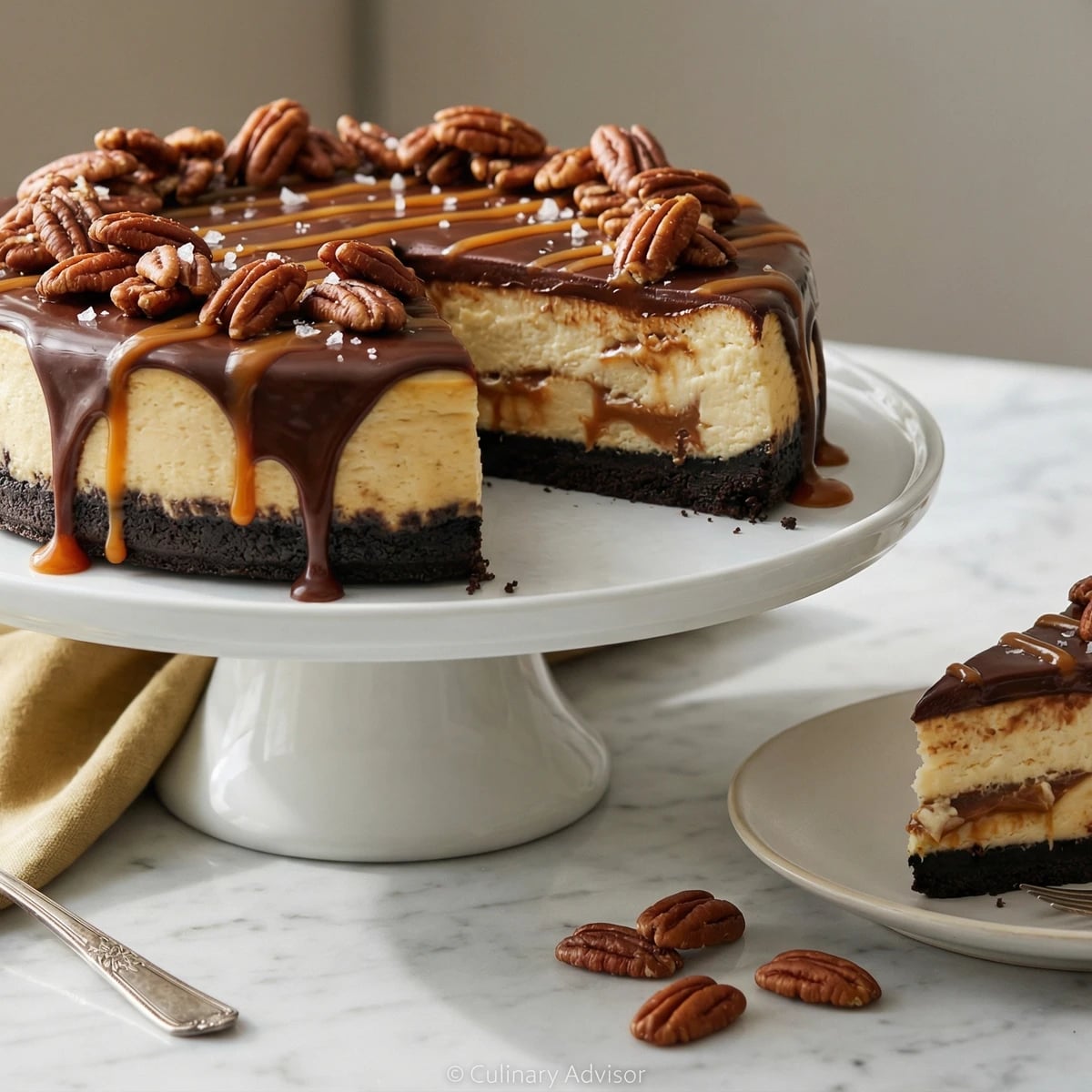
A towering tribute to the beloved candy: silky cheesecake on a chocolate cookie crust, crowned with homemade caramel, glossy chocolate ganache, and mountains of toasted pecans. This is the dessert that makes people remember your name.
The turtle candy has been a confectionery standard since the early 1900s, when some clever soul first combined caramel, chocolate, and pecans into a shape resembling the creature. It was an American invention, and like most American inventions, someone eventually made it bigger and better.
This cheesecake takes that holy trinity of flavors and builds them onto the most indulgent canvas imaginable. The filling is dense New York-style, the kind that requires a fork and a moment of reverence before the first bite. The caramel is real caramel, cooked until it develops that slight bitterness that keeps sweetness from becoming cloying. The ganache is simple and honest: good chocolate, good cream, nothing more.
I've made this cake for countless celebrations. It sits at the center of a holiday table like it belongs there, like it was born for the occasion. But don't save it only for special days. The truth about celebratory desserts is that they're only difficult the first time. After that, they become part of your repertoire, ready whenever you need to make someone feel loved.
Quantity
25 cookies
filling included
Quantity
5 tablespoons
melted
Quantity
1/4 teaspoon
Quantity
32 ounces (four 8-ounce packages)
at room temperature
Quantity
1 cup
Quantity
1/4 cup
at room temperature
Quantity
2 teaspoons
Quantity
1/2 teaspoon
Quantity
4
at room temperature
Quantity
1 cup
Quantity
1/4 cup
Quantity
3/4 cup
warmed
Quantity
4 tablespoons
cut into pieces
Quantity
1/2 teaspoon
Quantity
1/4 teaspoon
Quantity
6 ounces
finely chopped
Quantity
3/4 cup
Quantity
1 1/2 cups
Quantity
for finishing
| Ingredient | Quantity |
|---|---|
| chocolate sandwich cookiesfilling included | 25 cookies |
| unsalted butter (for crust)melted | 5 tablespoons |
| fine sea salt (for crust) | 1/4 teaspoon |
| cream cheeseat room temperature | 32 ounces (four 8-ounce packages) |
| granulated sugar (for filling) | 1 cup |
| sour creamat room temperature | 1/4 cup |
| pure vanilla extract (for filling) | 2 teaspoons |
| fine sea salt (for filling) | 1/2 teaspoon |
| large eggsat room temperature | 4 |
| granulated sugar (for caramel) | 1 cup |
| water | 1/4 cup |
| heavy cream (for caramel)warmed | 3/4 cup |
| unsalted butter (for caramel)cut into pieces | 4 tablespoons |
| pure vanilla extract (for caramel) | 1/2 teaspoon |
| fine sea salt (for caramel) | 1/4 teaspoon |
| semi-sweet chocolatefinely chopped | 6 ounces |
| heavy cream (for ganache) | 3/4 cup |
| pecan halves | 1 1/2 cups |
| flaky sea salt (optional) | for finishing |
Preheat your oven to 325°F. Spread the pecan halves on a rimmed baking sheet in a single layer. Toast for 8 to 10 minutes, stirring once halfway through, until fragrant and slightly darkened. You'll smell them before you see the change. Transfer immediately to a plate to cool. Pecans that sit on a hot pan continue cooking and turn bitter.
Increase oven temperature to 350°F. Wrap the outside of a 9-inch springform pan with two layers of heavy-duty aluminum foil, coming up the sides. This waterproofs the pan for its water bath. In a food processor, pulse the chocolate sandwich cookies until finely ground, about 30 seconds. Add melted butter and salt, pulsing until mixture resembles wet sand. Press firmly and evenly into the bottom and 1 inch up the sides of the prepared pan, using the flat bottom of a measuring cup to compact the base.
Bake the crust for 10 minutes until set and fragrant. The edges will look slightly dry, the center just firm. Remove and reduce oven temperature to 325°F. Let crust cool while you prepare the filling.
In a stand mixer fitted with the paddle attachment, beat the cream cheese on medium speed until completely smooth and fluffy, about 3 minutes. Scrape down the bowl and beater twice during this process. Lumps in your cream cheese become lumps in your cheesecake. There is no fixing this later.
Add the sugar gradually with the mixer on medium-low, beating until incorporated. Add the sour cream, vanilla, and salt, mixing until smooth. Scrape down the bowl again. Lower the speed to the slowest setting and add the eggs one at a time, mixing just until each disappears before adding the next. Do not overbeat once eggs are added. Every second of excess mixing incorporates air that will rise and crack your cheesecake.
Pour the filling over the cooled crust, smoothing the top with an offset spatula. Place the springform pan inside a larger roasting pan. Pour hot water into the roasting pan until it reaches halfway up the sides of the springform. The water bath provides gentle, even heat that prevents the surface from drying and cracking.
Bake at 325°F for 60 to 75 minutes. The cheesecake is done when the edges are set and slightly puffed but the center still wobbles like gelatin when you gently shake the pan. It should jiggle, not wave. An instant-read thermometer inserted in the center should read about 150°F. The residual heat will carry it to 160°F as it cools.
Turn off the oven, crack the door open about two inches, and let the cheesecake cool inside for one hour. This gradual temperature change prevents the dramatic contraction that causes cracks. After an hour, remove from the water bath, peel away the foil, and cool completely on a wire rack. Refrigerate uncovered for at least four hours, preferably overnight.
Combine the sugar and water in a medium heavy-bottomed saucepan. Stir gently to moisten all the sugar, then stop stirring entirely. Place over medium-high heat and cook without disturbing until the mixture turns deep amber, 8 to 12 minutes. Watch carefully in the final minutes. Caramel goes from perfect to burnt in seconds. The color you want is dark copper, like a new penny.
Remove from heat and carefully pour in the warm cream. The mixture will bubble violently. This is expected. Whisk until smooth, then whisk in the butter pieces until melted and glossy. Stir in the vanilla and salt. Let cool to room temperature, stirring occasionally. The caramel will thicken as it cools but should remain pourable.
Place the chopped chocolate in a heatproof bowl. Heat the cream in a small saucepan until bubbles form around the edges and steam rises from the surface. Pour the hot cream over the chocolate and let sit undisturbed for 2 minutes. Whisk slowly from the center outward until completely smooth and glossy. Let cool for 10 minutes until slightly thickened but still pourable.
Run a thin knife around the edge of the chilled cheesecake and release the springform ring. Transfer the cheesecake (still on its base) to a serving platter. Spoon about half the caramel over the top, spreading gently to within half an inch of the edges. Let set for 5 minutes in the refrigerator.
Pour the ganache over the caramel layer, tilting the platter gently to encourage it to flow to the edges. Some will drip down the sides. This is desirable. Arrange toasted pecans generously over the ganache while it's still tacky. Drizzle remaining caramel in artistic swoops across the top. Finish with a few flakes of sea salt. Refrigerate at least 30 minutes to set the toppings before slicing.
Dip a sharp thin-bladed knife in hot water and wipe dry before each cut. This melts through the ganache cleanly instead of dragging it. Cut with a single confident stroke, pressing down rather than sawing. Clean and reheat the knife between slices. Patience here rewards you with portions that look as professional as they taste.
1 serving (about 120g)
Culinary guides, cultural storytelling, and the editorial depth that makes cooking meaningful.
Discover Culinary Explorer
Chef Dean
Hot espresso meets frozen gelato in a collision of temperature and texture that Italians perfected centuries ago. Two ingredients. Thirty seconds. A dessert worthy of standing ovations.

Chef Dean
A tumble of cinnamon-kissed apples beneath a shaggy, golden oat topping that shatters into buttery crumbs with every spoonful. This is the dessert that makes your kitchen smell like autumn and your guests ask for seconds before they've finished firsts.

Chef Dean
A crustless wonder from San Sebastián with a dramatic caramelized top that cracks like crème brûlée, giving way to a center so impossibly creamy it trembles when you slice it.

Chef Dean
A golden-topped New England treasure where tender butter cake, jammy wild berries, and a craggy cinnamon streusel buckle and crack into something your grandmother would recognize as honest summer baking.