
Chef Takumi
Aomori Ginger-Miso Oden (青森生姜味噌おでん, Aomori Shōga-Miso Oden)
A northern oden built for cold nights: clear dashi, patient simmering, and a spoon of sweet ginger miso added at the end, where its sharp warmth stays alive.
A cooking platform built around craft, culture, and the stories behind what we eat.
Created by
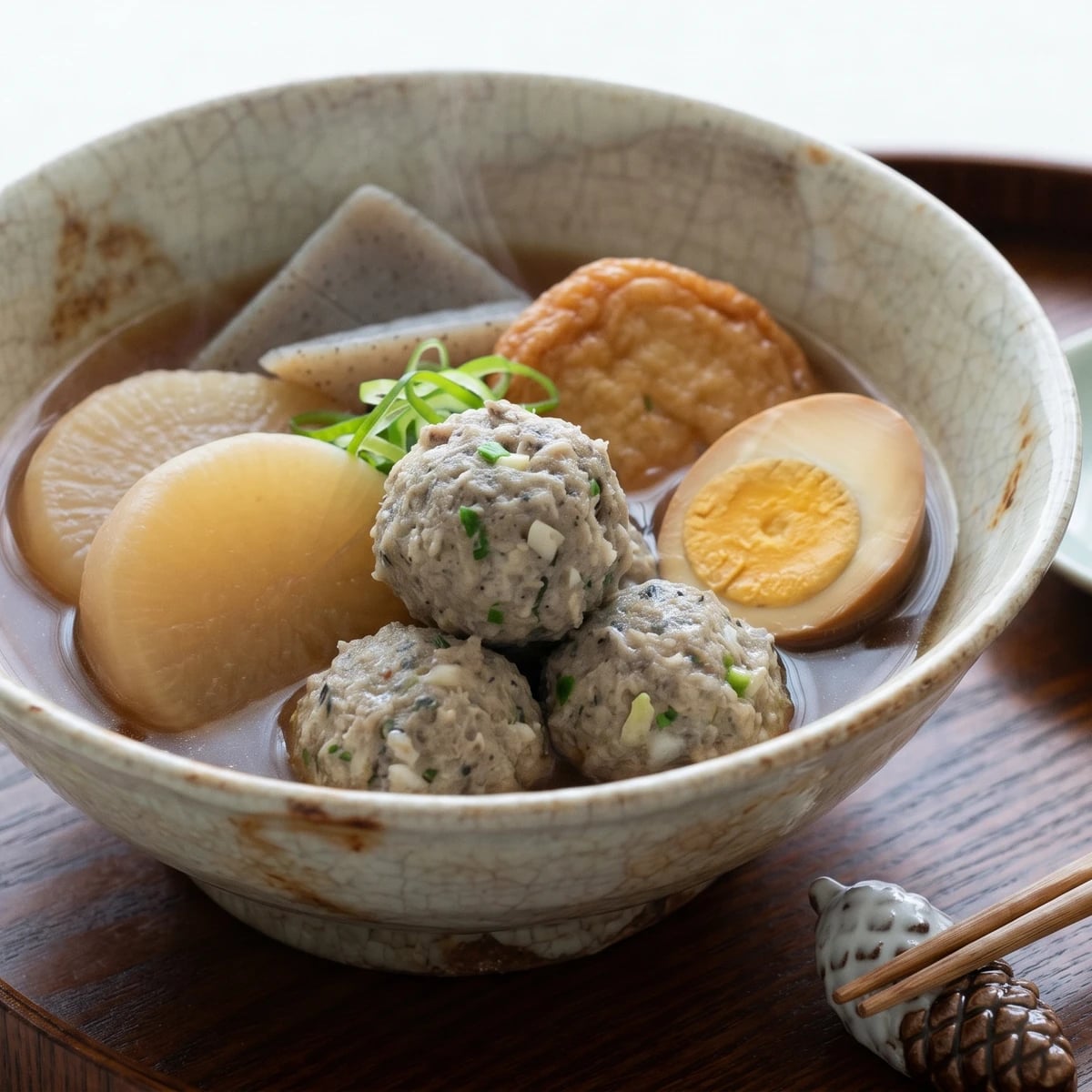
Tsumire oden asks one honest thing of you: start with glistening fresh sardines, mince them lightly, and let the rough fish balls deepen the dashi as they simmer.
Sardines make no polite disguise for themselves. When they're fresh, they taste clean, sweet, and full of the sea. When they're tired, they announce it before the knife is even out. So for tsumire oden, sourcing comes first. Choose glistening fresh iwashi, Japanese sardines, with bright eyes and firm flesh. Nothing hidden, certainly not under miso.
Tsumire looks like the sort of thing a careful cook should shape with wet hands and worry over. Don't. The name itself comes from tsumireru, to pinch or spoon off, and the balls should be rough. Mince the fish with ginger, scallion, a little miso, and starch only until it binds. Work it too long and the paste turns springy and dull. Leave a little texture, and the oden gains life.
The broth is the other half of the matter. Start with real dashi, konbu and katsuobushi, then season it with soy, mirin, and sake. The tsumire go in after the daikon and other pieces have begun to soften, because they need only a gentle simmer. Boil them hard and they toughen. Let them tremble quietly in the pot, and the broth darkens, the fish sets tender, and winter suddenly looks less severe. That is honmono made without ceremony.
Tsumire, minced fish shaped by spooning or pinching, has long been associated with small oily fish such as sardine and horse mackerel, especially in eastern Japan where these fish were abundant and inexpensive. Oden developed from dengaku, skewered foods dressed with miso, and by the Edo period it had become a simmered urban dish, with regional broths and ingredients taking different forms. Sardine tsumire remains especially at home in Kantō-style oden, where its stronger flavor darkens and enriches the soy-seasoned broth.
Quantity
8 (about 500g whole)
scaled, headed, gutted, and butterflied
Quantity
1 teaspoon
for rinsing the sardines
Quantity
1 tablespoon
grated
Quantity
2
finely chopped
Quantity
1 tablespoon
Quantity
1 tablespoon
Quantity
1 teaspoon
Quantity
1/2 teaspoon
Quantity
1 piece (about 10g)
Quantity
6 cups
Quantity
25g
Quantity
1/2 (about 500g)
peeled and cut into thick rounds
Quantity
4
peeled
Quantity
1 block (about 250g)
cut into triangles and parboiled
Quantity
2 pieces
halved
Quantity
3 tablespoons
Quantity
2 tablespoons
Quantity
2 tablespoons
Quantity
1/2 teaspoon
Quantity
for serving
| Ingredient | Quantity |
|---|---|
| fresh sardines (iwashi)scaled, headed, gutted, and butterflied | 8 (about 500g whole) |
| sea saltfor rinsing the sardines | 1 teaspoon |
| gingergrated | 1 tablespoon |
| scallionsfinely chopped | 2 |
| white or yellow miso | 1 tablespoon |
| potato starch | 1 tablespoon |
| sake | 1 teaspoon |
| soy sauce | 1/2 teaspoon |
| konbu (dried kelp) | 1 piece (about 10g) |
| cold water | 6 cups |
| katsuobushi (bonito flakes) | 25g |
| daikonpeeled and cut into thick rounds | 1/2 (about 500g) |
| boiled eggspeeled | 4 |
| konnyakucut into triangles and parboiled | 1 block (about 250g) |
| satsuma-age or other plain fried fish cakehalved | 2 pieces |
| soy sauce | 3 tablespoons |
| mirin | 2 tablespoons |
| sake | 2 tablespoons |
| sea salt | 1/2 teaspoon |
| karashi mustard (optional) | for serving |
Wipe the konbu with a damp cloth, but don't wash it. Put it in the cold water and bring it up slowly over low heat. Pull the konbu just before the water boils, when small bubbles climb the pot. Boil the kelp and the stock turns faintly bitter, which is poor payment for impatience. Add the katsuobushi, take the pot off the heat, and let the flakes sink for two or three minutes. Strain through cloth and don't squeeze, because squeezing pushes harsh, oily flavors into the clear stock.
Put the daikon rounds in a saucepan, cover with water, and simmer for 20 minutes until a skewer enters with slight resistance. This first cooking removes the raw edge and lets the daikon drink the oden broth later instead of clouding it at the start.
Sprinkle the butterflied sardines with the salt and leave them for 5 minutes, then rinse quickly under cold water and pat very dry. Wash it twice, wash it thrice, if the fish asks for it, but dry it once with care. The salt firms the flesh and draws out any strong surface smell, while drying keeps the paste from turning loose.
Scrape or chop the sardine flesh finely with a knife, leaving it a little coarse. Mix in the ginger, scallion, miso, potato starch, sake, and soy sauce until the paste just holds together. Don't beat it smooth. A little roughness gives the tsumire tenderness and keeps the sardine tasting like sardine, not a rubber ball with a title.
Pour the dashi into a wide pot and add the soy sauce, mirin, sake, and salt. Taste it before anything goes in. It should be savory and clear, slightly stronger than a soup you would drink alone, because the daikon, eggs, konnyaku, and fish cakes will soften it as they simmer.
Add the daikon, eggs, konnyaku, and fish cakes. Bring the pot to a quiet simmer, then lower the heat and cook for 30 minutes. Keep the surface barely moving. Oden is a steeping pot as much as a simmering one, and hard boiling roughens the broth and toughens what should stay gentle.
Use two wet spoons to scoop rough walnut-sized balls of sardine paste into the simmering broth. Don't press them smooth. Let them cook 10 to 12 minutes, turning once if needed, until they are firm enough to hold together but still tender inside. If the broth boils hard, lower the heat at once; fish protein tightens quickly.
Turn off the heat and let the oden rest for at least 20 minutes, or cool and reheat it gently. This rest is when the seasoning settles into the daikon and eggs and the tsumire gives its flavor back to the broth. Serve in deep bowls with a little karashi on the side, not stirred into the pot.
1 serving (about 620g)
Culinary guides, cultural storytelling, and the editorial depth that makes cooking meaningful.
Discover Culinary Explorer
Chef Takumi
A northern oden built for cold nights: clear dashi, patient simmering, and a spoon of sweet ginger miso added at the end, where its sharp warmth stays alive.

Chef Takumi
Gyūsuji oden asks for time, not cleverness: tender beef tendon, clear dashi, quiet simmering, and the patience to let the broth become richer without turning heavy.

Chef Takumi
Chikuwabu is Tokyo's quiet oden pleasure: a ridged wheat-flour tube, boiled first to set its chew, then simmered until it drinks clear dashi like a good student.

Chef Takumi
Hanpen is the delicate one in the oden pot: a white triangle of whipped fish and yam that floats, swells, and must never be bullied by a boil.