
Chef Thomas
A Proper Hot Toddy
A winter glass of whisky, honey, and lemon, stirred together in a warm mug and carried up to bed when the cough won't leave and the evening has asked you politely to stop.
A cooking platform built around craft, culture, and the stories behind what we eat.
Created by Chef Thomas
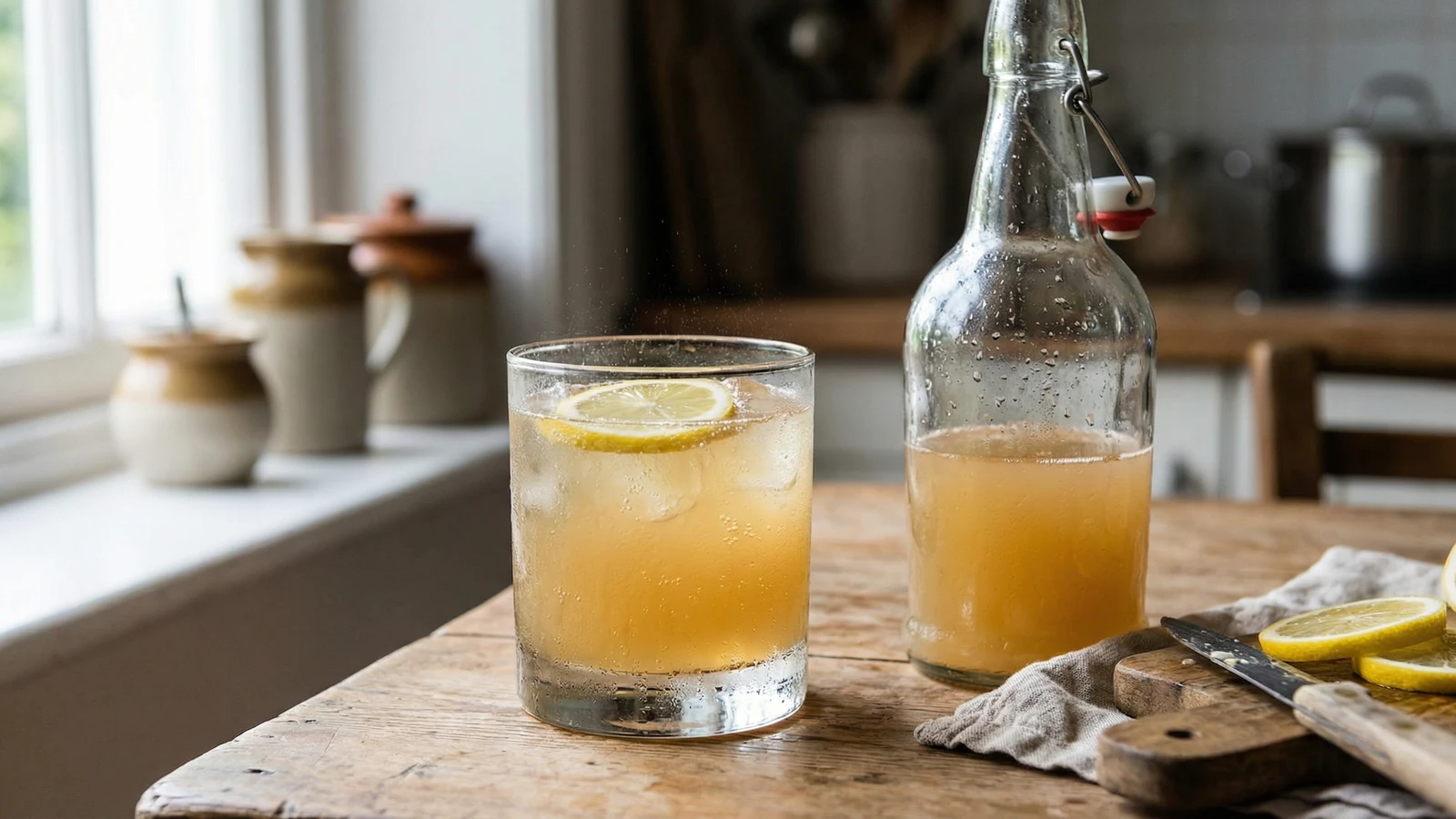
A ginger beer that asks you to feed it every morning for a week, the reward being a hot, cloudy, properly fizzy drink that tastes of summer and a little bit of effort in equal measure.
The first properly warm weekend of the year is usually when I start one. May, sometimes earlier if April has been generous. You have to think ahead for this, because a ginger beer plant takes a week to do its work and the drink itself wants a few more days in the bottle to find its fizz. By the time it's ready, the garden has come into itself and someone is standing at the back door looking for something cold.
This is the old way. Not the brown stuff in the supermarket, which is fine in its way but has nothing to do with fermentation. A proper ginger beer plant is a small living thing that lives in a jar on the counter and asks you to feed it every morning with a teaspoon of ginger and a teaspoon of sugar. It bubbles. It smells yeasty and sharp and faintly medicinal in a way that makes you trust it. For a week it asks very little of you, and at the end of the week it gives you something genuinely alive.
The finished drink is hot with ginger, cloudy, unpasteurised, and lively against your teeth in a way the commercial sort never manages. Poured over ice on a warm afternoon with a slice of lemon, it's the kind of thing that makes you wonder why you ever bought a bottle of anything. I wrote it down in the notebook years ago and the note just says: the plant, again, Saturday. Some things don't need more detail than that.
One word of warning, because I'd be a bad friend if I didn't say it. This is a real ferment, which means the yeast is making its own carbonation in the bottle, which means you need proper swing-top bottles designed for the job and you need to ease the pressure every day or two during the second ferment. Respect the yeast. It works hard for you, but it doesn't know when to stop.
Quantity
1/2 teaspoon
or 7g fresh baker's yeast
Quantity
2 teaspoons, plus 1 teaspoon daily for 6 days
Quantity
2 teaspoons, plus 1 teaspoon daily for 6 days
Quantity
280ml
Quantity
500g
Quantity
1 litre
Quantity
2.25 litres
Quantity
2
juiced, plus extra slices to serve
Quantity
to serve
| Ingredient | Quantity |
|---|---|
| dried active yeastor 7g fresh baker's yeast | 1/2 teaspoon |
| ground ginger (for the plant) | 2 teaspoons, plus 1 teaspoon daily for 6 days |
| caster sugar (for the plant) | 2 teaspoons, plus 1 teaspoon daily for 6 days |
| warm water (for the plant) | 280ml |
| caster sugar (for finishing) | 500g |
| just-boiled water | 1 litre |
| cold water | 2.25 litres |
| unwaxed lemonsjuiced, plus extra slices to serve | 2 |
| ice (optional) | to serve |
Find a clean glass jar that holds about 500ml. A jam jar is perfect. Pour in 280ml of warm water. It should feel like a comfortable bath, no hotter, because water that's too hot will kill the yeast before it's had a chance to do anything useful. Stir in the 2 teaspoons of ground ginger, 2 teaspoons of sugar, and the yeast. Cover the top with a square of muslin or a clean tea towel, held on with a rubber band. Not a lid. The plant needs to breathe. Set it somewhere out of direct sunlight, a cool corner of the kitchen counter where you'll see it and remember it.
For the next six days, feed the plant every morning with one teaspoon of ground ginger and one teaspoon of sugar. Give it a gentle stir with a clean spoon and put the cloth back on. That's the whole job. By day three or four you'll see a soft foam on top of the liquid and smell the sharp, yeasty, gingery perfume that tells you the plant is properly alive and working for you. It becomes a small daily ritual, the sort of thing you do before the kettle has boiled.
On the seventh or eighth day, when the plant is actively foaming and smells sharp and strong, it's time. Line a fine sieve with a double layer of muslin and set it over a large jug. Pour the plant through slowly, letting all the liquid drain. The wet sediment left in the cloth is the yeast and ginger that have done the work. You can split it in two and start fresh plants with each half (that's how this tradition has travelled for a hundred years), or just discard it. The liquid in the jug is what you want.
In a large heatproof bowl or a clean pan, pour the 1 litre of just-boiled water over the 500g of caster sugar. Stir until every grain has dissolved. The water will go completely glassy and clear, almost slippery. Add the 2.25 litres of cold water and the juice of the two lemons. Stir it through.
The mixture needs to be at blood temperature before the plant liquid goes in. Dip a clean finger. It should feel neither hot nor cold, as though you're touching nothing at all. Too hot and you'll kill the yeast and nothing will happen in the bottles. If in doubt, wait a bit longer. When it feels right, pour in the strained plant liquid and stir it through gently.
Using a funnel, decant the ginger beer into swing-top bottles, leaving a good inch of headspace at the top of each one. Seal the flip-tops closed. Write the date on each bottle with a piece of tape, because you will absolutely not remember otherwise. I've made that mistake more times than I'd like to admit.
Leave the sealed bottles in a cool, dark place for two to four days. This is when the ginger beer builds its fizz. Check each bottle once a day by easing the flip-top open just enough to hear a soft hiss, then closing it again. A gentle hiss on day two is good. A sharp, violent hiss means it's going faster than you expected and needs to move to the fridge immediately. Once the bottles are properly carbonated, refrigerate them all. The cold slows the ferment down to almost nothing and holds the drink where you want it. Serve over ice with a slice of lemon, outside if the weather is doing its job.
1 serving (about 500g)
Culinary guides, cultural storytelling, and the editorial depth that makes cooking meaningful.
Discover Culinary ExplorerChef Thomas
A winter glass of whisky, honey, and lemon, stirred together in a warm mug and carried up to bed when the cough won't leave and the evening has asked you politely to stop.

Chef Thomas
Hot spiced ale with roasted apples bobbing on the surface, honeyed and fragrant with cinnamon and orange peel, the oldest winter drink in the British kitchen and still the best.

Chef Thomas
A deep, inky cordial made from a glut of August blackcurrants, bottled for the months when summer feels like something you dreamed, and poured over ice when you need proof it happened.
Chef Thomas
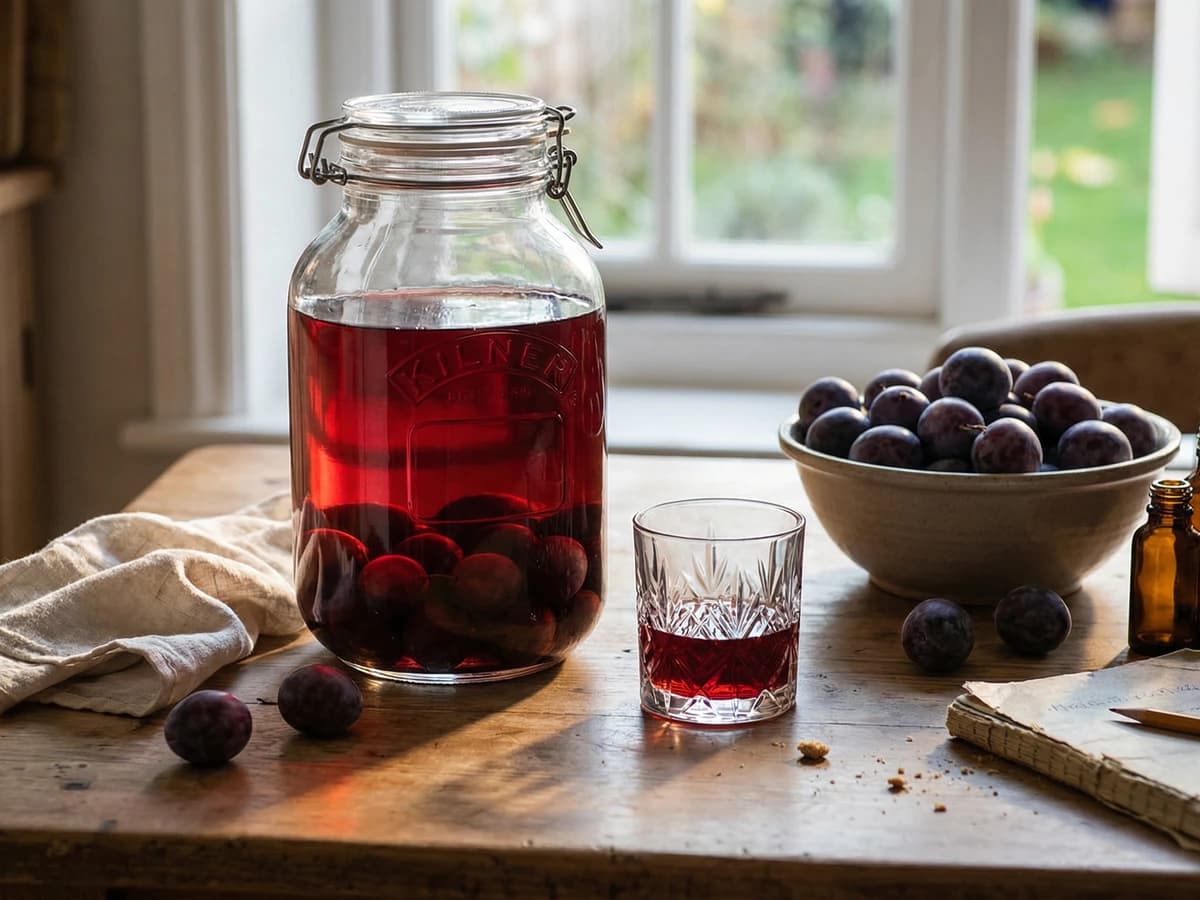
A slow autumn ritual that turns a glut of sharp purple plums into a bottle of ruby warmth, ready to pour on dark December evenings when the kitchen smells of woodsmoke and the year is winding down.