Culinary Explorer

A cooking platform built around craft, culture, and the stories behind what we eat.
Discover Culinary Explorer
Damson Gin

Damson Gin

Created by Chef Thomas

A slow autumn ritual that turns a glut of sharp purple plums into a bottle of ruby warmth, ready to pour on dark December evenings when the kitchen smells of woodsmoke and the year is winding down.

Beverages
British
Make Ahead
Christmas
Special Occasion
20 min
Active Time
0 min cookPT20M plus 8 to 12 weeks steeping total
YieldAbout 1.5 litres

Damsons arrive in September and they don't stick around. A brief, sharp, dark little fruit with a stone that won't let go and a skin that puckers the mouth if you try to eat one raw. Useless for most things. Perfect for this.

I make damson gin every year, without fail, in the first proper week of autumn when the mornings have turned cold enough to wear a jumper in the kitchen. It's not really a recipe. It's three ingredients in a jar, and then time does the rest. You prick the fruit, tip in the sugar, pour over the gin, and put the jar at the back of a cupboard where you can mostly forget about it. Eight weeks later, maybe twelve, you have something that tastes like the whole of autumn has been pressed into a bottle.

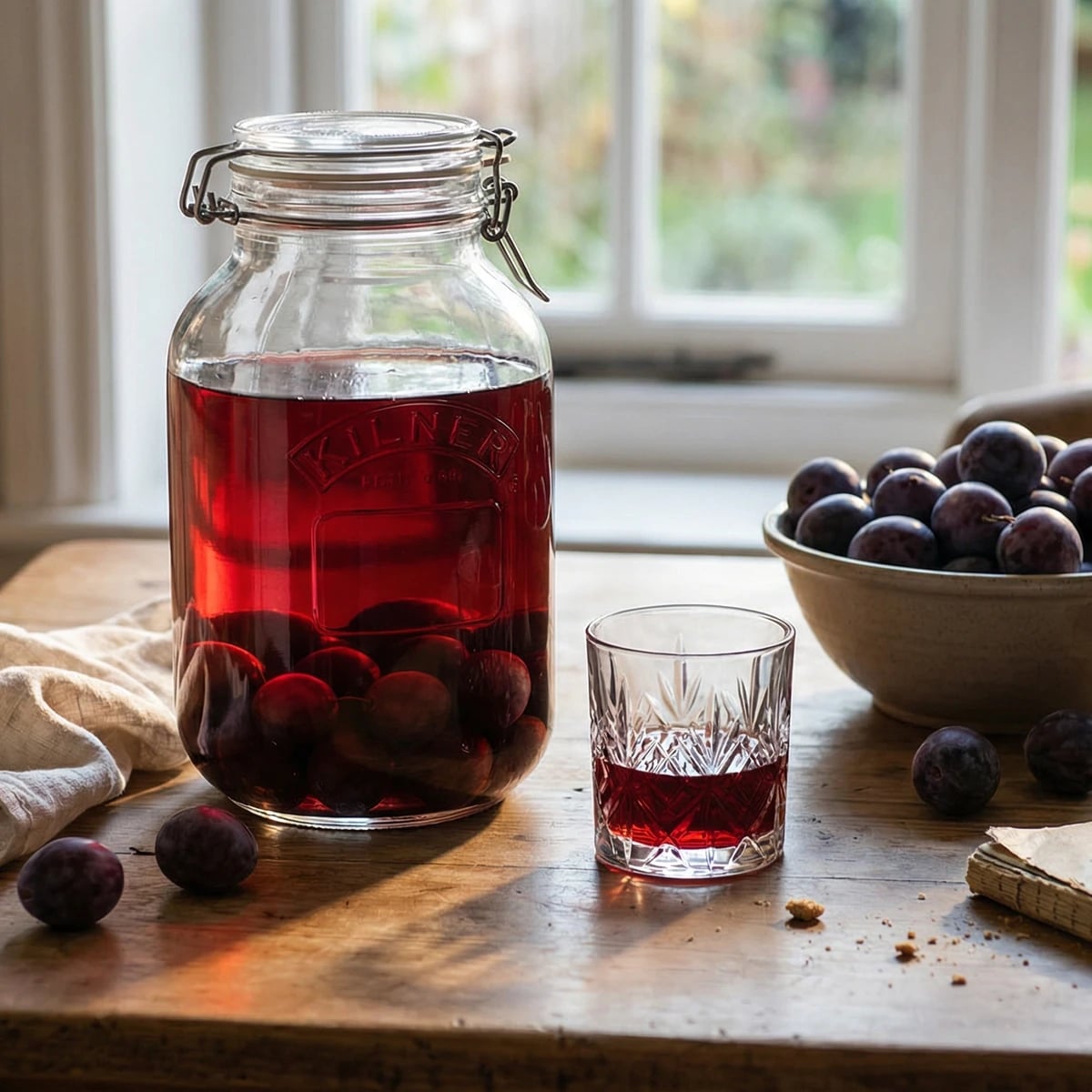
The colour is the first thing. Within a day or two the gin has gone pink. Within a week it's the colour of garnets. By the time you strain and bottle it in December, it's so deep and dark it looks almost black against the light, and when you hold a glass up to a lamp the edges burn red. It smells of fruit and almond and something warm you can't quite name.

I wrote it down in the notebook the first year I made it: start in September, open in December, keep one bottle back for the following Christmas. I've kept to that rule ever since. A bottle of last year's damson gin, opened on a dark evening with someone you like, is one of the better reasons I can think of for paying attention to the seasons.

The technique, the tradition, and the story behind every dish.

Discover Culinary Explorer

Ingredients

ripe damsons

Quantity

500g

washed, stems removed

golden caster sugar

Quantity

250g

decent gin

Quantity

1 litre

a London dry style works best

cinnamon stick (optional)

Quantity

1

lemon peel (optional)

Quantity

2 strips

pith removed

Equipment Needed

  • Clean 2-litre jar with tight-sealing lid (Kilner-style works well)
  • Needle or cocktail stick for pricking
  • Fine sieve and muslin cloth for straining
  • Sterilized glass bottles for storing

Instructions

  1. 1

    Sort and wash the damsons

    Tip the damsons into a colander and rinse them under cold water. Pick out any that are bruised beyond redemption or split open. A few soft ones are fine. Pull off the stems. Pat them dry with a clean cloth. You want them properly dry before they go in the jar, so any bruised skin doesn't turn the whole thing cloudy.

    Damsons come into season in late August and hold through September. If they're sharp enough to make your mouth pucker when you bite one raw, they're exactly right. Sweet damsons make dull gin.
  2. 2

    Prick each damson

    Take a clean needle or a cocktail stick and prick each damson two or three times. This is a slow job. Put the radio on. The pricks let the juice bleed out into the gin, and without them the fruit sits there looking decorative and doing nothing. You want holes deep enough to reach the stone. Some people freeze the damsons overnight instead, which splits the skins and saves the needlework. Either works. I prefer pricking because it feels like part of the ritual.

    If you freeze them, let them thaw slightly before they go in the jar. Rock-solid fruit won't start giving up its colour for days.
  3. 3

    Layer into a large jar

    Take a clean, sterilized 2-litre jar with a good seal. Tip the damsons in first, then the sugar on top. If you're using the cinnamon stick and lemon peel, add them now. The spices are optional and some years I skip them. A plain damson gin has a purer, more fruit-driven taste. A spiced one feels more like Christmas in a glass.

    To sterilize the jar, wash it in hot soapy water, rinse, then put it in a low oven (140C) for fifteen minutes until bone dry. Let it cool before filling.
  4. 4

    Pour over the gin

    Pour the gin in slowly until the fruit is fully submerged. Seal the jar tightly. Give it a gentle swirl to start the sugar moving. The gin will already be picking up a faint rosy tint from the pricked skins. That's the beginning. By tomorrow morning it'll be darker. By next week it'll look like something from a stained-glass window.

  5. 5

    Steep and turn

    Put the jar somewhere cool and dark. A pantry shelf, a cupboard, the back of a sideboard. For the first week or two, give it a gentle turn or shake every day to help the sugar dissolve and the colour develop. After that, once a week is plenty. You'll notice the gin going from pale pink to deep garnet to something that looks almost black held against the light. Leave it for at least eight weeks. Twelve is better. I start mine in early September and open the first bottle in the second week of December.

    Don't be tempted to taste it at four weeks. It'll be sharp and thin and you'll panic. Patience. The transformation happens in the last fortnight.
  6. 6

    Strain and bottle

    When the gin is ready, set a fine sieve lined with muslin over a large jug. Pour the damson gin through slowly. Don't press the fruit or the liquid will go cloudy. Let it drip in its own time. Once it's clear, decant into sterilized bottles and seal. The colour should be deep ruby, almost black at the heart, and the smell should stop you where you stand: fruit, almond, warmth, Christmas.

    Don't throw the boozy damsons away. Pit them and fold them into crumble topping, or spoon them over vanilla ice cream. They're one of the best by-products in cooking.

Chef Tips

  • Damsons are the point. Don't substitute sloes (that's sloe gin, a different drink) or regular plums (too sweet, too mild). Damsons have a sharp, dark, almost almondy taste that stands up to the gin and pulls it somewhere neither can go alone. If you can't find damsons, wait until next year. Some things aren't worth faking.
  • Gin quality matters more than people say. A rough, harsh gin will give you a rough, harsh drink. A mid-range London dry (nothing you'd feel bad using in a gin and tonic) is ideal. The botanicals of the gin and the fruit of the damsons find each other in the jar and become something neither was on its own.
  • Less sugar than you think. The classic ratio is one part sugar to two parts fruit by weight. Any more and you lose the damson's sharpness, which is the whole reason you're doing this. You can always add a splash of sugar syrup later to sweeten an individual glass. You can't take sweetness out.
  • Keep a bottle back for next year. Damson gin improves with age. A two-year-old bottle tastes deeper, rounder, more married than a three-month-old one. I always hide one at the back of the cupboard and forget about it until the following December.

Advance Preparation

  • This is make-ahead cooking at its most literal. Start the gin in early September when damsons are at their best. It needs a minimum of 8 weeks to steep, and 12 weeks is better. Aim to strain and bottle in the first half of December, ready for Christmas.
  • Once bottled and sealed, damson gin keeps indefinitely in a cool, dark place. It improves with age. A bottle kept for a year or two tastes rounder and more complex than a freshly made one.
  • The strained damsons are too good to throw out. Pit them, fold them into apple crumble, spoon them over ice cream, or stir them into a chocolate sponge batter. They keep in a sealed jar in the fridge for two weeks.

Frequently Asked Questions

Nutrition Information

1 serving (about 50g)

Calories
100 calories
Total Fat
0 g
Saturated Fat
0 g
Trans Fat
0 g
Unsaturated Fat
0 g
Cholesterol
0 mg
Sodium
1 mg
Total Carbohydrates
8 g
Dietary Fiber
0 g
Sugars
8 g
Protein
0 g

Note: Chef personas and recipes are created with AI assistance. Cook with care: follow safe food-handling practices, check doneness with a thermometer when needed, and adapt for allergies and your kitchen.

Where cooking meets culture.

Culinary guides, cultural storytelling, and the editorial depth that makes cooking meaningful.

Discover Culinary Explorer

More from Seasonal British Drinks

Browse the full collection