
Chef Lupita
Mone Zoque-Chol de Hoja Santa
Chiapas' Zoque-Chol leaf wrap, pork or charcoal-roasted pejelagarto folded with tomate, chile simojovel or amashito, plátano macho, and hoja santa, then slow-steamed until the leaf perfumes every bite.
A cooking platform built around craft, culture, and the stories behind what we eat.
Created by
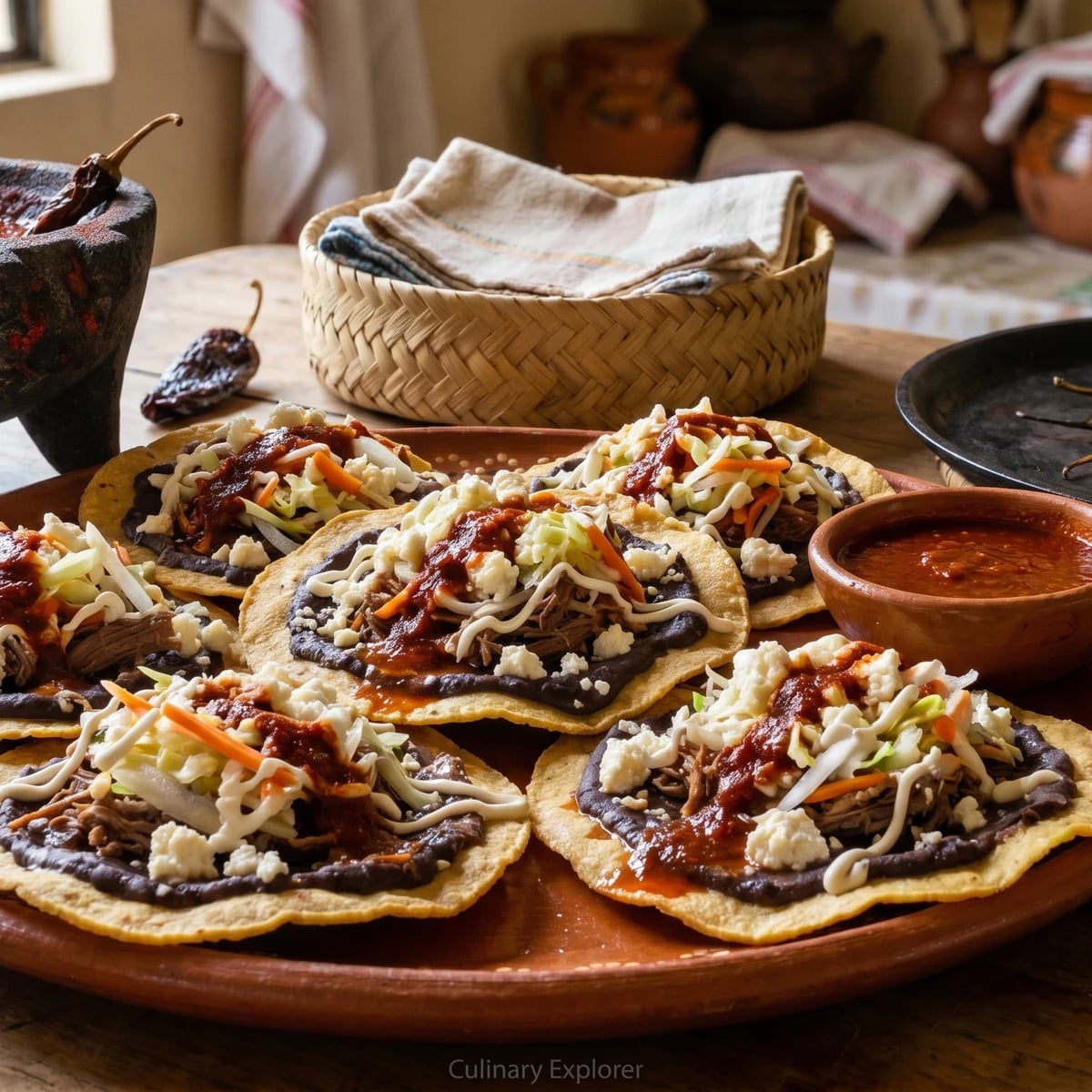
Chiapas's Central Valley tostada, built on a crisp corn tortilla with black beans, shredded beef, queso doble crema, curtido, and the sharp heat of chile simojovel.
Chiapas, Tuxtla Gutierrez, the old Zoque heart of the Central Valley. This tostada belongs to the cenadurias and home kitchens where the tortilla is crisp, the frijol negro is cooked with epazote, and the salsa bites because chile simojovel does not arrive quietly.
The base is corn. Not flour. Flour tortillas are northern tradition and they have their place, but not here. In Tuxtla, the tostada is an edible plate: strong enough to hold beans, carne deshebrada, curtido, queso doble crema chiapaneco, and salsa without collapsing in your hand. That structure matters. La cocina no es decoracion, es trabajo.
I learned this style from women who treated the toppings like a small architecture lesson. Beans first, because they glue everything down. Meat next, moist but not wet. Curtido for acidity. Queso doble crema for the soft, milky finish that Chiapas knows better than outsiders think. Then the chile simojovel salsa, red, sharp, and honest. Cada estado, su propia cocina.
The Zoque people have lived in what is now central Chiapas since pre-Columbian times, with maize, beans, squash, and local chiles forming the backbone of daily cooking long before the state became part of modern Mexico. Tuxtla Gutierrez was originally a Zoque settlement known as Coyatoc, and its antojito culture still carries that corn-and-bean foundation even when later ingredients such as beef and dairy entered through colonial cattle ranching. Chile simojovel, associated with the Chiapas municipality of Simojovel de Allende, is one of the state's distinctive small hot chiles and is prized in table salsas for its clean force.
Quantity
1 pound
cut into 3-inch pieces
Quantity
1/2
for simmering the beef
Quantity
1/4 cup
finely chopped, for the beans
Quantity
3
divided
Quantity
1
Quantity
1 1/2 teaspoons, plus more to taste
Quantity
3 cups
with 1 cup bean broth reserved
Quantity
2 tablespoons
for frying the beans
Quantity
1 sprig
Quantity
8
preferably hand-pressed and day-old
Quantity
as needed
for frying the tostadas
Quantity
2 cups
finely shredded
Quantity
1
grated
Quantity
1/4 cup
thinly sliced, for the curtido
Quantity
1/3 cup
Quantity
1 teaspoon
for the curtido
Quantity
8
stemmed
Quantity
2
Quantity
1 small
husked and rinsed
Quantity
1/4 small
for the salsa
Quantity
1
unpeeled, for the salsa
Quantity
1/2 teaspoon, plus more to taste
for the salsa
Quantity
1 cup
crumbled
Quantity
for serving
Quantity
for serving
| Ingredient | Quantity |
|---|---|
| beef brisket or flankcut into 3-inch pieces | 1 pound |
| white onionfor simmering the beef | 1/2 |
| white onionfinely chopped, for the beans | 1/4 cup |
| garlic clovesdivided | 3 |
| bay leaf | 1 |
| kosher salt | 1 1/2 teaspoons, plus more to taste |
| cooked black beanswith 1 cup bean broth reserved | 3 cups |
| manteca de cerdofor frying the beans | 2 tablespoons |
| fresh epazote | 1 sprig |
| corn tortillaspreferably hand-pressed and day-old | 8 |
| neutral oil or additional manteca de cerdofor frying the tostadas | as needed |
| green cabbagefinely shredded | 2 cups |
| small carrotgrated | 1 |
| white onionthinly sliced, for the curtido | 1/4 cup |
| fresh lime juice | 1/3 cup |
| sea saltfor the curtido | 1 teaspoon |
| dried chile simojovelstemmed | 8 |
| ripe Roma tomatoes | 2 |
| tomatillohusked and rinsed | 1 small |
| white onionfor the salsa | 1/4 small |
| garlic cloveunpeeled, for the salsa | 1 |
| sea saltfor the salsa | 1/2 teaspoon, plus more to taste |
| queso doble crema chiapanecocrumbled | 1 cup |
| Mexican crema (optional) | for serving |
| lime halves (optional) | for serving |
Place the beef in a pot with the half onion, 2 garlic cloves, bay leaf, kosher salt, and enough water to cover by 2 inches. Bring to a gentle simmer, skim the foam, then cover partially and cook 1 to 1 1/2 hours, until the meat pulls apart with a fork. Do not boil it hard. Tough meat on a tostada is bad planning.
Lift the beef from the broth and let it cool just enough to handle. Shred it with your fingers or two forks into thin strands. Moisten it with 2 or 3 tablespoons of its broth and taste for salt. The meat should be savory and loose, not dripping. A tostada needs control.
Toss the shredded cabbage, grated carrot, sliced onion, lime juice, and sea salt in a bowl. Massage it for one minute with your hands, then let it sit while you finish the rest. The cabbage softens but keeps its bite. This is acidity, not salad decoration.
Melt the manteca de cerdo in a skillet over medium heat. Add the chopped onion and cook until translucent. Add the remaining garlic clove, minced, and cook for 30 seconds. Add the black beans, 1/2 cup bean broth, and the epazote sprig. Mash with a wooden spoon until thick and spreadable, adding more broth only if the beans seize. Remove the epazote before serving. La manteca es el sabor, and black beans know it.
Heat 1/2 inch of oil or manteca in a wide skillet over medium-high heat. Fry the tortillas one at a time, pressing gently with tongs so they stay flat, until crisp and golden, about 45 to 60 seconds per side. Drain on a rack and salt lightly while warm. If the tortilla bends, it is not done. It must hold the beans without surrendering.
Heat a dry comal over medium. Toast the chile simojovel for a few seconds per side, just until fragrant. Do not blacken it. Roast the tomatoes, tomatillo, onion, and unpeeled garlic on the same comal until blistered and softened. The tomatoes should slump and the garlic skin should char in spots.
Peel the roasted garlic. Blend the toasted chile simojovel, tomatoes, tomatillo, onion, garlic, and 1/2 teaspoon sea salt until slightly coarse. Add a spoonful of water only if the blender refuses to move. Taste. The salsa should be sharp, smoky, and direct, with the chile leading. No me vengas con atajos. Jarred salsa does not belong here.
Spread each tostada with a firm layer of hot black beans. Add shredded beef, a small handful of drained curtido, crumbled queso doble crema chiapaneco, a thin line of crema if using, and chile simojovel salsa. Serve at once, before the beans soften the tortilla. Así se hace y punto.
1 serving (about 240g)
Culinary guides, cultural storytelling, and the editorial depth that makes cooking meaningful.
Discover Culinary Explorer
Chef Lupita
Chiapas' Zoque-Chol leaf wrap, pork or charcoal-roasted pejelagarto folded with tomate, chile simojovel or amashito, plátano macho, and hoja santa, then slow-steamed until the leaf perfumes every bite.

Chef Lupita
Chiapas highland pan francés, small and sturdy, filled the Comitán cenaduría way with frijol colorado, pierna deshebrada, queso añejo, mayo, and sharp pickled carrot on a warm comal.

Chef Lupita
Tabasco's panucho is a fried corn tortilla split and filled with black beans, then topped with shredded pork or charcoal-roasted pejelagarto, lettuce, and chile dulce salsa.

Chef Lupita
Tabasco's Sierra opens this giant slow-toasted totoposte with frijol negro, cerdo guisado, queso fresco, and chile amashito salsa, a Tapijulapa antojito that does not need permission from Oaxaca.