Culinary Explorer

A cooking platform built around craft, culture, and the stories behind what we eat.
Discover Culinary Explorer
Mone Zoque-Chol de Hoja Santa

Mone Zoque-Chol de Hoja Santa

Created by

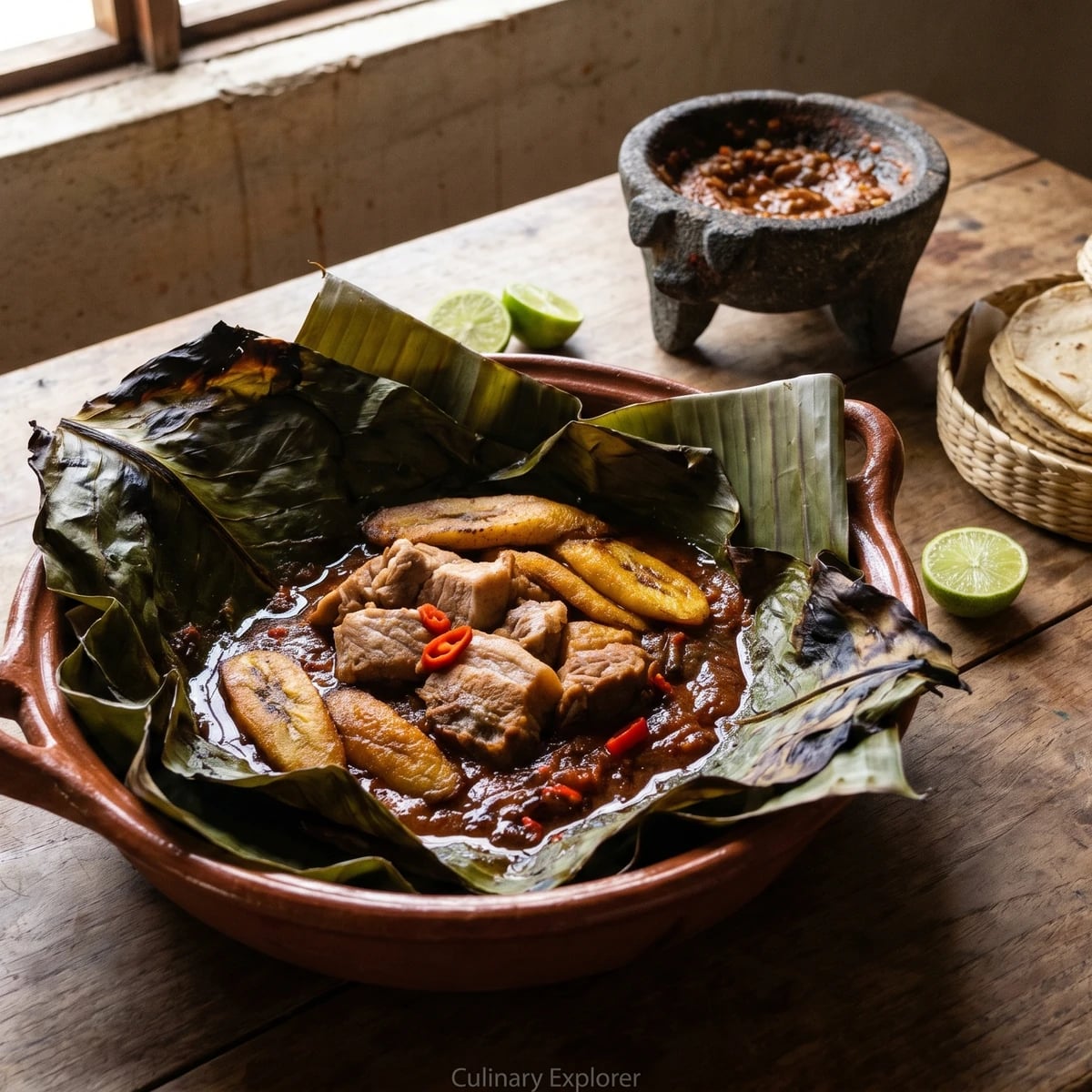
Chiapas' Zoque-Chol leaf wrap, pork or charcoal-roasted pejelagarto folded with tomate, chile simojovel or amashito, plátano macho, and hoja santa, then slow-steamed until the leaf perfumes every bite.

Sandwiches & Wraps
Mexican
Special Occasion
Make Ahead
Dinner Party
1 hr
Active Time
2 hr cook3 hr total
Yield8 packets, 6 to 8 servings

Chiapas, in the Zoque corridor around Tuxtla Gutiérrez, Copoya, and Ocozocoautla, reaching north toward Chol kitchens near Tila, Sabanilla, and Palenque, is where this mone lives. Do not flatten the people. Zoque is not Chol. One is Mixe-Zoquean, one is Maya, and the kitchens along that southern route have always understood exchange better than outsiders do.

The leaf defines the dish. Hoja santa wraps the filling first, banana leaf protects it outside, and inside go pork shoulder or charcoal-roasted pejelagarto, tomate rojo, chile simojovel or chile amashito, epazote, and plátano macho pintón. The plantain is not decoration. It thickens the juices, softens the chile, and tells you this food comes from hot green country, not the dry north.

I learned this style from women who wrapped by touch: vein trimmed, filling tucked tight, packet tied, then into the tamalera until the pork gives in and the hoja santa has done its work. No flour tortilla. No yellow cheese. This is a wrap, yes, but it belongs to a different grammar. La cocina no es decoración, es trabajo.

Mone is a leaf-wrapped preparation associated with Zoque home cooking in central Chiapas and related Chol and lowland kitchens that continue toward Tabasco. Pejelagarto, Atractosteus tropicus, is native to the Grijalva-Usumacinta basin, so its use marks the river-country version, while pork reflects the post-conquest livestock economy that became part of southern Mexican cooking. Banana leaves became common after bananas arrived in the Americas through 16th-century colonial trade, but cooking seasoned foods inside fragrant local leaves is older than that introduction.

The technique, the tradition, and the story behind every dish.

Discover Culinary Explorer

Ingredients

pork shoulder with visible fat or charcoal-roasted pejelagarto meat

Quantity

2 pounds

pork cut into 3/4-inch cubes, or pejelagarto pulled by hand and checked for bones

kosher salt

Quantity

2 teaspoons

divided

hoja santa leaves

Quantity

16 large

rinsed and thick stems shaved

banana leaf squares

Quantity

8 squares, about 12 by 12 inches

plus scraps for lining the steamer

manteca de cerdo

Quantity

3 tablespoons, plus more for brushing

tomate rojo

Quantity

4 medium

roasted on a comal until blistered

white onion

Quantity

1 medium

finely chopped

garlic cloves

Quantity

4

roasted and peeled

fresh chile simojovel or chile amashito

Quantity

8

stemmed and crushed in a molcajete

plátano macho pintón

Quantity

1

peeled and cut into 1/2-inch cubes

fresh epazote leaves

Quantity

2 tablespoons

chopped

fresh cilantro

Quantity

1/2 cup

chopped

pork broth or water

Quantity

1/2 cup

hand-pressed corn tortillas (optional)

Quantity

for serving

warmed

lime halves (optional)

Quantity

for serving

salsa de chile amashito (optional)

Quantity

for serving

Equipment Needed

  • Dry comal for roasting tomate, garlic, and softening banana leaves
  • Volcanic stone molcajete for crushing chile simojovel or chile amashito
  • Wide clay cazuela or heavy skillet for frying the recaudo
  • Tamalera or large steamer with a tight lid
  • Kitchen twine for tying the packets
  • Amatenango del Valle red clay platter or low clay cazuela for serving

Instructions

  1. 1

    Wake the leaves

    Wipe the banana leaf squares clean. Pass each square over a gas flame or hot comal for a few seconds per side until the leaf turns glossy and bends without cracking. Trim the thick center vein from the hoja santa leaves, shaving it down instead of cutting the leaf in half when you can. Save torn pieces and banana leaf scraps for lining the steamer. The leaf is the wrapper and the seasoning, so treat it like an ingredient, not packaging.

  2. 2

    Roast the tomate

    Heat a dry comal over medium. Roast the tomates and garlic, turning often, until the tomato skins blister and the garlic softens. The tomatoes should slump but not collapse into water. Chop the tomatoes roughly and mash the garlic with the crushed chile simojovel or chile amashito. This dish needs body. Do not turn the seasoning into a thin salsa.

  3. 3

    Fry the recaudo

    Melt the manteca de cerdo in a wide clay cazuela or heavy skillet over medium heat. Add the chopped onion and cook until it softens and smells sweet, about 5 minutes. Stir in the roasted tomate, garlic, crushed chile, and 1 teaspoon salt. Cook, stirring often, until the tomato thickens and the lard glistens at the edge of the pan, 8 to 10 minutes. La manteca es el sabor. Oil will cook the tomato, yes, but it will not give you the same depth.

  4. 4

    Season the filling

    For pork, add the cubed pork shoulder to the hot recaudo and stir until every piece is coated and the outside loses its raw color, about 4 minutes. Add the plátano macho, epazote, cilantro, broth or water, and the remaining teaspoon of salt. For pejelagarto, let the recaudo cool for 10 minutes, then fold in the pulled charcoal-roasted fish, plantain, epazote, and cilantro gently so the flakes stay large. Pejelagarto is bony. Pull it by hand and feel every piece. No me vengas con atajos.

    If you start with a whole pejelagarto, salt it, skewer it, and roast it over charcoal until the armored skin blackens and the flesh pulls away in firm flakes, 35 to 45 minutes. That is the Tabasco river method, and it belongs here.
  5. 5

    Build the packets

    Lay one banana leaf square on the table, dull side up. Brush lightly with manteca. Cross two hoja santa leaves in the center, glossy side facing the filling. Spoon about 3/4 cup of filling into the middle. Fold the hoja santa over first, then fold the banana leaf into a tight rectangle like a tamal. Tie with kitchen twine. The packet should be firm, not strangled. If the hoja santa tears, patch it with another piece. The women who taught me did this without looking down. You can learn it.

  6. 6

    Steam slowly

    Line a tamalera or large steamer with banana leaf scraps and any torn hoja santa. Add water below the rack, making sure it does not touch the packets. Arrange the mone seam side up, cover tightly, and cook at a steady medium-low simmer. Pork packets need 1 hour 45 minutes to 2 hours, until the meat is tender and registers at least 190F. Pejelagarto packets need 35 to 40 minutes because the fish is already roasted. Check the water twice and add hot water if needed. A dry pot burns the leaves and ruins the work.

  7. 7

    Rest and serve

    Turn off the heat and let the packets rest unopened for 15 minutes. Open them at the table in a red clay cazuela or on an Amatenango del Valle clay platter, still sitting in their leaves. Serve with warm hand-pressed corn tortillas, lime halves, salsa de chile amashito, and jícaras of cold pozol if you are feeding people properly. The first smell should be hoja santa. If it smells only like tomato, you were timid with the leaf. Así se hace y punto.

Chef Tips

  • Hoja santa is also called hierba santa, acuyo, or momo in the southeast. Do not replace it with basil or spinach. Those leaves are green, yes, and that is where the similarity ends. If the market leaves are torn, use them to line the steamer and buy better ones for wrapping.
  • Chile simojovel gives the Chiapas pork version its local bite. Chile amashito belongs with the pejelagarto and the Tabasco side of the river country. If you cannot find either, chile piquín is the closest compromise. Chile de árbol is sharper and redder. Use it only if you understand you are changing the flavor.
  • Use plátano macho pintón, yellow with green shoulders. Green plantain stays too hard here. Black-ripe plantain turns the filling sweet and soft in the wrong way.
  • Pork shoulder needs visible fat. Lean pork dries out inside the packet and makes you blame the recipe. The fat carries the chile, tomato, and hoja santa into the meat.
  • Pejelagarto is not tilapia. If you cannot find pejelagarto, make the pork version. A substitution is a compromise, not an upgrade.

Advance Preparation

  • The tomate and chile recaudo can be made up to 2 days ahead and refrigerated. Rewarm it before coating the pork or folding it with pejelagarto.
  • Pork packets can be assembled up to 24 hours ahead and kept refrigerated. Add 15 minutes to the steaming time if they go into the tamalera cold.
  • Cooked mone keeps refrigerated for 3 days. Reheat unopened packets in a steamer for 25 to 30 minutes. Pejelagarto has the best texture the day it is wrapped.

Frequently Asked Questions

Nutrition Information

1 serving (about 210g)

Calories
435 calories
Total Fat
28 g
Saturated Fat
10 g
Trans Fat
0 g
Unsaturated Fat
16 g
Cholesterol
90 mg
Sodium
780 mg
Total Carbohydrates
22 g
Dietary Fiber
3 g
Sugars
7 g
Protein
24 g

Note: Chef personas and recipes are created with AI assistance. Cook with care: follow safe food-handling practices, check doneness with a thermometer when needed, and adapt for allergies and your kitchen.

Where cooking meets culture.

Culinary guides, cultural storytelling, and the editorial depth that makes cooking meaningful.

Discover Culinary Explorer

More from Chiapas & Tabasco Pan Compuesto, Tacos & Handhelds

Browse the full collection