
Chef Lupita
Acambaritas de Acámbaro
Guanajuato's daily bread from Acámbaro, a small glazed roll built on pata, enriched with manteca de cerdo, and baked until the top shines lightly for merienda.
A cooking platform built around craft, culture, and the stories behind what we eat.
Created by
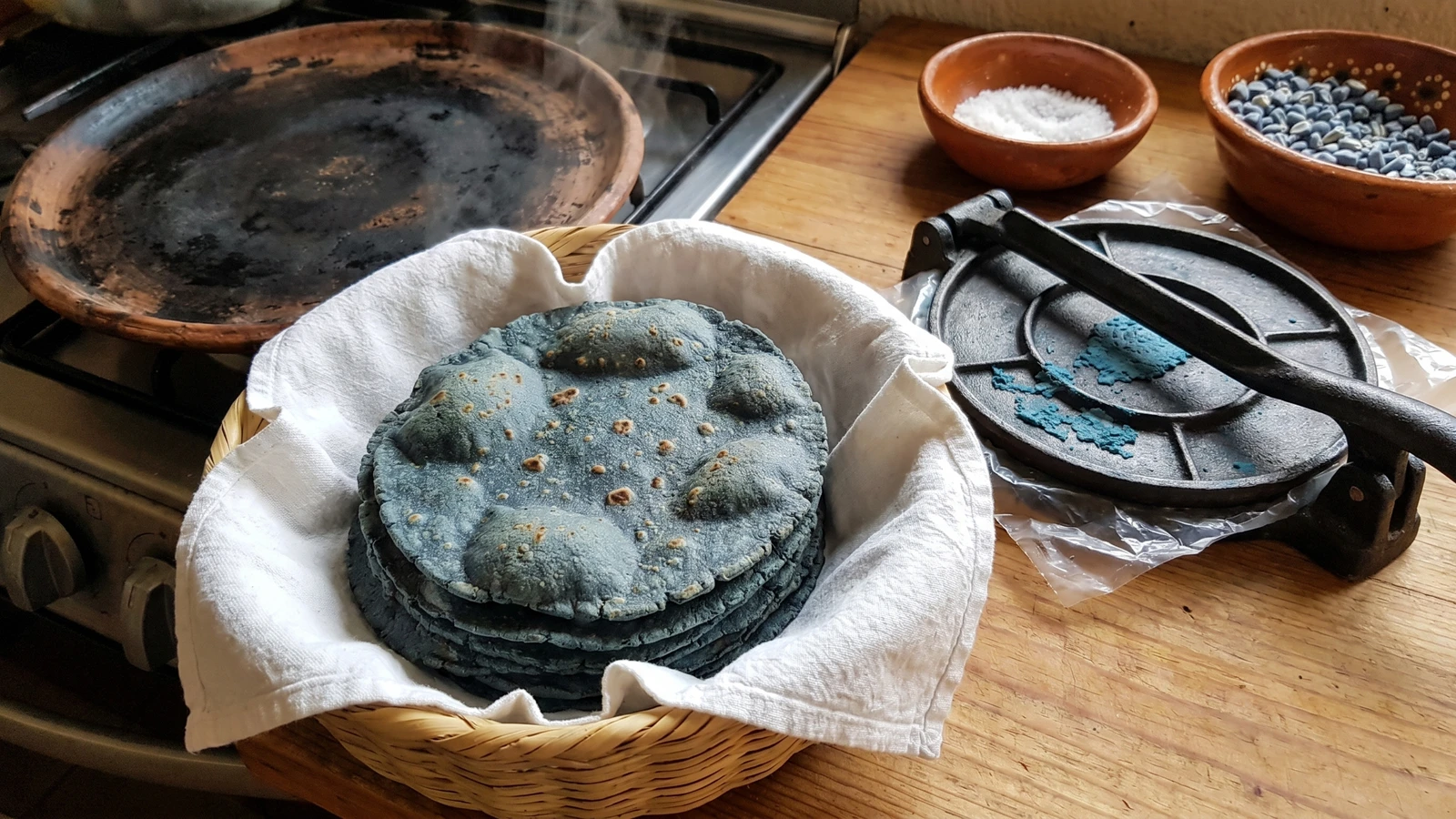
Central highland blue corn tortillas made from Cónico landrace maize, cooked with cal, ground to fresh masa, pressed by hand, and puffed on a hot clay comal.
Tlaxcala and the high valleys of the State of Mexico are blue Cónico country. This is central highland food, from cold mornings, volcanic soil, milpa plots, and women who know by touch when masa needs one more spoonful of water. The tortilla is not a side dish here. It is the plate, the spoon, the daily bread, and sometimes the meal.
Cónico corn gets its name from the shape of the ear, tight and tapered, adapted to altitude and short growing seasons. When it is blue, the masa turns the color of wet slate. Not purple dye. Not a restaurant trick. Blue corn has its own perfume, deeper and more mineral than white corn, and when it hits a clay comal the kitchen smells like the central plateau after rain.
I learned this rhythm from women in Tlaxcala who pressed tortillas faster than I could count them, talking the whole time, correcting the young ones without looking down. Nixtamal first: corn, water, cal, rest, rinse, grind. No me vengas con atajos. Masa harina has its place when there is no molino and no choice, but do not pass it off as the same thing. Tortillas start with nixtamal. Así se hace y punto.
My mother used to write only three words for tortillas in her notebook: maíz, cal, manos. Corn, cal, hands. She was right. Recetas probadas y garantizadas, but only if your hands do their work.
The Cónico corn race is associated with Mexico's central highlands, especially Tlaxcala, the State of Mexico, Hidalgo, Puebla, and nearby cold valleys where short, conical ears adapt well to altitude. Nixtamalization, cooking maize with an alkaline mineral such as cal, predates the Spanish conquest and made corn more nutritious, easier to grind, and better suited for masa. Blue corn tortillas remain especially tied to highland household cooking and mercado economies, where landrace maize is still valued for flavor, color, and regional identity rather than industrial yield.
Quantity
2 pounds
sorted and rinsed
Quantity
2 tablespoons
Quantity
3 quarts, plus more as needed
Quantity
1 teaspoon
| Ingredient | Quantity |
|---|---|
| dried blue Cónico cornsorted and rinsed | 2 pounds |
| food-grade calcium hydroxide (cal) | 2 tablespoons |
| water | 3 quarts, plus more as needed |
| fine sea salt | 1 teaspoon |
Sort the blue Cónico corn with your hands. Remove stones, broken kernels, and any dusty bits from the sack. Rinse the corn until the water runs mostly clear. This is where tortillas begin, not in a paper bag of masa harina. Si no conoces el mercado, no conoces la cocina.
Put the corn, 3 quarts water, and cal in a nonreactive pot. Stir well so the cal dissolves. Bring to a gentle simmer over medium heat and cook for 25 to 35 minutes, until the skins loosen and you can bite a kernel and see the center still slightly firm. Do not boil it to death. The cal opens the corn, releases its smell, and prepares it for the metate or molino.
Turn off the heat, cover the pot, and let the corn rest in its cal water for 8 to 12 hours. The liquid will turn yellow-gray and the corn will smell mineral, earthy, and sweet. That rest is not waiting time. It is the nixtamal becoming itself.
Drain the nixtamal. Rinse it under cool water, rubbing the kernels between your palms until most of the skins slip away but the corn still feels alive, not polished clean. Leave a little skin. It gives flavor and grip to the masa. If you scrub it like a factory, you lose character.
Grind the rinsed nixtamal in a hand-crank molino, electric mill, or on a metate if you have the back for it. Add water a spoonful at a time only if the grinder struggles. The masa should come out soft, cohesive, and blue-gray, with a smell like wet stone and warm corn. A food processor can help in an emergency, but it will not give the same fine grind. A compromise is a compromise, not an upgrade.
Knead the masa with the salt for 5 minutes. It should feel like soft clay, moist but not sticky. Pinch off a piece and flatten it between your fingers. If the edges crack, knead in water 1 tablespoon at a time. If it smears wet and heavy, let it rest uncovered for 10 minutes. Masa teaches you through your hands. Pay attention.
Heat a clay comal or heavy cast iron comal over medium-high heat. Line a tortilladora with two pieces of plastic cut from a clean produce bag. Roll the masa into golf-ball-size portions, about 35 grams each. Press one ball firmly but not violently. Open the press, rotate the tortilla, and press once more if needed. The tortilla should be thin, round enough, and still clearly made by hand.
Lay the tortilla on the hot comal. Cook 20 to 30 seconds, just until the surface releases. Flip and cook the second side about 45 seconds, until blue freckles and small brown spots appear. Flip a third time and press gently with your fingertips or a folded cloth. A good tortilla will puff. That puff tells you the masa was hydrated correctly and the comal was hot enough.
Move each tortilla to a woven basket lined with a clean cotton servilleta. Cover immediately. The tortillas finish softening together under the cloth, and the stack keeps its warmth. Serve them with beans, quelites, eggs in salsa, or just salt and a good salsa de molcajete. Saber cocinar es saber vivir.
1 serving (about 58g)
Culinary guides, cultural storytelling, and the editorial depth that makes cooking meaningful.
Discover Culinary ExplorerChef Lupita
Guanajuato's daily bread from Acámbaro, a small glazed roll built on pata, enriched with manteca de cerdo, and baked until the top shines lightly for merienda.

Chef Lupita
Michoacan's Tinguindin aguacatas are flat, leaf-scored sweet breads made with harina de trigo, piloncillo, anise, and manteca de cerdo, shaped by hand for the wood oven.

Chef Lupita
From Ajijic on Lake Chapala, Pan Tachihual is a lightly sweet wedding loaf built with harina de trigo, harina de maiz, piloncillo, manteca, anise, and the old Guadalajara pata.

Chef Lupita
Comitán's pan de yema shaped into little pigs, birds, and rabbits, a Chiapas bakery bread rich with egg yolks, manteca de cerdo, and anís, baked golden on hoja de plátano.