
Chef Lupita
Acambaritas de Acámbaro
Guanajuato's daily bread from Acámbaro, a small glazed roll built on pata, enriched with manteca de cerdo, and baked until the top shines lightly for merienda.
A cooking platform built around craft, culture, and the stories behind what we eat.
Created by
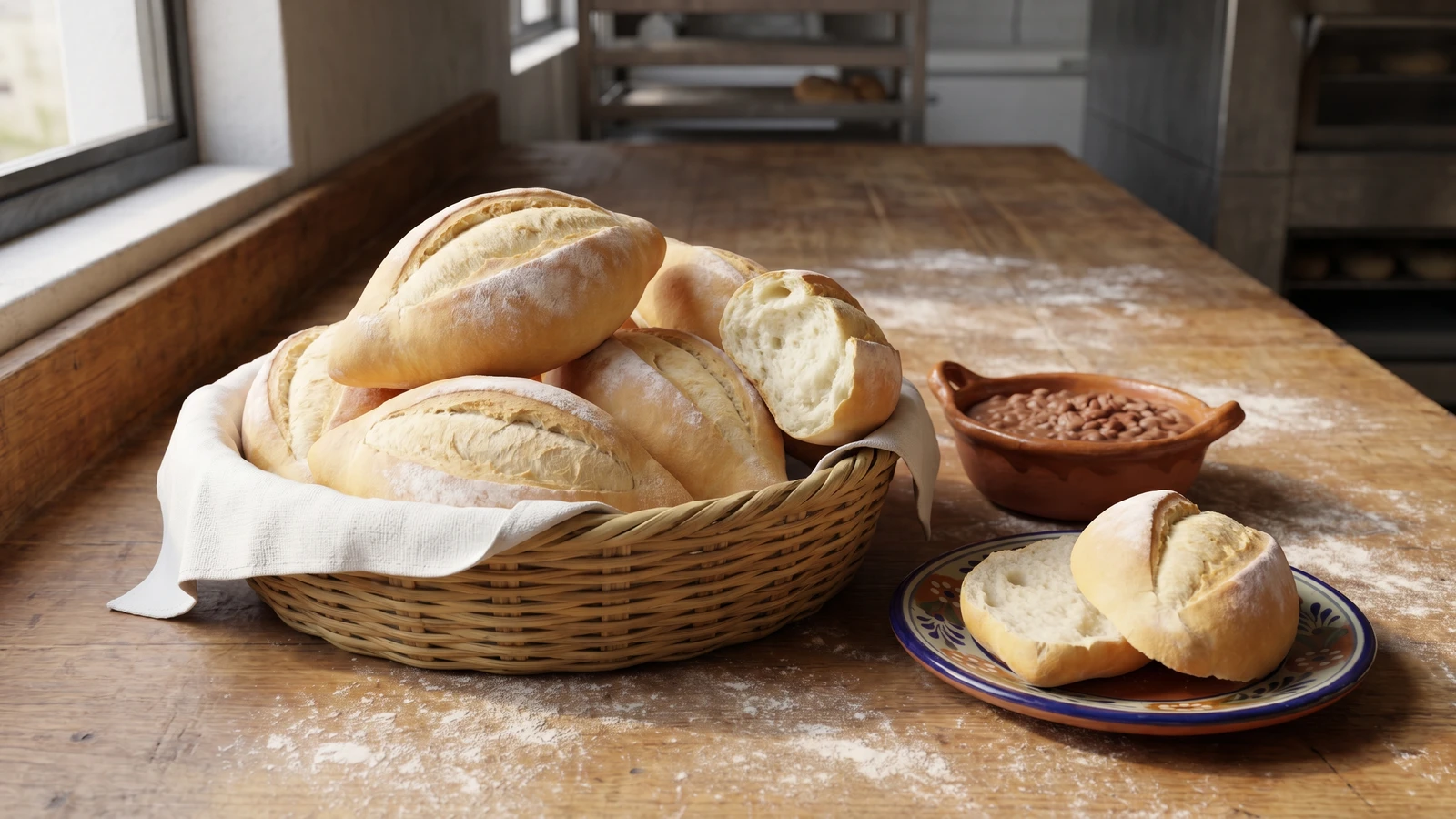
Ciudad de Mexico's everyday pan de sal, shaped like a small football, slashed once, baked crisp outside and airy inside for molletes, tortas, and the first bread of the morning.
Ciudad de Mexico and the Valle de Mexico own the daily rhythm of the bolillo. Yes, you find it across the country now, from Veracruz to Baja California, but the capital's panaderias made it the morning bread of office workers, schoolchildren, market vendors, and anyone carrying a cloth bag home before breakfast.
This is not a sweet bread. It is pan de sal: wheat flour, water, yeast, salt, and a small spoon of manteca de cerdo or oil to soften the crumb. The shape matters. The pointed ends, the single slash, the thin crust, the airy migajon inside. A home cook in the capital knows what it is for: molletes with frijoles refritos and queso, tortas packed in paper, or a piece torn open with cafe de olla before the day starts.
I learned this one from a panadero near La Merced who shaped faster than I could write. He watched the dough, not the clock. He told me, 'si la masa esta dura, la torta sale triste.' If the dough is hard, the sandwich comes out sad. He was right. Recetas probadas y garantizadas, but your hands still have to pay attention.
Bolillo descends from the French-style breads introduced and popularized in Mexico during the 19th century, especially under the French presence and the Porfiriato, when urban bakeries in Mexico City adopted wheat loaves with crisp crusts and light interiors. Mexican panaderos reshaped that European technique into smaller daily rolls, known in different regions as bolillo, birote, or pan frances. Guadalajara's birote salado developed its own firmer crust and sourer character, while the capital's bolillo stayed lighter, softer inside, and better suited to molletes and tortas.
Quantity
4 cups
plus more for dusting
Quantity
1 1/2 cups
about 95F to 100F
Quantity
2 1/4 teaspoons
Quantity
2 teaspoons
Quantity
1 teaspoon
Quantity
1 tablespoon
plus more for the bowl
Quantity
1/4 cup
| Ingredient | Quantity |
|---|---|
| bread flourplus more for dusting | 4 cups |
| warm waterabout 95F to 100F | 1 1/2 cups |
| active dry yeast | 2 1/4 teaspoons |
| fine sea salt | 2 teaspoons |
| sugar | 1 teaspoon |
| manteca de cerdo or neutral oilplus more for the bowl | 1 tablespoon |
| water for the oven pan | 1/4 cup |
Stir the warm water, yeast, and sugar together in a large bowl. Let it sit for 8 to 10 minutes, until a beige foam gathers on top. If nothing happens, your yeast is dead. Start again. Bread does not forgive sleepy yeast.
Add the flour, salt, and manteca de cerdo. Mix with your hand or a wooden spoon until a rough dough forms and no dry flour remains. The dough should feel firm but not dry. Bolillo is pan de sal, not cake. Keep the dough honest.
Turn the dough onto a lightly floured board and knead for 10 to 12 minutes. Push, fold, turn. The dough is ready when it feels smooth, springs back under your finger, and stretches without tearing immediately. This kneading builds the migajon, the airy crumb that makes a bolillo useful for molletes and tortas.
Set the dough in a lightly greased bowl, cover with a clean cloth, and let it rise in a warm kitchen until doubled, about 1 hour to 1 hour 30 minutes. Do not rush it with too much heat. Yeast works like a patient panadero, not like a microwave.
Punch the dough down and divide it into 8 equal pieces. Flatten each piece into a small oval, roll it tightly from the long side, and pinch the seam closed. Taper both ends with the sides of your hands until you have the football shape used in Mexico City bakeries. Place seam side down on a parchment-lined baking sheet.
Cover the shaped rolls and let them rise until puffy, about 35 to 45 minutes. Heat the oven to 425F with an empty metal pan on the bottom rack. Right before baking, cut one deep lengthwise slash across each roll with a sharp blade. That cut controls the expansion. Without it, the bolillo tears where it wants. No me vengas con atajos.
Slide the tray into the oven and carefully pour 1/4 cup water into the hot metal pan. Close the oven at once. Bake 20 to 22 minutes, until the crust is pale golden, crisp, and the bottom sounds hollow when tapped. The crust should crack lightly under your fingers, and the inside should stay soft enough to pull apart for a morning mollete.
Move the bolillos to a rack and let them cool at least 20 minutes. Cut too early and you crush the migajon. Bread keeps cooking inside after it leaves the oven. Saber cocinar es saber vivir.
1 serving (about 95g)
Culinary guides, cultural storytelling, and the editorial depth that makes cooking meaningful.
Discover Culinary ExplorerChef Lupita
Guanajuato's daily bread from Acámbaro, a small glazed roll built on pata, enriched with manteca de cerdo, and baked until the top shines lightly for merienda.

Chef Lupita
Michoacan's Tinguindin aguacatas are flat, leaf-scored sweet breads made with harina de trigo, piloncillo, anise, and manteca de cerdo, shaped by hand for the wood oven.

Chef Lupita
From Ajijic on Lake Chapala, Pan Tachihual is a lightly sweet wedding loaf built with harina de trigo, harina de maiz, piloncillo, manteca, anise, and the old Guadalajara pata.

Chef Lupita
Comitán's pan de yema shaped into little pigs, birds, and rabbits, a Chiapas bakery bread rich with egg yolks, manteca de cerdo, and anís, baked golden on hoja de plátano.