
Chef Lupita
Aporreadillo Michoacano con Huevo
Michoacán's Tierra Caliente almuerzo, where salted beef is softened, pounded, fried in lard, folded with egg and chile perón salsa, then served beside morisqueta like a proper working table.
A cooking platform built around craft, culture, and the stories behind what we eat.
Created by
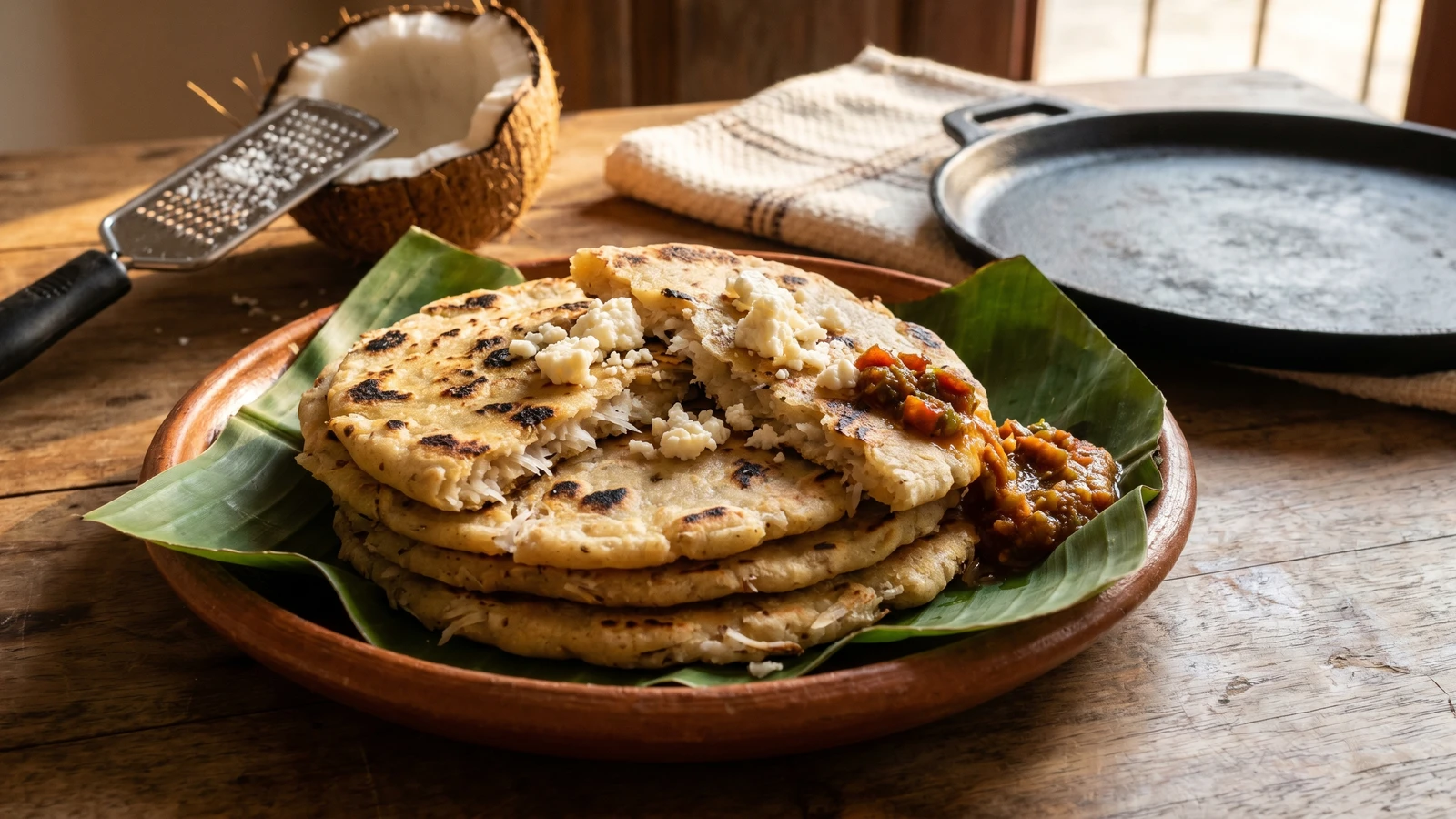
Tabasco's Gulf coast breakfast tortilla, made from nixtamal masa, fresh mature coconut, piloncillo, and a little manteca, pressed thick and browned on a steady comal.
Tabasco, the Chontal lowlands and the Gulf coast, is where these tortillas belong. Coconut palms, cacao, plantain, river fish, hoja de momo, chile amashito, this is the wet green kitchen of the Maya south, not the dry north and not the center of the country.
The tortilla here is not the thin table tortilla you use to pick up beans. It is thicker, gently sweet from fresh coconut and piloncillo, cooked on a comal until the edges brown and the coconut oils perfume the masa. A woman in Villahermosa once corrected my hand at the press because I was making them too thin. She was right. Too thin and the coconut burns before the masa cooks.
Use fresh nixtamal masa if you can get it. If you don't know where to buy it, pregúntale a las señoras del mercado. Masa harina will work in a kitchen far from Tabasco, but know what you are losing: the clean corn smell of nixtamal made that morning. A substitution is a compromise, not an upgrade.
Serve them warm with queso fresco, not syrup. This is not a pancake wearing a Mexican costume. This is Tabasco corn and coconut meeting on a comal. Cada estado, su propia cocina.
Tabasco's coconut cookery belongs to the Gulf and Caribbean food corridor, where coconut became common after Spanish colonial trade moved palms, sugar, and coastal ingredients through ports from Veracruz to Campeche and the Caribbean. In Tabasco, Indigenous Maya-Chontal corn techniques remained the base, so coconut was folded into masa rather than replacing it. The result is a regional breakfast food that sits between tortilla and sweet antojito, tied to the coastal lowlands more than to the wheat and dairy breakfasts of northern Mexico.
Quantity
2 cups
at room temperature
Quantity
1 cup
freshly grated, loosely packed
Quantity
1/2 cup, plus more as needed
Quantity
2 tablespoons
finely grated
Quantity
1/2 teaspoon
Quantity
1 tablespoon
softened, plus a little for the comal if needed
Quantity
1/2 cup
crumbled, for serving
Quantity
for serving
| Ingredient | Quantity |
|---|---|
| fresh nixtamal masa for tortillasat room temperature | 2 cups |
| fresh mature coconutfreshly grated, loosely packed | 1 cup |
| warm coconut water or warm water | 1/2 cup, plus more as needed |
| piloncillofinely grated | 2 tablespoons |
| fine sea salt | 1/2 teaspoon |
| manteca de cerdosoftened, plus a little for the comal if needed | 1 tablespoon |
| queso fresco (optional)crumbled, for serving | 1/2 cup |
| salsa de chile amashito (optional) | for serving |
Crack the mature coconut and save the water if it is clean and sweet. Pry out the white meat and grate it fine. Do not use sweetened bagged coconut. That belongs to cakes from a supermarket shelf, not to a Tabasco comal. The coconut should smell milky and fresh, with a little oil on your fingers.
Put the nixtamal masa in a wide bowl. Add the grated coconut, piloncillo, salt, and softened manteca de cerdo. Work everything together with your hand, pressing the coconut through the masa so it distributes evenly. Add the warm coconut water a little at a time until the masa feels soft, smooth, and pliable, not wet. If it cracks at the edges when pressed, it needs more liquid.
Cover the bowl with a damp servilleta and let the masa rest for 15 minutes. The coconut drinks moisture slowly. Skip the rest and the tortillas crack on the comal. La cocina no es decoración, es trabajo.
Set a cast iron comal or heavy griddle over medium heat until a pinch of masa sizzles softly when it touches the surface. The heat should be steady, not violent. These tortillas have piloncillo and coconut, so they brown faster than plain corn tortillas.
Divide the masa into 10 to 12 balls, each about the size of a small lime. Press each one between two pieces of plastic in a tortilla press to about 1/4 inch thick. They should be thicker than a table tortilla, closer to a small gordita, because the coconut needs enough masa around it to toast without burning.
Lay one tortilla on the dry comal. Cook 2 to 3 minutes on the first side, until the surface looks dry and the bottom has golden brown spots. Flip and cook 2 minutes more. Flip once again and press gently with a folded cloth. It may puff a little. Good. That tells you the masa is cooked through. If the coconut sugars darken too quickly, lower the heat.
Stack the cooked tortillas in a basket lined with a clean servilleta so they soften together. Serve warm with crumbled queso fresco and, if you want the Tabasco bite, a small dish of salsa de chile amashito. Sweet coconut, corn, salt, fresh cheese. That is breakfast at dawn in the lowlands. Así se hace y punto.
1 serving (about 60g)
Culinary guides, cultural storytelling, and the editorial depth that makes cooking meaningful.
Discover Culinary ExplorerChef Lupita
Michoacán's Tierra Caliente almuerzo, where salted beef is softened, pounded, fried in lard, folded with egg and chile perón salsa, then served beside morisqueta like a proper working table.

Chef Lupita
Guerrero's Costa Grande aporreado is salted cecina pounded soft, scrambled with egg, and finished in a red guajillo and chile de árbol salsa loud with garlic and cilantro.

Chef Lupita
Los Altos de Chiapas turns two-night fermented white corn into a tart-sweet atole, cooked with canela and piloncillo, then poured hot into jícaras for desayuno.

Chef Lupita
Oaxaca's Mixteca region ferments nixtamalized masa for days until it turns tart and alive, then simmers it with piloncillo and canela into a thick, warm atole served at first light in clay.