
Chef Lupita
Aporreadillo Michoacano con Huevo
Michoacán's Tierra Caliente almuerzo, where salted beef is softened, pounded, fried in lard, folded with egg and chile perón salsa, then served beside morisqueta like a proper working table.
A cooking platform built around craft, culture, and the stories behind what we eat.
Created by
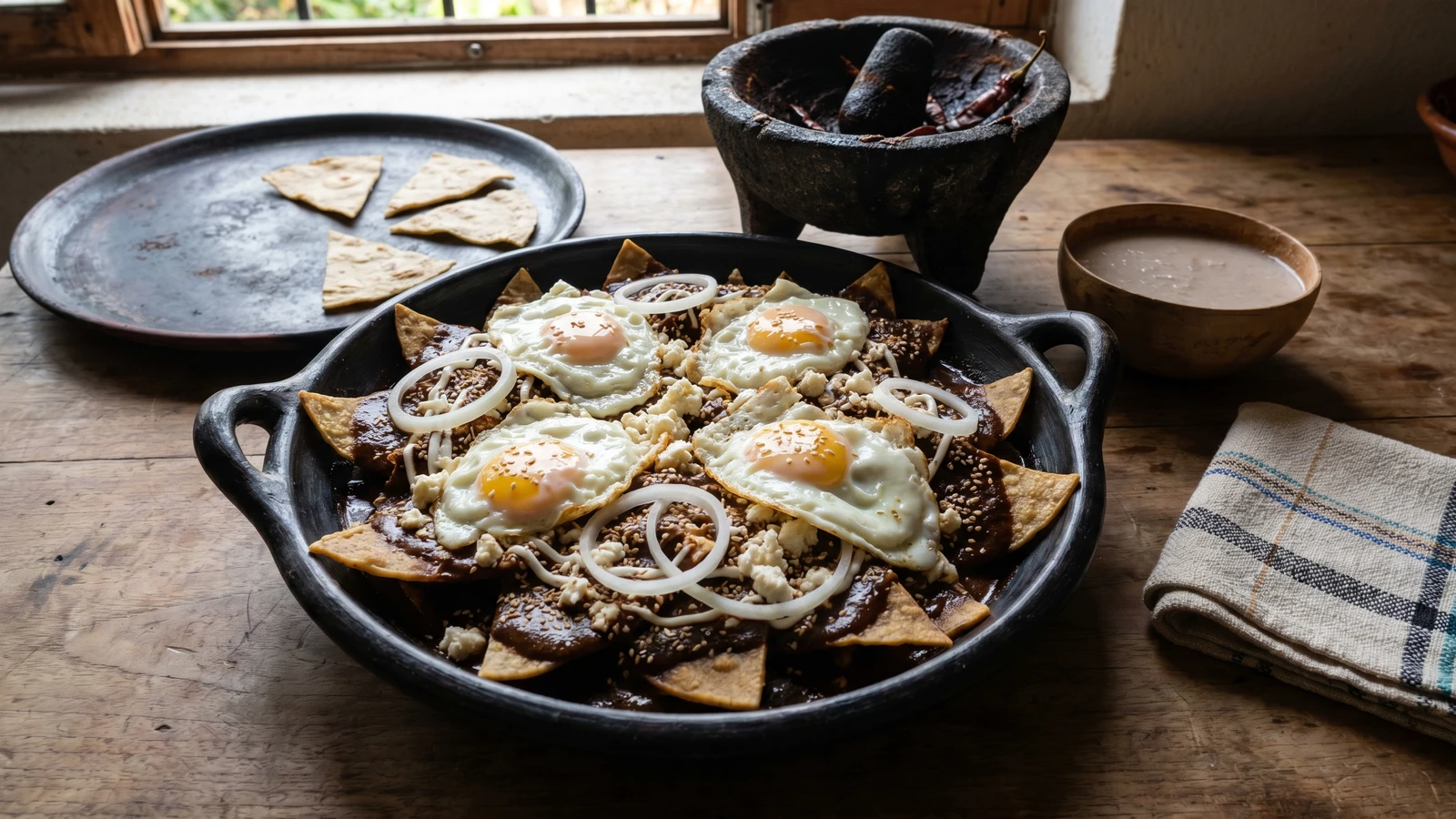
Central Chiapas breakfast chilaquiles where day-old tortillas are fried in manteca, folded through mole chiapaneco with chile simojovel, seeds, plantain, and cacao, then finished with crema, cheese, and eggs.
Chiapas, especially the Central Highlands between San Cristóbal de las Casas and Comitán, is where these chilaquiles live. This is not the red or green breakfast plate from central Mexico with a little cheese thrown on top. Here the day-old tortillas are folded into mole chiapaneco, a brown, glossy sauce built from chile simojovel, ancho, mulato, pasilla, sesame, pepita, plantain, cacao, achiote, and a breath of hoja de momo.
I learned this rhythm in a coleto kitchen before the market fully woke up. The mole had been made the day before for chicken, the kind of family pot that sits in a clay cazuela and feeds whoever passes through the door. The next morning, the women cut yesterday's tortillas, fried them in manteca, loosened the mole with broth, and put eggs on top. That is not leftovers as apology. That is household intelligence.
Fry the tortillas. No bagged chips. No me vengas con atajos. Manteca gives the tortillas the right edge, crisp first, then tender once the mole grabs them. Oil will feed you, yes, but it won't give you the same flavor. La manteca es el sabor.
Set this on Amatenango clay with crema de rancho and Chiapas cheese, and a señora from Comitán should know what you are doing. Cada estado, su propia cocina. This is a 32-state cuisine, and Chiapas does not need to borrow anybody else's breakfast.
Chilaquiles were already appearing in Mexican cookbooks by the 19th century as a practical way to give day-old tortillas a second life in chile sauce. In Chiapas, especially after the state joined the Mexican federation in 1824 while retaining strong links to Guatemala, moles kept a southern profile: local chiles like simojovel, cacao, achiote, seeds, plantain, and Spanish-introduced spices ground into one sauce. Using festival mole for breakfast with eggs is household economy, not a restaurant trick, because a pot of mole chiapaneco is meant to feed more than one meal.
Quantity
12
cut into 6 triangles each
Quantity
2 cups
divided, plus more if needed
Quantity
3
stemmed and seeded
Quantity
2
stemmed and seeded
Quantity
2
stemmed and seeded
Quantity
6
stemmed
Quantity
3
Quantity
1/2 medium
Quantity
4
unpeeled
Quantity
1/2
peeled and sliced
Quantity
1/2 small
torn into pieces
Quantity
2 tablespoons
Quantity
3 tablespoons
divided
Quantity
2 tablespoons
Quantity
2 tablespoons
Quantity
2 tablespoons
Quantity
1 inch
Quantity
2
Quantity
4
Quantity
2
Quantity
1/2 teaspoon
Quantity
1 teaspoon
Quantity
4 cups
divided
Quantity
1 ounce
preferably made with Chiapas cacao, chopped
Quantity
1 teaspoon
Quantity
1 small
center rib removed
Quantity
1 1/2 teaspoons, plus more to taste
Quantity
4
Quantity
1/2 cup
Quantity
3/4 cup
crumbled or torn
Quantity
1/4 cup
thinly sliced, for serving
| Ingredient | Quantity |
|---|---|
| day-old corn tortillascut into 6 triangles each | 12 |
| manteca de cerdodivided, plus more if needed | 2 cups |
| dried chile anchostemmed and seeded | 3 |
| dried chile mulatostemmed and seeded | 2 |
| dried chile pasilla mexicanostemmed and seeded | 2 |
| dried chile simojovelstemmed | 6 |
| Roma tomatoes | 3 |
| white onion | 1/2 medium |
| garlic clovesunpeeled | 4 |
| ripe plantainpeeled and sliced | 1/2 |
| stale bolillotorn into pieces | 1/2 small |
| raisins | 2 tablespoons |
| sesame seedsdivided | 3 tablespoons |
| hulled pumpkin seeds | 2 tablespoons |
| raw peanuts | 2 tablespoons |
| blanched almonds | 2 tablespoons |
| Mexican canela stick | 1 inch |
| whole cloves | 2 |
| black peppercorns | 4 |
| allspice berries | 2 |
| dried Mexican oregano | 1/2 teaspoon |
| achiote paste | 1 teaspoon |
| unsalted caldo de pollo or guajolotedivided | 4 cups |
| Mexican table chocolatepreferably made with Chiapas cacao, chopped | 1 ounce |
| grated piloncillo | 1 teaspoon |
| fresh hoja de momocenter rib removed | 1 small |
| kosher salt | 1 1/2 teaspoons, plus more to taste |
| large eggs | 4 |
| crema de rancho | 1/2 cup |
| queso doble crema de Chiapas or queso frescocrumbled or torn | 3/4 cup |
| white onion (optional)thinly sliced, for serving | 1/4 cup |
Heat a dry comal over medium. Toast the ancho, mulato, and pasilla one at a time, about 20 to 30 seconds per side, just until the skins puff and the smell turns deep and sweet. Toast the chile simojovel last, only 8 to 10 seconds per side. It is smaller and it burns fast. Black chile makes bitter mole. Throw it out if you burn it.
Put the toasted chiles in a bowl and cover with hot water, not boiling water. Let them soften for 20 minutes. Drain them and taste a drop of the soaking liquid. If it tastes clean and chile-rich, keep 1/2 cup. If it tastes harsh, throw it away. The mole should taste like chile, not like punishment.
On the same comal, toast 2 tablespoons sesame seeds, the pumpkin seeds, peanuts, almonds, canela, cloves, peppercorns, allspice, and oregano. Move everything constantly. The sesame should turn gold, the pumpkin seeds should puff, and the nuts should smell warm. This is the backbone of mole chiapaneco. Seeds give body, not decoration.
Melt 2 tablespoons manteca in a skillet over medium heat. Fry the plantain slices until browned at the edges, then remove them. Fry the bolillo pieces in the same fat until golden. Add the raisins for the last 20 seconds, just until they swell. Plantain and bread make the mole cling to the tortillas later. Without them, the sauce runs thin.
Put the tomatoes, onion, and unpeeled garlic on the comal. Turn them until the tomato skins blister, the onion softens, and the garlic is browned in spots. Peel the garlic. Do not wash the comal between steps. That dark chile and seed flavor belongs in the sauce.
Blend the drained chiles with the roasted tomatoes, onion, garlic, toasted seeds and spices, fried plantain, bolillo, raisins, achiote paste, 2 cups caldo, and the reserved chile soaking liquid if it tasted good. Work in batches if your blender is small. Blend longer than you think, until the sauce is completely smooth. A grainy mole is laziness you can feel on the tongue.
Melt 3 tablespoons manteca in a wide cazuela over medium heat. Strain the blended mole directly into the hot fat. It will sputter, so stand back and stir with authority. Cook 8 to 10 minutes, until the color darkens and the fat begins to show at the edges. Add the remaining caldo, the chocolate, piloncillo, hoja de momo, and salt. Simmer 25 to 30 minutes, stirring often, until glossy and thick enough to coat a spoon. Remove the hoja de momo. Taste for salt.
While the mole simmers, heat 1 1/2 cups manteca in a heavy skillet. When a tortilla corner sizzles immediately, fry the triangles in batches until firm and pale gold with darker edges. Drain on a rack or paper towels and salt lightly. Day-old tortillas fry better because they have lost moisture. Fresh tortillas fight you.
Ladle about 3 cups hot mole into a wide cazuela and keep the rest for another meal. Add the fried tortilla triangles and fold gently for 1 to 2 minutes. The edges should soften while the centers keep a little bite. Do not stir them into paste. Chilaquiles are not porridge. Así se hace y punto.
In a small skillet, melt 2 tablespoons of the clean frying manteca over medium heat. Fry the eggs until the whites are set and the yolks are still soft, or cook them firmer if that is how your table eats. Salt them while they are hot. The egg yolk belongs with the mole, rich against rich.
Spoon the chilaquiles onto plates or bring the cazuela straight to the table. Set the fried eggs on top. Spoon over crema de rancho, scatter the queso doble crema or queso fresco, add the sliced white onion, and finish with the remaining toasted sesame seeds. Serve immediately. This is breakfast from the Maya south, not a plate of chips drowning under sour cream.
1 serving (about 520g)
Culinary guides, cultural storytelling, and the editorial depth that makes cooking meaningful.
Discover Culinary ExplorerChef Lupita
Michoacán's Tierra Caliente almuerzo, where salted beef is softened, pounded, fried in lard, folded with egg and chile perón salsa, then served beside morisqueta like a proper working table.

Chef Lupita
Guerrero's Costa Grande aporreado is salted cecina pounded soft, scrambled with egg, and finished in a red guajillo and chile de árbol salsa loud with garlic and cilantro.

Chef Lupita
Los Altos de Chiapas turns two-night fermented white corn into a tart-sweet atole, cooked with canela and piloncillo, then poured hot into jícaras for desayuno.

Chef Lupita
Oaxaca's Mixteca region ferments nixtamalized masa for days until it turns tart and alive, then simmers it with piloncillo and canela into a thick, warm atole served at first light in clay.